KI-gestützte Vermittlung von Freiwilligen: So funktioniert es

Fragen Sie CSR-Programmmanager nach ihrem stressigsten Arbeitstag, und Sie werden wahrscheinlich immer wieder dieselbe Geschichte hören: Eine Tabelle mit 400 Mitarbeitern, ein Stapel Anfragen von gemeinnützigen Organisationen, die nicht so recht zu den Fähigkeiten der Leute passen, und eine Deadline, die eigentlich schon gestern abgelaufen ist. Mitarbeiter manuell an die richtigen Projekte zu vermitteln – besonders über verschiedene Standorte und Zeitzonen hinweg – kostet wertvolle Zeit, die besser in den Aufbau des Programms investiert wäre.
KI-gestütztes Volunteer-Matching löst genau dieses Problem. Es nutzt Mitarbeiterdaten wie Fähigkeiten, Interessen, Verfügbarkeit und Standort, um automatisch die relevantesten Projekte zu empfehlen oder zuzuweisen, und verfeinert diese Empfehlungen kontinuierlich durch den Lerneffekt bei jedem neuen Match.
Daten aus der Goodera AIX Strategieanalyse zeigen, dass eine KI-gestützte CSR-Führungskraft Freiwilligenprogramme 10-mal effektiver bereitstellen, verwalten und koordinieren kann, indem sie die „Infrastruktur“ wie Terminplanung, länderübergreifende Logistik und automatisierte Wirkungsberichte automatisiert.
Der weitere Verlauf dieses Leitfadens erläutert genau, wie diese Technologie funktioniert, welche Fragen Sie Anbietern stellen sollten und an welchen Stellen menschliches Urteilsvermögen im Prozess weiterhin unverzichtbar ist.
Was genau ist KI-gestütztes Volunteer-Matching?
Vereinfacht gesagt ist KI-gestütztes Volunteer-Matching ein System, das Mitarbeiter automatisch mit passenden Projekten zusammenbringt, indem es mehrere Variablen gleichzeitig berücksichtigt – anstatt dass ein Koordinator jede Anfrage manuell prüfen muss. Anstatt dass ein Mitarbeiter durch sechzig offene Projekte scrollt und hofft, dass etwas dabei ist, reduziert das System die Auswahl auf eine kleine, relevante Anzahl, basierend auf den bereits bekannten Informationen über die Person.
Gooderas Workshop- Leitfaden zu diesem Thema beschreibt das Ziel treffend: Wenn die Relevanz steigt, sinkt die Hemmschwelle, und die Wahrscheinlichkeit, dass Mitarbeiter ihr Interesse in Taten umsetzen, nimmt zu.
Die Datenpunkte einer Matching-Engine
Eine funktionierende Matching-Engine greift in der Regel auf fünf Informationskategorien zurück, die jeweils eine andere Ebene des Kontextes zur endgültigen Empfehlung beitragen.
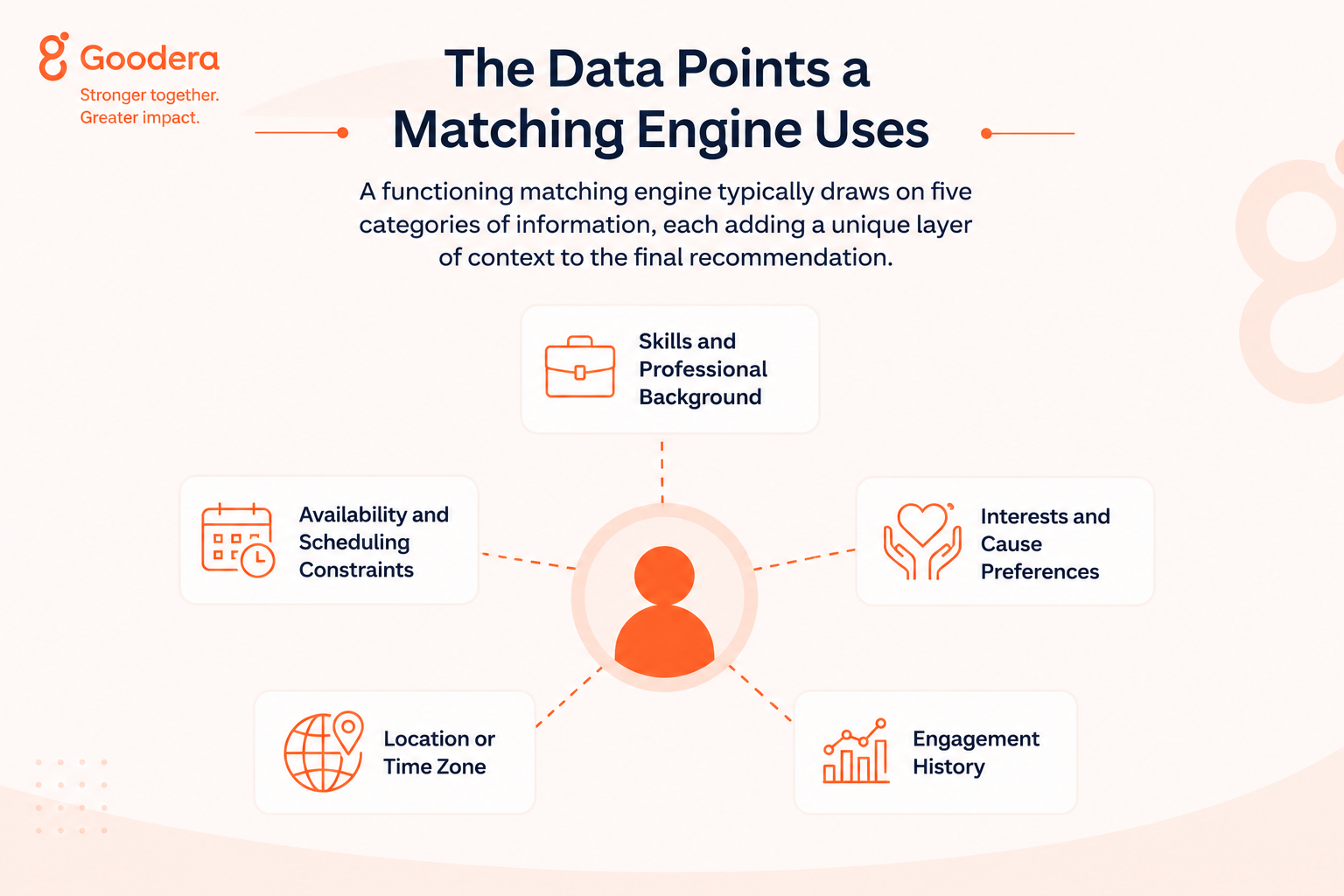
Datensignale einer Matching-Engine
- Fähigkeiten und beruflicher Hintergrund
Dies ist in der Regel der am stärksten gewichtete Input. Er umfasst die Jobfunktion, Branchenerfahrung und spezifische Kompetenzen, die ein Mitarbeiter einbringt. Dies ist besonders wichtig für kompetenzbasiertes Volunteering und Pro-Bono-Projekte, bei denen das Projekt einer gemeinnützigen Organisation von echter fachlicher Expertise abhängt.
- Angegebene Interessen und bevorzugte Themenbereiche
Mitarbeitende wählen in der Regel die Bereiche aus, die ihnen am wichtigsten sind – sei es Bildung, Umweltschutz oder wirtschaftliche Teilhabe. Diese Angaben helfen dem System dabei, Möglichkeiten zu priorisieren, für die sich die Mitarbeitenden wirklich begeistern können, anstatt sie nur nach fachlicher Eignung auszuwählen.
- Verfügbarkeit und zeitliche Rahmenbedingungen
Eine Empfehlung ist nur dann sinnvoll, wenn der Mitarbeitende sie auch wahrnehmen kann. Daher benötigt das System Informationen zu Arbeitszeiten, Sperrzeiten und zeitlichen Kapazitäten. Ohne diese Eingaben kann selbst ein fachlich perfektes Match an der Terminplanung scheitern.
- Standort oder Zeitzone
Bei Vor-Ort-Einsätzen grenzt dies die Ergebnisse auf einen angemessenen Umkreis ein; bei virtuellen Tätigkeiten stellt es sicher, dass sich Mitarbeitende und gemeinnützige Organisationen bei Live-Terminen abstimmen können. Globale Programme sind auf diese Daten angewiesen, um zu verhindern, dass logistisch unmögliche Matches vorgeschlagen werden.
- Engagement-Historie
Einige Systeme berücksichtigen auch, wie eine Person in der Vergangenheit auf Angebote reagiert hat – also wofür sie sich angemeldet, was sie abgeschlossen oder was sie abgelehnt hat. Dies hilft dem Modell zu verstehen, was für den Einzelnen in der Vergangenheit tatsächlich „gut gepasst“ hat, anstatt sich nur auf die expliziten Präferenzen zu verlassen.
Frequently Asked Questions
1. Ersetzt KI-gestütztes Volunteer-Matching unseren Volunteer-Koordinator?
Nein. Es nimmt zwar repetitive Aufgaben bei der Sortierung und Terminplanung ab, aber der Aufbau von Beziehungen zu gemeinnützigen Partnern, die Konzeption komplexer Projekte und die Lösung von Sonderfällen erfordern weiterhin menschliches Urteilsvermögen.
2. Wie präzise ist das KI-Matching im Vergleich zur manuellen Auswahl durch unser CSR-Team?
Die Genauigkeit hängt weniger von der Technologie selbst als vielmehr von der Datenqualität ab. Ein System mit detaillierten, aktuellen Daten zu Fähigkeiten und Interessen wird bei einer großen Anzahl an Anfragen konsistent besser abschneiden als eine manuelle Auswahl. Basiert das System hingegen auf lückenhaften oder veralteten Profilen, wird es selbst hinter die Leistung eines erfahrenen Koordinators zurückfallen.
3. Was passiert mit den Fähigkeiten und persönlichen Daten unserer Mitarbeitenden, sobald sie in das Matching-System eingegeben werden?
Seriöse Plattformen beschränken die Datenerhebung auf Felder, die direkt für das Matching erforderlich sind – wie Fähigkeiten, Interessen, Verfügbarkeit und Standort – und sollten Ihrem Unternehmen eine klare Kontrolle über die Speicherung und Löschung der Daten ermöglichen. Fordern Sie von jedem Anbieter ein vollständiges Verzeichnis der Datenfelder an, bevor Sie einen Vertrag unterzeichnen.
4. Kann KI-Matching auch für kompetenzbasiertes und pro-bono-Engagement genutzt werden oder nur für allgemeine Freiwilligentage?
Das System kann beides abdecken, wobei kompetenzbasiertes und pro-bono-Matching aufgrund der höheren Anforderungen detailliertere Daten und oft eine manuelle Überprüfung erfordern.
5. Woran erkennen wir, ob der KI-Matching-Algorithmus voreingenommen ist?
Fragen Sie den Anbieter, ob er die Matching-Ergebnisse regelmäßig anhand der demografischen Daten der Mitarbeitenden überprüft und wie er auf ungleichmäßige Muster reagiert. Das NIST AI Risk Management Framework ist ein nützlicher Referenzpunkt für die Art von Fairness-Fragen, die Sie stellen sollten.
6. Wie lange dauert es, bis ein KI-Matching-System gute Ergebnisse liefert?
Die meisten Systeme verbessern sich innerhalb der ersten Monate deutlich, sobald der Feedback-Loop genügend reale Ergebnisdaten gesammelt hat. Bei Programmen, die mit wenigen Profildaten starten, ist eine kurze Anlaufphase einzuplanen, bis die Empfehlungsqualität ihr Optimum erreicht.
7. Welche Fragen sollten wir einem Anbieter stellen, um sicherzugehen, dass er echte KI verwendet und nicht nur Filter?
Fragen Sie, welche spezifischen Datenpunkte in den Matching-Score einfließen, wie dieser gewichtet wird und wie oft das Modell neu trainiert wird. Verlangen Sie Benchmarks zu Vermittlungs- und Abschlussquoten von bestehenden Kunden, anstatt sich mit allgemeinen Aussagen zum Engagement zufriedenzugeben.
8. Funktioniert KI-Matching über verschiedene Länder, Sprachen und Zeitzonen hinweg?
Ja, sofern die Plattform von Grund auf für den globalen Einsatz konzipiert wurde und nicht nur für einen einzelnen Markt angepasst wurde. Zeitzonenkompatibilität und sprachliche Nuancen müssen direkt in den Matching-Score einfließen, nicht nur die fachliche Relevanz.
9. Was tun wir, wenn ein Mitarbeiter mit seinem KI-generierten Match unzufrieden ist?
Eine vertrauenswürdige Plattform macht es einfach, eine Fehlzuordnung zu melden und unkompliziert eine andere Gelegenheit anzufordern. Dieses Feedback sollte sichtbar in zukünftige Empfehlungen einfließen, anstatt in einer Support-Warteschlange zu verschwinden.
10. Werden unsere Mitarbeiterdaten zum Training der KI-Modelle des Anbieters verwendet?
Dies variiert je nach Anbieter und sollte ausdrücklich im Vertrag geregelt und nicht einfach vorausgesetzt werden. Fragen Sie direkt nach, ob die Daten Ihres Unternehmens ein gemeinsames Modell für den gesamten Kundenstamm des Anbieters trainieren oder isoliert in Ihrem eigenen Programm verbleiben.