Coincidencia de voluntariado impulsada por IA: cómo funciona

Si le pide a casi cualquier gerente de programas de RSE que describa su martes menos favorito, probablemente escuchará una versión de la misma historia: una hoja de cálculo con 400 nombres de empleados, una pila de solicitudes de organizaciones sin fines de lucro que no encajan con las habilidades de nadie y una fecha límite que venció ayer. Emparejar manualmente a las personas con la oportunidad correcta, especialmente en múltiples oficinas y zonas horarias, consume horas que podrían dedicarse a construir el programa.
El emparejamiento de voluntariado con IA resuelve ese problema exacto al utilizar datos de los empleados, como habilidades, intereses, disponibilidad y ubicación, para recomendar o asignar automáticamente la oportunidad de voluntariado más relevante, refinando esas recomendaciones a medida que aprende de cada coincidencia realizada.
Los datos del Análisis de estrategia Goodera AIX muestran que un líder de RSE potenciado por IA puede implementar, gestionar y coordinar programas de voluntariado 10 veces más eficazmente al automatizar la "fontanería" del voluntariado, como la programación, la logística transfronteriza y los informes de impacto automatizados.
El resto de esta guía detalla exactamente cómo funciona la tecnología, qué preguntas hacer antes de confiar en las promesas de un proveedor y dónde sigue siendo necesario el juicio humano en el proceso.
¿Qué es exactamente el emparejamiento de voluntariado con IA?
En su forma más simple, el emparejamiento de voluntariado con IA es un sistema que vincula a un empleado con una oportunidad de voluntariado basándose en más de una variable a la vez, y lo hace automáticamente en lugar de que un coordinador revise manualmente cada solicitud. En lugar de que un empleado se desplace por sesenta oportunidades abiertas esperando que algo encaje, el sistema reduce esa lista a un pequeño puñado basándose en lo que ya sabe sobre la persona.
La guía del taller de Goodera sobre este tema describe bien el objetivo: cuando la relevancia aumenta, la fricción disminuye y es más probable que los empleados conviertan su interés en acción.
Los puntos de datos que utiliza un motor de emparejamiento
Un motor de emparejamiento funcional suele basarse en cinco categorías de información, cada una de las cuales aporta un nivel diferente de contexto a la recomendación final.
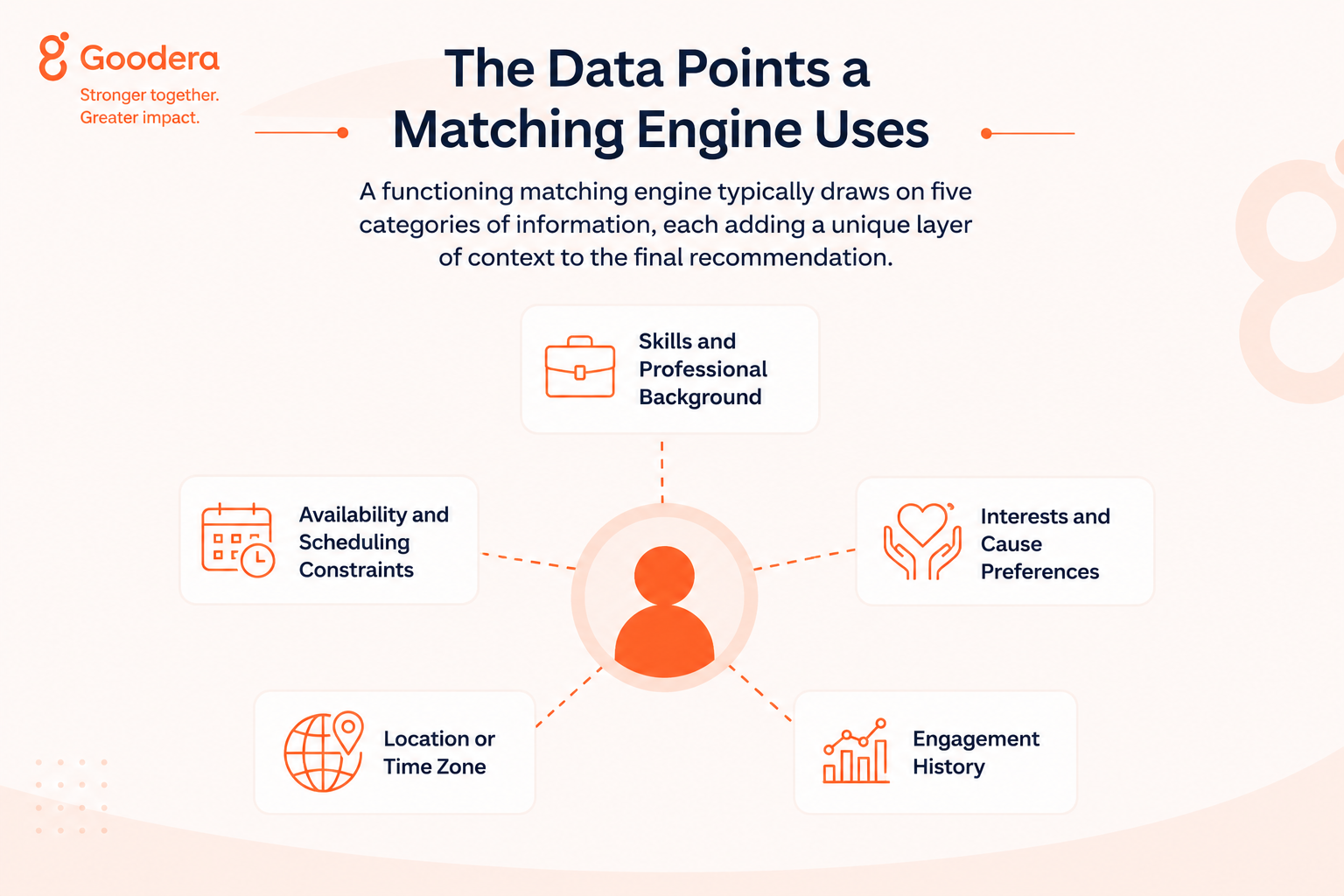
Señales de datos utilizadas por un motor de emparejamiento
- Habilidades y antecedentes profesionales
Esta suele ser la entrada con mayor peso, ya que abarca la función laboral, la experiencia en el sector y las competencias específicas que un empleado aporta. Es lo más importante para el emparejamiento basado en habilidades y pro bono, donde el proyecto de una organización sin fines de lucro depende de una verdadera experiencia en la materia.
- Intereses declarados y causas preferidas
Los empleados suelen elegir las causas que más les importan, ya sea la educación, el medio ambiente o la movilidad económica. Esta información ayuda al sistema a priorizar las oportunidades en las que es probable que el empleado se sienta realmente comprometido, y no solo técnicamente cualificado.
- Disponibilidad y restricciones de horario
Una recomendación solo es útil si el empleado puede asistir, por lo que el sistema necesita conocer el horario laboral, las fechas bloqueadas y los límites de tiempo. Sin esta información, incluso una coincidencia perfecta en cuanto a habilidades puede fracasar en la fase de programación.
- Ubicación o zona horaria
Para las oportunidades presenciales, esto limita los resultados a un radio de desplazamiento razonable y, para el trabajo virtual, confirma que el empleado y la organización sin ánimo de lucro pueden coordinar sesiones en directo de forma realista. Los programas globales dependen en gran medida de este dato para evitar recomendar una gran oportunidad que, logísticamente, es imposible de realizar.
- Historial de participación
Algunos sistemas también tienen en cuenta cómo ha respondido una persona a oportunidades anteriores, es decir, en qué se ha inscrito, qué ha completado o qué ha descartado. Esto ayuda al modelo a entender qué ha significado "un buen encaje" para ese individuo en el pasado, en lugar de depender únicamente de sus preferencias declaradas.
En qué se diferencia esto de una búsqueda sencilla por palabras clave o filtros
Una búsqueda básica por filtros pide al empleado que seleccione un área de interés o un rango de fechas y, a continuación, muestra todas las oportunidades que coinciden con esas etiquetas exactas. Por el contrario, la búsqueda basada en IA pondera varios factores simultáneamente y clasifica los resultados por relevancia, en lugar de limitarse a devolver todo lo que técnicamente cumple los requisitos.
La diferencia práctica es inmediata: un filtro puede devolver cuarenta opciones, mientras que un motor de búsqueda inteligente destaca las tres o cuatro con más probabilidades de resultar en una participación satisfactoria y completada.
¿Cómo decide el algoritmo de búsqueda quién recibe cada oportunidad?
En resumen, el algoritmo asigna una puntuación de relevancia a cada posible combinación y recomienda primero las opciones con mayor puntuación. Esa puntuación se basa en factores ponderados, lo que significa que algunos elementos, como una habilidad profesional necesaria para un proyecto pro bono, tienen más peso que un interés vago en "causas comunitarias". Entender esta lógica de puntuación es fundamental, ya que marca la diferencia entre un sistema que mejora realmente la calidad de las asignaciones y uno que simplemente automatiza una lista.
1. Puntuación de habilidades y competencias
Para el voluntariado general, la puntuación de habilidades puede ser bastante sencilla, relacionando categorías amplias como la comunicación o la organización. Para el trabajo basado en habilidades y el voluntariado pro bono, la puntuación debe ser mucho más precisa.
2. Señales de interés, disponibilidad y ubicación
Las habilidades por sí solas no garantizan un buen encaje. Un empleado con el perfil financiero perfecto no asistirá a un proyecto que entre en conflicto con su horario laboral o que se encuentre en una zona horaria en la que no pueda participar razonablemente. Los sistemas de búsqueda eficaces ponderan el interés y la logística junto con la competencia, ya que un empleado técnicamente cualificado que no puede asistir al programa representa una recomendación desperdiciada en lugar de una exitosa.
3. Aprender de las coincidencias pasadas: el ciclo de retroalimentación
La parte más valiosa de un sistema de búsqueda por IA es lo que ocurre después de la primera recomendación. Cuando un empleado completa un proyecto, ofrece su opinión o solicita un tipo de función diferente, esos datos se incorporan al modelo y perfeccionan las recomendaciones futuras para esa persona y para otras con perfiles similares. Con el tiempo, este ciclo de retroalimentación es lo que separa a un sistema genuinamente adaptativo de una lista estática.
Por qué los programas de voluntariado corporativo están adoptando la búsqueda por IA ahora
La respuesta honesta es que la asignación manual simplemente no puede seguir el ritmo de la escala a la que operan la mayoría de los programas corporativos actuales. Las expectativas de los empleados también han cambiado, ya que cada vez más personas asumen que cualquier plataforma digital que utilicen, ya sea para comprar, ver contenido en streaming o usar herramientas internas, filtrará la información para mostrarles solo lo que es realmente relevante para ellos.
La investigación de Goodera sobre la IA en el lugar de trabajo señala que cuando las plataformas de voluntariado permanecen estáticas y genéricas, la participación requiere un mayor esfuerzo cognitivo por parte del empleado, lo que reduce silenciosamente la asistencia.
El problema de la escala: conectar a miles de empleados con miles de organizaciones sin fines de lucro
Una empresa que ejecuta un programa en veinte o más países no está resolviendo un único problema de asignación; está resolviendo docenas de problemas más pequeños simultáneamente, cada uno con su propio idioma, panorama de organizaciones sin fines de lucro y contexto cultural.
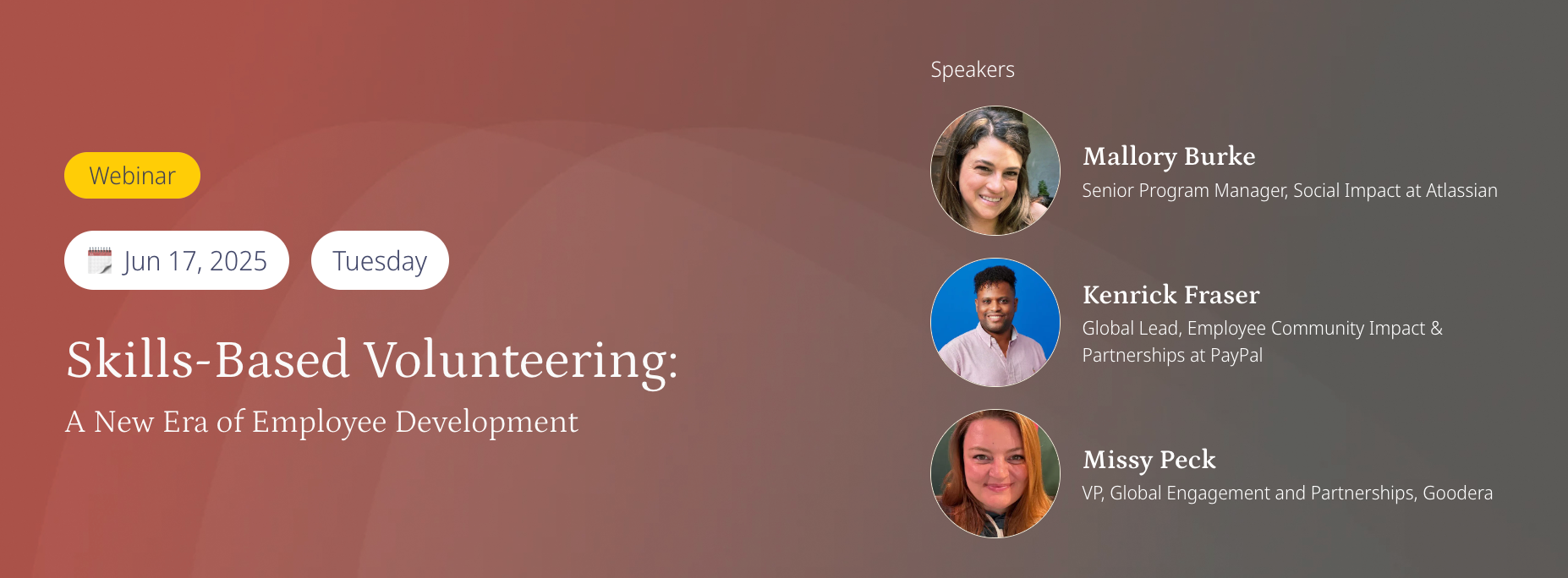
En el seminario web de Goodera, "Voluntariado basado en habilidades: una nueva era para el desarrollo de los empleados", Kenrick Fraser, líder global de impacto comunitario y asociaciones de empleados en PayPal, explicó cómo la empresa coordina las iniciativas de organizaciones sin fines de lucro en 23 países. PayPal centraliza el alcance de estos proyectos mientras confía en embajadores voluntarios locales para su ejecución sobre el terreno.
La asignación mediante IA se convierte en el elemento conector que permite que el alcance centralizado y la ejecución local funcionen en conjunto sin necesidad de que un gestor de programa revise personalmente cada emparejamiento.
La carga administrativa que la IA elimina sin esfuerzo
Anteriormente, los coordinadores pasaban horas cruzando hojas de cálculo, enviando seguimientos de elegibilidad y cerrando manualmente los proyectos una vez que se confirmaba suficiente interés. Automatizar esa capa de trabajo no elimina el rol del coordinador, pero libera tiempo valioso para tareas de mayor impacto, como fortalecer las relaciones con las organizaciones sin fines de lucro y definir la estrategia del programa. La guía de Goodera sobre este cambio es clara: el objetivo es automatizar de forma selectiva, utilizando la IA para reducir la fricción sin erosionar la confianza que hace que el voluntariado sea significativo desde el principio.
Frequently Asked Questions
1. ¿La asignación de voluntarios impulsada por IA reemplaza a nuestro coordinador de voluntarios?
No. Elimina el trabajo repetitivo de clasificación y programación, pero la construcción de relaciones con socios sin fines de lucro, la definición de proyectos de alta importancia y la resolución de casos excepcionales siguen requiriendo el criterio de una persona.
2. ¿Qué tan precisa es la asignación mediante IA en comparación con la asignación manual de nuestro equipo de RSE?
La precisión depende en gran medida de la calidad de los datos, no solo de la tecnología. Un sistema con datos detallados y actualizados sobre habilidades e intereses superará constantemente a la asignación manual a gran escala, mientras que un sistema basado en perfiles escasos o desactualizados tendrá un rendimiento inferior incluso al de un coordinador experimentado.
3. ¿Qué sucede con las habilidades y los datos personales de nuestros empleados una vez que ingresan al sistema de asignación?
Las plataformas confiables limitan la recopilación a campos que apoyan directamente la asignación, como habilidades, intereses, disponibilidad y ubicación, y deben otorgar a su organización un control claro sobre la retención y eliminación de datos. Solicite a cualquier proveedor un inventario completo de los campos de datos antes de firmar un contrato.
4. ¿Puede la asignación mediante IA gestionar el voluntariado basado en habilidades y pro bono, o es solo para jornadas de voluntariado general?
Puede gestionar ambos, aunque la asignación para voluntariado basado en habilidades y pro bono requiere datos más granulares y, a menudo, una revisión humana dado el mayor nivel de importancia.
5. ¿Cómo sabemos si el algoritmo de asignación por IA tiene sesgos?
Pregunte al proveedor si realiza auditorías periódicas de los resultados de las asignaciones en función de los datos demográficos de los empleados y cómo responden cuando los patrones parecen desiguales. El Marco de Gestión de Riesgos de IA del NIST es un punto de referencia útil para los tipos de preguntas sobre equidad que vale la pena plantear.
6. ¿Cuánto tiempo tarda un sistema de asignación por IA en empezar a producir buenas coincidencias?
La mayoría de los sistemas mejoran significativamente en los primeros meses a medida que el ciclo de retroalimentación acumula datos de resultados reales. Los programas que se lanzan con datos de perfil iniciales escasos deben esperar un breve período de adaptación antes de que las recomendaciones alcancen su máxima calidad.
7. ¿Qué preguntas debemos hacer a un proveedor para confirmar que utiliza IA real y no solo filtros?
Pregunte qué puntos de datos específicos alimentan la puntuación de coincidencia, cómo se pondera dicha puntuación y con qué frecuencia se reentrena el modelo. Solicite puntos de referencia de tasas de cobertura y finalización de clientes actuales en lugar de aceptar afirmaciones generales sobre el compromiso.
8. ¿Puede la coincidencia mediante IA funcionar en varios países, idiomas y zonas horarias?
Sí, siempre que la plataforma se haya diseñado para operar a nivel global y no sea una adaptación de un diseño para un mercado único. La compatibilidad con zonas horarias y los matices lingüísticos deben integrarse directamente en la puntuación de coincidencia, no solo la relevancia de las habilidades.
9. ¿Qué hacemos si un empleado no está satisfecho con la coincidencia sugerida por la IA?
Una plataforma creíble facilita marcar una coincidencia errónea y solicitar otra oportunidad sin fricciones. Esa retroalimentación debe incorporarse de forma visible en las recomendaciones futuras en lugar de perderse en una cola de soporte.
10. ¿Se utilizan nuestros datos de empleados para entrenar los modelos de IA del proveedor?
Esto varía según el proveedor y debe abordarse explícitamente en su contrato en lugar de darlo por sentado. Pregunte directamente si los datos de su organización entrenan un modelo compartido entre la base de clientes del proveedor o si permanecen aislados en su propio programa.