Status der KI-Kompetenz: Einblicke in die Tiefe der KI-Implementierung im Bereich Social Impact

Kennen Sie dieses Gefühl: Es gibt viel zu tun, zu wenige helfende Hände und die leise Sorge, dass die Welt sich schneller dreht, als man Schritt halten kann? Künstliche Intelligenz soll genau dabei helfen. Warum also scheint sie für die meisten zweckorientierten Teams immer noch in unerreichbarer Ferne zu liegen?
Um den tatsächlichen Stand der KI-Kompetenz im sozialen Sektor zu verstehen, hat Goodera mehr als 1.000 gemeinnützige Organisationen aus den Bereichen Bildung, Gesundheit, Umwelt, Gemeindeentwicklung, Gleichstellung der Geschlechter und humanitäre Hilfe in über 30 Ländern befragt. Das Bild, das sich dabei ergab, ist ehrlich und ein wenig überraschend. Der Sektor ist neugierig, hoffnungsvoll und bereit. Er ist nur noch nicht ausreichend ausgestattet. Hier ist, was die Daten uns sagen.
Was bedeutet KI-Kompetenz im sozialen Sektor?
KI-Kompetenz im sozialen Sektor ist die Fähigkeit von gemeinnützigen Teams und den von ihnen unterstützten Gemeinschaften, KI-Tools sicher, selbstbewusst und mit echtem Mehrwert für ihre Mission einzusetzen. Man muss nicht programmieren können, um von KI zu profitieren. Es geht vielmehr darum zu wissen, was KI leisten kann, wo sie hilft und wie man sie verantwortungsvoll einsetzt. Stellen Sie sich den Unterschied so vor: Es ist ein Unterschied, ob man von KI gehört hat oder sie tatsächlich für sich arbeiten lässt.
Dieser Unterschied ist wichtig, denn die meisten gemeinnützigen Organisationen befinden sich genau im ersten Lager. Sie wissen, dass es KI gibt. Sie sind sich jedoch bei weitem nicht sicher, wie sie diese sinnvoll nutzen können.
Wo stehen gemeinnützige Organisationen aktuell beim Thema KI?
Die kurze Antwort: hohe Erwartungen, geringe Nutzung. Das Interesse an KI ist nahezu universell, aber nur sehr wenige Organisationen haben den Schritt von der Neugier zur konsequenten Anwendung vollzogen. Die Umfrage zeigt einen Sektor an einem Wendepunkt, der bereit zum Handeln ist, aber noch auf den entscheidenden Anstoß wartet.
Hier ist der Überblick in Zahlen:
- 71% der gemeinnützigen Organisationen möchten KI nutzen, um ihre Abläufe effizienter zu gestalten
- Nur 25% nutzen heute aktiv KI-Tools
- 54% befinden sich in einer Erkundungsphase, testen Tools oder planen deren Einsatz
- 19 % sind interessiert, haben aber noch nicht begonnen
- Nur 2 % berichten von absolut keinem Interesse
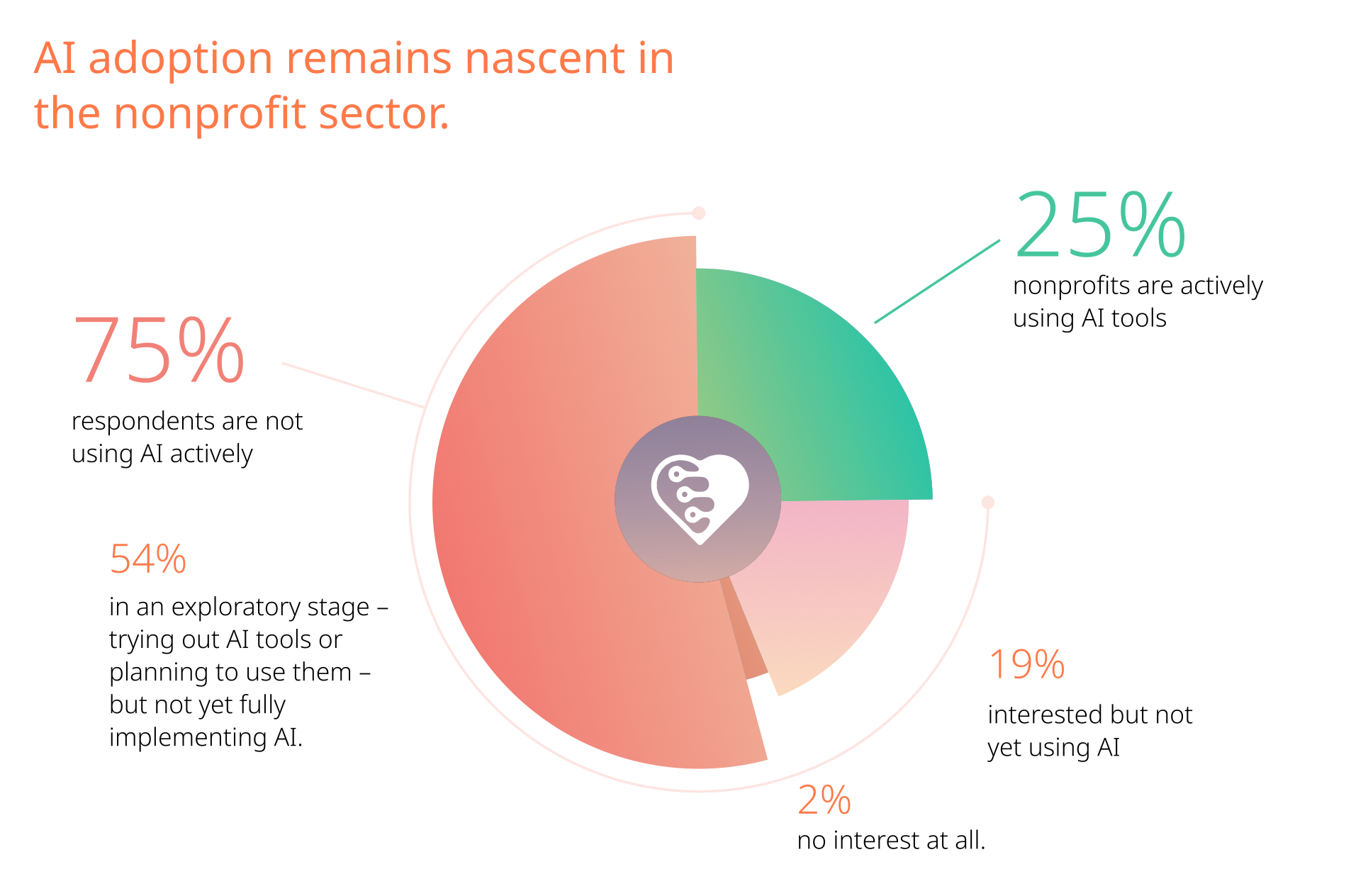
Bildquelle: Der Stand der KI-Kompetenz im sozialen Sektor 2025
Lesen Sie diese letzte Statistik noch einmal. So gut wie jede befragte Organisation nutzt, testet oder interessiert sich zumindest für KI. Offener Widerstand ist selten. Dieser Sektor zögert nicht. Er steht vielmehr in der Tür und wartet darauf, dass ihm jemand den Weg weist.
Diese Lücke zwischen Wollen und Handeln ist das zentrale Thema der Daten und zeigt sich auch in allen anderen Bereichen.
Wofür möchten gemeinnützige Organisationen KI am liebsten einsetzen?
Auf die Frage, wo KI im Alltag den größten Unterschied machen könnte, nannten gemeinnützige Organisationen fünf praktische Einsatzgebiete. Keines davon ist futuristisch. Es sind die unscheinbaren Aufgaben, die Woche für Woche die Zeit kleiner Teams auffressen.
1. Kommunikation und Storytelling
Dies war der klare Favorit, genannt von etwa 80 % der Befragten. Die meisten gemeinnützigen Organisationen haben kein Kommunikationsteam. Das Schreiben von Newslettern, Social-Media-Beiträgen, Förderanträgen und Erfolgsgeschichten bleibt also an demjenigen hängen, der gerade eine freie Stunde hat.
KI kann beim Entwurf all dieser Texte helfen. Wie ein Befragter es ausdrückte: KI könnte ihnen helfen, „wie eine größere Organisation zu wirken“.
Besseres Storytelling hilft dabei, die eigene Wirkung hervorzuheben, die Stimmung für die unterstützten Anliegen zu verbessern und Türen für eine angemessene Mittelbeschaffung zu öffnen – ein kluger Ausgangspunkt also.
2. Wirkungsmessung und Berichterstattung
Fast die Hälfte der Befragten nannte die Berichterstattung als einen der wichtigsten Anwendungsbereiche. Spenderberichte und Evaluierungsunterlagen können wochenlang die Zeit der Mitarbeiter in Anspruch nehmen. KI kann die Datenvisualisierung, das Verfassen von Berichten und die Ergebnisanalyse beschleunigen und so eine gefürchtete Pflichtaufgabe in einen strategischen Vorteil verwandeln.
Ein Befragter brachte das Problem auf den Punkt: „Die Berichterstattung dauert Wochen. KI könnte das drastisch reduzieren.“
3. Fundraising und Spenderbindung
Teams sehen großes Potenzial darin, KI für die Gewinnung und Bindung von Spendern einzusetzen: intelligentere Segmentierung, personalisierte Spendenaufrufe, Prospect Research und automatisierte Dankesschreiben. Für ein zweiköpfiges Fundraising-Team kann eine solche Unterstützung eine enorme Hebelwirkung entfalten.
4. Datenmanagement und -analyse
Viele gemeinnützige Organisationen sitzen auf Datenbergen, für deren Nutzung ihnen die Zeit fehlt. KI kann Datenbanken bereinigen, Muster aus Umfrageergebnissen ableiten und Erkenntnisse zutage fördern, die sonst verborgen blieben. Ein Befragter brachte die Frustration auf den Punkt: „Wir haben die Daten, aber keine Zeit, sie zu analysieren.“
Laden Sie den Bericht herunter, um die vollständige Analyse zu lesen:
5. Schulungs- und Bildungsinhalte
Ob Onboarding für Mitarbeiter, Leitfäden für Freiwillige oder Lernmaterialien für die Community – die Erstellung von Inhalten ist zeit- und kostenintensiv. KI kann erste Entwürfe für Schulungshandbücher oder Lehrpläne erstellen, die das Team anschließend verfeinert. So können auch kleine Teams mehr Menschen erreichen, ohne dass die Kosten explodieren.
Der rote Faden: Es geht nicht um utopische Projekte. Es geht um alltägliche Herausforderungen, bei denen KI als praktischer Teamkollege und nicht als bloßes Experiment willkommen ist.
Warum ist die KI-Nutzung in gemeinnützigen Organisationen noch so gering?
Wenn das Interesse so groß ist, warum nutzt dann nur ein Viertel der Organisationen tatsächlich KI? Die ehrliche Antwort lautet: Die Begeisterung ist noch nicht auf die nötige Unterstützung gestoßen. Die Umfrage hat fünf klare Lücken aufgezeigt, die zwischen Absicht und Umsetzung stehen.
- Die Lücke zwischen Bewusstsein und Handeln. Die meisten wissen, dass KI helfen kann, aber aus Wissen ist noch kein Handeln geworden. Viele Teams stecken in einem dauerhaften „Erkundungsmodus“ fest.
- Die Implementierungslücke. Unklare Startpunkte und mangelnde praktische Erfahrung führen dazu, dass Organisationen nicht wissen, wie sie den ersten Schritt machen sollen. Fast die Hälfte gibt an, nicht über die richtigen internen Kompetenzen zu verfügen.
- Die Lücke bei der digitalen Kompetenz in der Community. Die meisten gemeinnützigen Organisationen möchten die KI-Kompetenz der von ihnen betreuten Menschen fördern, aber weniger als ein Viertel führt tatsächlich entsprechende Programme durch.
- Die Lücke bei der Lernunterstützung. Einmalige Webinare reichen nicht aus. 86 % der gemeinnützigen Organisationen wünschen sich Schulungen, doch den meisten fehlt der Zugang zu angeleiteter, praktischer Unterstützung.
- Die Werkzeuglücke. Abgesehen von den Fähigkeiten fehlt vielen schlicht der Zugang zu den fortgeschritteneren Tools, die nötig sind, um über die einfache Inhaltserstellung hinauszugehen.
Laden Sie den Bericht herunter, um auf die vollständige Analyse zuzugreifen:
Dieses Muster ist nicht auf die Umfrage von Goodera beschränkt. Eine separate Studie von Nonprofit Tech for Good ergab, dass 60 % der gemeinnützigen Organisationen angeben, dass ihnen das interne Fachwissen fehlt, um KI-Tools überhaupt bewerten zu können, und nur 4 % ein Budget für KI-Schulungen bereitgestellt haben.
Und laut der Untersuchung von TechSoup und Tapp Network verfügten nur 24 % der Organisationen über eine formelle KI-Strategie, obwohl die meisten die Technologie aktiv erkunden. Das Hindernis ist selten das Interesse. Es ist fast immer die fehlende Anleitung, das fehlende Know-how und die fehlende Zeit.
Wird KI-Kompetenz zu einer Frage der Chancengleichheit?
Ja, und gemeinnützige Organisationen sehen das kommen. Die zukunftsweisendste Erkenntnis der Umfrage ist, dass Organisationen KI nicht nur für sich selbst wollen. Sie wollen sie für ihre Gemeinschaften, weil sie sich Sorgen darüber machen, wer auf der Strecke bleibt, wenn sie nicht handeln.
- 76 % der gemeinnützigen Organisationen gaben an, dass die von ihnen betreuten Gemeinschaften sich Programme zur KI-Kompetenz wünschen.
- 87 % sehen einen klaren Mehrwert darin, KI-Kompetenz auf diese Gemeinschaften auszuweiten.
Die Logik ist einfach. Wenn KI-Fähigkeiten künftig darüber entscheiden, wer eingestellt wird, wer vorankommt und wer gehört wird, dann riskiert man durch den Ausschluss gefährdeter Gruppen von der KI-Debatte, dass sich bestehende Lücken weiter vergrößern. Gemeinnützige Organisationen wollen dem lieber zuvorkommen, als die Folgen später ausbaden zu müssen.
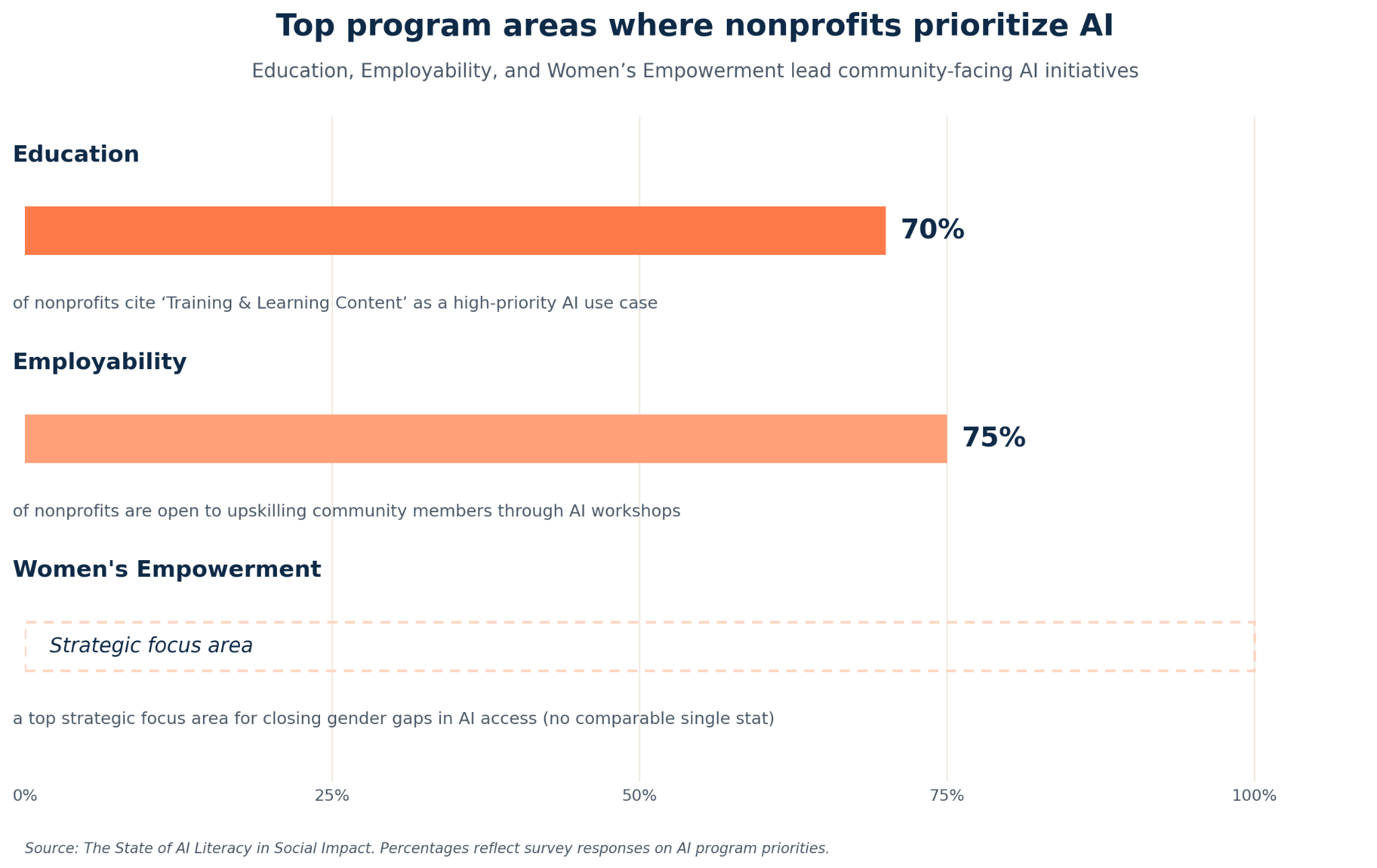
Drei Programmbereiche stachen als Vorreiter für den KI-Einsatz in der Gemeinschaft hervor.
1. Bildung
Fast 70 % der Befragten nannten Schulungs- und Lerninhalte als KI-Anwendungsbereich mit hoher Priorität. Organisationen möchten KI-gestützte Nachhilfe, Inhaltserstellung und personalisiertes Lernen in ihre Programme integrieren und betrachten KI-Kompetenz zunehmend als grundlegenden Bestandteil der Vorbereitung von Schülern auf die Zukunft.
Ein Befragter brachte es auf den Punkt: „Wenn unsere Schüler keine KI lernen, bereiten wir sie auf eine Welt vor, die nicht mehr existiert.“
2. Beschäftigungsfähigkeit
Gemeinnützige Organisationen für berufliche Bildung sehen in KI einen direkten Weg zu besseren Lebensgrundlagen. Mehr als drei Viertel sind offen dafür, ihre Community-Mitglieder durch KI-Workshops weiterzubilden und KI-Kompetenzen in Berufs- und Gründungsprogramme zu integrieren, damit Arbeitssuchende mit dem sich schnell wandelnden Markt Schritt halten können.
3. Stärkung von Frauen
Organisationen, die sich für Frauen und Mädchen einsetzen, planen den Einsatz von KI, um Lücken beim Zugang zu Technologie und Chancen zu schließen – durch Sensibilisierungsworkshops, maßgeschneiderte Lerninhalte und Tools, die dazu beitragen, die Stimmen von Frauen zu stärken. Für diese Teams wird KI-Kompetenz zunehmend zu einer Frage der Chancengleichheit bei wirtschaftlichen Möglichkeiten.
Welche Art von KI-Schulung wünschen sich gemeinnützige Organisationen wirklich?
Kein weiteres Webinar. Die Daten zeigen deutlich, dass sich gemeinnützige Organisationen praktisches, angeleitetes Lernen wünschen, idealerweise mit jemandem an ihrer Seite, der dies bereits erfolgreich umgesetzt hat. Passive Kurse und einmalige Vorträge schaffen kein echtes Vertrauen in die eigenen Fähigkeiten.
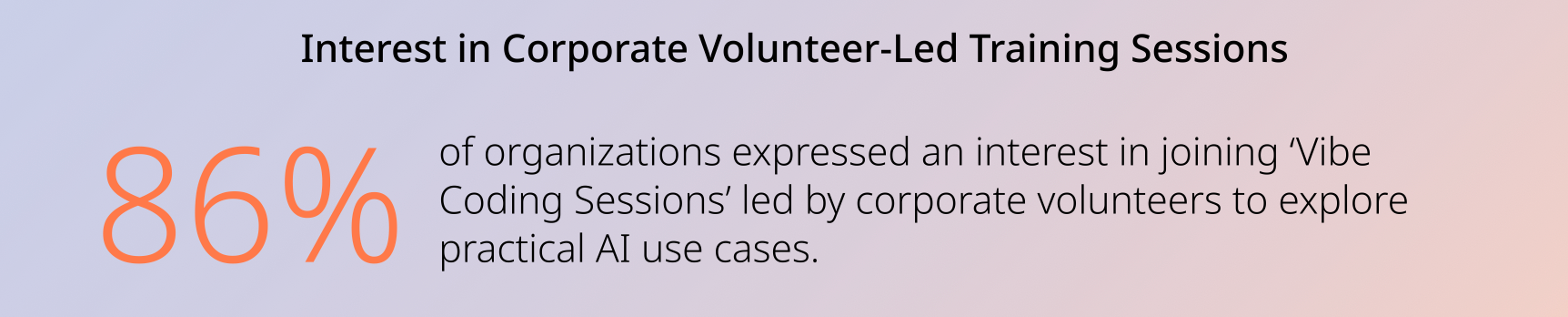
Hier kommen Unternehmensfreiwillige ins Spiel. 86 % der Organisationen gaben an, dass sie an „Vibe Coding Sessions“ teilnehmen würden, die von Unternehmensfreiwilligen geleitet werden, um gemeinsam konkrete KI-Anwendungsfälle zu erkunden. Das ist eine beeindruckende Nachfrage nach Peer-to-Peer-Unterstützung durch praktisches Lernen und weist auf eine offensichtliche Synergie hin: Unternehmen verfügen über Mitarbeiter mit genau den KI-Fähigkeiten, die gemeinnützigen Organisationen fehlen.
Goodera fungiert als verwalteter Freiwilligendienst genau an dieser Schnittstelle und verbindet qualifizierte Unternehmensfreiwillige mit gemeinnützigen Organisationen, die sich praktische Hilfe statt weiterer Präsentationen wünschen. Das Interesse ist bereits vorhanden. Was der Sektor jetzt braucht, ist ein strukturierter Rahmen.
LESEN SIE AUCH:

Wie kommen gemeinnützige Organisationen vom Interesse zur Umsetzung?
Die Umfrage schloss mit vier Prioritäten ab, die zusammen einen einfachen Leitfaden für jede gemeinnützige Organisation bilden, die bereit ist, vom Planen zum Handeln überzugehen. Wenn Sie sich fragen, wo Sie anfangen sollen, beginnen Sie hier.
- Wählen Sie praxisorientierte, angeleitete Schulungen statt Selbstlernkursen. Workshops, Mentoring und angewandte Praxis stärken das Vertrauen viel schneller als Videos, die man allein ansieht. Bringen Sie Ihr Team mit Leuten zusammen, die Fragen in Echtzeit beantworten können.
- Erweitern Sie die KI-Kompetenz über Ihr Personal hinaus. Binden Sie Jugendliche, Arbeitssuchende und Familien in den Lernprozess ein, damit die Vorteile die Gemeinschaft erreichen und nicht nur die Verwaltung.
- Fangen Sie klein an mit Anwendungen, die eine große Wirkung haben. Wählen Sie eine mühsame Aufgabe (Inhalte entwerfen, Daten bereinigen, Lernmaterialien erstellen, grundlegende Automatisierung) und beweisen Sie den Nutzen, bevor Sie skalieren. Ein kleiner Erfolg schafft die Grundlage für den nächsten.
- Bauen Sie langfristige Partnerschaften auf. Setzen Sie auf Universitäten, Unternehmensfreiwillige, Geldgeber und Technologieanbieter für Tools, Mentoring und kontinuierliche Weiterbildung. KI-Kompetenz ist ein Prozess, kein einmaliges Ereignis.
Organisationen, die diesen Weg einschlagen, vermeiden eine Falle, in die der restliche Sektor bereits tappt. In einer Benchmark-Studie 2026 mit 346 gemeinnützigen Organisationennutzten 92 % KI auf irgendeine Weise, doch nur 7 % berichteten von wesentlichen Verbesserungen – ein „Effizienz-Plateau“, verursacht durch vereinzelte, isolierte Anwendungen ohne ein gemeinsames System dahinter. Klein anzufangen ist gut. Klein anzufangen mit einem Plan ist das, was wirklich etwas bewegt.
Fazit
Der Stand der KI-Kompetenz im sozialen Sektor ist eine Geschichte der Bereitschaft, die derzeit durch das Fehlen eines Fahrplans ausgebremst wird. Gemeinnützige Organisationen glauben, dass KI ein Multiplikator für ihre Mission sein kann, und sie haben recht. Was ihnen fehlt, ist nicht die Motivation, sondern Unterstützung: angeleitete Schulungen, praktische erste Schritte und Partner, die bereit sind, gemeinsam mit ihnen zu lernen.
Die Lücke zwischen Interesse und Umsetzung ist real, aber überbrückbar. Mit praxisnahem Lernen, gemeinschaftsorientierter Bildung und sektorübergreifenden Partnerschaften können gemeinnützige Organisationen von „Wir wissen, dass KI helfen könnte“ zu „KI hilft uns genau jetzt“ gelangen.
Wie ein Befragter sagte, braucht der Sektor vor allem „einen sicheren Ort, um KI ohne Vorurteile zu verstehen“. Diese Räume zu schaffen, ist die Aufgabe, die vor uns allen liegt.
Frequently Asked Questions
1. Wie ist der aktuelle Stand der KI-Einführung in gemeinnützigen Organisationen?
Die Einführung steckt noch in den Kinderschuhen, aber das Interesse ist groß. Laut der Umfrage von Goodera nutzen nur etwa 25 % der gemeinnützigen Organisationen aktiv KI-Tools, während 71 % sie zur Effizienzsteigerung einsetzen möchten und fast alle zumindest erste Erkundungen anstellen. Der Sektor ist enthusiastisch und bereit, doch den meisten Teams fehlen die Fähigkeiten, die Anleitung und die Zeit, um KI konsequent zu implementieren.
2. Wofür nutzen gemeinnützige Organisationen KI am häufigsten?
Kommunikation und Storytelling stehen ganz oben auf der Liste und wurden von etwa 80 % der Befragten genannt. Weitere häufige Einsatzgebiete sind Wirkungsberichte, Fundraising und Spenderbindung, Datenanalyse sowie die Erstellung von Schulungs- oder Bildungsinhalten. Dies sind alltägliche Aufgaben, bei denen kleine Teams oft an ihre Grenzen stoßen.
3. Was ist das größte Hindernis für die KI-Einführung im sozialen Sektor?
Ein Mangel an praktischer Anleitung und internen Fähigkeiten, nicht ein Mangel an Interesse. Fast die Hälfte der gemeinnützigen Organisationen gibt an, nicht über die richtigen internen Kompetenzen zu verfügen, und die meisten wünschen sich praxisnahe Schulungen statt einmaliger Webinare. Finanzierung und der Zugang zu fortschrittlichen Tools folgen dicht dahinter.
4. Warum ist KI-Kompetenz für die Gemeinschaften wichtig, denen gemeinnützige Organisationen dienen?
Weil KI-Fähigkeiten zunehmend den Zugang zu Arbeitsplätzen, Bildung und Chancen bestimmen. 76 % der gemeinnützigen Organisationen geben an, dass ihre Zielgruppen sich KI-Kompetenzprogramme wünschen, und 87 % sehen einen Mehrwert darin, diese anzubieten – vor allem, um sicherzustellen, dass gefährdete Gruppen bei der technologischen Entwicklung nicht abgehängt werden.
5. Wie kann eine kleine gemeinnützige Organisation ohne großes Budget mit der Nutzung von KI beginnen?
Starten Sie mit einer wirkungsvollen, kostengünstigen Aufgabe, wie dem Entwerfen von Kommunikation oder dem Bereinigen von Daten, und nutzen Sie kostenlose oder günstige Tools. Holen Sie sich dann praktische Unterstützung, etwa durch Unternehmensfreiwillige, und bauen Sie auf einem kleinen, nachweisbaren Erfolg auf, anstatt zu versuchen, alles auf einmal zu verändern.
6. Wie können Unternehmen die KI-Kompetenz gemeinnütziger Organisationen unterstützen?
Unternehmen können KI-Schulungen finanzieren, geprüfte Tools mit Lizenzen spenden, Workshops für Mitarbeitende in NGOs sponsern und Skills-based Volunteering für die Implementierung anbieten. Da nur 25 % der gemeinnützigen Organisationen KI aktiv nutzen, schließt unternehmerische Unterstützung eine kritische Lücke. Die Verbindung technischer Freiwilliger mit Missions-Teams verwandelt Neugier in nutzbare Arbeitsabläufe für Fundraising, Betrieb und Begünstigtendienste.
7. Was sind die wichtigsten ethischen Risiken von KI im sozialen Sektor?
Zu den zentralen Risiken zählen verzerrtes Matching von Freiwilligen oder Begünstigten, Datenschutzverletzungen sensibler Community-Daten, Überautomatisierung von Fürsorgearbeit und Impact-Washing, wenn KI-Ergebnisse ungeprüft geteilt werden. Da NGOs vulnerable Gruppen betreuen, wiegen Fehler schwerer als in kommerziellen Kontexten. Ethische Nutzung erfordert transparente Datenpraxis, Offenlegung von Modellgrenzen und klare Grenzen dort, wo Automatisierung unangebracht ist.
8. Was bedeutet KI-Kompetenz im gemeinnützigen Kontext?
KI-Kompetenz ist die Fähigkeit von NGO-Teams und der betreuten Gemeinschaften, KI-Werkzeuge sicher, souverän und mit Missionsnutzen zu verstehen, zu bewerten und einzusetzen. Sie geht über das bloße Wissen um KI hinaus und umfasst Prompt-Design, Ergebnisprüfung, ethisches Urteilsvermögen und Bewusstsein für Datenrisiken. Kompetente Teams entscheiden fundiert, wann KI hilft und wann menschliche Expertise führen muss.
9. Wie sollten NGOs KI-Tools steuern, um Begünstigte zu schützen?
Wirksame Governance verbindet Human-in-the-Loop-Prüfung von KI-Ausgaben, schriftliche Datenvereinbarungen mit Anbietern, Offenlegung von Modellgrenzen sowie regelmäßige Bias-Audits. Sensible Begünstigtendaten dürfen nie ohne Einwilligung und Anonymisierung in öffentliche KI-Tools eingegeben werden. Eine benannte verantwortliche Person, auch in kleinen Teams, stellt sicher, dass Entscheidungen zur Automatisierung dokumentiert und nicht spontan getroffen werden.
10. Warum steckt die KI-Nutzung in NGOs noch in der Erkundungsphase?
Die Umfrage zeigt, dass 54 % der NGOs KI erkunden und 19 % interessiert sind, aber noch nicht begonnen haben, vor allem wegen knapper Budgets, unklarer Anwendungsfälle und fehlender technischer Fachkräfte. Der Sektor ist neugierig und hoffnungsvoll, aber noch nicht ausgerüstet. Nachhaltige Förderung, Peer-Learning-Netzwerke und missionsspezifische Anbieterpartnerschaften sind nötig, um von der Erkundung zur täglichen Praxis zu gelangen.