World Day of Social Justice 2027: A Practical Guide for Workplaces and Teams

World Day of Social Justice 2026 was observed on February 20, the date the United Nations sets aside every year to promote fairness, decent work, and inclusion for everyone. The 2026 theme was "Renewed Commitment to Social Development and Social Justice," which calls on governments and their partners to turn commitments into measurable outcomes.
For companies, the day is a chance to act through inclusive workplace practices, skills-based volunteering, and partnerships with local nonprofits. The next observance falls on Saturday, February 20, 2027, so the best time to plan is now.
Big global problems can make a single company's efforts feel small. The International Labour Organization (ILO) estimates that the global jobs gap, meaning people who want paid work but cannot find it, will reach 408 million in 2026. Companies do have a part to play, and the most direct way to start is through their own employees.
Yet Goodera's Volunteering Quotient (VQ) Report 2026 found that a median of only 25.6% of employees take part in volunteering across 240 companies. That leaves roughly three in four colleagues who never get involved. This guide explains what the World Day of Social Justice means, what the 2026 theme called for, and how your team can turn the day into action.
What Is the World Day of Social Justice?
The World Day of Social Justice is a United Nations observance held every February 20 to promote fairness, equal opportunity, and inclusion. The UN General Assembly declared the day on 26 November 2007. It rests on three linked pillars of social development: ending poverty, full and productive employment with decent work for all, and social inclusion. The three are connected because progress on one depends on the others.
A person cannot escape poverty without a stable job, and a job does not lift someone out of poverty if it pays too little or shuts out people because of their gender, disability, or background. Each year, the UN uses the day to report on how far countries have come on these three fronts and where the gaps remain. Governments hold official events, the ILO and other UN agencies publish new data, and nonprofits and companies run their own activities. For workplaces, the day is a yearly checkpoint to ask whether pay, hiring, and community partnerships are moving in the same direction.
What Does Social Justice Mean?
Social justice means everyone gets a fair chance at education, work, healthcare, and a dignified life, whatever their background. People start from different places, so fairness sometimes means offering different levels of support. That is the difference between equality and equity, and it is the idea most people find hardest to explain.
Equality gives everyone the same resources, while equity gives people what they need to reach a fair outcome. In daily life, this shows up in things like equal pay, accessible schools, safe workplaces, and access to healthcare.
History and Origin of Social Justice Day
The UN General Assembly declared the day on 26 November 2007 to support efforts to tackle poverty, exclusion, and unemployment. It builds on the Declaration on Social Justice for a Fair Globalization, which the International Labour Organization (ILO) adopted unanimously on 10 June 2008.
The ILO is the UN agency that sets international standards for work, bringing governments, employers, and workers together to shape fair labour policies. Its declaration placed decent work at the center of that mission. It also carries forward the commitments countries made at the 1995 World Summit for Social Development in Copenhagen.
Together, these decisions explain why the day focuses on eradicating poverty, achieving full employment and decent work, and promoting social inclusion.
Who Is This Day For?
The day is for everyone, because no single group can close these gaps alone. The UN calls for collaboration among governments, international organizations, social partners, and civil society. Governments and UN agencies hold formal events and set policy on jobs, social protection, and inclusion, while employers, schools, and community groups add their own.
Individual employees can take part too, by asking what their workplace is doing and by offering their time and skills. For a company, the day works best as a prompt to look at its own people, policies, and partnerships.
What Was the World Day of Social Justice Theme in 2026?
The UN's theme for 2026 was "Renewed Commitment to Social Development and Social Justice." In plain terms, it asked the world to stop announcing promises and start showing results. It came right after the Second World Summit for Social Development and the Doha Political Declaration, where countries recommitted to fairer societies, and it put the focus on putting those pledges to work. According to the UN's observance page, the priorities included:
- Decent jobs and living wages through stronger labour market institutions
- Universal social protection for people at every stage of life
- Gender equality and better opportunities for young people
- Fair transitions to digital and green economies
These goals show up in everyday questions, like whether a parent can earn enough to cover rent, whether a young graduate can find a first job, and whether a family has a safety net when life gets hard.
The numbers show why the theme matters. The ILO's Employment and Social Trends 2026 report, published in January 2026, projects global unemployment at 4.9%, which sounds steady. The same report warns that this should not be read as a return to healthy labour markets, because the wider jobs gap remains very large. A calm headline number can hide a lot of people who are still waiting for a fair chance at work.
That is why the word "results" in the theme matters to us. Companies, like governments, can say the right things. What counts is whether policies, programs, and partnerships change something for real people, and that is what the rest of this guide helps your team do.
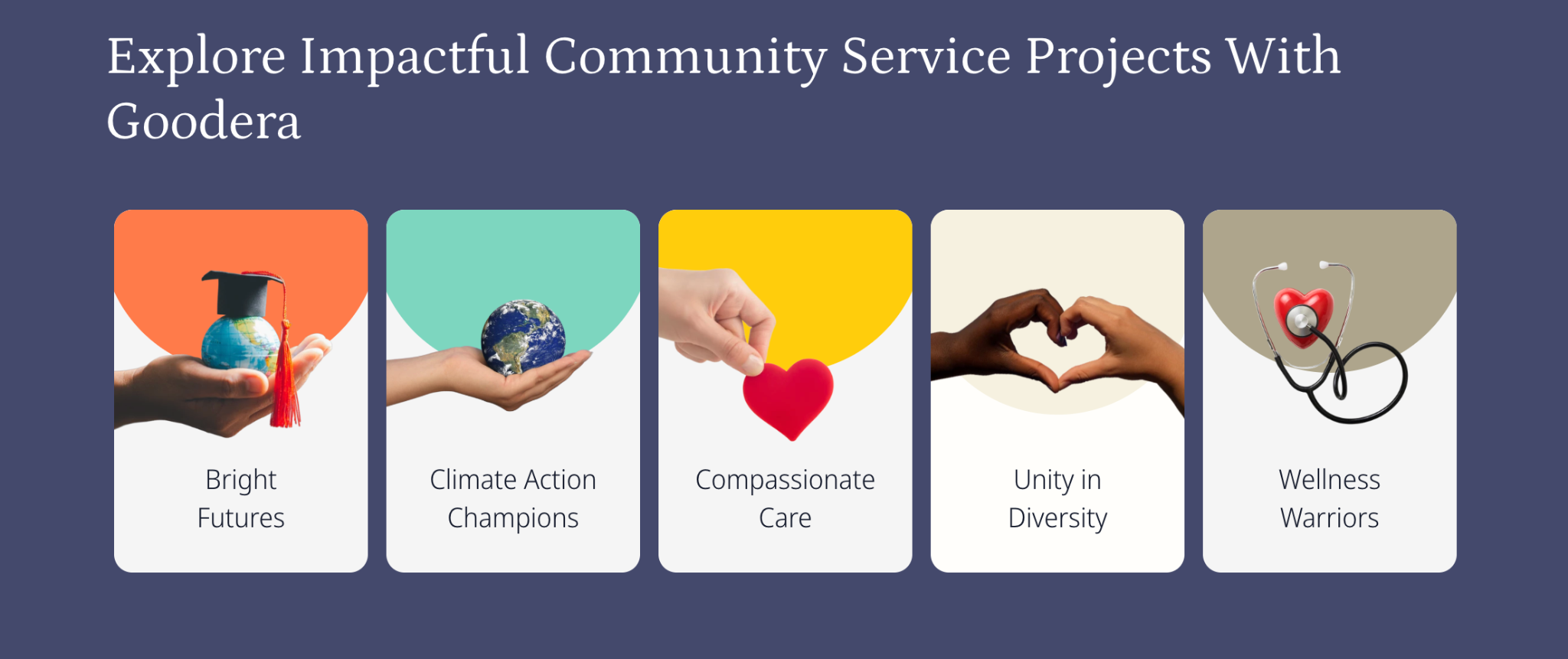
Goodera can help you ideate and execute your entire volunteering program. You can support key causes such as education, climate action, and compassionate care for communities, while customizing volunteering opportunities around the causes and values that align with your company’s goals.
Plan Your Social Justice Day Volunteering Campaign
A good Social Justice Day campaign starts with what employees care about, adds a project that uses their skills, and runs on a plan that lasts longer than one afternoon. Six steps cover the basics, and none needs a large budget. The principle behind all six steps is simple: involve employees and community partners from the start, so the project meets a real need.
1. Ask Employees What Matters to Them
Run a short cause preference survey and invite your employee resource groups to a listening session. Then repeat the survey every year, because employee priorities shift. In Goodera's VQ Report 2026, child welfare and education grew from 32% to 43% of all volunteering events in a single year, and community welfare rose from 20% to 24%. Let the latest answers shape which projects you offer, so every group of employees finds a cause that speaks to them.
2. Offer a Skills-Based Project
Your people have expertise that nonprofits struggle to buy. In Goodera's survey of 1,000+ nonprofits, 71% said they want to use AI to work more efficiently, and 76% see value in AI literacy for their communities. Only 25% are actively using AI tools today. An analyst or engineer who spends a day closing that gap gives a nonprofit something a one-time donation cannot.
Check out the detailed survey on the state of AI literacy in nonprofit organizations here:
3. Pair Virtual Options With In-Person Service
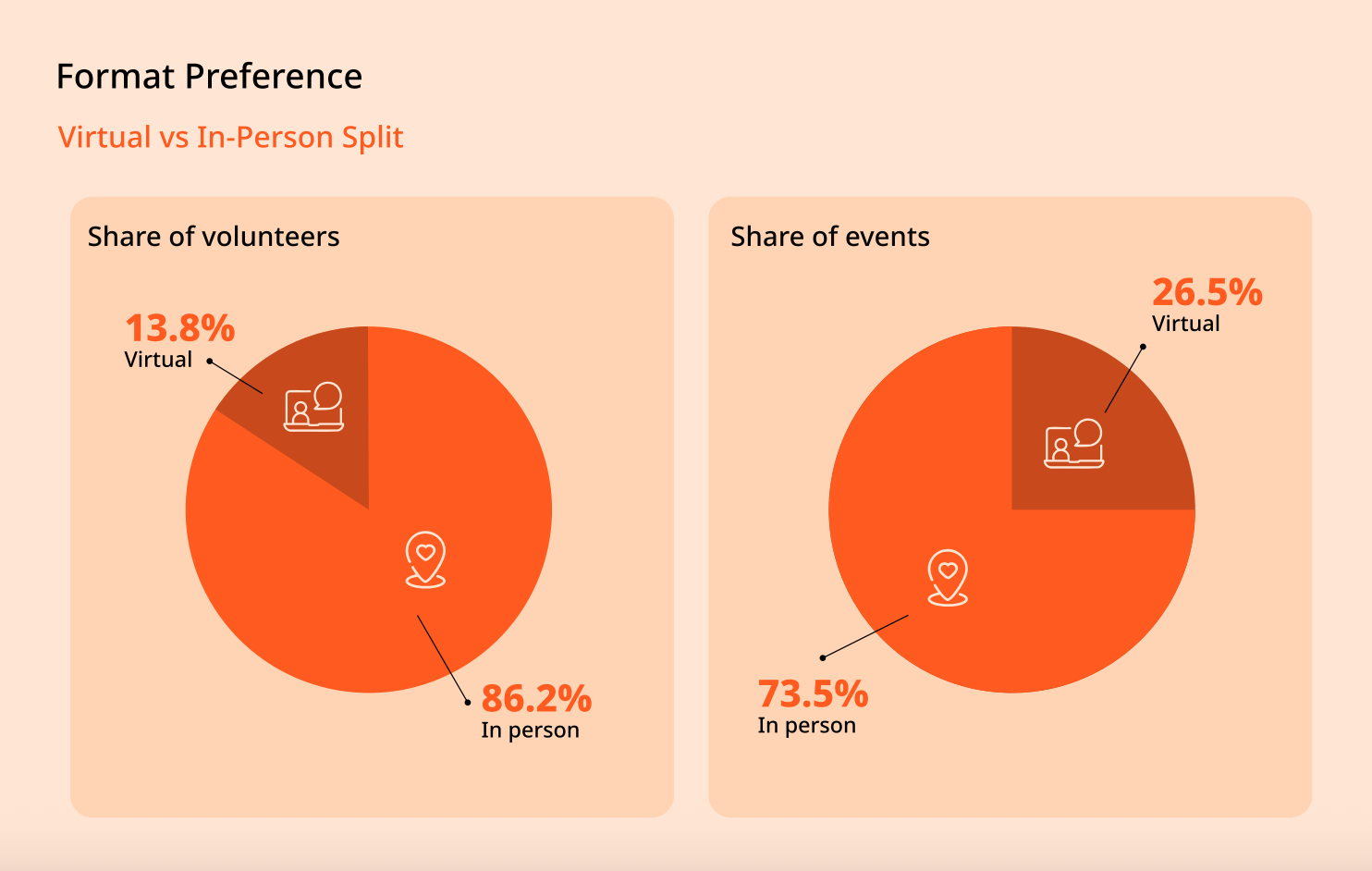
When both formats are on offer, 86.2% of volunteers chose in-person in 2026, even though virtual formats made up 26.5% of scheduled events. Use in-person projects where teams share a city and keep interactive virtual sessions, such as mentoring, for remote colleagues.
Need help with in-office and virtual volunteering ideas for your team? Get in touch with us, and we will plan the entire volunteering experience for you.
4. Review Your Own Policies
Before you ask employees to volunteer for social justice, look at how your own workplace treats them. Review whether pay is fair, whether contract terms are clear, and whether employees can take paid time off to volunteer.
That last point makes a real difference. The VQ 2026 report found that 65% of companies now have a defined volunteer time off (VTO) policy, and those companies see 1.4x higher participation. Our VTO policy guide is a good place to start.
Our VTO policy guide is a good place to start.
5. Start With One Event and Scale to a Year-Round Campaign
Begin with a single event, such as a service day or a mentoring session, in the week before the observance. February 20, 2027 falls on a Saturday, so the week of February 15 is a practical window. Once that event runs well, build it into a calendar. Annual campaigns deliver 2.6x higher participation than always-on programs.
Goodera's campaign calendar lists 15+ major campaigns, and the next section maps them to the areas Social Justice Day supports.
6. Measure What Changed
Hours logged show reach, and outcomes show impact. Add three questions to your post-event survey:
- Did this experience connect you to the company's values?
- Did you use or build a skill?
- Are you more likely to recommend us as an employer?
Then track how many volunteers come back within 12 months, which the VQ report calls one of the strongest signs of program health.
Team Volunteering Ideas for Social Justice Day
Social Justice Day offers five key causes to support: poverty eradication, decent work and full employment, gender equality, social inclusion and protection, and human rights. These line up with what employees already ask for. In Goodera's VQ Report 2026, child welfare and education grew from 32% to 43% of all volunteering events in a single year, which sits under social inclusion and protection, and community welfare rose from 20% to 24%, which connects to poverty eradication.
Career readiness and mentoring requests map to decent work, and the causes employee resource groups raise most often fall under gender equality and human rights. When your own survey comes back, you will likely see the same pattern. The effort pays off in more than goodwill.
A 2023 global study conducted for Ares Management by Edge Research found that 79% of employees who volunteer through employer-sponsored programs are satisfied with their jobs, compared with 55% of those who do not. Here is how each cause can become a team volunteering activity.
1. Poverty Eradication
Poverty eradication means supporting initiatives and policies that lift individuals and families out of extreme poverty. Team volunteering can address the daily realities behind it, such as hunger and lack of basic supplies.
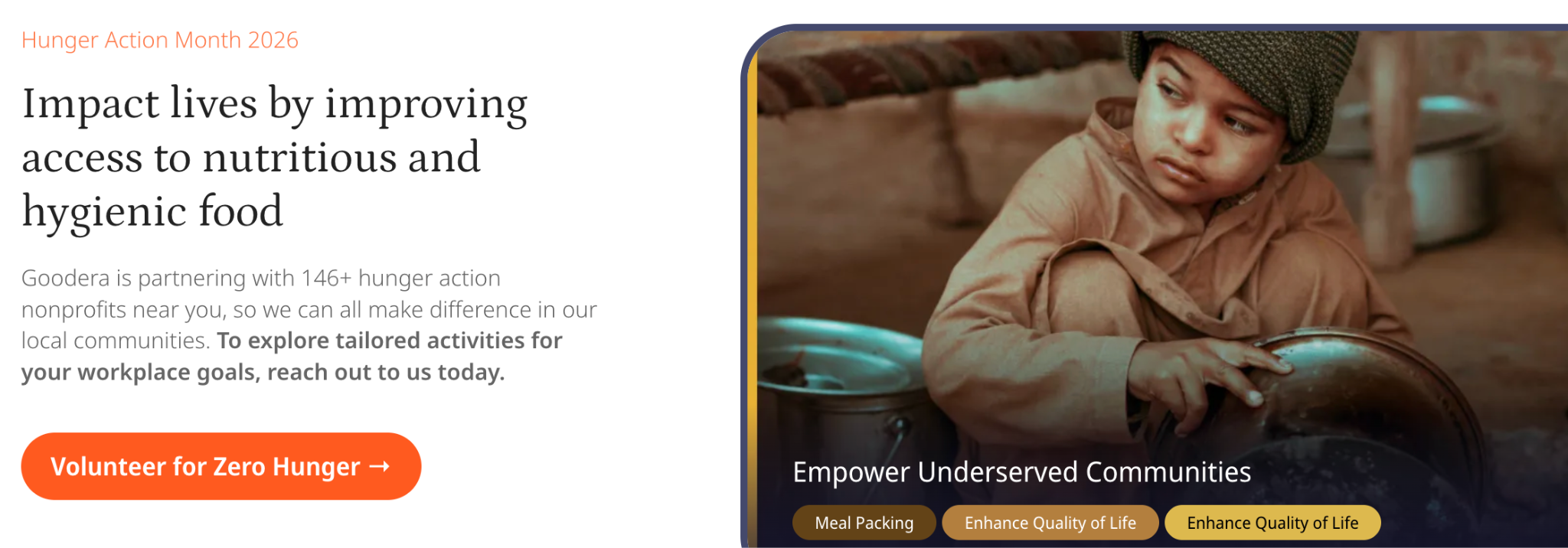
- Food security: Run a team activity for Hunger Action Month, which focuses on empowering underserved communities and promoting sustainable food practices. The Hunger Action Month calendar helps you plan.
- Essentials: Make winter essentials as a group through our Giving Tuesday and Thanksgiving activities, which also include ways to promote the wellbeing of elderly community members. You can also join the Season of Giving to send seasonal wishes to people with disabilities or prepare audio resources for children. Both give teams a hands-on way to meet basic needs together.
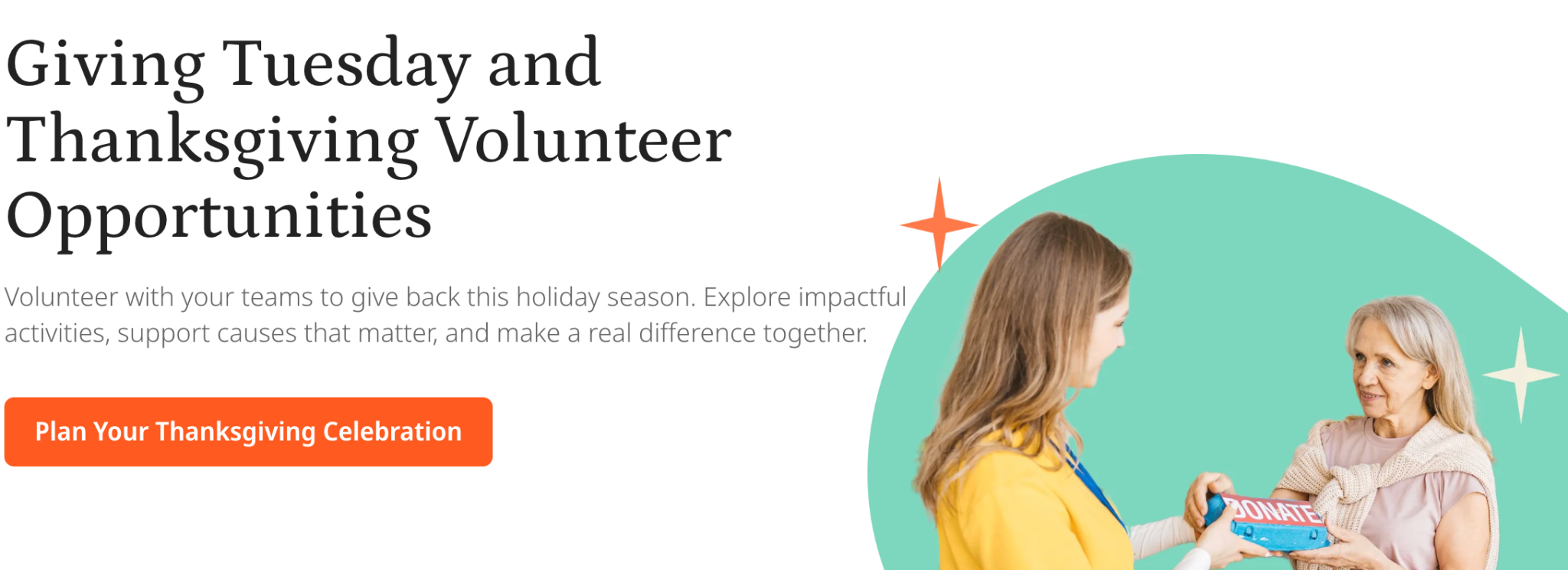
These campaigns run in the fall and winter, so ask your Goodera contact for a February version built around Social Justice Day.
2. Decent Work and Full Employment
Decent work and full employment means promoting fair labor standards, safe working conditions, and job opportunities for all. With the global jobs gap so large, career readiness is a place where volunteers can help directly.
- Career readiness: Host resume clinics and mock interviews for Black women and youth through Black History Month and Juneteenth activities.
- Financial literacy: Teach money basics to young people through the same campaigns.
- Veterans: Share career resources with veterans through Veterans Day volunteering.
3. Gender Equality
Gender equality means addressing systemic discrimination and bridging gaps between men and women across economic and social life. Team activities can start at the school and household level.
- STEM for girls: Run a workshop that promotes STEM learning among young girls during Women's History Month.
- Support for single mothers: Volunteer with organizations that support single mothers through the same campaign.
- Keep it going at work: Use the women's ERG toolkit and the Pride Month volunteering catalog to promote awareness and ensure equal opportunities at work.
4. Social Inclusion and Protection
Social inclusion and protection means encouraging fair access to education, healthcare, social safety nets, and public services for marginalized groups. This is the broadest area, so teams can choose from several angles.
- Education: Advance accessible learning through Back to School programs, or create tactile learning aids and teach financial literacy for International Literacy Day.
- Healthcare: Raise awareness and support patient care during Breast Cancer Awareness Month.
- Mental health: Promote awareness and run team wellbeing sessions for Mental Health Awareness Month.
- Inclusion for LGBTQIA+ communities: Bust myths and support LGBTQIA+ elders through Pride Month and LGBT History Month.
5. Human Rights
Human rights means upholding fundamental freedoms and equality of opportunity within and between nations. Racial equality is a strong starting point, and three observances give teams a rhythm across the year.
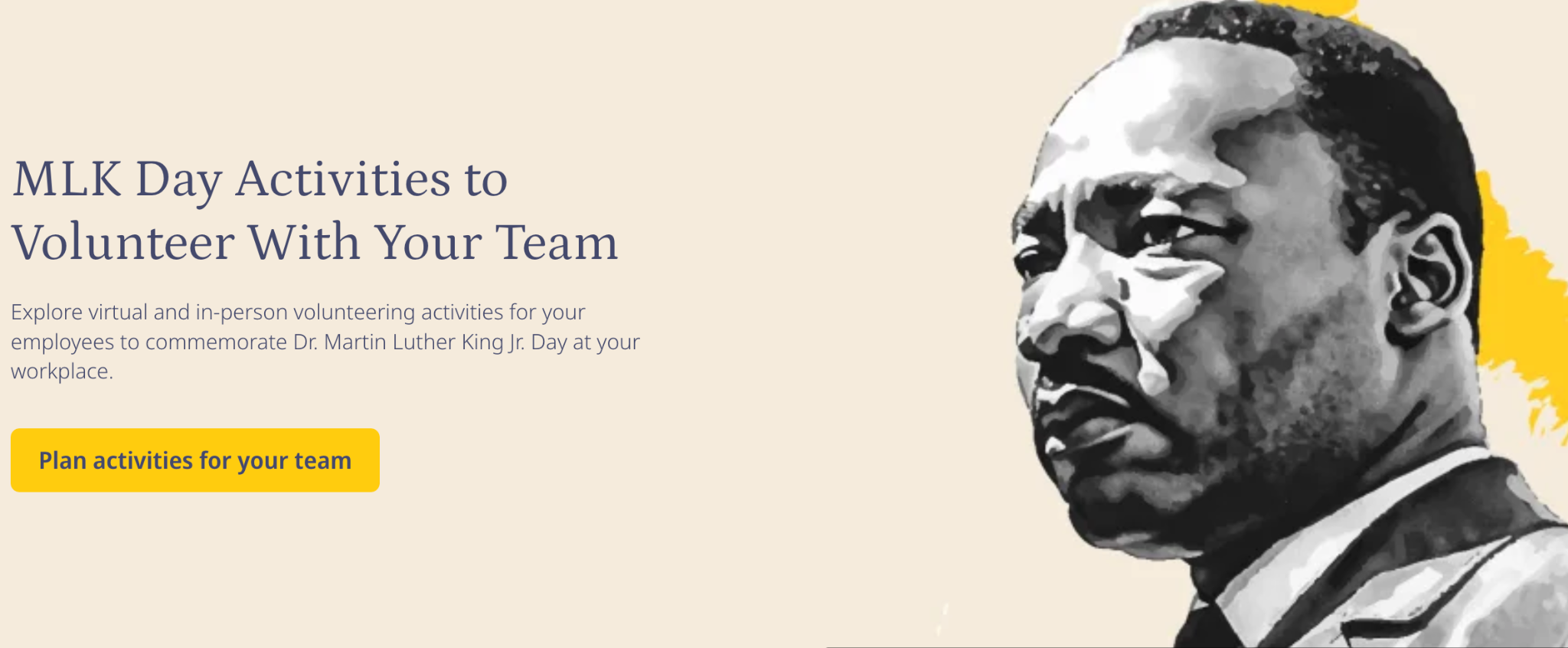
- Martin Luther King Jr. Day of Service (third Monday of January, January 18 in 2027): Inspire children with MLK's achievements and organize workshops through MLK Day activities. Employees can also mentor Black entrepreneurs or serve organizations that provide housing, legal aid, or workforce development.
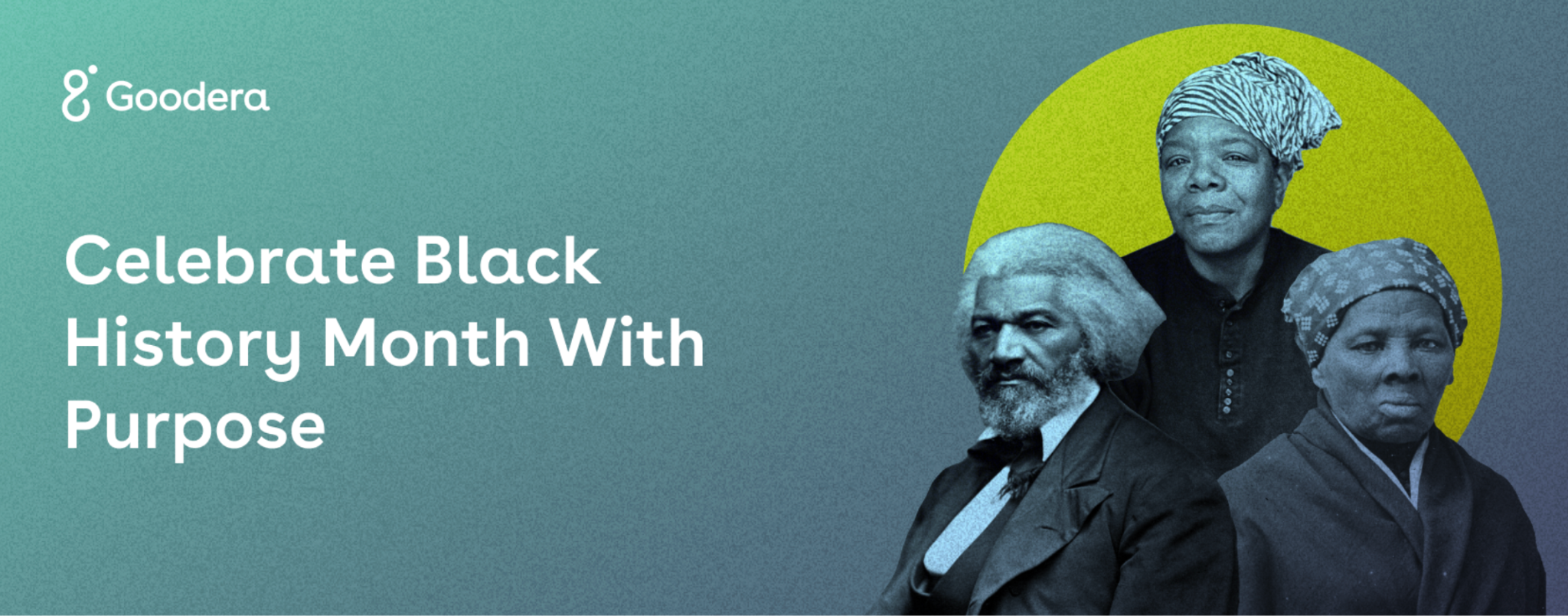
- Black History Month (February in the US and Canada, October in the UK): February 20 falls inside it, so one week of activities can serve both. Mentor HBCU students through our Future Forward program, which connects them with corporate role models. According to HBCU Heroes (2025), about 60% of the students it serves are low-income, first-generation college students.
- Juneteenth (June 19): Learn about the abolitionist movement, hold a book donation drive, or host a storytelling event or virtual museum tour. Start with our guides on how to celebrate Juneteenth at work and companies recognizing Juneteenth.
A word of caution from our own experience: the most common misstep is treating these days as a one-time PR moment. Teams get better results when they keep going between the dates with quarterly volunteering, ERG-led fundraisers, and listening sessions. Our list of Black nonprofit organizations to support can help you choose partners.
Where Do We Go From Here?
Even once the observance has passed, the work it pointed to has not. The good news is that you have time to plan something that lasts. A few honest conversations, one well-chosen project to kickstart your campaign, and a plan that runs all year will help you make a significant change, and more importantly, a recurring one.
The data from Goodera's VQ Report 2026 shows why a plan matters. Companies with volunteering fully embedded in their culture reach 70% employee participation, while companies running mostly ad hoc initiatives see 7.1%. People join when they know what is happening, when it happens, and why it matters to them.
Here is a simple way to begin this month:
- Listen first. Send a short survey to learn which causes your employees care about, and invite your ERGs to share ideas.
- Pick one area. Choose from poverty eradication, decent work, gender equality, social inclusion, or human rights, and match it to a campaign on Goodera's campaign calendar.
- Set the date and decide how you'll track results. Book your event, then choose what you'll check afterward: how many employees took part, whether they used or built a skill, and how many come back for another activity.
- Plan past the day. Put the next two or three campaigns on the calendar, so the momentum carries into spring.
Social justice work asks for patience, and small, steady actions add up. If you want help building that plan, our team works with 50K+ nonprofits across 100+ countries through Goodera's CSR volunteering solutions. You can also read the VQ Report 2026 for valuable insights on what has worked for other organizations..
Frequently Asked Questions
1. When Is Social Justice World Day Observed, and When Is the Next One?
Social Justice World Day is observed every year on February 20. The 2026 observance fell on a Friday. The next one is Saturday, February 20, 2027, which means most workplaces will not be in the office that day. Many teams plan their activities for the week of February 15 instead, so employees can take part during working hours. February 20 also falls inside Black History Month in the US and Canada, so one week of activities can serve both occasions. Starting your plan by January leaves enough time to survey employees, book nonprofit partners, and promote the event.
2. What Is the Social Justice Day Theme for 2027?
We have not seen an official 2027 theme at the time of writing. The UN observance page is where it is announced first, so it is the place to check. Some third-party sites reuse older taglines, so wait for the UN's confirmation before citing one in your communications. A good habit is to check the page again in January and update your campaign materials if a new theme appears. Your plan does not need to wait for it, though. The five areas the day supports (poverty eradication, decent work, gender equality, social inclusion and protection, and human rights) stay constant, so you can start building your campaign around them today.
3. Who Started the World Day of Social Justice?
The UN General Assembly declared the day on 26 November 2007. The idea grew out of the ILO Declaration on Social Justice for a Fair Globalization, adopted in 2008, which brought governments, employers, and workers from 182 member states together behind decent work. Since then, the day has served as a yearly reminder to countries and companies of their commitments on poverty, jobs, and inclusion.
4. What Is the Difference Between Social Justice and CSR?
Social justice is the principle that everyone deserves fair access to opportunity and dignity. Corporate social responsibility (CSR) is the set of actions a company takes, such as volunteering, giving, and responsible business practices. Many companies use CSR programs to support causes tied to fairness and inclusion. Our guide to corporate social responsibility explains the basics.
5. How Can Employees Take Part in Social Justice Day at Work?
Employees can join an ERG listening session, sign up for a volunteering activity, or offer a professional skill to a nonprofit. A resume review, a marketing workshop, or a data project can help an organization more than many people expect. Employees can also tell their CSR or HR team which causes matter to them, since those answers shape which projects get offered. If your company has paid volunteer time off, this is a good week to use it. You can browse volunteer opportunities by format and location.
6. How Do We Measure the Impact of Social Justice Initiatives at Work?
Start with the basics: track participation and hours so you know how many people took part. Then add outcomes such as engagement change, skills gained, and the share of volunteers who return within 12 months. A short post-event survey works well here, with questions on whether the experience connected people to company values and whether they used or built a skill. Partnering with HR to compare volunteering data with retention data is a practical first step. Review the results after each event so the next campaign improves on the last.
7. How Can Goodera Help Us Plan Ahead for 2027?
We curate virtual, in-person, and hybrid volunteering and connect teams with vetted nonprofits. Our network includes 50K+ nonprofits across 100+ countries, so teams in different locations can take part in the same campaign. We also report on participation and outcomes, which gives you data to share with leadership. Our campaign calendar lists 45+ campaigns through the year, so you can match each cause area to a date. You can explore our employee volunteering programs or read the VQ Report 2026 to benchmark your own program.
8. What Are Examples of Social Justice in the Workplace?
Common examples include fair and transparent pay, inclusive hiring and promotion practices, and employee resource groups that give people a voice. Accessible benefits, such as paid volunteer time off, also count. Safe working conditions and clear paths to growth for every employee are part of the picture too. Volunteering extends the same principle beyond the office walls, because it lets employees support causes they care about, alongside nonprofits that know their communities. The strongest workplaces do both, so what they say outside matches how they treat their own people.
9. Which UN Sustainable Development Goal Connects to the World Day of Social Justice?
The closest link is Sustainable Development Goal 8, which aims to promote sustained, inclusive, and sustainable economic growth, full and productive employment, and decent work for all. The UN also ties the day to poverty eradication and social inclusion, which connect to several other goals. These include Goal 1 (No Poverty), Goal 5 (Gender Equality), and Goal 10 (Reduced Inequalities). That makes the day a useful hook for companies that already report against the SDGs in their CSR or ESG work. You can use the same projects to show progress on more than one goal.
10. Is the World Day of Social Justice a Public Holiday?
No, the World Day of Social Justice is a United Nations observance, not a public holiday, so most workplaces stay open and schools run as usual. That makes it easy for companies to mark the day in their own way, without changing the work calendar. Some companies add paid volunteer time off for the occasion, which gives employees a chance to take part during working hours. Whatever you choose, announce it early so people can plan around it.