Feiern Sie den Monat des Bewusstseins für psychische Gesundheit bei der Arbeit
Celebrate this Mental Health Awareness Month at work by giving back and promoting awareness around mental well-being.

- INHALTSVERZEICHNIS
- Wann ist der Monat des Bewusstseins für psychische Gesundheit?
- Was ist der Monat des Bewusstseins für psychische Gesundheit und warum ist er wichtig?
- Was sind die Vorteile eines Bewusstseins für psychische Gesundheit am Arbeitsplatz?
- Die 10 besten Ideen für den Monat zur Sensibilisierung für psychische Gesundheit am Arbeitsplatz
- Wohltätigkeitsorganisationen für psychische Gesundheit werden an diesem Monat zur Sensibilisierung für psychische Gesundheit teilnehmen
Wann ist der Monat des Bewusstseins für psychische Gesundheit?
Der Monat des Bewusstseins für psychische Gesundheit wird im Mai weltweit, insbesondere in den USA, häufig begangen.
Some universities in the United States, however, celebrate this month in October to coincide with the spike in the need for mental health support.
In the UK, Mental Health Awareness Week is celebrated from 15–21 May each year, tackling various themes such as loneliness, kindness, body image, and more. Many organizations use this time to plan mental health awareness month activities for work that support employees holistically.
Was ist der Monat des Bewusstseins für psychische Gesundheit und warum ist er wichtig?
Mental illnesses cost the global economy $1 trillion annually, primarily through reduced productivity. People with mental illnesses experience higher mortality rates, and the prevailing stigma attached to acknowledging, discussing, and seeking care prevents people from being diagnosed correctly and cured.
Did you know? Nearly 15% of working-age adults now report a long-term mental health condition, up over 5% in the past decade. This rise underscores the urgency for ongoing workplace support beyond awareness month.
Mental Health Awareness Month is both a reminder and an opportunity for organizations to break the stigma around mental illness through awareness initiatives and celebrations that spotlight the resources and support available to employees year-round.
Mental Health Awareness Month is also a time to renew organizational commitment to fulfilling mental health-related SDG goals. Act on these goals through purposeful employee engagement and volunteering initiatives that raise awareness, support communities disproportionately affected by mental health challenges, or simply spend time with those battling these challenges.
Mental health awareness month activities are a powerful way to bring teams together while prioritizing well-being.
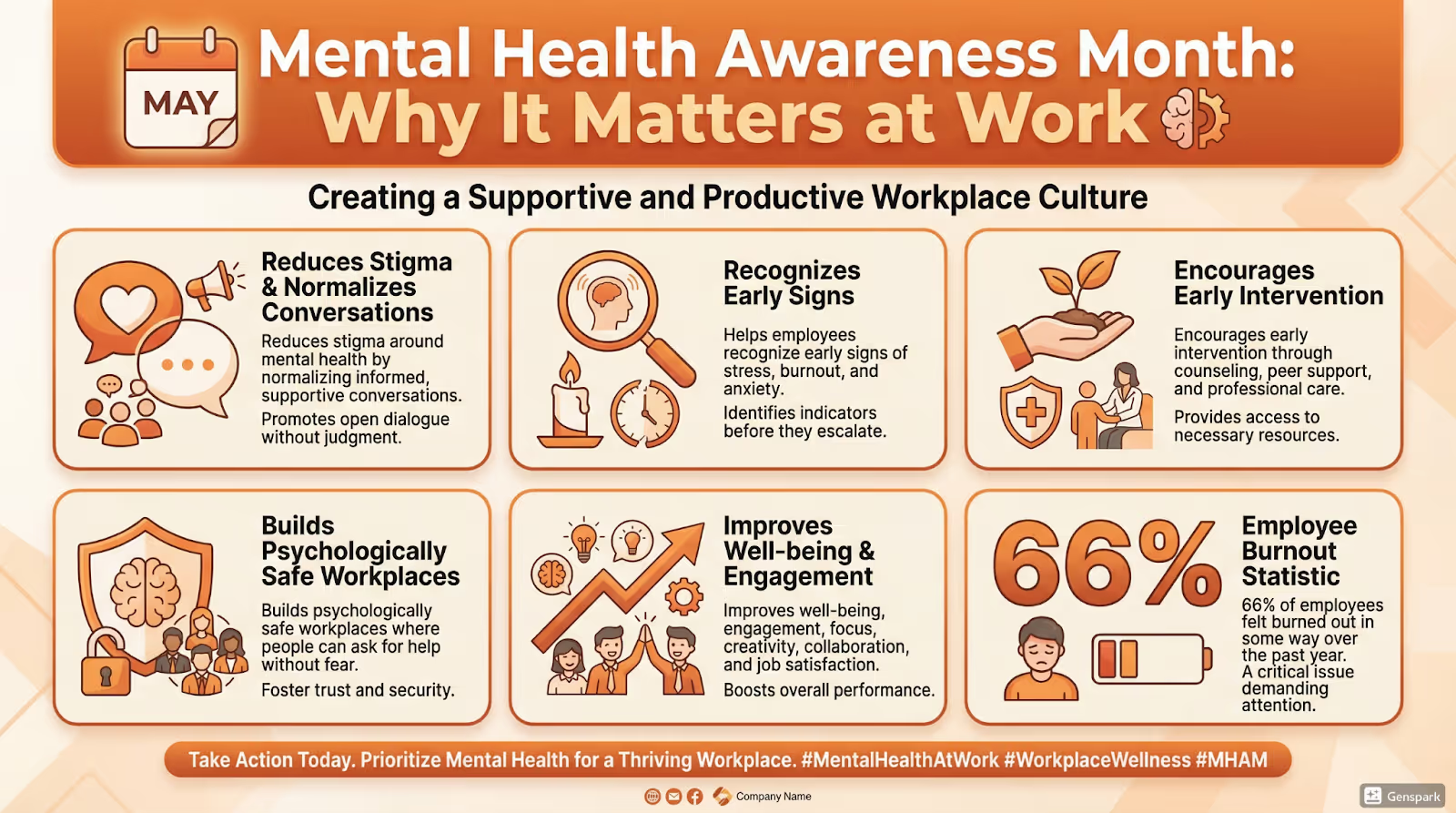
1. Reduces Stigma Around Mental Health
Equipping employees and communities with accurate information helps normalize conversations around mental health.
When people understand that mental health challenges are common and treatable, they are more likely to seek support without fear of judgment.
2. Helps Individuals Recognize Their Own Symptoms
Mental health is often easier to acknowledge in others than in ourselves.
Did you know? Two-thirds (66% of employees) felt burned out in some way over the past year. Proactive activities like volunteering can help combat this persistent issue.
Awareness initiatives, activities, and shared resources help individuals identify early signs of stress, burnout, or anxiety, and take steps to address them before they escalate.
3. Encourages Early Intervention and Support
The earlier someone seeks help, the better the outcomes.
Mental health awareness creates pathways to resources such as counseling, peer support, and professional care, reducing the risk of long-term challenges.
4. Builds Psychologically Safe Workplaces
When mental health is openly discussed, employees feel safer expressing concerns, asking for help, or taking necessary breaks.
This contributes to a culture of trust, where people don’t feel the need to hide struggles.
5. Improves Employee Well-Being and Engagement
Employees who feel supported are more likely to stay engaged, productive, and connected to their work.
Mental well-being directly impacts focus, creativity, collaboration, and overall job satisfaction.
How to Celebrate Mental Health Awareness Month at Work
Celebrating Mental Health Awareness Month at work does not have to be complicated or resource-heavy. What matters most is consistency, intention, and the creation of a safe space for employees to engage.
If you are wondering how to celebrate Mental Health Awareness Month at work, start with a few simple steps:
- Start conversations around mental health awareness at work through team meetings or internal campaigns
- Introduce small but impactful mental health awareness month activities that employees can easily participate in
- Encourage leadership to talk about well-being and share personal experiences where possible, openly
- Provide access to resources like counseling, helplines, or self-care toolkits
- Create a mix of individual and team-based activities for Mental Health Awareness Month
When done right, these efforts extend beyond a single month and help build a workplace culture where people feel supported every day.
Investing in workplace mental health awareness through structured activities during Mental Health Awareness Month yields long-term impact.
Was sind die Vorteile eines Bewusstseins für psychische Gesundheit am Arbeitsplatz?
1. Reduced Talent Attrition
Increasingly, employees are leaving organizations due to stress, burnout, and unsustainable work environments.
Did you know? 48% of U.S. employees have quit a job due to mental health reasons, with two-thirds quitting voluntarily. This highlights how awareness efforts reduce attrition beyond what's already known from APA data.
Mental health awareness helps organizations:
- Recognize early signs of burnout
- Provide timely support through resources and training
- Build systems that prioritize well-being
When employees feel supported, they’re more likely to stay and grow within the organization.
According to the American Psychological Association, workplace stress is a significant factor influencing employee turnover.
2. Increased Employee Productivity
Employees who feel mentally supported are more focused, engaged, and motivated.
Did you know? In the UK, poor mental well-being costs employers £42-45 billion annually from presenteeism, absence, and turnover. Investing in mental health initiatives yields clear ROI for businesses.
Mental health awareness contributes to:
- Better concentration and decision-making
- Higher job satisfaction
- Stronger collaboration across teams
Research from the World Health Organization shows that for every $1 invested in mental health, there is a $4 return in improved health and productivity.
3. Improved Diversity, Culture, and Belonging
Mental health challenges can disproportionately affect younger employees and underrepresented groups.
By prioritizing mental health, organizations can:
- Create psychologically safe environments
- Support diverse employee needs more effectively
- Strengthen inclusion and belonging
This leads to workplaces where more people feel seen, supported, and able to contribute fully.
4. Stronger Employee Engagement and Morale
When mental health is openly discussed and supported:
- Employees feel valued beyond their output
- Trust in leadership increases
- Team morale improves
Engaged employees are more likely to participate, contribute ideas, and stay committed to organizational goals.
5. Reduced Burnout and Absenteeism
Unchecked stress often leads to:
- Frequent sick leaves
- Disengagement
- Long-term burnout
Mental health awareness helps organizations take a preventive approach, reducing both absenteeism and presenteeism.
6. Better Leadership and Team Dynamics
Awareness initiatives often equip managers with tools to:
- Recognize signs of distress
- Respond with empathy
- Support team members effectively
This improves everyday interactions and builds stronger, more resilient teams.
7. Enhanced Employer Brand
Organizations that prioritize mental well-being are seen as:
- More attractive to top talent
- More responsible and people-first
- Better places to build long-term careers
This strengthens both hiring and retention efforts.
8. Long-Term Organizational Resilience
When mental health becomes part of workplace culture:
- Teams adapt better to change
- Employees handle challenges more effectively
- Organizations become more stable over time
Simple 4-Week Plan for Mental Health Awareness Month Activities
Planning can make your Mental Health Awareness Month activities more structured and impactful. Here’s a simple way to spread your efforts across the month:
Week 1: Awareness & Education
- Host a kickoff session on mental health awareness at work: Open with an overview to introduce the topic and set the tone for the month.
- Share resources and guides: Provide easy-to-access toolkits, articles, and helplines that employees can explore at their own pace.
- Run short awareness campaigns: Use emails, posters, or internal platforms to share quick, relatable messages about Mental Health Awareness Month.
Week 2: Engagement & Connection
- Introduce team-based mental health awareness month activities for the workplace - Plan simple group activities that encourage participation and make conversations around mental health feel natural.
- Host listening circles or group discussions: Create safe spaces where employees can share experiences, listen actively, and feel heard without judgment.
- Encourage peer conversations: Prompt teams to check in with one another regularly to build stronger, more supportive connections.
Week 3: Action & Participation
- Organize volunteering activities for mental health awareness month - Engage employees in meaningful volunteering opportunities that support community mental health initiatives.
- Launch wellness challenges or mindfulness sessions: Introduce small daily habits, such as meditation, step challenges, or breathing exercises, to improve overall well-being.
- Promote creative expression activities: Encourage employees to unwind through art, journaling, or music during Mental Health Awareness Month.
Week 4: Reflection & Sustainability
- Gather feedback from employees: Understand what worked through quick surveys or discussions to improve future mental health awareness month activities for work.
- Continue high-impact mental health awareness month activities at work: Carry forward the most-loved initiatives to keep mental health awareness a year-round priority.
- Build long-term well-being initiatives: Use insights from the month to create sustainable programs that support employees beyond just one campaign.
If you are exploring ideas for Mental Health Awareness Month at work, these activities are a great place to start.
Die 10 besten Ideen für den Monat zur Sensibilisierung für psychische Gesundheit am Arbeitsplatz
Placing mental health at the center of our workplace conversations is an everyday necessity. It is important to ensure that our employees’ mental health is taken care of, and they feel like ‘we’re in this together’. We need to create organizations and teams that put psychological safety first – this will help everyone thrive, and keep personal and professional outcomes optimal. Mental Health Awareness Month is a great time to promote employee wellness at work. These workplace Mental Health Awareness Month activities are designed to be simple, engaging, and meaningful.
You can start by incorporating these ideas:
- Mental Health Awareness Month activities to engage employees and encourage self-care
- Volunteering for community mental health
- HR-led employee engagement activities for better mental health
- Mental Health Month team-building activities
One of the best ways to start today is by volunteering for your community’s mental health and for your own.
Did you know? In FY 2025, 147,000 TCS volunteers logged 8.93 million hours via their HOPE program, impacting 12.2 million lives. Employee volunteering ties directly to purpose-driven mental health gains in CSR.
Use this May as a time to set organization-wide good mental health practices for your employees. Here are some ideas for Mental Health Awareness Month that HRs, ERG heads, and CSR teams can check out:
1. Freiwilligenarbeit
.webp)
Eine der besten Möglichkeiten, den Monat des Bewusstseins für psychische Gesundheit zu feiern, ist Freiwilligenarbeit und Teamengagement, um Ihrer Gemeinde und Ihren Mitarbeitern auf ihrem Weg zur psychischen Gesundheit besser zu helfen. Sie können sich spannenden Aktivitäten hingeben, die eine gute psychische Gesundheit von Kindern, isolierten Erwachsenen, Jugendlichen und Ihren eigenen Mitarbeitern gewährleisten. Der Goodera-Katalog zur Sensibilisierung für psychische Gesundheit bietet eine Mischung aus Aktivitäten, die Ihren Mitarbeitern und Ihrem Unternehmen helfen, gemeinsam an einer besseren psychischen Gesundheit für alle zu arbeiten.
2. 10-minütige Meditationssitzung an jedem Tag im Mai

Meditation ist eine der besten Möglichkeiten, die psychische Gesundheit zu verbessern. Lassen Sie einzelne Teamleiter dies im Rahmen des Monats zur Sensibilisierung für psychische Gesundheit teamübergreifend in morgendlichen Besprechungen umsetzen. Die Mitarbeiter werden sich den ganzen Tag über großartig fühlen und eine gute Angewohnheit entwickeln.
3. Veranstalten Sie wöchentliche Hörzirkel

Bilden Sie kleine Gruppen von Mitarbeitern (teamübergreifend — Personen, die nicht genug interagieren) und veranstalten Sie jede Woche im Monat des Mental Health Awareness Month einen 30-minütigen Hörkreis, in dem die Mitarbeiter sicher mitteilen können, wie es ihnen geht, und andere sie fragen können: „Geht es uns gut?“
4. Comfort Santa, wie Secret Santa, aber mit Karten
.webp)
Die Aktivitäten des Monats zur Sensibilisierung für psychische Gesundheit können eine Menge Spaß machen und mit warmen Worten bedeutungsvoll werden. Stellen Sie in den öffentlichen Bereichen ein paar leere Grußkarten bereit und platzieren Sie auch eine Dropbox. Bitten Sie alle, eine anonyme Nachricht zu schreiben, in der sie ihre Unterstützung oder ihren Trost für einen Kollegen zum Ausdruck bringen (das könnte auch für sie selbst sein), und werfen Sie sie in die Dropbox. Verteilen Sie diese Karten am Ende des Monats an diejenigen, für die sie geschrieben wurden.
5. Bringen Sie Ihr Haustier zur Arbeit

Pets and animals can ease stress. Pick a day or a slot for a virtual call during Mental Health Awareness Month in May, when all your employees with pets are encouraged to bring their pets to work or join a pet-introduction call where everyone gets to meet pets, spend time with furry friends, and relieve stress.
6. Gratitude Box

This Mental Health Awareness Month, gift your employees a small, eco-friendly gratitude box where they can drop a chit each day about one thing at work or in their personal lives they are grateful for. This will help them develop a sense of purpose and contentment in both their professional and personal lives.
7. Safe Upward Feedback Sessions

HRs can encourage team leaders to set up one-on-one sessions with their reportees to seek upward feedback and start sustainable practices during Mental Health Awareness Month. The team leaders can encourage their reportees by sharing something they think they need to improve and inviting them to provide constructive, open feedback. This is the first step in establishing psychological safety and building cultures of learning, where all employees can maintain good mental health and help the work thrive.
8. Passing the Goodness Parcel

Set up a call or a meeting with teams that work together, where each person shares something they like or a reason they enjoy working with the person next to them, and so on. This will help everyone feel appreciated and valued; great feelings to maintain a happy mind. This activity can be continued beyond the Mental Health Awareness Month as well.
9. Games Day

Maintaining good physical health and boosting serotonin are great ways to regulate the body and mind. Organize a day of sports and other games, add some competitive spirit, and watch your employees rejuvenate and recharge for their mental well-being. Maybe make it a monthly thing!
10. Arts-Based Therapy Booths

Set up an arts-based therapy booth for your employees throughout Mental Health Awareness Month. You can add colored pens, pencils, crayons, arts-and-crafts paper, and coloring books for them to use during short breaks or when they’re feeling stressed. A few minutes of art can make a big difference to one’s mental health. Continuing mental health awareness month activities for work beyond May helps create lasting cultural change.
There are many ways employers can ensure employees’ mental health is cared for and that they feel supported and safe in the workplace. People from marginalized communities must speak up about the challenges they face at the workplace and how we can contribute to safer environments.
These were our 10 activity ideas for Mental Health Awareness Month, but if you’re looking for more ways to engage your employees, reach out to our engagement experts.

Mental Health Awareness Month Activities for Remote Teams
With distributed teams becoming the norm, it’s important to adapt mental health awareness month activities for the workplace to virtual settings as well.
Here are a few simple ideas:
- Virtual meditation or mindfulness sessions
Host short, guided sessions during the week to help employees pause, reset, and build consistent mental health awareness and habits at work. - Online gratitude walls or Slack appreciation threads
Create a shared digital space where employees can recognize and appreciate one another, making Mental Health Awareness Month activities feel more personal and uplifting. - Remote-friendly games and team bonding activities
Plan light, interactive games or virtual hangouts that encourage connection and reduce stress, while keeping work activities engaging for Mental Health Awareness Month. - Anonymous check-in forms to understand employee well-being
Use simple surveys or pulse checks to give employees a safe way to share how they’re feeling and help shape better mental health awareness activities for workplace support. - Virtual volunteering opportunities focused on mental health
Encourage teams to participate in online volunteering initiatives that contribute to community well-being while strengthening mental health awareness month activities for the workplace.
These mental health awareness activities for workplace settings ensure that remote employees feel just as included and supported.
The Role of Leaders in Mental Health Awareness at Work
Leaders play a critical role in shaping how mental health awareness at work is perceived and practiced.
Here’s how they can make a difference:
- Normalize conversations around mental health
- Actively participate in mental health awareness month activities
- Recognize signs of burnout within teams
- Encourage time off and work-life balance
- Support employees without judgment
When leaders actively engage in workplace mental health awareness month activities, it builds trust and sets the tone for the entire organization.
Wohltätigkeitsorganisationen für psychische Gesundheit werden an diesem Monat zur Sensibilisierung für psychische Gesundheit teilnehmen
Diese gemeinnützigen Organisationen arbeiten daran, psychische Probleme zu entstigmatisieren, die berufliche Entwicklung durch Resilienz-Workshops voranzutreiben, Unterstützung durch innovative Medien zu bieten und das Bewusstsein in unseren Gemeinden zu fördern. Nur wenige der einflussreichsten Wohltätigkeitsorganisationen für psychische Gesundheit sind Arts Holding Hands and Hearts (AHHAH), Love Is Outreach, Cardz For Kidz und Letters to Strangers (L2S). Schauen Sie sich Goodera's an Top 10 Wohltätigkeitsorganisationen für psychische Gesundheit für die vollständige Liste.
Frequently Asked Questions
1. When is Mental Health Awareness Month?
Mental Health Awareness Month is observed in May each year and is widely recognized across the United States and globally. During this time, organizations actively plan mental health awareness month activities to support employee well-being, encourage open conversations, and create more supportive workplace environments.
2. Why is mental health awareness at work important?
Mental health awareness at work plays a critical role in reducing stigma, improving employee well-being, and creating psychologically safe workplaces. When organizations prioritize mental health awareness initiatives in the workplace, employees feel more supported, engaged, and comfortable seeking help when needed.
3. How can companies celebrate Mental Health Awareness Month at work?
Companies can celebrate by organizing meaningful Mental Health Awareness Month activities, such as volunteering, mindfulness sessions, team check-ins, and listening circles. The key is to create a mix of structured and informal activities that encourage participation and make workplace mental health awareness a shared responsibility.
4. What are some effective mental health awareness month activities?
Effective Mental Health Awareness Month activities include meditation sessions, gratitude exercises, peer support groups, volunteer initiatives, and creative wellness activities. These Mental Health Awareness Month activities help employees manage stress, build connections, and improve overall well-being.
5. What are the best ideas for Mental Health Awareness Month at work?
The best ideas for Mental Health Awareness Month at work are simple, inclusive, and easy to implement across teams. Activities like awareness campaigns, team bonding exercises, and workplace mental health awareness month initiatives ensure higher participation and long-term impact.
6. How do mental health awareness month activities benefit employees?
Mental health awareness month activities help employees feel valued, reduce stress, and improve focus and productivity. When organizations consistently invest in mental health awareness month activities for work, it leads to stronger engagement, better collaboration, and improved overall job satisfaction.
7. How can organizations sustain mental health awareness beyond May?
Organizations can sustain impact by continuing mental health awareness month activities for work throughout the year and embedding well-being into everyday culture. Ongoing mental health awareness at work, supported by leadership and regular initiatives, ensures long-term positive outcomes for employees and teams.
