Volunteer Opportunities for Women: How to Show Up and Make It Count
Somewhere in a conflict zone right now, a woman is making a calculation most of us will never face. Not a financial calculation or a career decision, but something far more immediate: which need goes unmet today? The child's education or the week's food. Safety or proximity to work. Stability or survival.
This is not a metaphor. The UN Gender Snapshot 2025 puts numbers to what many already sense: an estimated 613 million women and girls lived in conflict-affected areas in 2024, 64 million more women than in previous years faced moderate or severe food insecurity, and if the current pace of progress holds, 351 million women and girls could still be living in extreme poverty by 2030.
Behind those figures is a texture of daily life that statistics struggle to carry. A young woman leaving school early to keep her family afloat. A survivor starting over after domestic violence with no financial safety net. A mother stretching every resource while shouldering unpaid caregiving that the economy does not count. A girl missing school every month because menstrual health supplies are simply not there. Across healthcare, education, housing, employment, and safety, the barriers are rarely singular and almost never simple.
That is where volunteer opportunities for women become deeply important. Across shelters, nonprofit organizations, community health programs, mentoring networks, and grassroots initiatives, volunteers help expand access to services that many women would otherwise struggle to reach. Volunteer opportunities to support women now extend far beyond traditional community service. Skilled volunteering, virtual mentoring, career coaching, health advocacy, fundraising support, legal aid, and long-term capacity building are becoming essential parts of how nonprofits sustain their work and reach more communities effectively.
The Ongoing Need for Volunteer Opportunities to Support Women
The urgency is not driven by a single issue. It comes from the scale and persistence of interconnected challenges affecting women globally.
The Reliefbank estimates that nearly one in ten women worldwide continues to live in extreme poverty. UN Women reports that women still carry a disproportionate share of unpaid caregiving responsibilities, limiting access to stable income opportunities and long-term economic mobility. Maternal healthcare gaps, gender-based violence, educational disruption, digital exclusion, and rising living costs continue to affect millions of women across both developing and developed economies.
Nonprofit organizations working in these areas often operate under sustained pressure. Many face increasing demand for services alongside funding limitations, staffing shortages, and volunteer burnout. In practice, this means community programs frequently rely on volunteers to keep critical services running. Mentors help young women stay connected to education and employment pathways. Volunteers in women’s health programs support awareness drives, logistics, outreach, and patient assistance efforts. Legal aid organizations depend on pro bono support. Shelters and crisis centers rely on volunteers for operational continuity, emotional support services, and resource coordination.
ALSO READ:
Volunteer opportunities for women therefore play a practical role in strengthening the ecosystems that support safety, recovery, education, employability, and independence. While volunteering alone cannot solve structural inequality, sustained volunteer engagement can help organizations reach more people, improve service delivery, and create stronger support systems for women navigating vulnerable circumstances.
Five Areas Where Volunteer Opportunities to Support Women Have the Most Impact
1. Volunteering to Help Women Surviving Domestic Violence
Domestic violence response is one of the most underfunded, most urgently needed areas in the entire women's support ecosystem. According to the CDC's National Intimate Partner and Sexual Violence Survey (2023/2024), more than 1 in 3 women in the US, approximately 43.5 million, have experienced contact sexual violence, physical violence, or stalking by an intimate partner during their lifetime. The Bureau of Justice Statistics documented more than 1.8 million domestic violence victimizations in 2024 alone.
And yet shelters are perpetually at capacity. Hotlines are perpetually understaffed. The gap between survivor need and available support is filled, when it's filled at all, by trained community volunteers.
What volunteering to help women in this space looks like:
- Crisis hotline support: Organizations like the National Domestic Violence Hotline train volunteers to staff their 24-hour lines, which handled around 2,600 daily contacts in 2022, which is more than double pre-pandemic levels.
- Hospital and court accompaniment: Trained advocates accompany survivors through emergency rooms and legal proceedings, places that can feel retraumatizing without a steady, informed presence.
- Shelter logistics: Meal preparation, childcare assistance, intake support, and transportation coordination for residential shelters.
- Care kit assembly: Hygiene kits, clothing bundles, and household starter packs for women transitioning out of shelter situations.
Organizations to know:
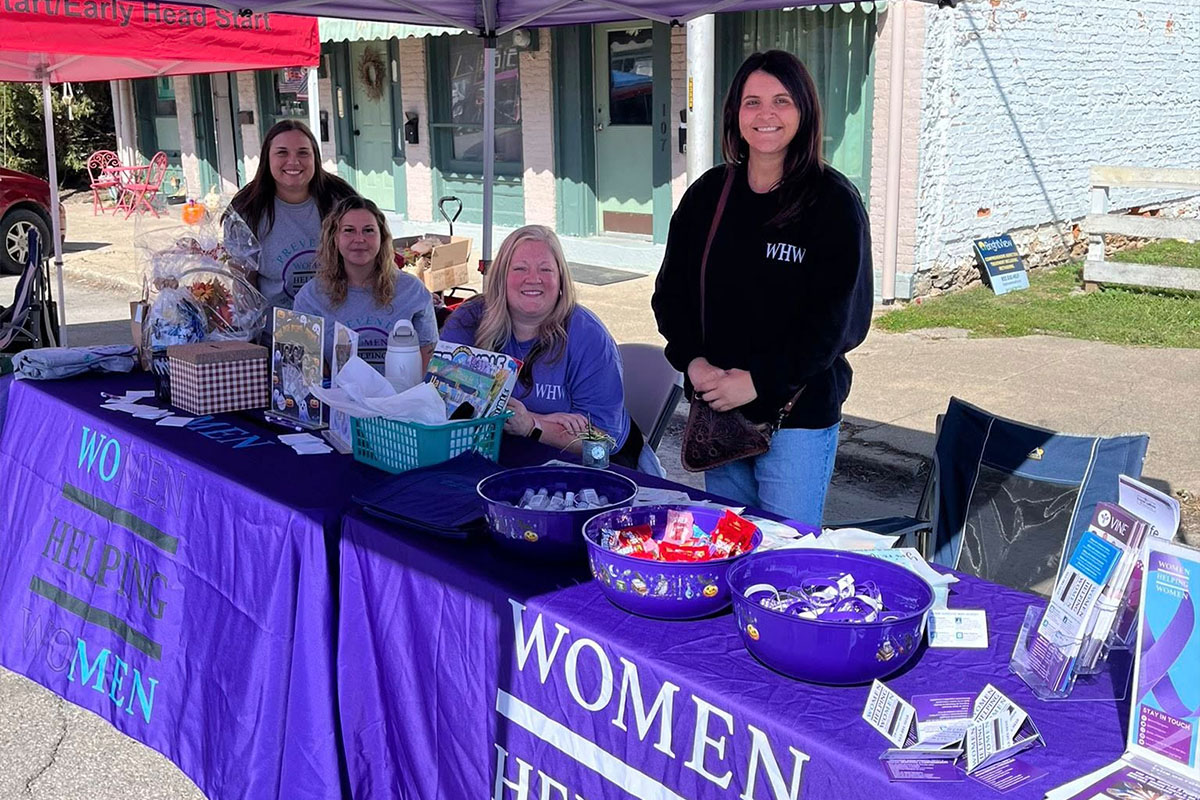
- Women Helping Women (Ohio): Founded in 1973 by community volunteers, it is now the largest comprehensive gender-based violence response agency in Southwest Ohio, with nearly 100 volunteers supporting its programs across five counties.
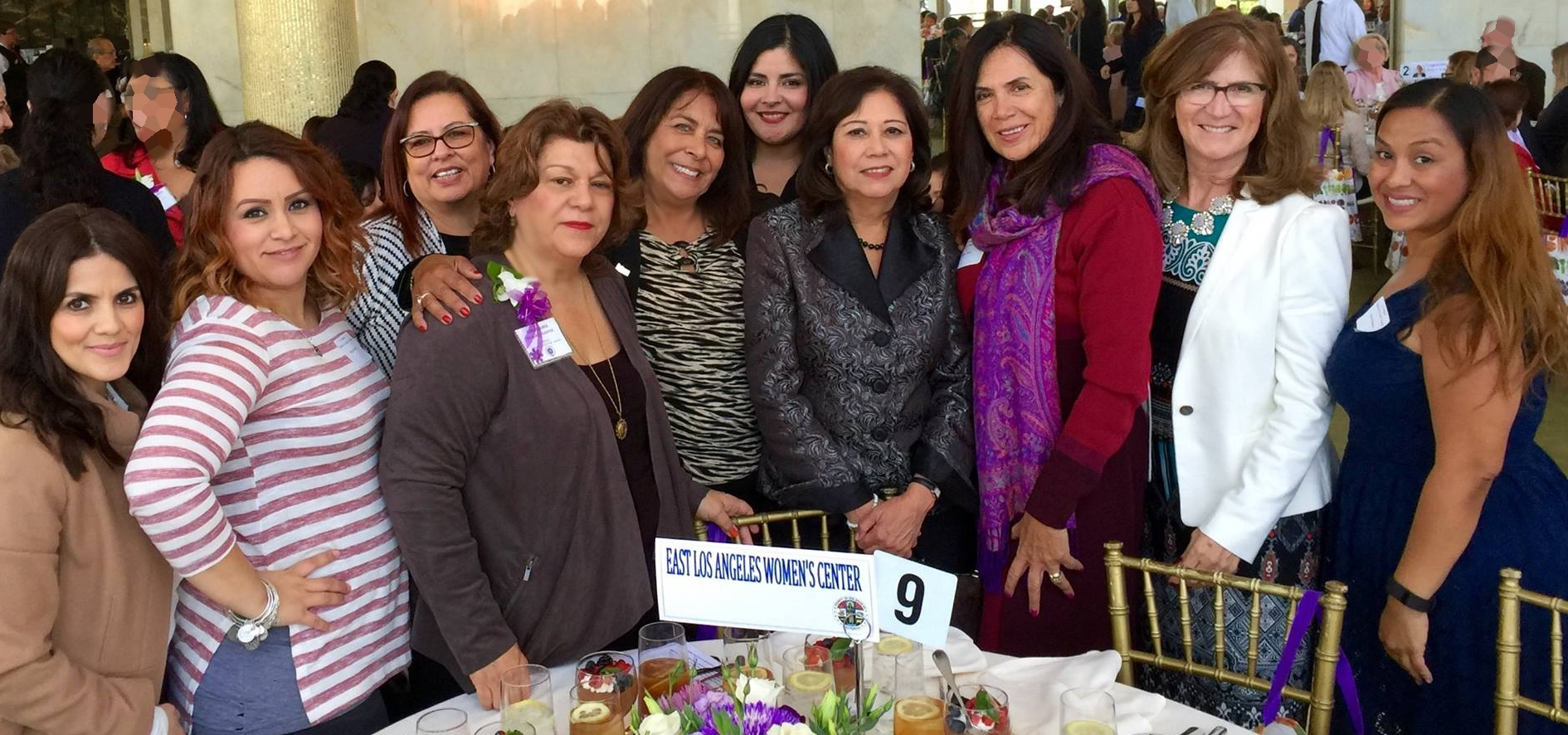
- East Los Angeles Women's Center: bilingual, trauma-informed services across 30+ LA communities, with volunteer-advocates completing a 70-hour certification before taking on crisis hotline and accompaniment roles.
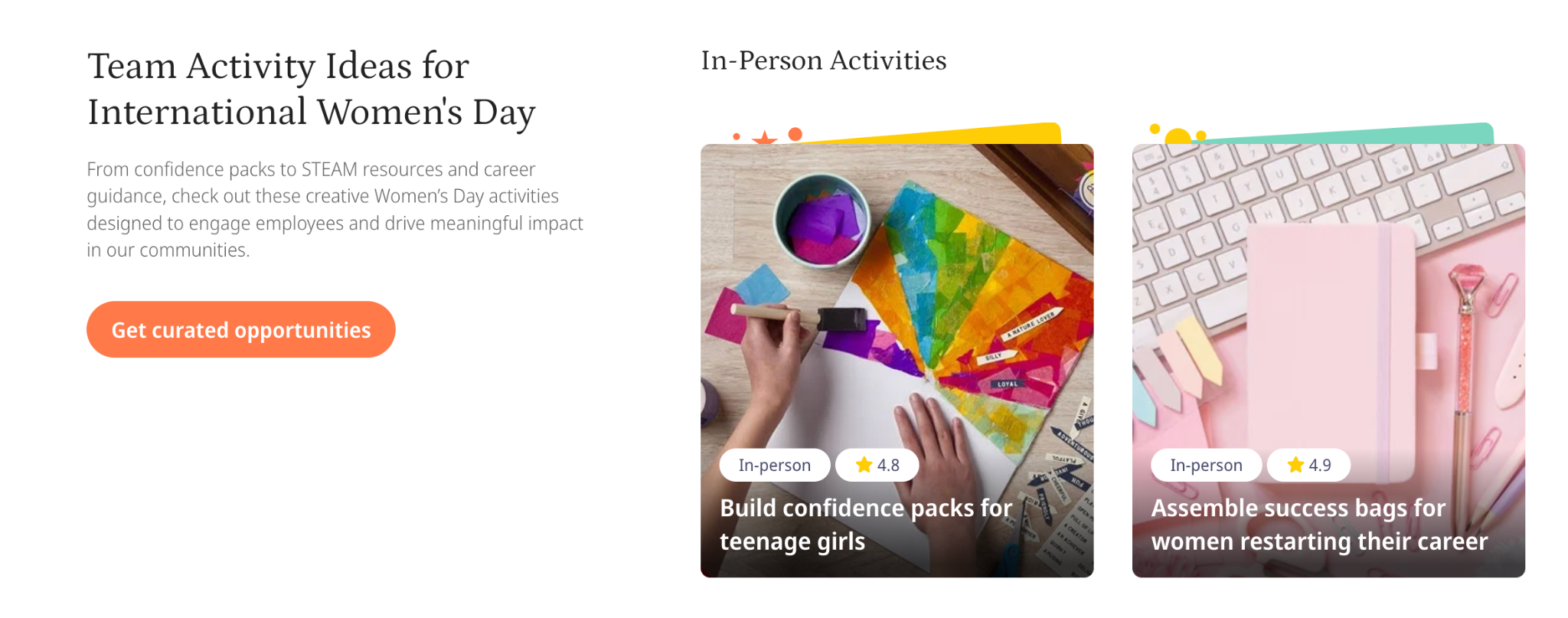
For corporate teams: Goodera's essential care assembly activities let groups of any size assemble hygiene and essential supplies for women at domestic violence shelters: no prior training required, fully managed from logistics to impact reporting, and one of the highest-demand activities during Women's History Month. Learn more at:
2. Volunteer for Women's Health
The health burden carried by women in underserved communities is specific, measurable, and largely preventable. According to UN Women, women spend nearly three more years of their lives in poor health. By 2030, one in three women of reproductive age could be living with anaemia - a condition directly linked to nutritional poverty, which limits school attendance, work capacity, and overall quality of life.
Maternal mortality dropped by nearly 40% between 2000 and 2023 globally, but the UN Gender Snapshot 2024 notes that nearly 800 women still die every day from preventable pregnancy and childbirth-related causes. In the US, homicide is one of the leading causes of death for pregnant women. These are not abstract risks.
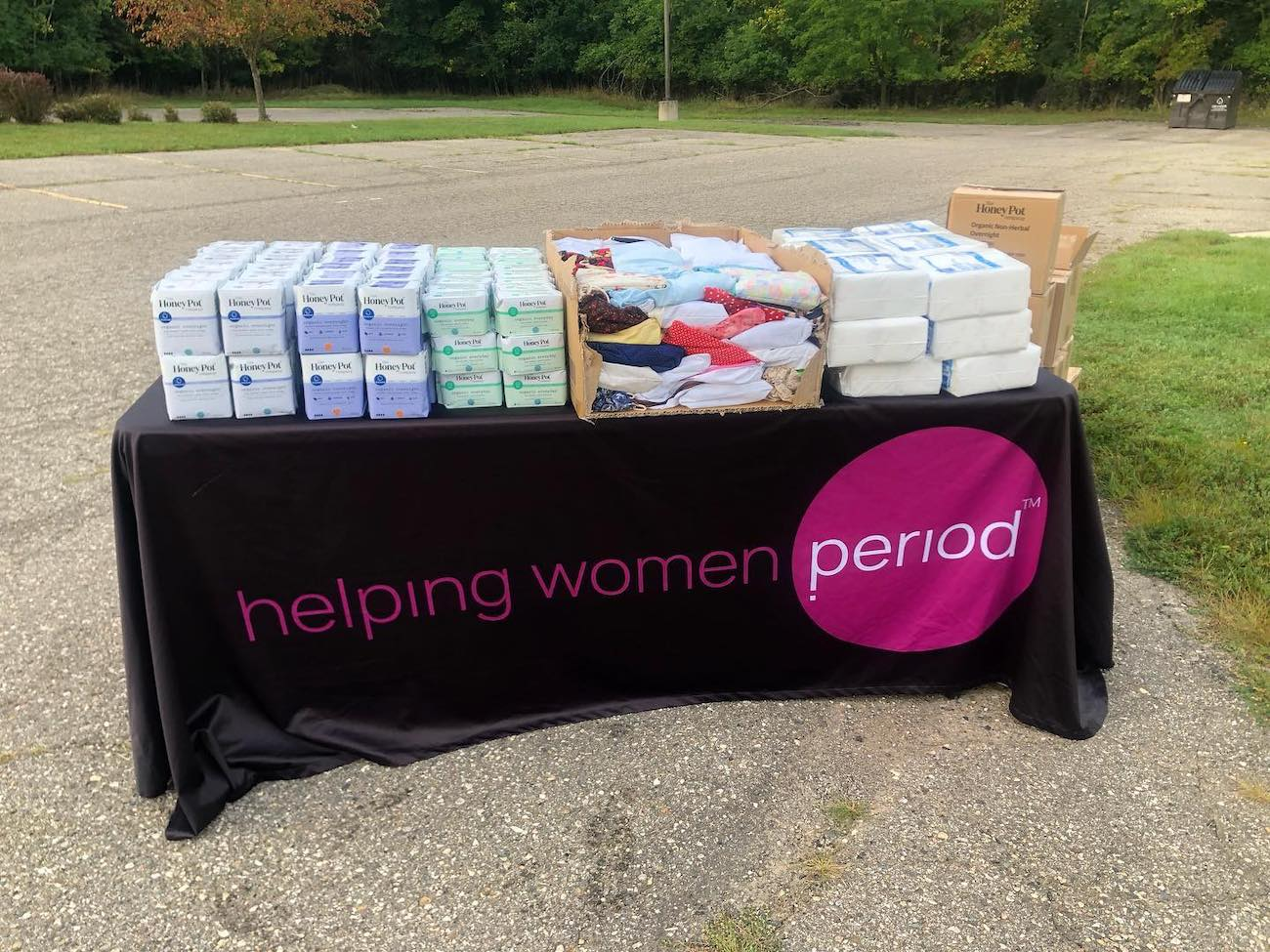
Then there is period poverty, the lack of access to menstrual products, hygiene infrastructure, and basic reproductive health education. The National Institute of Environmental Health Sciences notes that millions of girls and women in the US alone struggle to afford or access menstrual products every month, with consequences that reach into school attendance, employment, and self-esteem.
How to volunteer for women's health:
- Menstrual hygiene drives: Collect and distribute products through organizations like Helping Women Period or through the Alliance for Period Supplies, which works with 120+ supply banks and provides supplies covering over 420,000 cycles annually.
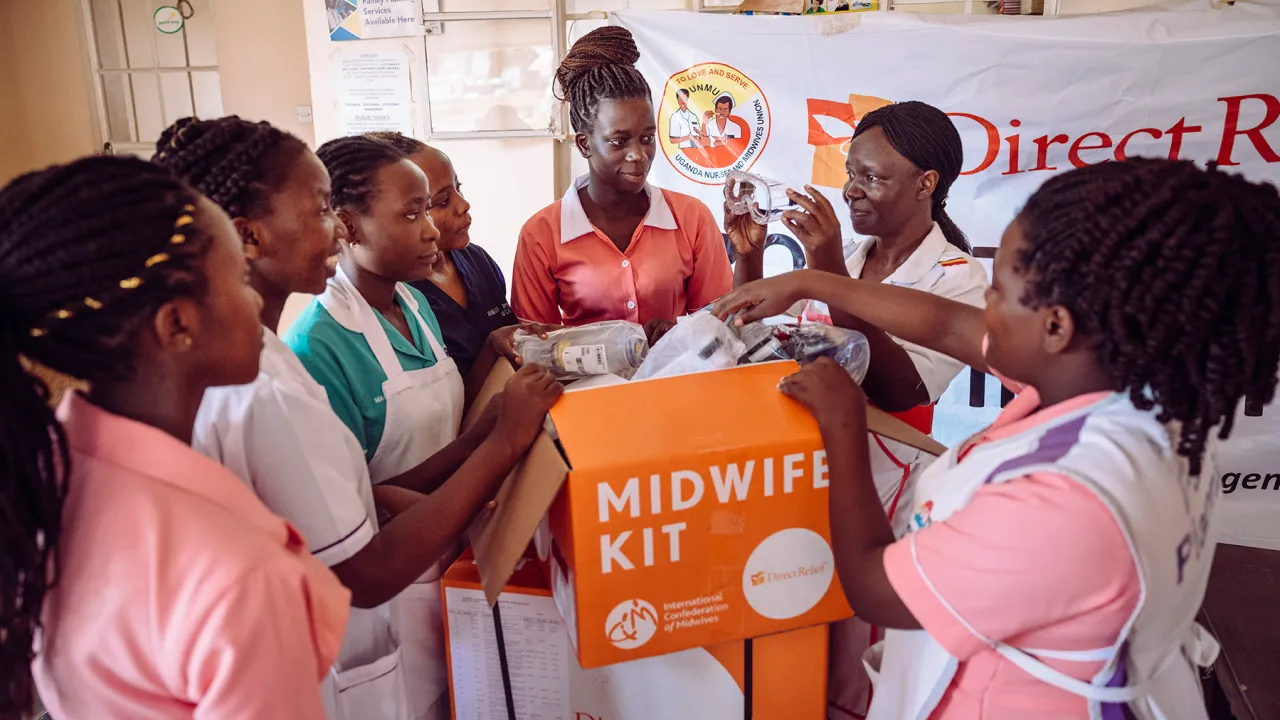
- Prenatal and maternal support: Direct Relief equipped midwives and frontline health workers with over 1,000 maternal and child health kits in 27 countries in 2024 alone, enabling more than 65,000 safe births. Volunteers support supply drives and health education around programs like these.
- Community health education: Supporting nonprofits that deliver reproductive health, nutrition, and maternal care information to underserved women, often in the form of home visits, community workshops, or multilingual content creation.
- Health literacy content creation: Writing or translating guides on prenatal care, menstrual health, or mental health access for women's nonprofits.
For corporate teams: Goodera's virtual volunteering catalog includes health literacy content creation activities accessible entirely from a laptop, available for corporate teams across time zones. In-person options connect teams with community health organizations in their local area.
3. Volunteer for Women's Education and the Empowerment of Girls
Education and economic independence are among the most durable, long-lasting protections against every other form of gender-based disadvantage. A girl who finishes school earns more, marries later, has healthier children, and has far more agency over her own life. And yet the structural barriers to that education, i.e., poverty, early marriage, lack of role models, and a STEM pipeline that loses girls at almost every stage, are still formidable.
Women represent only 30% of the global STEM workforce, according to Girl Up. Black and Hispanic women in the US make up just 2% and 1% of scientists and engineers, respectively. These numbers don't reflect talent; instead, they reflect access, encouragement, and exposure.
Specific volunteer activities for women's education:
- STEM mentorship: Technovation Girls connects girls ages 8–18 with volunteer mentors who guide them through building mobile apps and developing entrepreneurial thinking. The program runs August through April and offers both mentoring and judging roles, mentoring for those who want sustained engagement, judging for those with limited availability. Their data shows 97% of students report improved skills, and 87% of alumnae go on to pursue or plan to pursue STEM degrees.
- Financial literacy workshops: Bloomberg's annual financial literacy partnership with Mexico's MIDE (Interactive Museum of Economics) shows what corporate volunteering in this space can look like at scale, with employee volunteers reaching more than 150 young women in a single year through personal finance and career workshops.
- Career coaching and mock interviews: One-on-one sessions with women entering or re-entering the workforce after education interruptions, career gaps, or leaving abusive situations. These sessions are among the highest-impact virtual volunteer formats because they deliver personalized, skills-based support.
- Craft Inspiring Book Gifts: IBM, in partnership with Goodera and the nonprofit Children of Asia Philippines, ran an activity where employees illustrated and assembled personalized book gifts celebrating visionary women for students. Hands-on, meaningful, and scalable to large teams.
- Digital literacy support: Helping women navigate online job applications, telehealth platforms, legal aid portals, and financial tools, the digital access gap that often gets overlooked in conversations about economic empowerment.
For corporate teams: Goodera's Women's History Month activities include STEM education sessions, financial literacy workshops, career guidance programs, and digital literacy support, all available for corporate teams globally, in virtual and in-person formats. Explore options at Goodera's IWD activities page.
4. How to Volunteer for Women's Rights
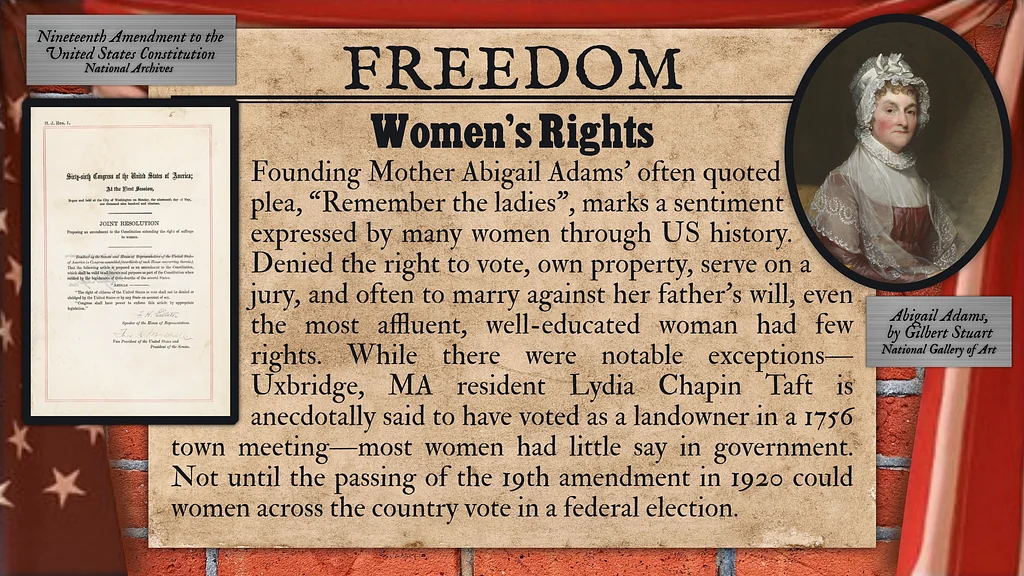
Rights-focused volunteering operates at a different level than direct service. It works on the conditions that create inequality, rather than the symptoms. It is slower, less visible, and absolutely necessary.
The numbers in this space are sobering. In 2024, women working full-time year-round in the US earned a median of $57,520, compared to $71,090 for others, a gap that widened for the second consecutive year, according to IWPR analysis of US Census Bureau data. At the global level, achieving gender parity in management could take nearly a century at the current rate of change. As of January 2025, 102 countries have never had a woman as head of state or government.
How to volunteer for women's rights in practice:
- Legal aid support: Many women navigating workplace discrimination, housing insecurity, or immigration situations can't afford legal counsel. Organizations like the National Women's Law Center and local legal aid clinics take skilled volunteers for research, intake support, and case documentation.
- Policy research and communications: Advocacy organizations running campaigns on equal pay, reproductive rights, or safety legislation often have more work than staff capacity, and skilled volunteers in writing, data analysis, or strategic communications can fill that gap meaningfully.
- Leadership and civic engagement mentoring: Programs that prepare women and girls for roles in public service, law, policy, or advocacy benefit enormously from professional mentors who can provide guidance, connections, and practical tools.
- Storytelling and awareness campaigns: Helping nonprofits document and share the experiences of women affected by rights violations through written content, video production, social media strategy, or grant writing.
The 2026 International Women's Day theme, "Rights. Justice. Action. For ALL Women and Girls," makes this a particularly strong moment for teams to anchor their volunteering to the global conversation on gender justice.
5. Volunteering for Women's Aid Through Corporate Programs
Corporate volunteer programs are one of the most underused channels for sustained, high-impact volunteering to help women, and Women's Employee Resource Groups (ERGs) are where the real opportunity lies.
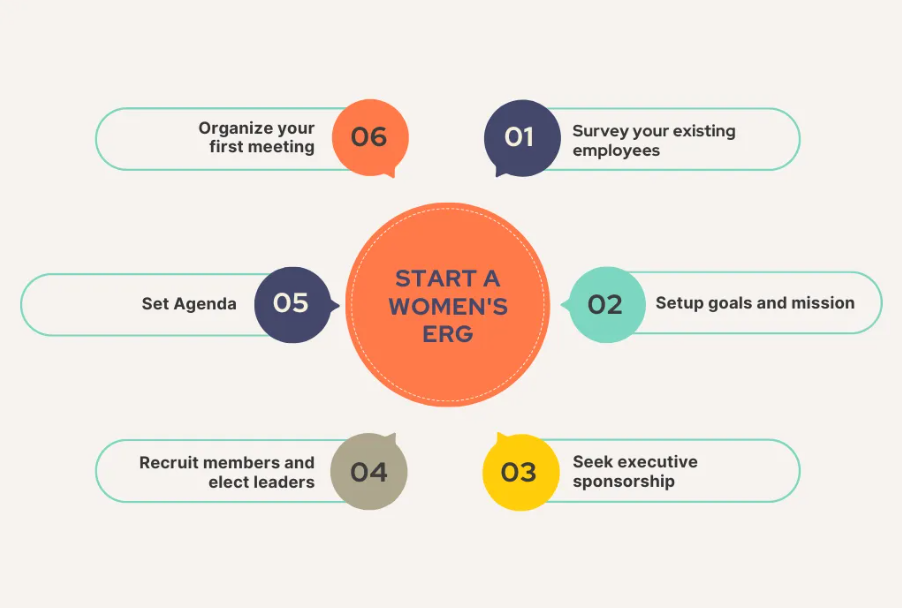
According to Goodera's Women's ERG guide, women represent nearly half of entry-level corporate hires, yet that presence shrinks significantly up the ladder, with women holding only 29% of C-suite positions in 2024. Women's ERGs exist to address that internal reality, and volunteering is one of the few activities that simultaneously builds community inside the company, creates awareness around gender equity, and generates real impact for organizations outside it.
The companies doing this well, IBM, ServiceNow, LexisNexis, Oracle, aren't running one-off Women's Day events. They're building structured, year-round programs that connect employee skills to community needs. Oracle volunteers, for example, recorded audiobooks for young girls in Project DIVA International through Goodera, making it an engaging team activity with direct educational impact. IBM and LexisNexis support students through mentorship, interview coaching, and career kits through Goodera's platform.
What a year-round corporate volunteering calendar for women can look like:
Quarter 1: Women's History Month and IWD (January–March): Care kit assembly for domestic violence shelters, STEM mentoring sessions, financial literacy workshops, book gift crafting, storytelling events, and panel discussions anchored to the IWD theme.
Quarter 2: Economic Empowerment (April–June): Skills-based volunteering aligned with career coaching, financial literacy, digital literacy, and legal aid support for women's organizations.
Quarter 3: Health and Wellness Focus (July–September): Health supply drives, menstrual hygiene kit assembly, health literacy content creation, and maternal health education support.
Quarter 4: Domestic Violence Awareness Month and Season of Giving (October–December): Shelter supply drives, hotline fundraisers, hygiene kit packing, and care kit assembly for women's crisis centers.
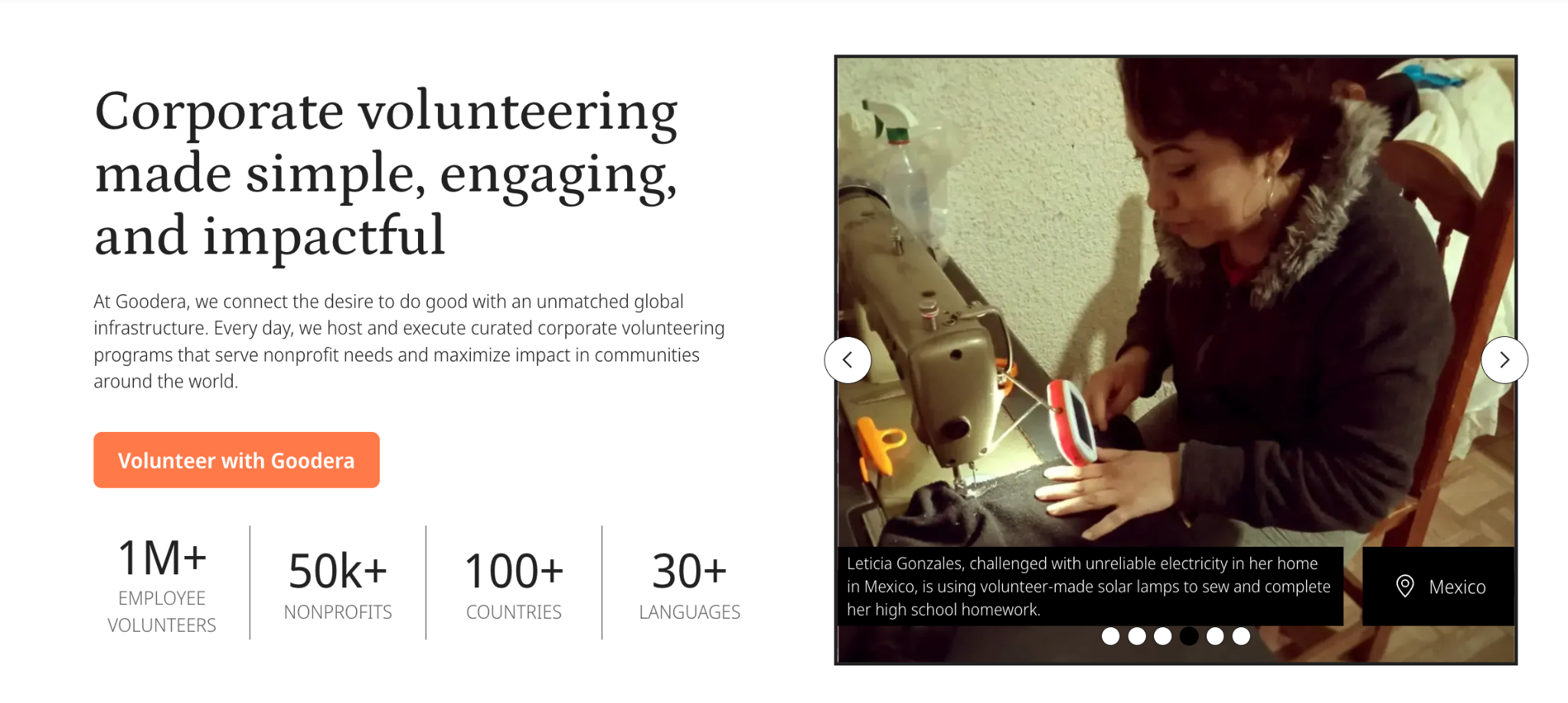
Goodera supports corporate teams with end-to-end managed volunteering experiences for women's causes, available virtually and in person across 100+ countries and 30+ languages. Their platform integrates with major corporate giving tools, including a recently announced partnership with Benevity that enables seamless coordination between both platforms. Learn more at goodera.com.
The Volunteer Activities That Create the Most Lasting Impact
Not all volunteer experiences are created equal. Based on Goodera's catalog and the specific operational needs of women-focused nonprofits, here are the highest-demand formats:
Hands-on, in-person volunteer activities for women:
- Hygiene and care kit assembly for domestic violence shelters and women's crisis centers
- Menstrual supply drives in partnership with period equity organizations
- Maternal health supply packing (prenatal vitamins, newborn essentials, postpartum care items)
- Book gift crafting and illustrated story kits for girls in underserved communities
- Community garden and food security projects supporting women-led households
Skills-based and virtual activities to volunteer for women:
- Career coaching and mock interview sessions for women re-entering the workforce
- STEM mentorship for girls in middle and high school through programs like Technovation Girls
- Financial literacy workshop facilitation for women accessing economic independence programs
- Health and reproductive literacy content creation for women's nonprofits
- Grant writing, marketing strategy, and communications support for women-led organizations
- Digital skills coaching i.e., job applications, telehealth navigation, legal aid portals
Team activities for corporate groups:
- Women's storytelling and panel events for internal awareness around gender equity
- Skills-based consulting sprints for women-led nonprofits and social enterprises
- Donation drives for maternal health supplies, menstrual products, or legal aid funds
- Goodera-hosted hybrid activities that engage both in-office and remote employees in the same session
How to Volunteer for Women's Aid: Getting Started Without Overcomplicating It
- Start with what you care about most. Safety and domestic violence support, healthcare, education, economic empowerment, rights, and advocacy - each area needs different skills and different time commitments. Picking one and going deep tends to create more sustained impact than spreading thin across all of them.
- Pick your format. In-person volunteering at a shelter, mentoring program, or community health organization tends to have the deepest individual impact. Virtual volunteering through content creation, career coaching, or digital literacy support offers flexibility for people with limited time or geography constraints. Both are valuable, and many organizations now run hybrid programs that combine both.
- Check the training requirements. Crisis hotline roles and domestic violence shelter work involve significant training before any direct client contact i.e., typically 60 to 80 hours of certification. That's by design and worth it. Education, supply drives, and content creation roles have minimal prerequisites.
- Make a consistent commitment. One-time participation is valuable. Consistent, sustained engagement is where the transformational outcomes are for volunteers as much as for the organizations they support.
- Bring your team. A Women's ERG that runs a quarterly volunteering session or a corporate team that builds a year-round calendar generates far more sustained benefit than individual one-time contributions. Goodera's platform is built specifically for that kind of sustained, structured corporate volunteering.
Frequently Asked Questions
1. What are the best volunteer opportunities for women's causes?
The most impactful volunteer opportunities to support women align with areas of greatest need: domestic violence support (hotline staffing, shelter logistics, care kit assembly), women's health (maternal health education, menstrual hygiene drives, health literacy content), education and mentorship (STEM programs through Technovation Girls, career coaching, financial literacy workshops), and economic empowerment (skills-based volunteering with women-led nonprofits). The best choice depends on your available time, skill set, and whether you prefer hands-on or virtual formats. Goodera's women-focused activities catalog offers curated options across all of these areas for individuals and corporate teams alike.
2. How do I volunteer for women's aid organizations near me?
Start by contacting your local domestic violence shelter, women's health clinic, or community resource center and asking directly about their volunteer program. Most have structured onboarding and training. For a broader search, Goodera connects individuals and corporate teams with vetted women-focused organizations in 1,000+ cities across 100+ countries, for both in-person and virtual formats.
3. How do I volunteer for women's rights organizations?
Women's rights volunteering typically involves legal aid support, policy research and writing, civic engagement mentoring, and advocacy communications work. Organizations like the National Women's Law Center and Girls for a Change welcome skilled volunteers. For corporate teams, Goodera's skills-based volunteering connects professionals with women's rights nonprofits that need specific expertise in law, marketing, data, or strategy.
4. What is the difference between volunteer opportunities for women's rights and volunteering for women's aid?
Volunteering for women's rights focuses on systemic change: legal access, policy advocacy, workplace equity, political representation, and accountability. It tends to involve skills-based contributions like research, writing, legal support, and mentoring. Volunteering for women's aid focuses on immediate, practical support: crisis intervention, shelter assistance, health access, and economic survival. Both are essential. The most comprehensive approach supports both through a mix of hands-on and skills-based activities, year-round.
5. Can my company run a volunteering program to support women?
Yes! And doing it well means going beyond a single Women's Day event. Goodera works with corporate teams to design year-round volunteering programs that include Women's History Month campaigns, IWD activities, and cause-aligned events throughout the calendar year. Virtual and in-person formats are available globally. Their Women's ERG guide and toolkit also offer specific frameworks for building these programs through employee resource groups. Start at Goodera's Women's ERG page.
6. How do I get involved in volunteering for women's health programs?
Women's health volunteering ranges from supply drives and community education to virtual content creation and maternal health support. Goodera's catalog includes health-focused content creation activities accessible from home. Organizations like Direct Relief, Helping Women Period, and the Alliance for Period Supplies all have clear, structured pathways for volunteers. For clinical support roles, most organizations require relevant health qualifications, so verify requirements with each organization before applying.
The organizations and programs referenced in this article represent a small fraction of the women-focused volunteer ecosystem. What they share is a dependence on community support that goes beyond funding, on people who show up consistently, with their skills and their time.
7. What skills-based volunteer opportunities can professionals offer to support women?
Skills-based volunteering matches professional expertise with women's programs. Examples include financial literacy workshops for domestic violence survivors, resume and interview coaching for women re-entering the workforce, pro bono legal aid, mentorship circles for early-career women, and entrepreneurship coaching for founders. These engagements typically run 2 to 8 hours and create measurable outcomes such as job placements or business plans.
8. How can companies activate volunteering around International Women's Day?
International Women's Day on March 8 and Women's History Month drive concentrated activation. Companies host virtual mentorship sessions, financial literacy workshops, care package assemblies for shelters, panel discussions with women leaders, and matched giving campaigns for partners like Girls Who Code or the Malala Fund. A layered calendar with a signature event and week-long micro-actions typically outperforms a single day.
9. What virtual volunteer opportunities support women globally?
Virtual formats let employees support women across time zones without travel. Common options include one-to-one mentorship with women in STEM or entrepreneurship programs, English conversation practice for refugees, resume reviews for job seekers, translation of educational content, and crisis text-line training for hotlines. Partners such as the Malala Fund and the Women's Refugee Commission run structured remote programs suitable for corporate cohorts.
10. Why does volunteering for women's economic empowerment matter now?
The UN Gender Snapshot 2025 warns that 351 million women and girls could live in extreme poverty by 2030, and women still shoulder a disproportionate share of unpaid care work. Volunteer time in financial literacy, workforce re-entry coaching, and entrepreneurship mentoring directly closes income and confidence gaps, accelerating recovery in households where women's earnings drive food security, healthcare access, and children's education.


.webp)