National Mentoring Month: Dates, Themes, Ideas, and Ways to Celebrate

Some of the most important relationships in a person’s life do not come with a job title or a formal introduction. A teacher who helps a student see a future they had not imagined. A volunteer who shows up every week for a young person who needs someone in their corner. A professional who shares advice, encouragement, or an opportunity that helps someone take their next step.
Yet access to these relationships is far from universal. Mentor conducted research in 2014 to assess the state of mentoring. The research found that one in three young people in the US had grown up without a mentor.
Another 2024 report showed that the situation had not improved significantly.
Today’s 18–21-year-olds are 9 percentage points less likely to have had a mentor while growing up than Millennials were.
Even more concerning, 6% of Gen Z, or roughly 2 million young people, reported growing up without a mentor or another meaningful adult in their lives.
National Mentoring Month, observed every January, brings attention to the role mentoring can play across schools, communities, workplaces, and beyond. It is an opportunity to recognize mentors, encourage more people to become mentors, and expand access to relationships that can help young people learn, grow, and navigate new opportunities.
For companies, January can also be a chance to look beyond internal mentoring programs and explore how employees can use their time, skills, and experience to mentor students and young people in the communities they serve.

What Is National Mentoring Month?
National Mentoring Month is an annual observance held every January, dedicated to raising awareness about the value of mentoring relationships and expanding access to mentors for young people and professionals who need them most.
It was established by the Harvard T.H. Chan School of Public Health and MENTOR: The National Mentoring Partnership in 2002. Since then, it has grown from a campaign focused on youth mentoring into a broader national movement that encompasses workplace mentoring, career development, community volunteering, and cross-sector advocacy.
The observance is anchored by MENTOR, the leading nonprofit organization in the United States working to expand the quality and quantity of mentoring relationships. Each January, communities, organizations, and schools come together to celebrate the impact of mentoring, promote the expansion of mentoring programs, and appreciate mentors for everything they do.
MENTOR uses National Mentoring Month to recruit organizations to engage their constituents in mentoring and highlight the benefits mentoring provides for both mentors and mentees.
Businesses, nonprofits, government agencies, and schools across the country run structured campaigns throughout January, tied to specific dates and calls to action within the month.
Volunteer with Goodera to mentor youth and students from underserved communities:
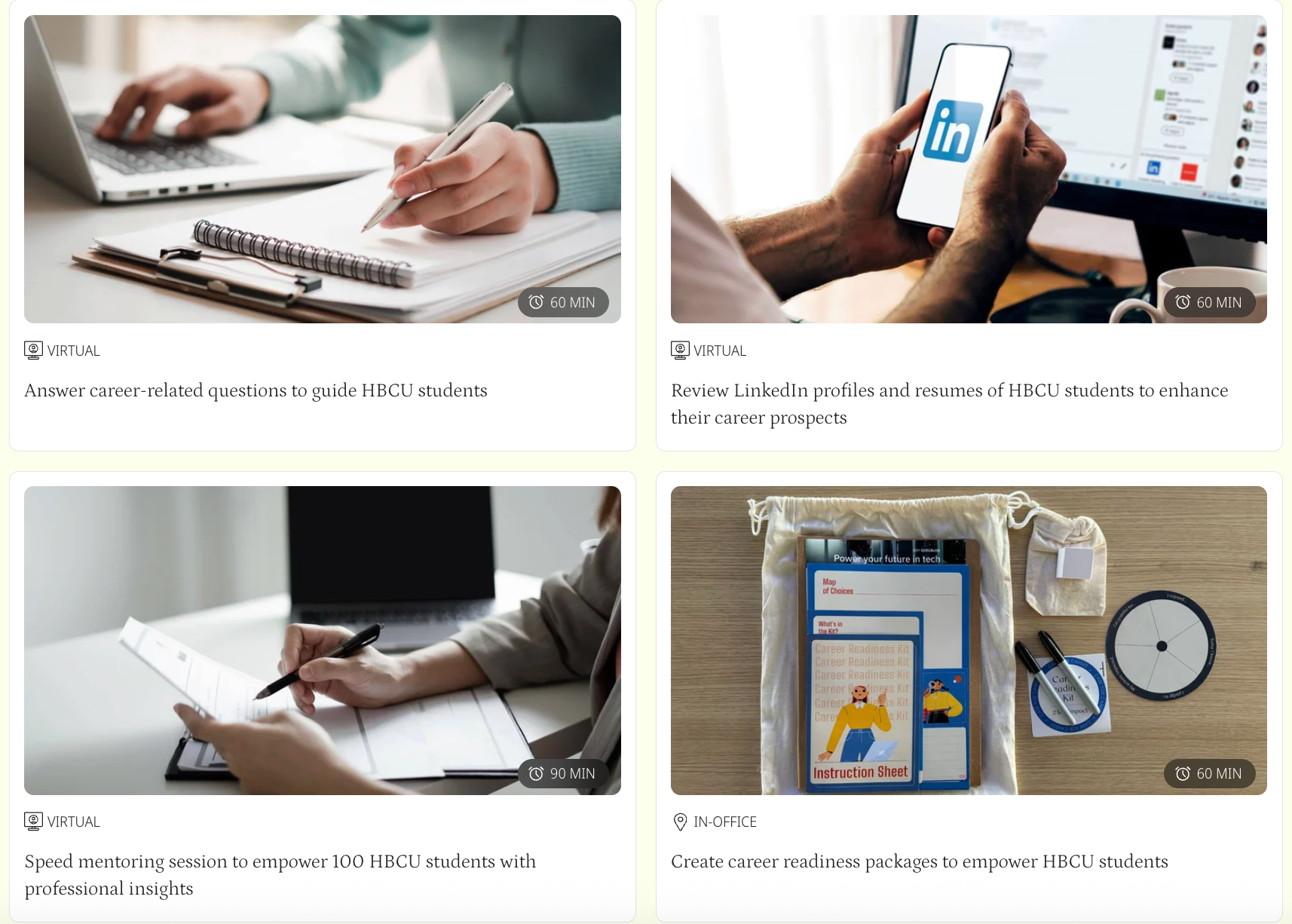
Learn more about Future Forward
When Is National Mentoring Month 2027?
National Mentoring Month is observed throughout January 1–31 each year.
MENTOR highlights several key dates during the month:
- I Am a Mentor Day: January 6, based on the 2026 calendar
- International Mentoring Day: January 17, based on the 2026 calendar
- Dr. Martin Luther King Jr. Day of Service: January 18, 2027
- Thank Your Mentor Day: January 28, based on the 2026 calendar
Some dates may change from year to year. Companies planning a 2027 National Mentoring Month campaign should confirm the official calendar once MENTOR publishes it.
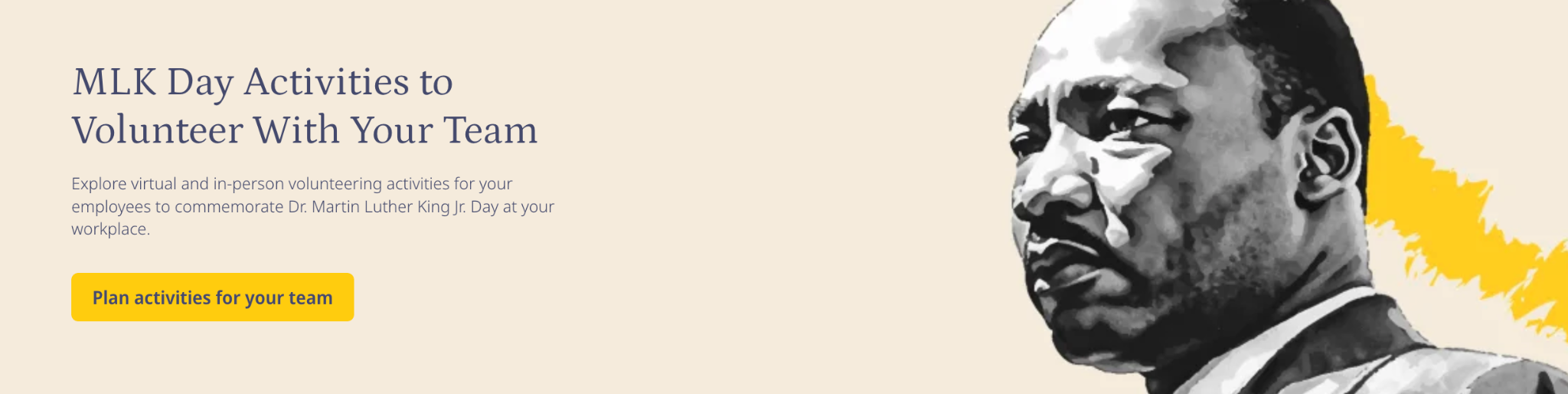
One date that is already confirmed is Dr. Martin Luther King Jr. Day of Service, which falls on January 18, 2027, the third Monday of January.
The First Celebration of the Month: I Am a Mentor Day
I Am a Mentor Day recognizes the mentors who give their time, knowledge, and support to help others grow. It also encourages more people to consider becoming mentors themselves.
Businesses, nonprofits, schools, and mentoring organizations can use the day to celebrate mentors in their communities and workplaces. Mentoring can happen through formal programs or more informally through everyday relationships and guidance.
Organizations often mark I Am a Mentor Day by recognizing their mentors through company-wide messages, social media posts featuring mentor stories, or small appreciation gestures. It can also be a good time to launch a new mentoring program or invite employees to join an existing one.
The Final Recognition of the Month: Thank Your Mentor Day
Thank Your Mentor Day falls toward the end of National Mentoring Month and offers a dedicated opportunity to thank the people who have guided, supported, or encouraged you along the way.
For companies, it can be a simple way to bring mentoring into everyday workplace conversations. A company-wide prompt encouraging employees to thank someone who has mentored them, whether inside or outside the organization, can help highlight the value of these relationships. Organizations can also use the day to collect and share mentoring stories or recognize employees who regularly support others.
The calendar also includes Thank Your Mentee Day, which recognizes the two-way nature of mentoring relationships. Mentees can bring fresh perspectives, new ideas, and opportunities for mentors to learn and grow, too.
The Difference Between National Mentoring Month and National Mentoring Day
National Mentoring Month and National Mentoring Day are separate observances. National Mentoring Month takes place each January in the United States and is led by MENTOR: The National Mentoring Partnership, while National Mentoring Day takes place on October 27 and originated in the United Kingdom. The two observances share a focus on expanding awareness and participation in mentoring, but they have different origins, dates, and organizers.
What Is National Mentoring Day?
National Mentoring Day is a separate observance from National Mentoring Month. Founded in the United Kingdom in 2014 by award-winning business mentor Chelsey Baker, National Mentoring Day takes place on October 27. It celebrates all forms of mentoring, including formal and informal, personal and professional relationships, and encourages more people to take part in mentoring. It was inaugurated as an official national day at the Houses of Parliament in London in 2016 and has since grown into a global celebration.
Many organizations use October 27 to host events, create mentoring partnerships, recognize mentors, or share stories about the impact of mentoring. It also gives people an opportunity to thank their mentors, reconnect with mentees, and highlight the role mentoring can play in communities and workplaces.
While National Mentoring Month takes place in January in the United States, National Mentoring Day offers another opportunity on October 27 for organizations to recognize mentoring and create opportunities for employees and communities to get involved.
Is There an International Mentoring Day?
Yes. International Mentoring Day is observed on January 17 each year and falls within National Mentoring Month. It is a day to reflect on the role mentoring can play in building connections, sharing knowledge, and supporting people around the world. MENTOR describes January 17 as a day that highlights the worldwide power of mentoring and its role in fostering global understanding.
International Mentoring Day is separate from the UK-founded National Mentoring Day on October 27, although both observances focus on raising awareness of mentoring.
For companies with global teams, January 17 can be a useful opportunity to create cross-border or cross-cultural mentoring initiatives. Employees can connect across locations, share their experiences and skills, and learn from colleagues or community members in different parts of the world.
How to Celebrate National Mentoring Month
January is a natural starting point for mentoring initiatives because the new year creates an opportunity to revisit commitments and invest in employee and community relationships. But organizations can use National Mentoring Month as a starting point for mentoring activities that continue throughout the year.
Here are some formats to consider:
1. Employee Mentoring Programs
Structured workplace mentoring can be a valuable investment in employees. Retention rates are 72% higher for mentees than for employees who do not participate in a mentoring program, and mentees are promoted five times more often than those without mentors.
Perhaps most strikingly for organizations thinking about talent pipelines, mentors themselves are promoted six times more often than those not participating in mentoring, suggesting that the benefits can extend to both sides of the relationship.
National Mentoring Month can be a useful moment to launch or relaunch a formal employee mentoring program, open applications, announce new mentoring pairs, or pilot a reverse mentoring initiative. Reverse mentoring programs, in which junior employees mentor senior leaders on topics like technology, culture, and workforce trends, are now used by 72% of Fair360's Top 50 Companies for Diversity and represent a growing format in workplace mentoring.
2. Volunteer Mentoring
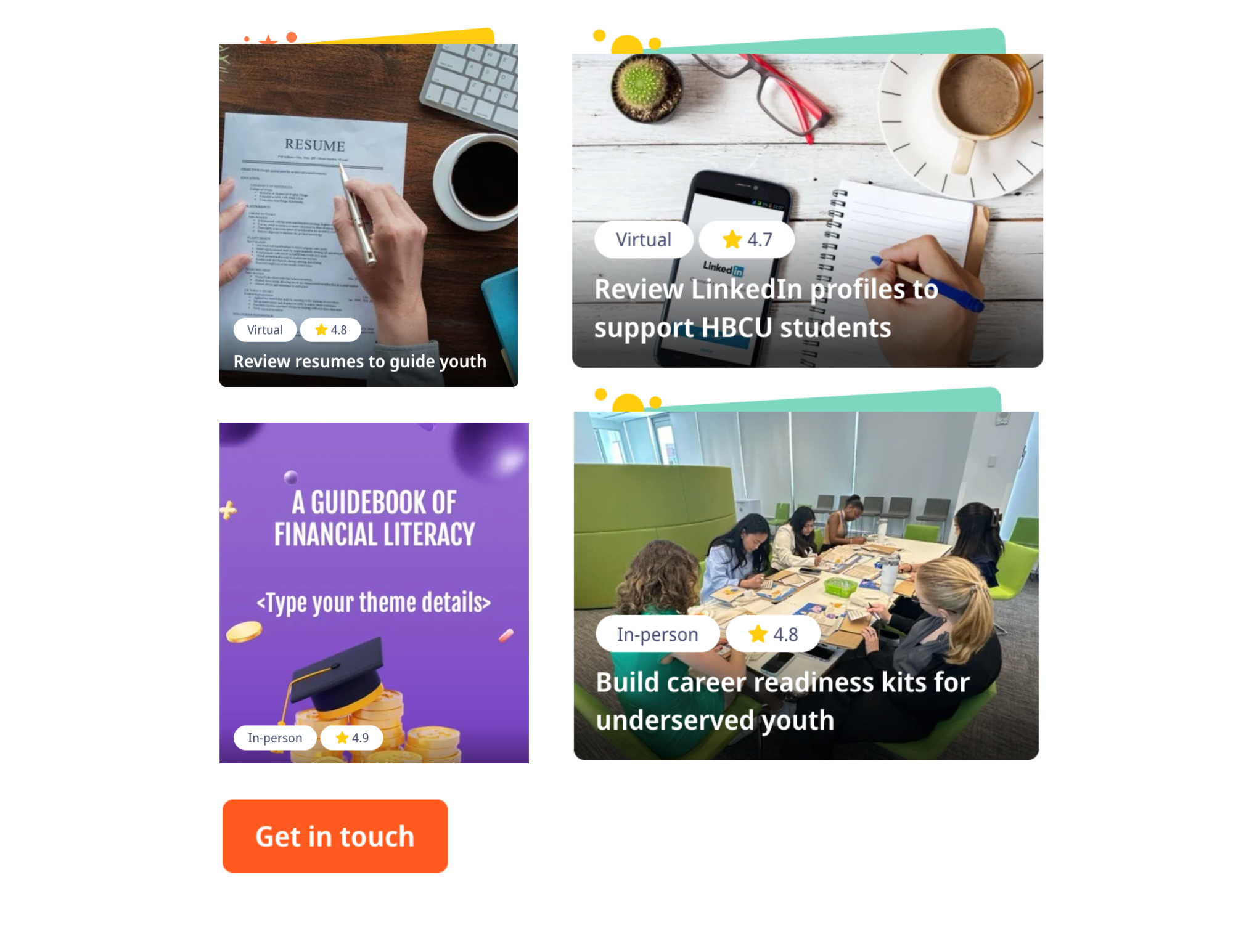
Volunteer mentoring is a meaningful form of community service for professionals and can be a natural part of a January corporate volunteering campaign. Employees who volunteer as mentors contribute something that financial donations and one-time service activities cannot always provide: sustained, individualized attention from someone who can offer guidance and support.
76% of youth with a mentor aspire to enroll and graduate from college, nearly double the rate of those without mentors, according to MENTOR's research. For companies with employee volunteer programs, connecting your team to local schools, youth organizations, or workforce development nonprofits during January can create opportunities for employees to contribute their skills and experience while supporting young people.
Platforms like Goodera's volunteer matching network connect companies with 50,000+ vetted nonprofits globally, many of which run youth mentoring programs that actively seek skilled professional volunteers. January can be a useful time to identify and launch those partnerships.
3. Career Mentoring
Career mentoring connects employees with professionals in their field or adjacent roles who can offer guidance, sponsorship, and access to networks. It is among the most requested forms of mentoring from younger employees.
83% of Gen Z employees say a workplace mentor is crucial for their career, yet only 52% report having one. 54% of employees say they would consider leaving their company if it did not offer professional development opportunities like mentoring. These findings point to career mentoring as one way companies can support employee development and engagement.
National Mentoring Month can be a useful time to open enrollment for career mentoring programs, run a company-wide "mentoring speed networking" event where employees meet potential mentors across functions, or publish a directory of senior employees who have opted in to informal mentoring conversations.
4. Student Mentoring
Beyond the workplace, National Mentoring Month offers companies an opportunity to extend mentoring into the communities where their employees live and work. Student mentoring programs, whether virtual or in person, connect professional employees with K-12 students, college students, or early-career young people who can benefit from additional guidance and support.
87% of students with mentors are more likely to pursue higher education, and mentored students achieve 25% higher test scores compared with peers without mentors. For companies looking to create community impact through their CSR programs, student mentoring can provide a structured way for employees to contribute their time and expertise.
5. Mentor Appreciation Activities
Recognition can help reinforce the value of mentoring and encourage people to continue participating. January offers an opportunity to celebrate the mentors already operating inside and around your organization and show potential mentors that their time and contribution are valued.
Practical mentor appreciation activities worth running during National Mentoring Month include:
The Personal Thank-You Prompt: On Thank Your Mentor Day, send a company-wide prompt asking every employee to reach out personally, by message, email, or note, to someone who has mentored them. The simplicity is the point. Personal gratitude from a mentee can be more meaningful than a formal award.
A Mentor Story Series: Throughout January, publish one short mentor story per week on your internal channels or social media, featuring a real mentoring pair from inside or connected to your organization. Specific stories about how a mentoring relationship influenced someone's career or confidence can help demonstrate the value of mentoring across the organization.
An Appreciation Event: Host a mentor appreciation breakfast, virtual lunch, or team gathering during the last week of January. Brief speeches from mentees, a small gift or token of recognition, and public acknowledgment from senior leadership can signal that mentoring is valued within the organization.
Mentor of the Year Recognition: Establish an annual Mentor of the Year recognition tied to National Mentoring Month. Nominations from mentees, a public announcement, and a meaningful prize can create a lasting tradition that gives mentoring visible status in your organization.
Corporate Volunteering Ideas for National Mentoring Month
Corporate volunteering is one way to bring National Mentoring Month to life while giving employees opportunities to contribute their skills and experience. Here are a few approaches companies can consider:
6. Skills-Based Mentoring Volunteer Days
Organize a company-wide volunteer day in January where employees use their professional skills in marketing, finance, legal, technology, or HR to mentor nonprofit staff, social entrepreneurs, or students. Unlike traditional volunteering, skills-based mentoring can create knowledge and resources that nonprofits can continue using after the activity. Taproot Foundation research shows that skilled volunteers deliver $150 in value per hour, compared with roughly $30 for traditional volunteering.
7. A "Mentor for an Hour" Campaign
Challenge employees to dedicate one hour in January to mentoring someone who could benefit from their experience. Track the hours, display a progress meter, and donate a set amount to a youth mentoring nonprofit for every 100 hours logged. This creates a simple and measurable way for employees to participate.
8. Partnership With a Youth Mentoring Nonprofit
Identify a local or national youth mentoring organization and explore a corporate partnership during National Mentoring Month. This could involve employee volunteer mentors committing to monthly sessions with a young person, with the company providing paid volunteer time off to support that commitment. Programs like Big Brothers Big Sisters, Year Up, and iMentor run structured programs that can provide opportunities for corporate volunteers.
Employee-Led Mentoring Opportunities
The most sustainable mentoring cultures are not entirely top-down. Employees who care about mentoring can create their own structures when they have the space and resources to do so. National Mentoring Month is a natural moment to invite that kind of employee-led participation.
9. ERG-Led Mentoring Circles
Employee Resource Groups are natural homes for peer mentoring and mentoring circles, small groups of three to five people who meet monthly to discuss career challenges, share advice, and hold one another accountable. ERGs that run skills-based volunteering and peer mentoring programs see 30% higher engagement than those that do not. National Mentoring Month can be a useful time to launch or re-energize these circles.
10. Reverse Mentoring Programs
Reverse mentoring connects junior employees with senior leaders, creating an exchange of expertise and perspectives. Junior participants can share insights into technology, culture, and workforce trends, while senior leaders gain perspectives from employees at different stages of their careers. January can be a useful launch window because National Mentoring Month provides a natural context for introducing the program.
11. An Open Mentoring Directory
Create a simple internal document or platform listing employees who are open to informal mentoring conversations, their areas of expertise, and how to reach them. Publish it in January and keep it live year-round. This can make it easier for employees to find someone with relevant experience without having to make a cold outreach.
National Mentoring Month Ideas for Companies
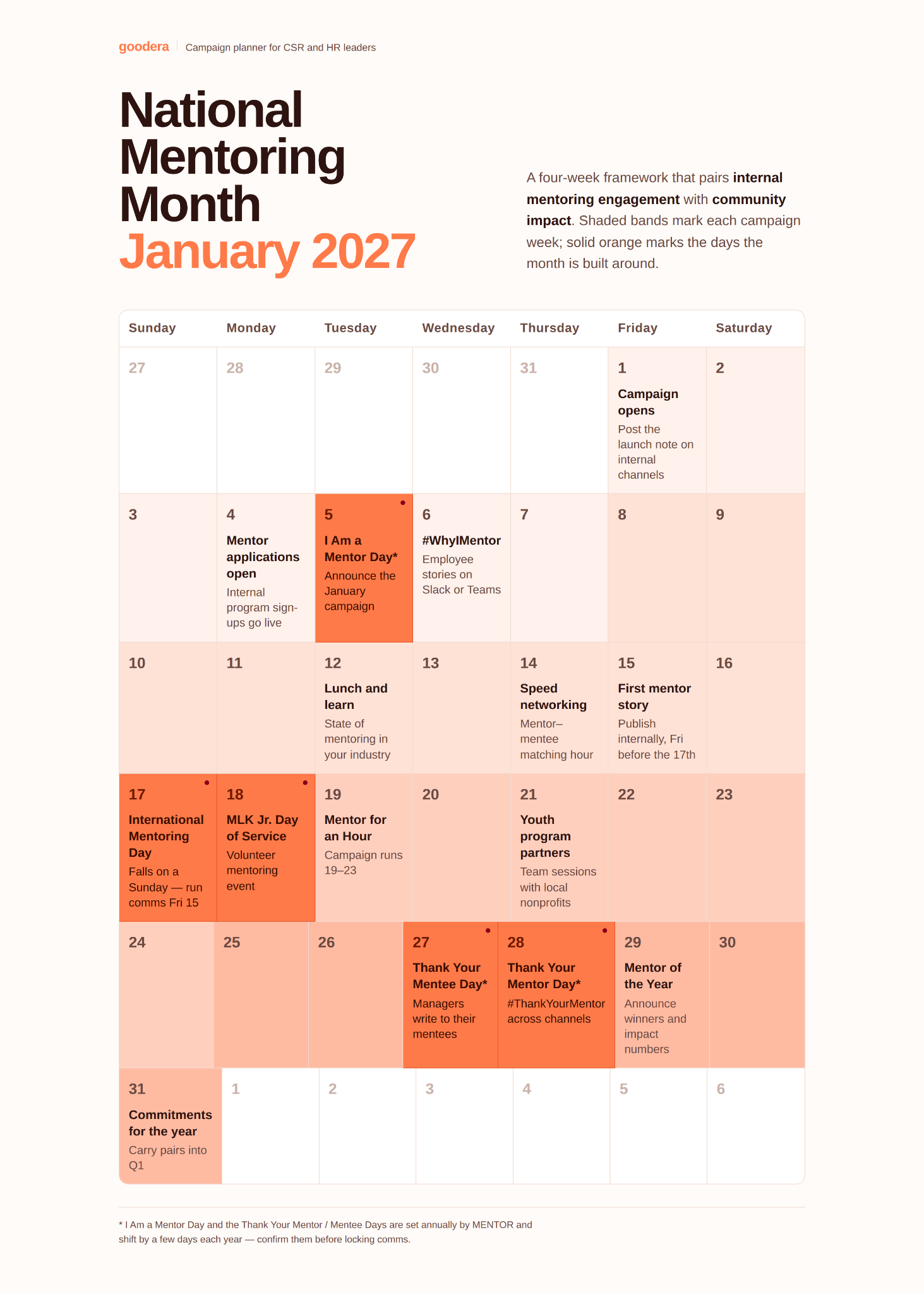
For CSR and HR leaders building a January campaign, here is a practical month-long framework that balances internal engagement with external community impact:
- Week 1 (January 1–7): Launch and Declare
Use I Am a Mentor Day to announce your January mentoring campaign. Open applications for your internal mentoring program and invite employees to share why mentoring matters to them on internal channels. - Week 2 (January 8–17): Education and Connection
Use International Mentoring Day on January 17 as an opportunity to host a lunch-and-learn on the state of mentoring in your industry, organize a mentor-mentee speed networking event, or publish the first mentor story from inside your organization. - Week 3 (January 18–24): Service and Community
Use the Martin Luther King Jr. Day of Service as a springboard for a volunteer mentoring event. Connect employee teams with local youth mentoring programs or skills-based nonprofit partners. Run your "Mentor for an Hour" campaign this week. - Week 4 (January 25–31): Appreciation and Commitment
Use Thank Your Mentee Day and Thank Your Mentor Day to close the month by celebrating the relationships that have already formed. Announce Mentor of the Year results and share your impact numbers, such as mentoring hours, pairs formed, or students reached.
Key Takeaways
National Mentoring Month can be a useful starting point for companies that want to make mentoring part of how employees learn, connect, and give back. January gives organizations a clear moment to bring mentoring into the conversation, while the activities can continue throughout the year.
If you're planning a mentoring initiative, start by defining what you want employees to get involved in. You could recognize existing mentors, invite employees to volunteer as mentors, launch an internal mentoring program, or partner with a nonprofit to provide mentoring support to young people and communities.
A few practical steps can help you get started:
- Set a clear goal: Decide whether you want to recognize mentors, recruit new ones, develop employee skills, or support a community through mentoring.
- Choose the right format: Consider one-time mentoring sessions, ongoing relationships, group mentoring, skills-based sessions, or internal employee mentoring.
- Find the right partners: If you're volunteering externally, work with nonprofit organizations that have established mentoring programs and clear opportunities for employee participation.
- Plan beyond January: Use National Mentoring Month as a starting point for mentoring activities that employees can continue throughout the year.
- Make participation easy: Give employees clear information about who they will support, what they will do, how much time they need, and what they can expect from the experience.
For companies looking to include mentoring in their employee volunteering programs, Goodera can help identify relevant opportunities and organize mentoring activities with nonprofit partners. The right approach will depend on your goals, employees, and the communities you want to support.
Frequently Asked Questions
1. When Is National Mentoring Month?
National Mentoring Month is observed every January, from January 1 through January 31. It was established by Harvard T.H. Chan School of Public Health and MENTOR: The National Mentoring Partnership in 2002 and has been observed every January since, including formal proclamations from presidents, governors, and mayors across the United States.
2. What Is National Mentoring Month?
National Mentoring Month is an annual campaign dedicated to raising awareness about the power and impact of mentoring. It is a time to recognize and honor the contributions of mentors while encouraging individuals to become mentors themselves. The observance covers youth mentoring, workplace mentoring, community volunteering, and professional development, with the goal of expanding access to quality mentoring relationships for everyone who needs one.
3. What Is Mentor Appreciation Month? Is It the Same as National Mentoring Month?
Mentor Appreciation Month is not a formally designated observance in the United States. Some organizations use the phrase as an alternative way to frame National Mentoring Month, particularly when they want to focus on recognizing the mentors already making a difference in their communities or workplaces.
Organizations may use January to celebrate existing mentors through appreciation events, awards, employee recognition, or stories that highlight their contributions. The focus can also extend to encouraging more employees to become mentors or creating new opportunities for mentoring.
If your company is planning a January campaign, you can use Mentor Appreciation Month as a way to put the spotlight on the mentors already involved in your organization. If your goal is to encourage employees to become mentors or launch a new mentoring program, National Mentoring Month provides a broader framework and several dates that can support your campaign.
4. What Is National Mentoring Day?
National Mentoring Day is a separate observance from National Mentoring Month. Founded in the United Kingdom in 2014, National Mentoring Day takes place on October 27 and has grown into a worldwide event that highlights all forms of mentoring, formal or informal, personal or professional. It sits later in the year and complements January's National Mentoring Month by giving organizations another touchpoint for mentoring recognition and promotion.
5. Is There an International Mentoring Day?
Yes. International Mentoring Day falls on January 17 and is a day to reflect on how mentoring can foster global understanding and strengthen connections. It sits within National Mentoring Month and is particularly relevant for companies with global teams looking for a moment to run cross-border mentoring initiatives.
6. How Can Companies Celebrate National Mentoring Month?
Companies can celebrate by launching or relaunching internal mentoring programs, running volunteer mentoring campaigns with local youth organizations, organizing appreciation events for internal mentors, creating reverse mentoring opportunities between junior employees and senior leaders, and sharing mentor stories across internal and external channels.
Companies can also work with Goodera to organize mentorship volunteering events where employees mentor, guide, and support underserved youth and students through structured volunteering opportunities. January can serve as a starting point for building mentoring activities that continue throughout the year.
7. How Can I Thank My Mentor?
The most meaningful thank-you is personal and specific. On Thank Your Mentor Day, send a message naming one specific thing your mentor helped you see, decide, or achieve, and explain what it has meant to your career or life. A handwritten note can also be a thoughtful way to show appreciation. If your mentor is inside your company, recognizing them through an internal message or company channel can give the appreciation additional visibility.
8. How Can Employees Volunteer as Mentors?
Employees can volunteer as mentors through several pathways: registering for an internal company mentoring program, joining a platform like MENTOR's Mentoring Connector, volunteering with local youth organizations like Big Brothers Big Sisters or Year Up, or connecting with skills-based platforms like Taproot Foundation or Catchafire that match professionals with nonprofits needing their specific expertise. Many companies also offer paid volunteer time off specifically for mentoring activities, so check with your HR or CSR team to see what is available.
9. What Is the Difference Between a Mentor and a Sponsor?
A mentor gives advice, guidance, and emotional support. A sponsor uses their organizational influence to actively advocate for someone's advancement, nominating them for opportunities, projects, or promotions. Both can play important roles in professional development, and research shows that sponsorship has a more direct effect on career advancement than mentoring alone, particularly for women and underrepresented groups. Professional development can include both: a mentor to guide and a sponsor to open doors.
10. Does Mentoring Help With Employee Retention?
Retention rates are 72% higher for mentees than for employees who do not participate in a mentoring program. 77% of companies report that mentoring programs were effective in increasing retention, including during leadership transitions when flight risk can increase.
For organizations looking to support employee development and retention, mentoring can be one part of a broader employee engagement strategy. The impact will depend on factors such as program design, participation, relationship quality, and how well mentoring aligns with employees' needs.