Disaster Relief Volunteer Work: How Teams and Companies Can Show Up When It Matters Most

When disaster strikes, the destruction can be devastating. Families may lose their homes, people can be cut off from essential services, and entire communities can see their livelihoods disrupted overnight. And even after the immediate danger passes, the sorrow and uncertainty often linger. Rebuilding takes time, and communities need continued support long after the headlines fade. Immediate relief matters, but so does being there for the long road to recovery.
We can make that support more effective by preparing before disaster strikes. When we establish response plans, build relationships with trusted nonprofit organizations, and identify the resources we can mobilize, we can respond faster when communities need us. We can also make sure support continues as needs change, from emergency relief to rebuilding homes, restoring livelihoods, and strengthening community resilience. With the 2026–27 Super El Niño forecast to heighten the risk of extreme weather in several regions, now is a good time to think about how prepared we are.
As companies, we have the people, skills, and resources to make a meaningful difference. We can put those strengths to work by building structured volunteering programs before a crisis hits, partnering with experienced nonprofits, and preparing employees to contribute when and where they are needed. Instead of relying only on one-off volunteering events, we can create recurring opportunities that sustain relief efforts and support communities throughout recovery.
In this guide, we’ll explore what disaster relief volunteer work looks like, how we can contribute safely and effectively, how we can support communities across borders, and how we can build disaster relief volunteering into our plans so we’re ready to act when it matters most.
What Disaster Relief Volunteer Work Actually Involves
Before committing to disaster relief volunteering, it helps to understand what the work actually entails. Disaster response has several distinct phases, and the volunteer opportunities appropriate for corporate teams vary significantly depending on when and where you engage.
The Four Phases of Disaster Response
Phase 1: Preparedness
This is the phase that happens before a disaster strikes. It involves community education, early warning system support, emergency kit assembly, training programs, and building organizational capacity in at-risk regions. For companies, preparedness-phase volunteering is among the most impactful because it multiplies the effectiveness of every subsequent response dollar. Research on disaster risk reduction indicates that every US $1 invested in preparedness and risk reduction can save $4-7 in subsequent disaster-response costs.
For the 2026 Super El Niño specifically, this phase is urgent right now. The event is building. Communities in Southeast Asia, East Africa, and Central America that can receive preparedness support today, before the peak, will fare significantly better than those receiving only post-event aid.

Phase 2: Immediate Response: 72 Hours to Two Weeks Following a Disaster.
This phase requires trained emergency responders and is generally not appropriate for untrained corporate volunteers to participate in directly, for safety reasons and to avoid disrupting professional response operations.
However, it is the phase where financial contributions, coordinated supply donations, and corporate partnerships with relief organizations like Americares, CARE, Direct Relief, and International Rescue Committee make the most immediate difference.
Phase 3: Relief: Weeks to Months After the Disaster
This is the time when emergency needs are stabilizing, but communities are far from recovered. Volunteers help distribute food and clean water, assist with temporary shelter construction, support medical care logistics, help with data coordination, and provide psychosocial support. This phase is where structured corporate volunteer teams can be most directly useful on the ground.
Phase 4: Recovery and Reconstruction: The Months to Years After the Disaster
This is where skills-based volunteering delivers its highest value. Engineers help design rebuilt infrastructure. Teachers help children return to learning. Financial advisors help communities rebuild economic resilience. Communications professionals help organizations advocate for recovery funding. The recovery phase is long, rarely covered by media, and consistently underresourced.
How to Volunteer for Disaster Relief as a Company
Step 1: Define What Your Organization Can Uniquely Contribute
The first question is not "where do we want to help?" but "what do we have to offer?" A technology company's most valuable contribution is not its employees' labor moving rubble. It might be software that helps coordinate logistics, data systems that track aid distribution, or IT support for overwhelmed response organizations. A legal firm's most valuable contribution might be pro bono immigration support for displaced populations.
Matching your organization's distinctive skills to a response organization's specific gaps produces better outcomes than generic "boots on the ground" deployment. Start by inventorying what your employees know how to do professionally, and find the disaster relief context where that expertise is most needed.
Step 2: Partner With Vetted, Established Response Organizations
When a disaster strikes, getting help to the right people quickly takes local knowledge, established supply chains, trained responders, and coordination with communities on the ground. If you try to organize relief independently without the right expertise, you risk duplicating existing efforts or sending resources that communities cannot use.
Instead, you can partner with established humanitarian organizations that already have response systems and local relationships in place. These partnerships can help you direct funding, supplies, and employee support where they are needed most. The right partner will depend on the disaster, the location, the needs identified by local organizations, and the kind of support your team can safely provide.
Here are some established organizations you can consider when building your disaster preparedness and response plan.
1. Americares

Focus: Emergency medical aid, health services, disaster preparedness, and recovery.
Americares helps restore access to health care during emergencies by delivering medicines, medical supplies, and other essential support to local health providers. It also works with communities to strengthen health systems and prepare for future disasters.
Impact: Americares has helped more than 684,700 disaster and crisis survivors and carried out 30 emergency responses across 22 countries in 2025. Its medicine programs also distributed more than 9 million prescriptions.
How you can get involved: Explore Americares' corporate partnership opportunities to learn how your organization can support emergency response and preparedness. You can discuss financial contributions, medical supply partnerships, and other forms of support. If you want to involve employees directly, check which opportunities are suitable for volunteers, as emergency medical work requires specialist skills.
2. CARE

Focus: Humanitarian relief, food security, water access, livelihoods, and support for women and girls.
CARE works with local partners in communities affected by poverty, conflict, and climate-related emergencies. Its programs address immediate humanitarian needs while helping communities protect their livelihoods and prepare for future climate shocks.
They reached 58.7 million people across 121 countries in FY2025. In Somalia, CARE and its partners also provided treatment to 15,505 acutely malnourished children between March and August 2026, as hunger and the threat of El Niño-related flooding placed additional pressure on communities.
How you can get involved: Explore CARE's climate and humanitarian work to identify ways to support communities facing climate-related risks. You can discuss funding, preparedness initiatives, and employee engagement opportunities with CARE and its local partners. This helps ensure your support responds to identified needs, particularly when frontline teams are already managing an emergency.
3. Direct Relief

Focus: Medical aid, emergency health supplies, and support for health care providers.
Direct Relief helps health professionals and local health facilities access medicines, medical supplies, and equipment during emergencies. Its established logistics network makes it a relevant partner when disasters disrupt access to health care.
In FY2024, Direct Relief delivered 26,913 shipments of humanitarian aid to 94 countries, all 50 U.S. states, and five U.S. territories. These shipments included 3,200 tons of pharmaceuticals, medical supplies, and equipment, with a combined wholesale value of approximately $1.8 billion. In March 2026, Direct Relief also dispatched emergency medical aid following severe flooding in Hawaiʻi.
How you can get involved: Explore Direct Relief's corporate partnerships to discuss financial contributions, suitable medical product donations, and logistics support. Make sure any in-kind donations meet the organization's requirements. If you want to engage employees, confirm which volunteering opportunities are available rather than assuming field or warehouse placements can be arranged.
4. International Rescue Committee (IRC)
Focus: Humanitarian assistance, health, education, economic recovery, and protection in crisis-affected communities.
The IRC supports people whose lives have been disrupted by conflict and disaster. Its work addresses immediate needs while helping people recover, rebuild livelihoods, and regain stability.
Impact: The IRC and its partners directly reached more than 20.5 million people in FY2025. Its work also supported 2,713 health facilities, delivered more than 9.9 million outpatient consultations, and provided cash assistance to more than 1.5 million people.
How you can get involved: Through the IRC's corporate partnership program, you can explore ways to support emergency response, workplace giving, and employee engagement. Discuss your goals with the IRC to understand where your support could contribute to its work and which opportunities are appropriate for your team.
Logo: IRC official corporate partnership resources.
5. Habitat for Humanity
Focus: Housing, shelter, rebuilding, and disaster recovery.
After a disaster, families may need safe housing long after emergency relief has ended. Habitat for Humanity helps communities build, repair, and improve homes, making it a relevant partner for longer-term recovery. The work available depends on local needs and the capacity of the relevant Habitat organization.
Habitat for Humanity helped 3 million people build or improve a place to call home in FY2025. Its programs operate across the United States and approximately 70 countries.
How you can get involved: Explore Habitat's corporate volunteering opportunities to find out how your team can support appropriate housing and community projects. Work with the local affiliate to understand whether disaster recovery activities are available, what volunteers can safely do, and whether training or supervision is required. Rebuilding work should be coordinated with local teams rather than arranged independently.
6. Team Rubicon
Focus: Disaster response, debris removal, damage mitigation, and recovery operations.
Team Rubicon is a veteran-led disaster response organization that mobilizes trained volunteers for response and recovery operations. Its work includes debris removal, clearing flood-damaged homes, and helping communities recover after severe weather events.
Between January and October 2024, Team Rubicon completed 89 disaster response operations, served nearly 2.9 million people across 713 communities, and recorded more than 206,000 hours of volunteer labor.
How you can get involved: Explore Team Rubicon's partnership opportunities to learn how your organization can support its response work. Keep in mind that disaster operations are carried out by trained and organized volunteers. Your employees should not deploy independently to an active disaster site. Coordinate with Team Rubicon to determine whether a corporate partnership, funding contribution, or another form of support is appropriate.
7. Pacific Disaster Center (PDC)

Focus: Disaster risk intelligence, early warning, preparedness, and decision support.
Pacific Disaster Center takes a different approach from humanitarian relief organizations. It develops tools and resources that help authorities understand hazards, assess exposure, and prepare for emergencies. It is therefore particularly relevant when you're planning ahead, rather than looking for a conventional employee relief deployment.
PDC's Super El Niño hurricane readiness resource explains how disaster risk intelligence tools, including DisasterAWARE, can help emergency managers monitor developing hazards and prepare for potential flooding, landslides, and tropical cyclones.
How you can use its resources: You can use PDC's publicly available information to strengthen your understanding of disaster risks and inform preparedness discussions within your organization. For employee volunteering, partner with humanitarian organizations and local nonprofits that offer suitable community-based activities. Confirm directly with PDC before describing it as a corporate volunteering or relief deployment partner.
Logo: Pacific Disaster Center official media kit.
8. Goodera's Nonprofit Network
<iframe width="560" height="315" src="https://www.youtube.com/embed/QztwDas2azE?si=YTCxWhkcxWVso5PR" title="YouTube video player" frameborder="0" allow="accelerometer; autoplay; clipboard-write; encrypted-media; gyroscope; picture-in-picture; web-share" referrerpolicy="strict-origin-when-cross-origin" allowfullscreen></iframe>
Focus: Connecting companies with nonprofit-led volunteering opportunities.
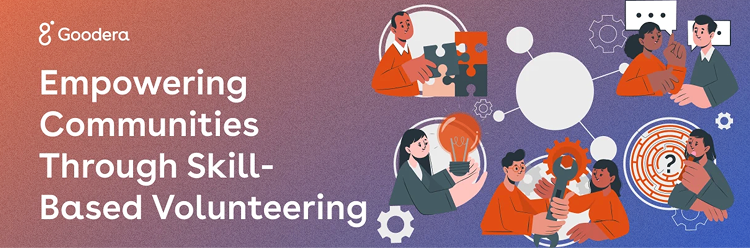
Once you understand the kinds of support communities need, you can work with Goodera to identify nonprofit partners and organize employee volunteering programs. Goodera's network includes organizations working on community resilience, environmental restoration, food security, and other causes that can contribute to disaster preparedness and recovery.
Network reach: Goodera connects companies with 50,000+ nonprofits and helps organize volunteering programs across locations.
How you can get involved: You can work with Goodera to identify relevant nonprofit partners and plan employee volunteering opportunities around your organization's goals and local community needs. Depending on the location and stage of a disaster, your team might support preparedness, environmental restoration, community resilience, or longer-term recovery. Each activity should be planned with the nonprofit delivering it to ensure it meets an identified need and is appropriate for volunteers.
Step 3: Choose the Right Format for Your Team
Not all disaster relief volunteer formats suit all organizations. Here is a practical guide to the options:
Virtual Skills-Based Volunteering
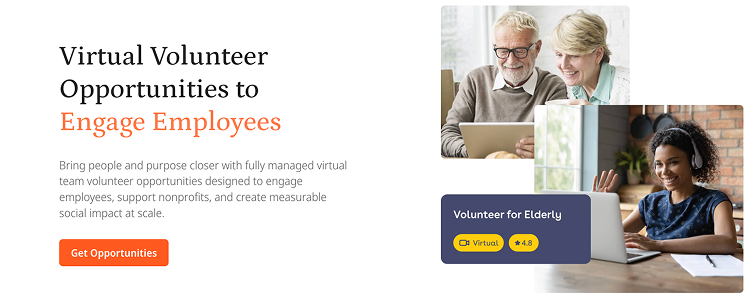
The most accessible option for distributed or remote teams. Volunteers contribute professional skills remotely to response organizations: data analysis, communications strategy, grant writing, translation, logistics coordination, financial modeling. Taproot Foundation research shows skilled volunteers deliver $150 in value per hour, making this format extraordinarily efficient from a community impact standpoint.
For El Niño response specifically, response organizations in Southeast Asia, East Africa, and Central America need skills that many corporate employees have: supply chain expertise, financial forecasting, public health communications, and technology support for data systems.
Goodera's global volunteering program manage the full logistics of international corporate volunteer deployments across 100+ countries, including the pre-trip briefings, nonprofit matching, and post-deployment impact measurement that make these programs sustainable.
Local Disaster Preparedness Events
For teams without international deployment capacity, participating in local disaster preparedness activities, training community members in first aid, assembling emergency supply kits, supporting local food banks and shelters, and educating your own employees on disaster readiness builds relevant community capacity and disaster response muscle within your organization at the same time.
Financial Matching Campaigns
Dollar-for-dollar matching campaigns tied to employee giving for disaster relief organizations are among the most efficient mechanisms available. Mentioning a matching gift in an appeal can increase response rates by 71% and average donation amounts by 51%. For El Niño specifically, financial contributions to established response organizations are often more immediately useful than in-person labor, because those organizations can deploy funds where they're most needed faster than corporate volunteers can be organized and deployed.
How to Volunteer for International Disaster Relief
International disaster relief volunteering is more accessible than many people assume, but it requires more careful preparation than domestic volunteering. Here is what the process looks like in practice:
What Preparation Is Required
1. Cultural and Contextual Briefing
Before any international deployment, volunteers need to understand the local context: the disaster's specific causes and effects in that community, the cultural norms governing how outside volunteers are received, the organizations already working there and what their specific needs are, and the boundaries of what an outsider can constructively contribute.
2. Country-Specific Safety Training
International deployments in disaster zones require health and safety preparation specific to the region and the type of disaster. For El Niño-affected areas, this includes understanding water-borne disease risks (cholera, typhoid), food contamination risks, heat exposure protocols, and emergency communication systems in the region.
3. Clear Scope and Timeline
International volunteer programs work best when the volunteer's role is clearly defined before arrival. Open-ended "come help" deployments create logistical burden for response organizations. A volunteer team that arrives knowing they will spend three days helping a specific nonprofit with a defined database project, and then leaves, is far more useful than one arriving with general availability and no specific skills match.
Building Disaster Relief Into Your Annual Volunteering Calendar
The organizations that respond most effectively to disasters are not the ones that mobilize fastest after the event. They are the ones that had a plan before it happened.
For the 2026-27 El Niño specifically, here is a practical calendar for companies building a coordinated response:
October 2026: Awareness and Preparation
Use the window before El Niño peaks to build internal awareness. Share NOAA's forecast with your team. Identify two or three response organizations you want to support. Launch a matched giving campaign tied to El Niño preparedness. Identify which employees have language skills, technical expertise, or personal connections to affected regions that could be useful in a skills-based volunteering capacity.
November-December 2026: Peak Period Support
This is when the humanitarian need is likely to be most acute. Have your financial matching campaign ready to activate quickly. Coordinate virtual volunteering sessions with partner organizations. Support employee giving campaigns with company matches. Communicate updates on the situation to your team to sustain engagement.
January-March 2027: Recovery Phase
El Niño's effects on communities don't end when the weather event peaks. Recovery takes months. This is the phase for skills-based volunteering, in-country deployments if appropriate, and sustained corporate partnership support for organizations doing the long-term work. Consider this the window for employee secondment programs and structured professional skills volunteering.
Year-Round: Build the Infrastructure
Get in touch with Goodera's global platform to ensure your employees always have access to vetted, high-quality disaster preparedness and relief volunteering opportunities. Establish relationships with two or three international response organizations now, before the next crisis, so you have trusted partners to activate when speed matters.
Wrapping it Up
A disaster beocmes a catastrophe not because of the disaster itself, but because the systems, relationships, and resources that could have cushioned the impact weren't in place when the event arrived.
The 2026-27 Super El Niño is coming. The communities most at risk know it's coming. What they need is for organizations with resources, skills, and the ability to mobilize people to show up now, before the peak, with intention and preparation rather than scrambling in response to headlines.
That is what disaster relief volunteer work, done well, actually is. Not a reaction to tragedy. A commitment to making tragedy's worst consequences preventable.
The calendar is open. The need is real. The window is now.
Frequently Asked Questions
1. What Is Disaster Relief Volunteer Work?
Disaster relief volunteer work encompasses any voluntary contribution of time, skills, or resources to help communities prepare for, respond to, or recover from natural or human-caused disasters. It ranges from assembling emergency supply kits and distributing food in the immediate aftermath of a disaster to providing professional skills like financial planning, data analysis, or construction expertise during longer-term recovery.
2. How Do I Volunteer for Disaster Relief as a Company?
Start by identifying what your organization can uniquely contribute, then partner with a vetted relief organization that can direct that contribution effectively. Platform partners like Goodera, Catchafire, or Taproot Foundation can match your team's skills to specific nonprofit needs in disaster-affected regions. For financial contributions, establish a matching gift program and identify two or three trusted international organizations before the next crisis hits.
3. How Do You Volunteer for International Disaster Relief?
International disaster relief volunteering requires cultural and contextual preparation, a clearly defined scope and role, coordination with an established response organization already operating in the affected region, and in many cases logistical support from a platform that manages the matching, briefing, and impact measurement. Organizations like Goodera coordinate international corporate volunteer deployments across 100+ countries and can manage the full lifecycle of an international disaster response engagement.
4. What Skills Are Most Useful in Disaster Relief Volunteering?
The skills in highest demand from corporate volunteers in disaster relief contexts include data analysis and database management, supply chain and logistics coordination, financial modeling and grant management, communications and translation, engineering and construction project management, medical and public health expertise, IT systems and digital infrastructure, and organizational strategy and capacity building. Almost every professional function has an application in disaster response if the matching is done thoughtfully.
5. When Is the Best Time to Engage With Disaster Relief Organizations?
Before the disaster, during the preparedness phase, is when your engagement will have the highest multiplier effect. During and immediately after the disaster is when financial contributions matter most, because established organizations can deploy funds more rapidly than new volunteer relationships can be built. The recovery phase, weeks to months after the event, is when skills-based corporate volunteering is most valuable and most needed.
6. How Does the 2026 Super El Niño Create Specific Volunteering Opportunities?
The 2026-27 El Niño is a defined, forecast event with a known geographic footprint. Organizations in Southeast Asia, East Africa, Central America, the Pacific Islands, and coastal South America are already preparing for its impacts. This advance warning creates an unusual opportunity to engage with relief organizations before the peak, supporting preparedness activities that will reduce the scale of the humanitarian response required afterward. Organizations like Americares, CARE, and Pacific Disaster Center have specific 2026-27 El Niño preparedness programs that corporate partners can support right now.
7. How Can Companies Support Disaster Relief Without Sending Employees Into Affected Areas?
Your team can contribute without deploying employees to a disaster zone. You can organize remote skills-based volunteering, support nonprofit logistics and communications, help with fundraising campaigns, or coordinate donations based on verified needs. You can also work with established organizations to identify preparedness activities in communities at risk. The right approach depends on the stage of the disaster and the capabilities of your nonprofit partners.
8. How Can Corporate Volunteering Support Long-Term Disaster Recovery?
Disaster recovery often continues for months or years after emergency response efforts begin. You can support this process through recurring volunteering programs that help nonprofits strengthen operations, manage resources, restore community services, and rebuild local capacity. By scheduling regular employee volunteering opportunities and maintaining relationships with nonprofit partners, you can provide more consistent support than a one-time event typically allows.
9. How Can We Make Sure Our Disaster Relief Volunteering Efforts Are Safe and Effective?
Start by partnering with an established relief organization or a trusted local nonprofit that understands the community's needs. Before each activity, confirm the scope of work, volunteer requirements, safety procedures, and any necessary training. Avoid sending unrequested supplies or deploying employees independently to disaster zones. After the activity, work with your partner to assess what was delivered, whether it addressed an identified need, and what further support may be useful.
10. How Can We Measure the Impact of a Corporate Disaster Relief Volunteering Program?
Measure both the immediate outputs and the longer-term results of your program. Depending on the activity, you can track employee participation, volunteer hours, supplies prepared or distributed, funds raised, and nonprofit capacity-building milestones. Work with your nonprofit partners to understand whether these contributions helped meet community needs and what outcomes followed. For ongoing programs, review progress regularly and use partner feedback to adjust future activities.