Wie man Juneteenth bei der Arbeit feiert

- INHALTSVERZEICHNIS
- Was ist Juneteenth?
- Wann wird der neunzehnte Juni gefeiert?
- Warum wird der neunzehnte Juni gefeiert?
- Wie man Juneteenth bei der Arbeit erkennt und ehrt
- So feiern Sie den zehnten Juni bei der Arbeit: 13 Möglichkeiten, Mitarbeiter virtuell und persönlich einzubeziehen
- Botschaft vom 19. Juni an die Mitarbeiter
- Warum es für Unternehmen von entscheidender Bedeutung ist, zielgerichtete Juni-Feierlichkeiten sicherzustellen
Was ist Juneteenth?
Juneteenth commemorates June 19, 1865, when federal troops arrived in Galveston, Texas, to announce the emancipation of enslaved people. This announcement came more than two years after the Emancipation Proclamation was issued. The day symbolizes delayed justice, perseverance, and the enduring strength of Black Americans.
In a workplace context, Juneteenth connects historical significance to present-day responsibilities. Before planning any activities, organizations must fully understand what the day represents and why it holds deep meaning for millions of Americans.
What Does Juneteenth Commemorate?
Juneteenth marks the enforcement of freedom for enslaved people in Texas, making it one of the most significant milestones in American history. It is often called Freedom Day or Emancipation Day.
The day honors:
- The resilience of generations who endured slavery and systemic injustice
- The cultural traditions that grew out of struggle and strength
- The ongoing work toward equal opportunity and fairness
Did you know?
Juneteenth is the oldest nationally celebrated commemoration of the end of slavery in the United States, with celebrations dating back to 1866. Long before federal recognition, communities gathered for parades, prayer services, music, and shared meals.
Why Organizations Are Recognizing Juneteenth Today
Juneteenth became a federal holiday in 2021, reflecting growing national recognition of its importance. Many organizations now observe the day through paid leave, educational programming, or structured engagement opportunities.
Recognizing Juneteenth at work is not about hosting a single event. It is about acknowledging history and creating an environment where learning and reflection are encouraged. Exploring ways to celebrate Juneteenth at work signals that leadership understands the cultural weight of the day and is willing to engage thoughtfully.
Related Read: 6 Examples of How Leading Companies are Celebrating Juneteenth at Work
Get inspired by organizations like Microsoft, Nike, and Mastercard, who are commemorating the holiday through meaningful outreach initiatives and impactful Juneteenth campaigns.
Wann wird der neunzehnte Juni gefeiert?
Juneteenth is celebrated annually on June 19 throughout the United States. This fixed date makes planning essential for organizations that wish to create meaningful programming. Since it has become a federal holiday, more businesses have formalized their observance. Some offer paid time off, while others host company-wide sessions during the week of June 19. For leaders looking to celebrate Juneteenth at work, early planning enables thoughtful communication rather than last-minute announcements.
Companies commonly recognize the day by:
- Offering a paid holiday or a floating day
- Hosting educational sessions or guest speakers
- Sharing curated learning resources internally
- Organizing optional volunteer opportunities
Did you know?
Before federal recognition, more than 45 states had already passed legislation or issued proclamations recognizing Juneteenth in some form. The national movement toward recognition had been building for decades.

Warum wird der neunzehnte Juni gefeiert?
Recognizing Juneteenth in the workplace signals a company’s commitment to historical awareness, inclusion, and meaningful dialogue. It marks the end of slavery in the United States and offers organizations an opportunity to reflect on progress, acknowledge ongoing inequities, and create space for thoughtful conversation.
When approached with intention, Juneteenth observances can strengthen trust, deepen cultural understanding, and foster a stronger sense of belonging across teams. The impact extends beyond a single day; it shapes how employees experience leadership, values, and accountability within the organization.
If you are considering how to commemorate Juneteenth thoughtfully, begin by evaluating its broader influence on employees, organizational culture, and community engagement.
1. It Strengthens Employee Connection
Employees want to feel that their workplace understands real-world history and the experiences that shape people’s lives today. Recognizing Juneteenth shows that leadership is paying attention to moments that matter in American culture and is willing to create space for learning and reflection. When teams see thoughtful effort behind celebrating Juneteenth at work, it builds trust and signals that employees are valued as whole people, not just as workers.
Are we simply acknowledging Juneteenth, or are we creating moments that help people connect more deeply? Strong Juneteenth celebration ideas give employees opportunities to:
- Learn history that may not have been fully taught in school
- Reflect on how the past connects to present-day realities
- Participate in conversations that encourage listening and understanding
- Feel included through shared experiences
Even small actions, such as hosting a discussion or sharing a sincere Juneteenth message with employees, can open the door to meaningful dialogue that continues long after June 19.
2. It Builds Organizational Credibility
Organizations are increasingly evaluated not only by what they produce, but by what they stand for. Thoughtfully exploring ways to celebrate Juneteenth at work shows that a company understands its role in acknowledging important cultural and historical milestones. Employees notice when organizations take consistent, intentional action rather than only responding when topics become widely visible.
Approaching how to celebrate Juneteenth at work with intention strengthens credibility by:
- Demonstrating alignment between values and everyday behavior
- Reinforcing trust with employees
- Supporting a culture of awareness and accountability
- Showing long-term commitment rather than one-time gestures
Over time, these choices shape how employees, candidates, and partners perceive the organization.
3. It Encourages Community Impact
Juneteenth is not only about reflection. It is also about forward movement. Many organizations use the day as a starting point for connecting internal learning with external action. When celebrating Juneteenth at work includes opportunities to give back, employees can see how history connects to real-world change.
Companies often turn this intention into action through:
- Volunteering with local organizations
- Supporting Black-owned businesses
- Mentoring students or early-career professionals
- Hosting donation or supply drives
When employees participate in these efforts, Juneteenth becomes more than a conversation. It becomes a shared commitment to contributing in practical, meaningful ways.
Explore Juneteenth volunteer activities your team can participate in to learn, reflect, and create real community impact.
Lassen Sie sich von Organisationen wie Microsoft, Nike und Mastercard inspirieren, die dieses Fest mit sinnvollen Initiativen und wirkungsvollen Juneteenth-Kampagnen feiern.
Ideen für die Feier des zehnten Juni: 4 Möglichkeiten, den zehnten Juni bei der Arbeit zu feiern
Before planning specific activities, it is important to establish a thoughtful approach. Strong Juneteenth celebration ideas start with clarity around purpose. When organizations take time to align on why they are recognizing the day, their efforts feel more sincere and meaningful. Without that alignment, even well-funded initiatives can feel disconnected.
Did you know?
Gallup reports employees who strongly agree their organization cares about overall well-being are 4.4 times more likely to be engaged at work. They are also 73% less likely to experience frequent burnout, 53% less likely to seek new jobs, and 50% more likely to thrive in life. Thoughtful cultural observances contribute to that sense of care. These foundational approaches help shape how to celebrate Juneteenth at work in ways that resonate with employees, center learning, and avoid surface-level gestures.
1. Investieren Sie in aktive Verbündete für schwarze Gemeinschaften
Active allyship starts with listening. It involves paying attention to the experiences of Black employees and respecting the perspectives they bring into the workplace. Rather than assuming what support looks like, organizations should create space for dialogue and feedback so that real voices inform efforts.
This approach can take many forms, including sharing educational resources, amplifying internal employee groups, and supporting community organizations doing long-term work. When allyship is embedded in daily culture, celebrating Juneteenth at work feels like a sustained commitment rather than a one-time event tied to the calendar.

2. Veranstalten Sie kulturell sensible Feste
Culturally sensitive celebrations prioritize respect, education, and context. The goal is not to turn Juneteenth into entertainment, but to create experiences that deepen understanding of its historical and cultural significance.
Thoughtful approaches often include:
- Facilitated discussions or fireside chats
- Guest speakers such as historians or community educators
- Optional learning sessions that employees can join voluntarily
3. Erkennen Sie Juneteenth mit Kollegen an
These experiences help employees understand not just how to celebrate Juneteenth, but why the day requires reflection and awareness.
Recognition does not always require a large event. For many employees, a simple acknowledgment carries significant weight. A thoughtful internal note or mention during a meeting can demonstrate that leadership recognizes the day's importance.
Organizations often support recognition by:
- Sharing a company-wide Juneteenth message to employees
- Encouraging managers to acknowledge the day in team settings
- Offering guidance on respectful greetings, such as “Wishing you a meaningful Juneteenth.”
These gestures reinforce a culture in which important moments are not overlooked.
4. Ehre Juneteenth als Tag, Woche oder Monat des Dienstes:
Juneteenth naturally encourages reflection and action. Many organizations choose to use this day to support their communities through service, donations, or partnerships with local nonprofits.
Consider this mindset shift: Is Juneteenth just a date on our company calendar, or can it serve as a catalyst for ongoing community engagement? The answer lies in consistency. When companies extend their activities beyond a single day, through volunteering, fundraising, or mentorship initiatives, celebrating Juneteenth at work becomes part of a broader culture of contribution rather than just a one-day observance.

So feiern Sie den zehnten Juni bei der Arbeit: 13 Möglichkeiten, Mitarbeiter virtuell und persönlich einzubeziehen
Once your organization has aligned on purpose, the next step is execution. Turning intention into action requires offering employees multiple ways to participate. Some may prefer learning experiences, others may gravitate toward service, and some may connect through culture and storytelling.
This curated mix of in-person and virtual Juneteenth celebration ideas offers teams practical options for celebrating Juneteenth at work that are respectful, engaging, and easy to implement.
Did you know?
A 2020 national survey by the American Historical Association (AHA) and Fairleigh Dickinson University found that 84% of respondents rated history education as equally valuable as fields like engineering or business for understanding issues, with results consistent across demographics. Workplace education moments like Juneteenth observances help bridge that gap.
Juneteenth Celebration Ideas to be Conducted In-Person
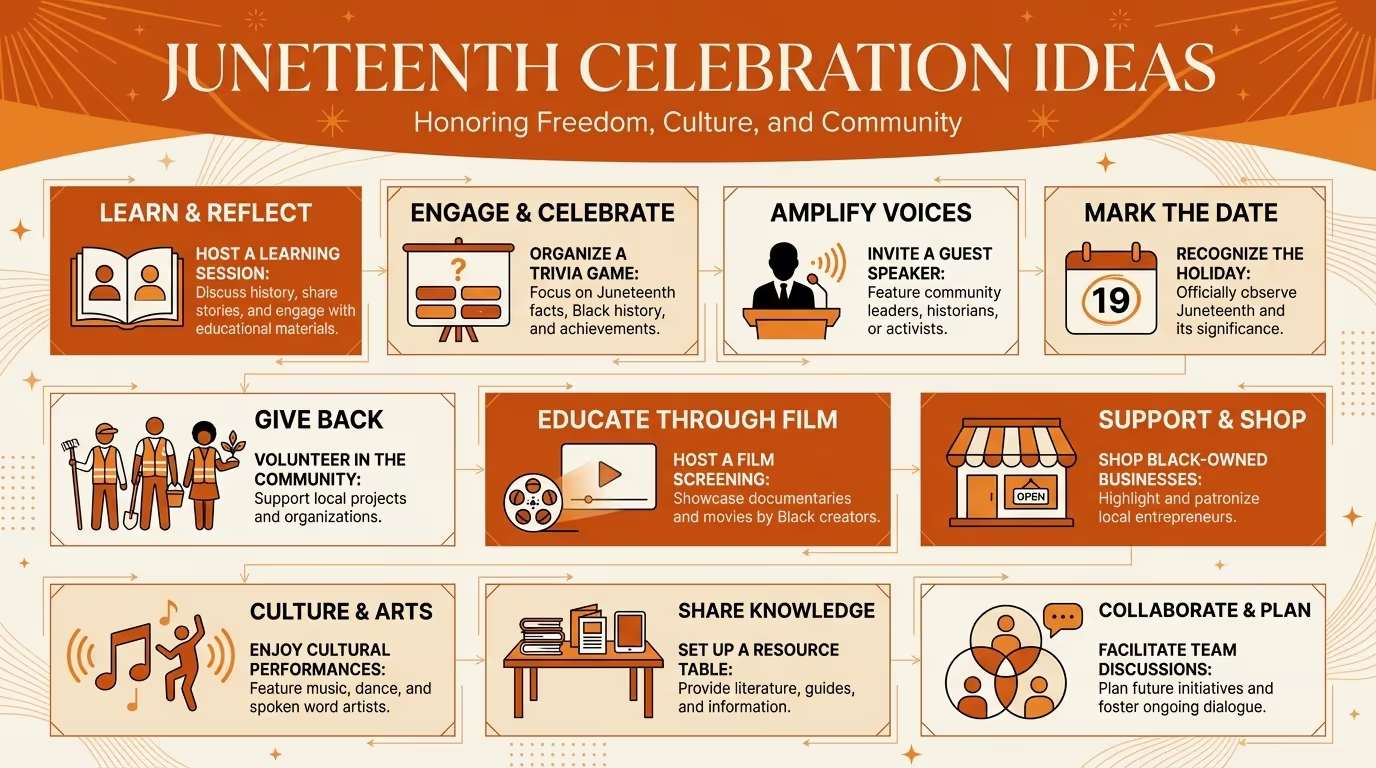
1. Host a Guided Juneteenth Learning Session
Bring in a historian, educator, or trained facilitator to explain the origins, significance, and lasting impact of Juneteenth in a structured yet accessible format. Design the session to include reflection and moderated discussion so employees can process what they learn. This approach helps teams understand how to celebrate Juneteenth in a way that prioritizes education and historical context. Sharing recommended readings or short videos afterward ensures learning continues beyond the session.
- Share discussion prompts in advance
- Record the session for employees who cannot attend
2. Organize a Juneteenth Trivia Experience
Create a trivia experience centered on key historical milestones, cultural traditions, and influential Black leaders connected to Juneteenth. Keep the emphasis on learning by explaining each answer and providing context. Trivia works well as a lunchtime event or informal gathering because it makes education engaging without feeling heavy. When designed thoughtfully, it becomes a practical way of celebrating Juneteenth at work while encouraging team participation.
3. Invite a Guest Speaker or Community Leader
Invite a respected community leader, historian, or activist to share insights and lived experiences. Hearing directly from someone connected to the subject adds authenticity and emotional depth that written material alone cannot provide. This format allows employees to connect history with present-day realities and better understand why the day continues to matter. Including a short Q&A session encourages thoughtful dialogue.
- Share the speaker's background ahead of time
4. Make Juneteenth a Paid Holiday or Floating Day
Offering paid time off demonstrates that Juneteenth is recognized at a policy level, not just through programming. It allows employees to observe the day in ways that feel personal and meaningful. Many organizations view this as one of the most effective ways to celebrate Juneteenth at work because it embeds recognition into the company calendar. Clear communication about the day's purpose strengthens its impact.
5. Organize a Volunteer or Service Day
Partner with a nonprofit that focuses on education, youth mentorship, or community development. Organize structured volunteer opportunities so employees can easily participate. Service initiatives help translate reflection into action and reinforce the connection between learning and contribution.
- Provide paid volunteer hours
- Offer multiple time slots
6. Host a Juneteenth Film Screening
Select a documentary or film that explores Black history, civil rights movements, or cultural achievements. Provide a short introduction explaining why the film was chosen and what themes to reflect on. After the screening, offer an optional discussion to allow employees to share takeaways. This creates a shared learning experience without requiring extensive planning.
7. Spotlight Black-Owned Businesses
Highlight local Black-owned restaurants, bookstores, or service providers in internal communications. Consider catering from one of these businesses or, if available, sharing employee discount codes. This initiative supports economic empowerment while extending the impact of celebrating Juneteenth at work beyond internal programming. Featuring short stories about the businesses adds context and meaning.
8. Create a Cultural Showcase
Organize a cultural showcase featuring spoken word, music, or artistic performances connected to Black culture. Provide a brief historical background so employees understand the roots and significance behind what they are experiencing. This ensures the showcase remains educational and respectful rather than purely entertainment-driven. Participation should remain optional to respect individual comfort levels.
9. Set Up a Juneteenth Resource Wall or Table
Create a dedicated space with books, articles, timelines, and QR codes linking to reputable resources. Employees can explore the materials throughout the day at their own pace. This format works particularly well for individuals who prefer quiet reflection over group discussions. Updating the resources annually keeps the experience fresh and relevant.
10. Encourage Team-Level Conversations
Provide managers with simple reflection prompts and historical context to help them feel comfortable acknowledging Juneteenth during team meetings. Even five to ten minutes of intentional recognition can make a difference. Local conversations ensure the observance reaches employees in every department rather than remaining centralized. Keeping participation voluntary respects individual boundaries.
Juneteenth Celebration Ideas to be Conducted Virtually
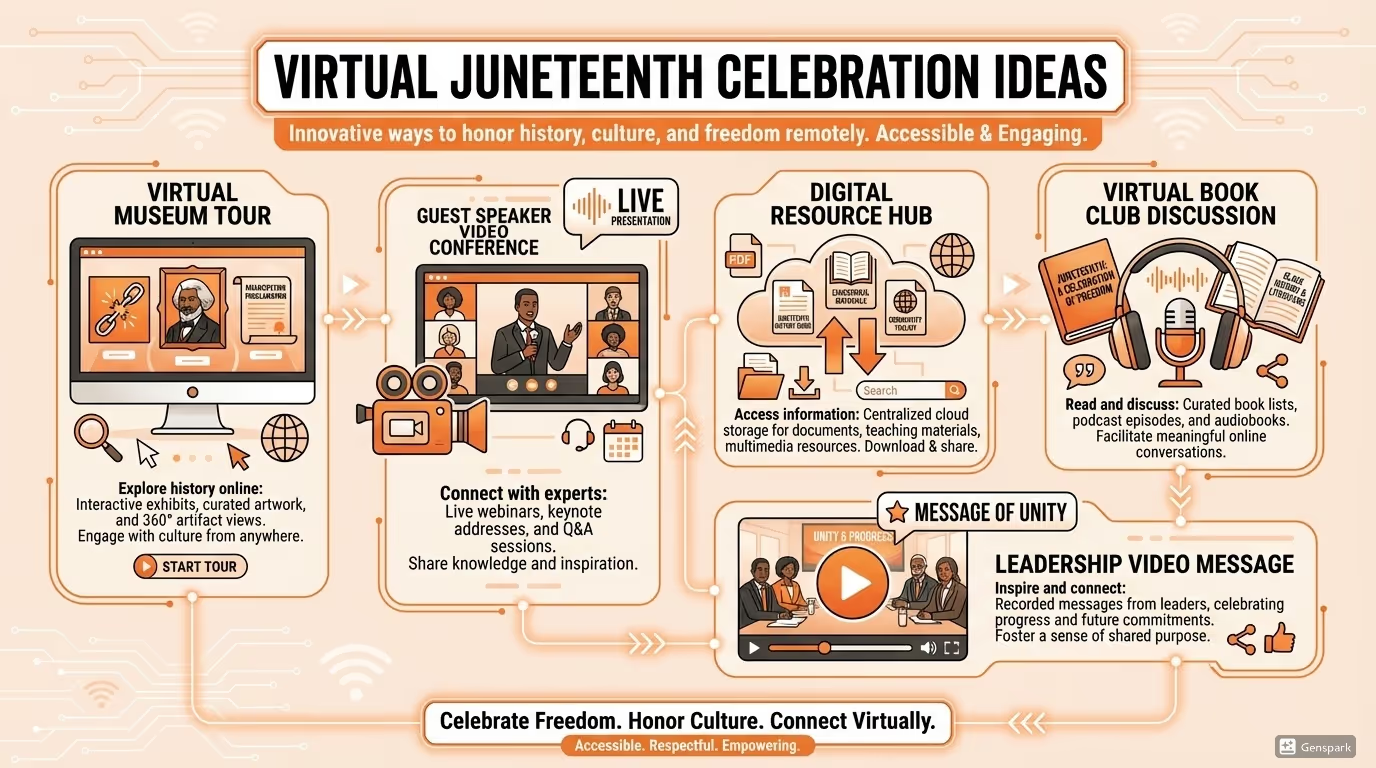
11. Virtual Museum Tour
Arrange a guided virtual tour of a museum dedicated to Black history and culture. Share background information beforehand, so employees understand the context of what they will see. Virtual tours allow remote teams to explore meaningful content together while remaining geographically dispersed. Follow-up reflection questions can help deepen engagement.
12. Virtual Guest Speaker Session
Host a live virtual session with a historian or educator who can discuss the history and present-day significance of Juneteenth. Encourage employees to submit questions in advance to make the session more interactive. This format mirrors in-person learning and works well for distributed teams exploring how to celebrate Juneteenth at work in a remote environment.
13. Digital Juneteenth Resource Hub
Create a centralized internal page featuring articles, short videos, podcasts, and links to volunteer opportunities. Organizing resources by theme makes them easier to navigate. Employees can engage with the content at their own pace, which increases accessibility for different schedules and learning preferences.
14. Virtual Book or Podcast Discussion
Select a single chapter, essay, or podcast episode instead of assigning an entire book. Host a short, moderated discussion focused on key insights and reflections. This lowers the barrier to participation while still encouraging thoughtful engagement. Providing discussion questions in advance helps employees prepare comfortably.
15. Leadership Video Message
Have senior leaders record a short Juneteenth message to employees, acknowledging the historical significance of the day and outlining the organization’s approach. A sincere and clearly delivered message sets the tone for the entire observance. Keeping it focused on learning, reflection, and action reinforces credibility and alignment with company values.
Note:Diese Ideen sind mehr als nur Möglichkeiten, den zehnten Juni bei der Arbeit zu feiern — sie sind Gelegenheiten, Gespräche anzuregen, Verbindungen zu fördern und ein Erbe der Widerstandsfähigkeit zu würdigen. Denken Sie bei der Planung Ihrer Feierlichkeiten daran, dass die Wirkung nicht nur im Büro spürbar ist. Erwägen Sie, der Gemeinschaft etwas zurückzugeben und das Eigenkapital zu fördern, indem Sie mit dem lokalen BIPOC und gemeinnützigen Organisationen unter der Führung von Schwarzen zusammenarbeiten. Wir haben eine Liste zusammengestellt, um Ihrem Team zu helfen, vor Ort und darüber hinaus einen echten Unterschied zu machen.
Juneteenth Message to Employees: What to Say and How to Say It
A thoughtful Juneteenth message to employees sets the tone for how your organization observes the day. It conveys awareness, respect, and intention. Whether shared via email, a leadership video, or an internal platform, the message should acknowledge history while encouraging reflection and participation.
When leaders consider how to celebrate Juneteenth at work, effective communication is often the first and most visible step. A strong message should feel sincere, be grounded in history, and align with your organization’s actions.
What a Meaningful Juneteenth Message Should Include
A well-crafted message does not need to be long. It needs to be clear and intentional. Employees can quickly recognize when a message is thoughtful versus when it feels rushed or generic.
An effective message typically includes:
- Acknowledgment of June 19, 1865, and what it represents
- Recognition of the resilience and contributions of Black Americans
- A brief reflection on why the day matters in today’s workplace
- An invitation to participate in available activities or learning
Clarity is more important than complexity. When employees understand how you celebrate Juneteenth within your organization, they are more likely to engage.
Did you know?
Edelman's research shows employees overwhelmingly expect employers to address societal issues, with 71% prioritizing human rights, 66% racial justice, and 63% climate change when choosing jobs. Employees who feel trusted by CEOs exhibit twice the trust (92% vs. 46%), and 66% value CEOs publicly speaking on controversial issues. Clear communication strengthens trust when it is backed by meaningful action.
Example of a Juneteenth Message to Employees
Here is a sample message you can adapt:
“Today, we recognize Juneteenth, a day that commemorates June 19, 1865, when enslaved people in Texas were finally informed of their freedom. Juneteenth reminds us that progress in our nation’s history has often required perseverance and courage. We honor the strength, culture, and contributions of Black Americans, past and present.
As an organization, we are committed to learning from history and creating an environment where every employee feels respected and valued. We encourage you to take time today to reflect, explore the resources we have shared, and participate in the activities available this week.”
This example balances acknowledgment, reflection, and forward-looking intention without being overly long.
Tips for Writing Your Own Juneteenth Message
If you are drafting your own message, keep these principles in mind:
- Speak plainly and avoid overly formal language
- Connect the historical significance to your workplace values
- Keep the tone reflective rather than celebratory
- Avoid making the message about the company’s achievements
- Follow words with visible actions
A sincere Juneteenth message to employees reinforces that celebrating Juneteenth at work is not a checkbox exercise. It is a moment of shared recognition and continued learning.
Tips to Successfully Conduct Juneteenth Activities at Work
Planning Juneteenth activities is not only about choosing what to do. It is about how those activities are designed, communicated, and experienced. Even strong Juneteenth celebration ideas can fall flat if execution lacks intention. These tips help ensure your efforts feel thoughtful, respectful, and impactful.
- Start Early: Begin planning several weeks in advance to avoid rushed, reactive activities. Early planning allows time to secure speakers, coordinate logistics, and communicate clearly with employees. It also gives leaders space to align on how to celebrate Juneteenth at work in a way that reflects organizational values.
- Involve Employees: Invite employees to share suggestions, recommend speakers, or help shape programming. This increases relevance and ownership. When people see their input reflected, participation and engagement naturally increase.
- Offer Choices: Not every employee connects in the same way. Some prefer learning sessions, others gravitate toward service or self-guided resources. Providing multiple options respects different comfort levels and learning styles.
- Partner With Experts: When possible, work with historians, educators, nonprofits, or community organizations. Expert guidance helps ensure accuracy and depth. It also reduces the risk of oversimplifying complex history.
- Measure Feedback: After Juneteenth, ask employees what resonated and what could improve. Short surveys or feedback forms help refine future efforts. Continuous improvement strengthens long-term impact.
These practices ensure that celebrating Juneteenth at work becomes a consistent, evolving effort rather than a one-time initiative.
Pitfalls to Avoid When Celebrating Juneteenth at Work
Avoiding common missteps is just as important as choosing the right activities. Being mindful of these pitfalls helps ensure that celebrating Juneteenth at work remains respectful and meaningful.
- Treating Juneteenth as a marketing opportunity rather than a moment of reflection
- Forcing participation in discussions or activities
- Hosting events without providing historical context
- Relying on a single symbolic gesture instead of sustained effort
- Speaking about the day without pairing words with action
These practices ensure that celebrating Juneteenth at work becomes a consistent, evolving effort rather than a one-time initiative.
Turning Reflection Into Action
Juneteenth is more than just a historical milestone; it serves as a reminder that progress requires awareness, intention, and ongoing effort. When organizations take the time to learn, reflect, and take action, they create workplaces that honor history while contributing to a better future.
Celebrating Juneteenth at work doesn’t require perfection. Instead, it is about showing up sincerely, listening openly, and committing to meaningful actions. Whether through education, community service, or simple acknowledgment, each step sends a message that this day is significant.
As you plan your approach, keep in mind that celebrating Juneteenth is not a one-time event. It can be woven into an ongoing culture of learning and community connection. When reflection leads to action, Juneteenth becomes more than just a date on the calendar; it evolves into a shared commitment to progress.
Start planning meaningful corporate volunteering experiences that create measurable community impact.
Frequently Asked Questions About Celebrating Juneteenth at Work
1. Is it appropriate to say “Happy Juneteenth” at work?
It is generally acceptable to acknowledge Juneteenth, but many people prefer phrases that emphasize reflection and meaning rather than celebration alone. Expressions such as “Wishing you a meaningful Juneteenth” or “Honoring Juneteenth today” are often better received. These options recognize the day's historical significance while remaining respectful.
2. Should Juneteenth be a paid holiday?
Many organizations now offer Juneteenth as a paid holiday or a floating holiday. This approach allows employees to observe the day in ways that feel personal. While not every company can offer paid time off immediately, providing structured programming and clear acknowledgment are still meaningful ways to celebrate Juneteenth at work.
3. How do you celebrate Juneteenth if your company is small?
Small organizations can start with simple, low-cost efforts such as sharing educational resources, hosting a short discussion, or organizing a volunteer activity. Even a thoughtful Juneteenth message to employees can create meaningful acknowledgment. Impact comes from intention, not budget size.
4. How do you avoid making Juneteenth feel performative?
Juneteenth feels authentic when words are paired with action. This can include ongoing learning opportunities, community partnerships, and consistent recognition year over year. Asking employees for feedback and acting on it also strengthens trust.
5. How early should Juneteenth planning begin?
Ideally, planning should start at least one to two months in advance. Early preparation allows time to secure speakers, coordinate logistics, and communicate clearly. It also prevents Juneteenth from feeling like a last-minute addition to the calendar.
6. What if employees choose not to participate?
Participation should always be optional. Employees engage in different ways and at different comfort levels. Offering choices respects personal boundaries while still making opportunities available.
7. How can leaders show support beyond June?
Leaders can continue sharing learning resources, supporting community partnerships, and integrating cultural awareness into year-round programming. Juneteenth should be a starting point, not the only moment of engagement.
8. What tone should internal communications use for Juneteenth?
Messages should be reflective, respectful, and sincere. Avoid overly casual language or overly formal statements. Clear, human language resonates most.
9. How do you measure the success of Juneteenth initiatives?
Use short feedback surveys, participation rates, and qualitative employee comments. Success is reflected not only in attendance but also in how employees describe their experience.
