Best Practices for Integrating Volunteering into HR and People Ops Workflows

Workplace volunteering works best when it is not treated as a side project that runs once a year. It becomes much easier to sustain when HR and People Ops teams build it into the systems they already own, from onboarding and engagement surveys to recognition programs and the employee lifecycle itself.
Organizations that take this approach often see stronger employee participation and engagement over time. Structured volunteering programs are associated with a 6.1% year-over-year reduction in turnover, alongside a 2.6X higher volunteer participation than programs without structured volunteering.
This guide explores where volunteering fits across the employee lifecycle, how HR and CSR teams can share ownership without duplicating work, and the practical ways to make volunteering a consistent part of the employee experience rather than a once-a-year initiative.
ALSO READ:

Why Workplace Volunteering Matters for HR Teams
Workplace volunteering is not just a feel-good benefit anymore. It has become a measurable lever for the outcomes HR teams are already accountable for: engagement, retention, and employer brand. As reported by ExtensisHR, 28% of U.S. companies now offer formal paid volunteer leave, and that share continues to climb as more HR leaders treat it as a retention tool rather than a perk.
Why it matters?
1. Higher Job Satisfaction for Employees
A longitudinal study by United Nations Volunteers Knowledge Portal found that employees who participated in corporate volunteering experienced a 24% increase in sense of purpose at work, a 20% increase in pride in their employer, and a 13% increase in job satisfaction compared with non-volunteers.
2. Employee Retention Rates Improve
In a recent survey of 1000 professionals conducted by Deloitte’s Purpose and DEI office, linked workplace volunteering as a direct employee retention force for 87% of the respondents.
Volunteering gives employees a greater sense of purpose, strengthens their connection to the organization's values, and helps build stronger relationships with colleagues. Over time, these experiences can contribute to higher engagement and make employees more likely to see a long-term future with their employer.
3. Skill and leadership development
Deloitte's Volunteer IMPACT Survey found that 92% of HR executives agree that contributing business skills to a nonprofit is an effective way to build employees' leadership and professional skills, and 80% said active volunteers move more easily into leadership roles.
4. Culture and Recruiting Signal
Workplace volunteering has become an increasingly important signal of company culture for both current and prospective employees.
In Deloitte's 2024 Workplace Volunteer Opportunities Survey, 95% of professionals said it's important that their employer makes a positive impact in the community, while 87% said workplace volunteer opportunities influence whether they stay with their current employer or consider joining a new one.
Employees are also looking for meaningful, team-based experiences, with 52% preferring company-organized, in-person volunteering opportunities, as reported in the same survey.
Together, these findings show that volunteering has evolved beyond a CSR initiative into an important part of the employee experience and employer brand. The pattern across all four data points is the same: volunteering is not competing with HR priorities; it is one of the more efficient ways to move them.
How Do Companies Embed Volunteering into the Employee Lifecycle?
The most effective employee volunteer programs do not live in a single moment. They show up at multiple points across the employee lifecycle, so volunteering feels like a consistent part of working at the company rather than an occasional event.
1. Year-Round Volunteering Calendar
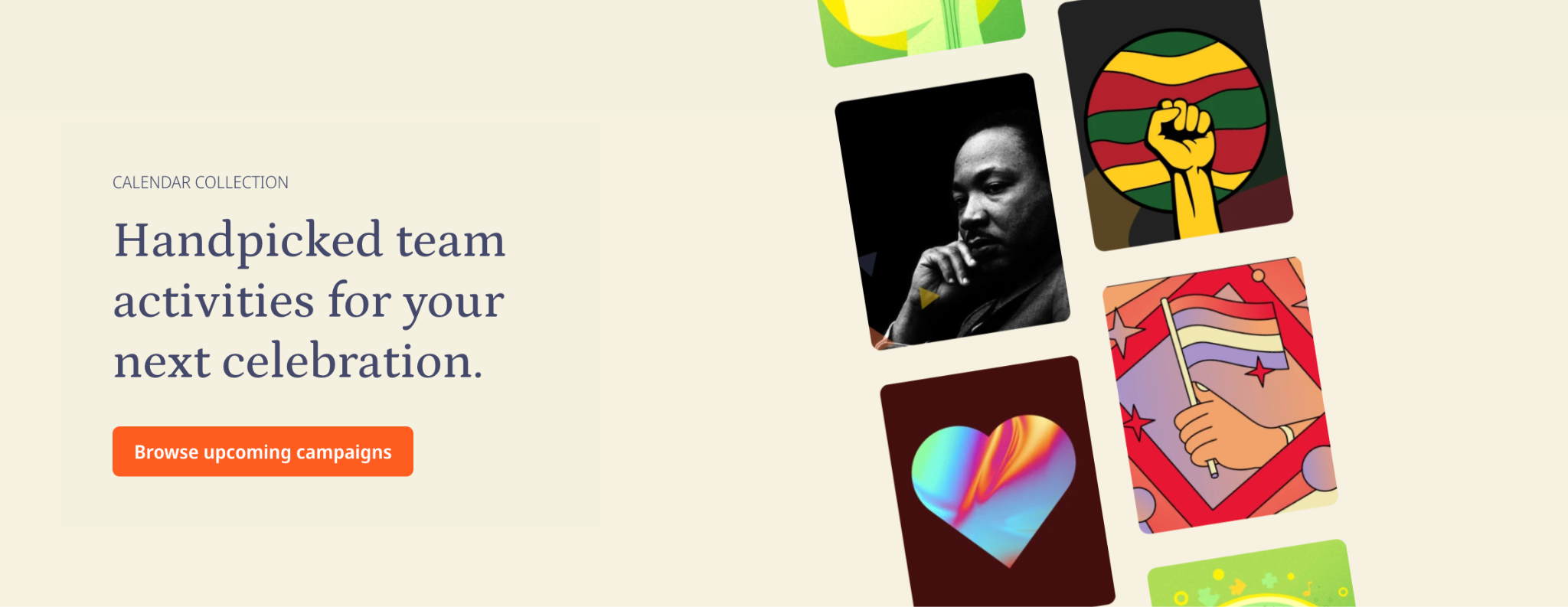
Plan a year-long volunteering calendar and update it on your HRMs platforms for visibility and participation. Volunteering events need not be limited to disaster relief and the traditional season of giving period. There are multiple occasions round the year where employees can band together and make a real impact on underserved communities.
From heritage moments like MLK Day, Black History Month, and Hispanic Heritage Month, to supply drives for Hunger Action Month and Back-to-School season, you can design a well-planned volunteering calendar well in advance for your teams.
Check out Goodera’s volunteering calendar to plan and strategize your workplace giving campaigns.
2. Hold Monthly Volunteering Events to Engage New Employees
Introduce new hires to volunteering options in their first weeks, alongside benefits enrollment and team introductions, rather than waiting for a quarterly newsletter to surface it. This is the same logic behind Bauer's well-known 4 Cs onboarding framework: connection and culture belong in week one, not month six.
- Ongoing engagement: Build volunteering into the same cadence as other engagement touchpoints, like pulse surveys or team offsites, so it is part of the regular rhythm of work rather than a separate initiative competing for attention.
- Leadership development: Use skills-based volunteering, like mentoring or pro bono consulting, as a structured part of manager and leadership development tracks, since it builds the same skills those programs already target.
ALSO READ: Empowering Communities through Skills-Based Volunteering
- Recognition and career milestones: Tie volunteering hours into existing recognition programs and career-anniversary moments, so participation gets the same visibility as other achievements HR already celebrates.
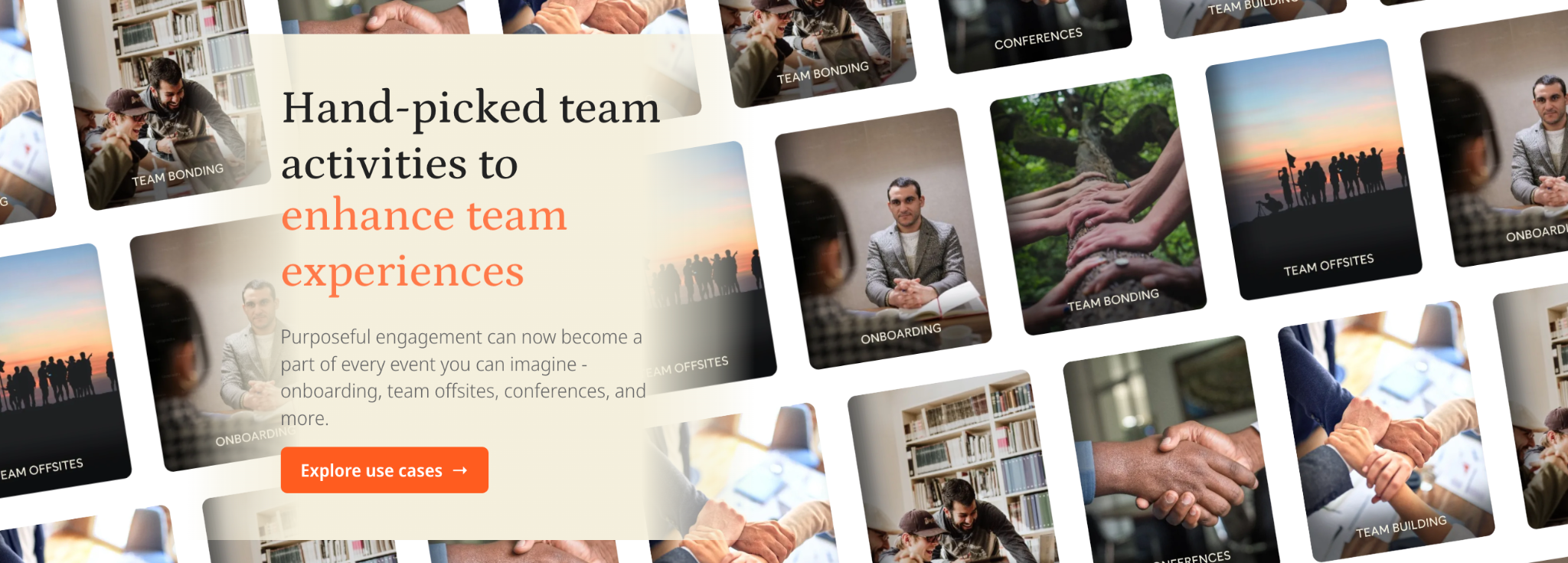
Explore Goodera's catalog of 500+ corporate volunteering opportunities built for every workplace moment. From new employee onboarding and team offsites to ERG activations, leadership events, and company-wide days of service, our curated experiences make it easy to bring employees together while creating meaningful impact in communities around the world.
How Do You Operationalize Employee Volunteering Across HR Teams?
Operationalizing volunteering means giving it the same structure as any other HR process: clear ownership, a defined policy, and a system for tracking it, rather than relying on goodwill and a shared spreadsheet.
- Write a clear policy first: Define eligible activities, VTO hour allotments, approval steps, and how hours are logged, before you promote the program internally. Most companies offering VTO grant between 8 and 20 hours annually, though some enterprises offer more.
- Centralize tracking in one system: Whether that is your HRIS, a dedicated volunteering platform, or a time-and-labor portal, volunteering data needs one home. Splitting it across spreadsheets and email requests is the fastest way for a program to quietly stall.
- Assign clear ownership: Decide upfront who approves requests, who monitors participation, and who reports on outcomes, so the program does not depend on one person remembering to follow up.
- Pilot before you scale: Launch with a single department or a kickoff event before rolling out company-wide, so you can catch process gaps while the stakes are still low.
- Review participation regularly: Monitor uptake on an ongoing basis and survey employees periodically to catch barriers to participation early, rather than discovering low engagement a year into the program.
How Do HR and CSR Teams Work Together on Employee Volunteering?
Volunteering programs tend to break down when HR and CSR teams build parallel systems instead of one shared one. The clearest path forward is dividing ownership by strength rather than by department territory.
- CSR owns the "what." Sourcing nonprofit partners, curating opportunities, and setting impact goals sit naturally with CSR teams, who already hold those relationships.
- HR owns the "how." Policy design, time-off systems, onboarding integration, and performance or recognition tie-ins sit naturally with HR, since those are systems HR already runs for every other benefit.
- Both own reporting. CSR needs participation and impact data for ESG disclosures, while HR needs the same data to demonstrate engagement and retention impact, so a shared dashboard serves both teams instead of two separate reports pulling from different sources.
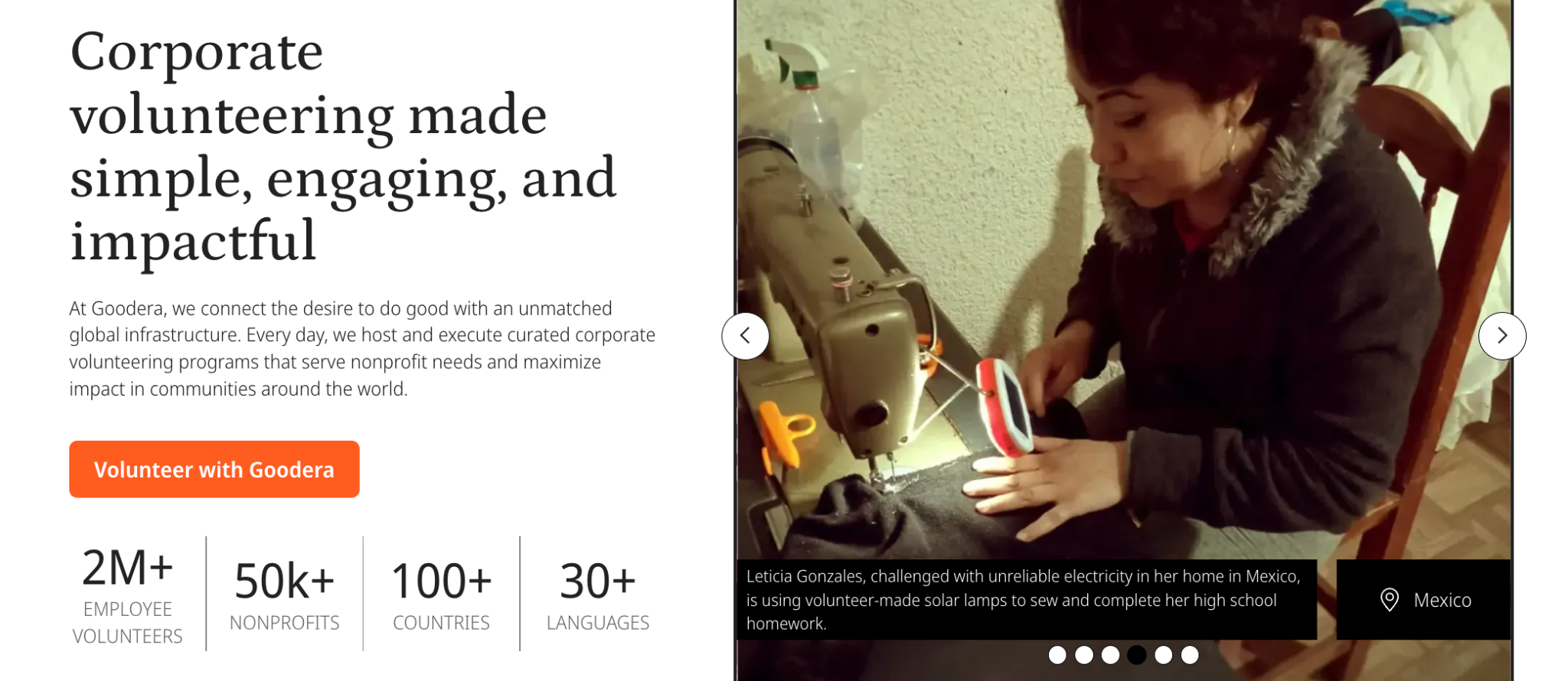
Bringing HR and CSR together is much easier when both teams work from the same platform instead of managing separate tools, spreadsheets, and reports. Goodera helps organizations do that by bringing volunteer opportunities, nonprofit partnerships, event management, participation tracking, and impact reporting into one place.
This gives CSR teams the flexibility to manage social impact programs while helping HR integrate volunteering into existing employee workflows without creating additional administrative work.
How Do You Make Volunteering Part of Company Culture?
Volunteering becomes part of company culture when it is visible, repeated, and modeled by leadership, not just offered as an available benefit that employees have to go looking for.
- Have leaders participate visibly: When executives join volunteering events rather than just approving the budget for them, it signals the program is a genuine priority rather than a checkbox.
- Build in social recognition: Public shout-outs for teams or individuals who volunteer, shared through the same channels used for other wins, reinforce that the behavior is valued the same way hitting a sales target or shipping a project is.
- Make it easy to do with colleagues: Group volunteering builds camaraderie in a way solo participation does not, and 82% of employees specifically say they want to volunteer alongside their peers rather than independently.
- Repeat it on a predictable cadence: A single annual "day of service" reads as an event. Monthly or quarterly opportunities, paired with always-available VTO, read as culture.
How to Encourage Volunteerism in the Workplace
Encouraging participation is less about convincing employees volunteering matters, most already agree that it does, and more about removing the friction that keeps intent from turning into action. Nearly half of employees cite work commitments as their biggest obstacle to volunteering, even when they want to participate.
- Promote through multiple channels: Share opportunities through email, team meetings, and internal social channels, since a single announcement buried in a newsletter will not reach most of the workforce.
- Make sign-up effortless: Reduce the process to a few clicks inside a tool employees already use, rather than a multi-step email chain with a manager and an admin.
- Offer flexible formats: Combine in-person, virtual, and skills-based options so employees with different schedules and comfort levels all have a viable way to participate.
- Recognize participation publicly: Recognition is one of the most consistently cited factors in whether employees keep volunteering after their first event, not just whether they try it once.
- Ask for feedback and iterate: Regularly ask employees what is working and what is not, and adjust the program accordingly, rather than assuming the initial design will hold up indefinitely.
Key Takeaways
Employee volunteering becomes much easier to sustain when it's treated as part of the employee experience rather than a standalone CSR initiative. Instead of relying on annual volunteer days or ad hoc campaigns, organizations should embed volunteering into existing HR workflows such as onboarding, Volunteer Time Off (VTO), manager enablement, recognition programs, and employee development. This reduces administrative effort while making volunteering more visible and accessible throughout the year.
Success also depends on shared ownership. CSR teams are best positioned to build nonprofit partnerships and define impact goals, while HR can integrate volunteering into the systems employees already use every day. When both teams work from the same processes, policies, and reporting framework, organizations can scale volunteering more consistently, measure its impact more effectively, and create experiences that employees are more likely to participate in year after year.
Frequently Asked Questions
What is the best way to manage volunteering through HR?
The most effective approach centralizes tracking in a single system, whether that is your HRIS or a dedicated volunteering platform, with a clear written policy covering eligible activities, hour allotments, and approval steps.
How do you build volunteering into People Ops processes?
Treat it the same way you would any other people process: fold it into onboarding, tie it to existing recognition programs, and track it alongside other engagement metrics rather than managing it separately.
How do you integrate employee volunteering into HR workflows?
Integration works best when volunteering touches the systems HR already owns, like onboarding checklists, time-off tracking, and performance or recognition programs, instead of existing as a standalone initiative outside those workflows.
How much volunteer time off do most companies offer?
Most organizations that offer VTO provide between 8 and 20 hours annually, though some enterprises offer considerably more. Salesforce, for example, offers up to 56 hours a year.
Does offering volunteer time off actually affect retention?
Yes. Employees who participate in corporate volunteer programs are 52% less likely to leave their employer, and organizations that actively promote VTO participation report up to twice the retention of those that do not.
Who should own a workplace volunteering program, HR or CSR?
Both, with divided responsibility. CSR typically owns nonprofit sourcing and impact goals, while HR owns the policy, systems, and integration into existing employee processes. Shared reporting keeps both teams aligned.
Does volunteering need to be paid time to be effective?
Paid volunteer time off tends to drive significantly higher participation than unpaid options, since work commitments are the most commonly cited barrier to volunteering. That said, unpaid group volunteering events can still build culture and engagement when access and scheduling friction are low.
How can HR encourage more employees to volunteer?
Participation is typically highest when volunteering is built into existing HR processes instead of being promoted as a one-off campaign. Including volunteering in onboarding, manager conversations, recognition programs, internal communications, and Volunteer Time Off (VTO) policies makes it more visible and easier for employees to take part throughout the year.
Should volunteering be part of the employee onboarding process?
Introducing volunteering during onboarding helps employees understand the organization's values and the opportunities available to them from day one. Many companies include volunteering information alongside benefits, learning resources, and employee resource groups so new hires know how to participate early in their employee journey.
What HR metrics should you track for employee volunteering?
In addition to volunteer hours, HR teams often track participation rates, Volunteer Time Off (VTO) utilization, repeat volunteer participation, employee satisfaction, and retention. Looking at these metrics alongside engagement survey results can provide a more complete view of how volunteering contributes to the overall employee experience.