Measuring Social Impact: How to Track, Prove, and Improve Real-World Change

There is a specific kind of frustration that program managers know well. You run a workforce training initiative for six months. Forty-three people completed it. You write the report. And somewhere in the process, a funder asks: "But did it actually work?"
The honest answer, for most organizations, is: "We think so."
That gap between "we think so" and "here is the evidence" is where social impact measurement lives. It is not limited to a reporting exercise or a compliance audit. It is the practice of asking, with rigor, whether the resources you put in produced the changes you and your team envisioned.
This article is about how to do that well, from the vocabulary that keeps teams aligned to the frameworks, metrics, and attribution methods that turn program data into defensible impact claims.
What Is Social Impact, Really?
Before any measurement conversation can happen, the definition needs to be precise.
Social impact is not just output. Output is just a part of it (more on that below). It is not even the number of workshops delivered or meals distributed or loans processed. Those are counts of activity.
Social impact is the change that occurs in people's lives, and over time, in the systems and communities those people are part of, as a result of that activity.
The distinction matters because organizations often confuse outputs with outcomes and end up with reports that look impressive but prove nothing. "We trained 850 people" is not a social impact claim. "Seventy-four percent of participants reported a 60% increase in household income six months after graduation" is one, provided the data behind it was collected properly.
A social impact assessment, at its most useful, answers three questions: What changed? For whom? Because of what? Getting to clean answers to all three requires deliberate design before the program begins, not retrospective data collection after it ends.
Why Social Impact Measurement Is No Longer Optional
Across the CSR and corporate volunteering industry, the pressure to move beyond anecdotes has intensified significantly. The reasons are structural.
Funders, whether institutional, corporate, or impact investors, are increasingly requiring outcome data as a condition of continued support. ESG reporting standards have expanded disclosure expectations. Employees and consumers are evaluating organizations on the credibility of their social claims, not just their existence.
There is also a resource case. Organizations that measure rigorously tend to allocate better. They discover which program components produce the most change per dollar and which ones produce activity without outcomes. That is operational intelligence with direct financial implications.
According to the latest State of the Market findings from the Global Impact Investing Network (GIIN), 89% of impact investment assets under management were allocated to investments targeting market-rate returns while also pursuing measurable social and environmental impact, highlighting how impact performance data has become integral to mainstream investment decision-making rather than a separate philanthropic consideration.
And then there is the trust case. In an environment where "impact washing" is a recognized phenomenon, the ability to show your methodology, your indicators, and your pre-post data is a competitive differentiator. The organizations that earn long-term credibility are the ones that report honestly, including when results are mixed.
The Five-Tier Chain: From Resources to Real Change
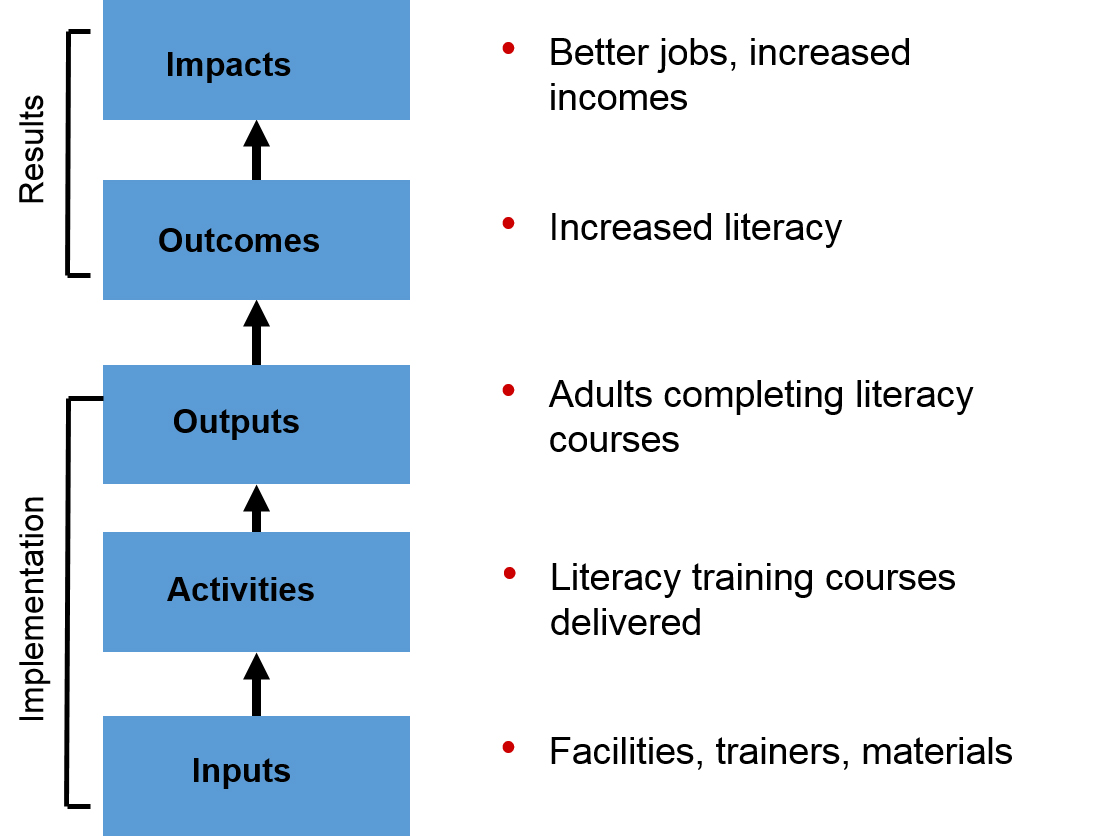
Every social program runs along the same logic chain. Resources go in. Activities happen. Things get delivered. People change. The world shifts a little.
Understanding where your program sits on this chain, and where it breaks down, is the foundation of any credible social impact assessment.
Tier 1: Inputs
Money, staff, volunteer hours, materials, technology, and relationships are invested in the program. The relevant question is: How much was actually put in? Inputs establish the efficiency denominator. Cost-per-outcome calculations begin here.
Tier 2: Activities
What the program does operationally. Workshops facilitated. Loans processed. Counseling sessions delivered. Mentoring relationships matched. The question is: What did the program actually do? Activities are the mechanism through which inputs become outputs.
Tier 3: Outputs
Counts of what was delivered. Two hundred loans disbursed. Fifty participants graduated. Four thousand meals provided. Outputs are measurable and important, but they do not indicate change. A person who attended ten workshops may have learned nothing. Output counts can look impressive while impact is negligible. This is the tier where most impact reports stop, and where genuine measurement has not yet started.
Tier 4: Outcomes
Measurable change in the people the program served. Income gained. A skill acquired and applied. A business that survived its first year. A child's reading level has improved. Outcomes are where social impact measurement gets demanding, because they require before-and-after data, consistent collection instruments, and the ability to link a specific participant's record across time.
Tier 5: Impact
Long-term, broader change in the community, system, or norm that the program was designed to influence. This is the hardest tier to measure because the timeframes are long, the contributing variables are many, and attribution becomes genuinely complex. But it is also the tier that answers the question a funder is asking when they say: "Did your work matter?"
The line between Tier 3 and Tier 4 is where most reporting breaks down. Organizations collect output data because it is the most accessible and prepared for. Outcome data requires a specific design interwoven with the objectives. Impact data requires commitment over the years. The organizations that invest in moving from Tier 3 to Tier 4 are the ones whose reports excellently drive decisions.
Four Words That Derail Every Impact Conversation
Metrics. Indicators. KPIs. Scores. These terms are used interchangeably in most CSR and social program contexts. They should not be. The confusion surfaces later, usually when a report is being written and the team realizes that the words were never defined the same way across departments.
Indicator vs. Metric
An indicator is a signal. A metric is a definition.
The indicator is the data point you collect: a survey score, a job-placement count, a six-month revenue figure from a supported business. The metric is the rule for how to collect it, from whom, on what timeline, and in what form, so the number is comparable across cohorts, programs, and reporting periods.
Write the metric definition first, then collect the indicator. Teams that define their social impact indicators during the report-writing phase end up with data that does not fit the question they are trying to answer. This is the single most common failure mode in impact measurement systems.
KPIs
A KPI is a small, curated set of outcome metrics chosen because they signal whether the program is on course. Three to seven indicators. More than seven and no one really watches them. A working KPI set carries one early signal (engagement or completion rate), one primary outcome (the specific change the program was designed to produce), and one downstream outcome that tests whether the change was held at six or twelve months.
Scores
A social impact score rolls multiple metrics into a single composite number. It travels well for cross-portfolio comparison and external communication. It is not useful for program improvement because it hides which individual metric moved and which did not.
Report the score alongside the metric set behind it. The score is the headline. The set is the explanation. A score without its underlying metrics is a marketing number, not an impact claim.
How Organizations Often Measure Social Impact
There are two primary approaches, and the most rigorous programs use both.
Qualitative Measurement
Qualitative methods capture what numbers cannot. Case studies, structured interviews, focus groups, participant narratives, and direct observation document lived experience, perceived change, and contextual factors that survey data misses. Qualitative data is particularly valuable at the design stage, where it helps define what outcomes to measure, and at the interpretation stage, where it explains why numbers moved in the direction they did.
Quantitative Measurement
Quantitative methods produce comparable, trackable figures that appear in impact reports. Pre-post surveys with validated scales. Administrative data from partner organizations. Longitudinal tracking against a defined cohort. The discipline of quantitative social impact measurement means asking the same people the same questions before the program, after it, and again at follow-up, then comparing answers on a linked record.
That last phrase matters: linked record. If you cannot connect a participant's baseline survey to their six-month follow-up, you cannot claim a measured outcome. You have two unrelated snapshots. Anecdote is not the same as measurement, and the difference is in whether the records are linked.
Major Social Impact Measurement Frameworks
Frameworks give organizations a shared structure for what to measure and how to report it. None of them is a complete solution. Each addresses a different aspect of the measurement challenge.
- Theory of Change (ToC)
A Theory of Change maps the causal logic between inputs, activities, outputs, outcomes, and long-term impact. It forces organizations to articulate not just what they do but why they believe it will produce the change they intend. A well-built ToC is the foundation for selecting meaningful metrics.
- Logic Models
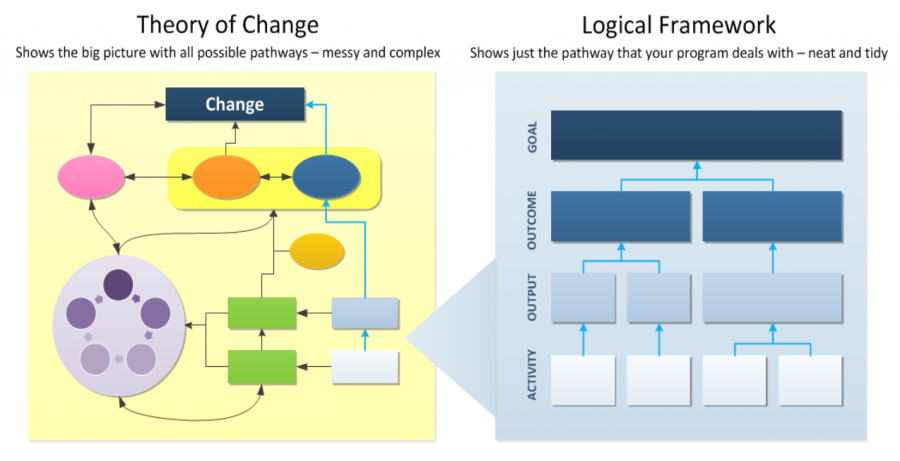
Logic models are simplified visual representations of the program chain. Less detailed than a full ToC, they are useful for communicating program design to stakeholders and for aligning teams on what counts as success.
- IRIS+ (Impact Reporting and Investment Standards)
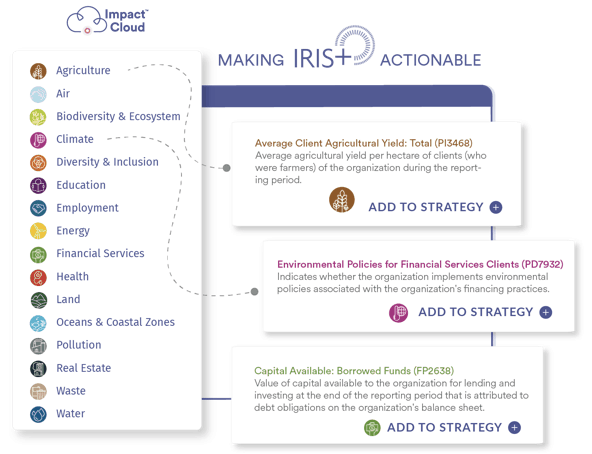
Developed by GIIN, IRIS+ is a catalogue of standardized social and environmental performance metrics. It allows organizations to select indicators from a shared taxonomy, which makes cross-portfolio comparison and investor communication significantly more tractable.
- GRI Standards (Global Reporting Initiative)
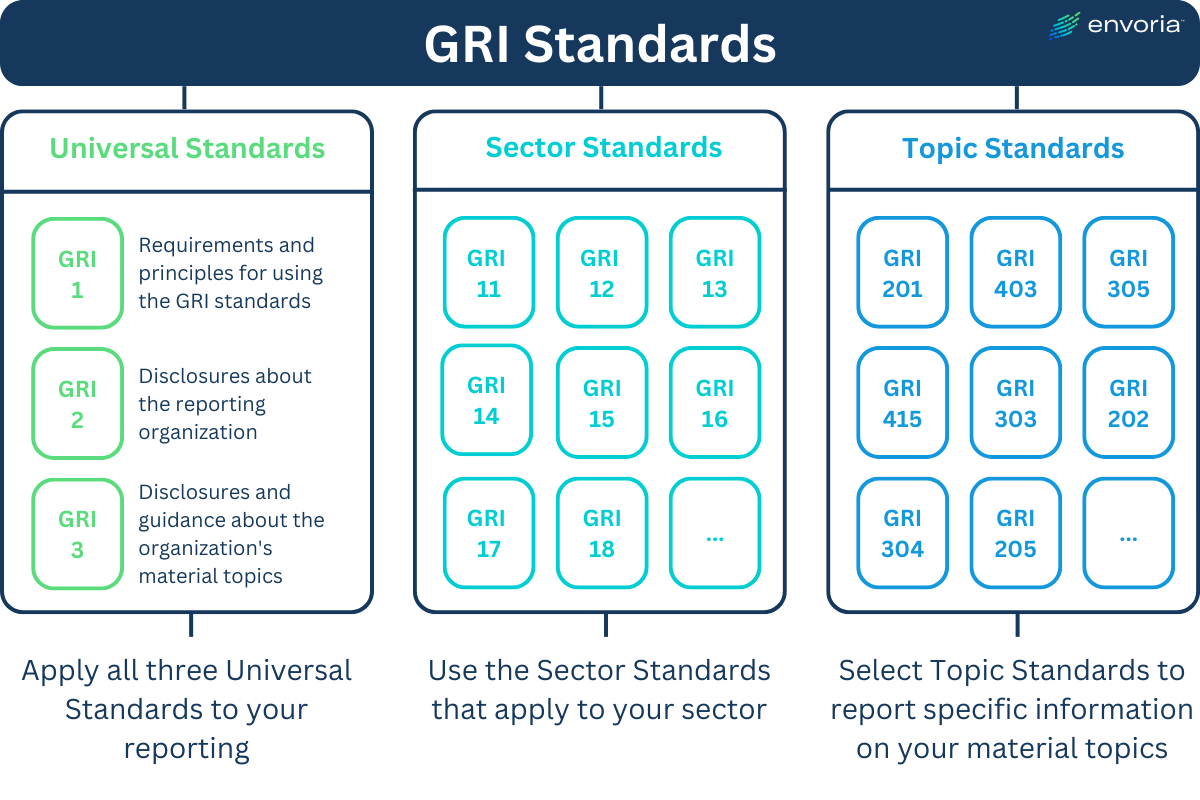
GRI provides the most widely used sustainability and social impact reporting framework for organizations with significant stakeholder disclosure obligations. Particularly relevant for large corporates, public companies, and organizations operating under ESG reporting requirements.
- SROI (Social Return on Investment)
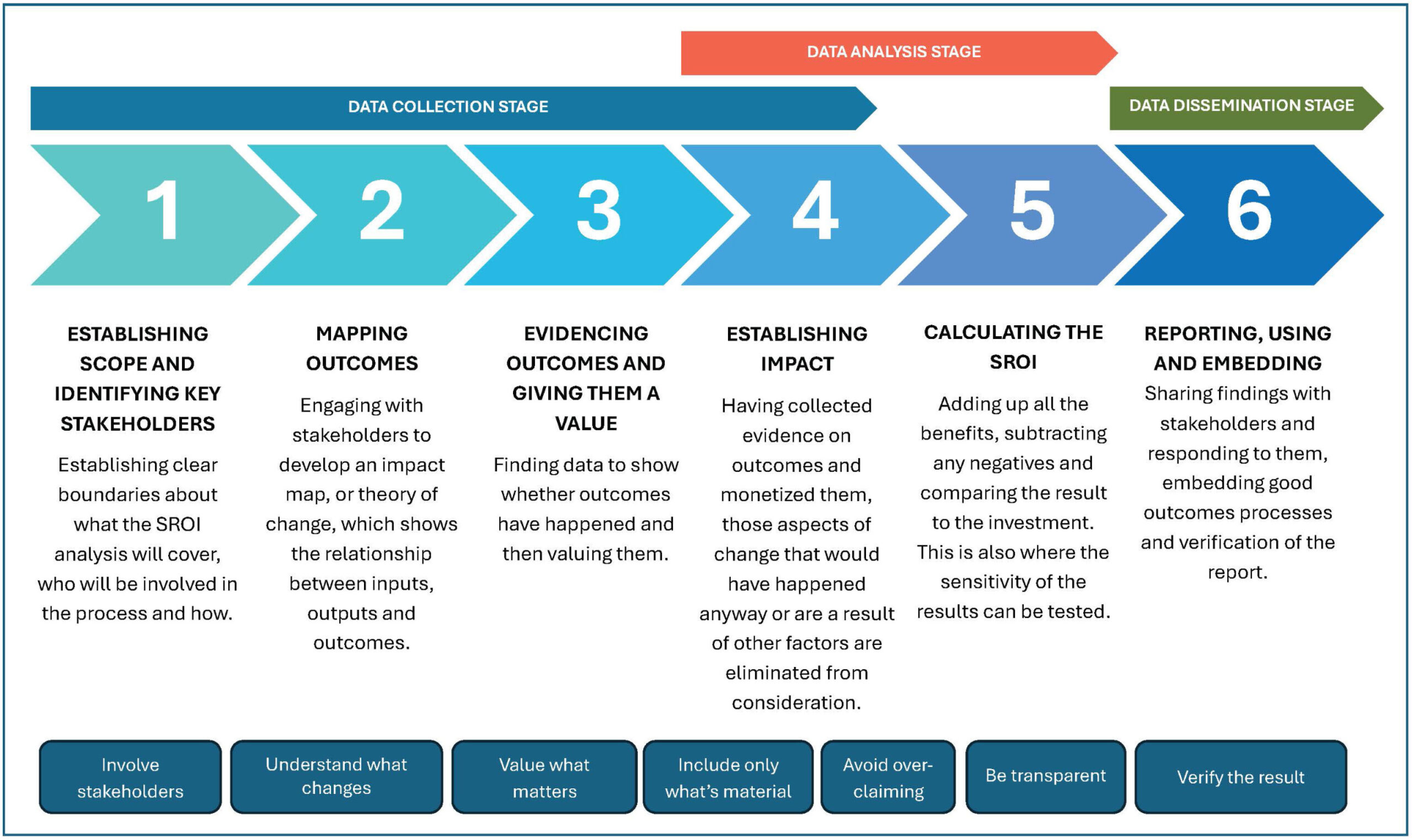
SROI assigns a monetary value to social outcomes, producing a ratio that communicates return in financial terms. Useful for communicating with investors and funders who think in ROI terms. Requires careful assumptions management; the credibility of an SROI figure depends entirely on the rigor of the underlying outcome data.
- B Impact Assessment
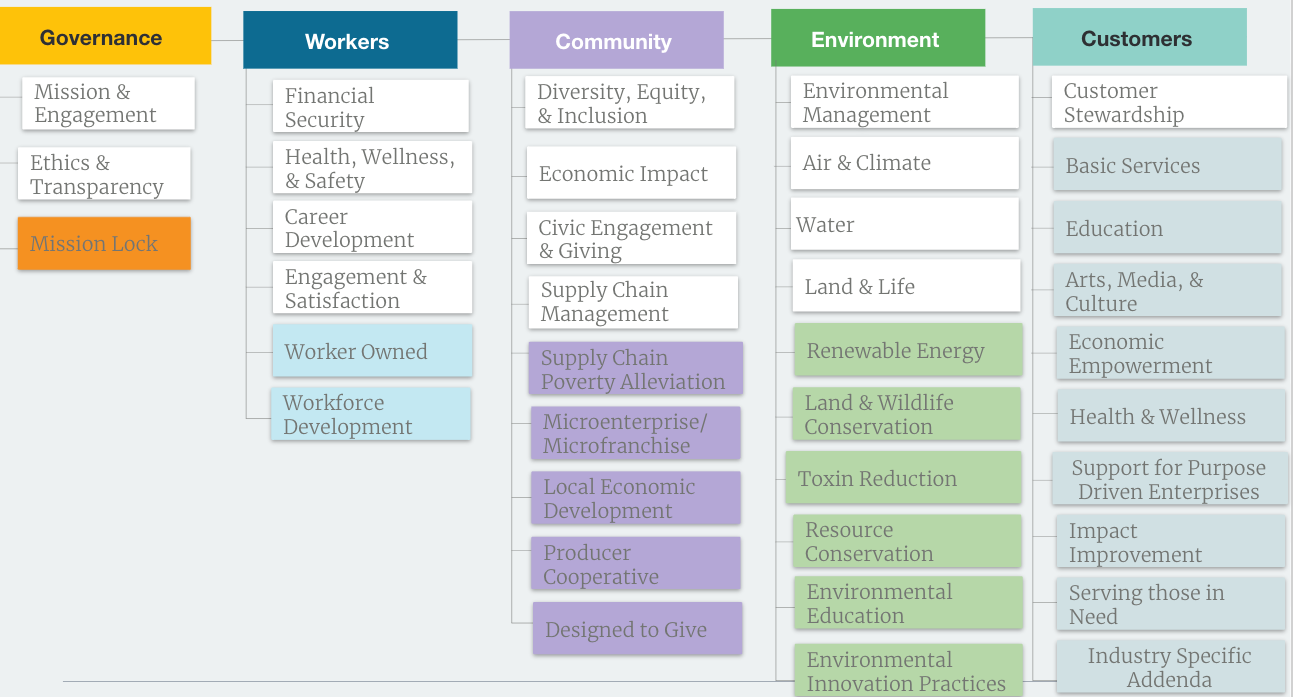
The B Impact Assessment measures company-wide performance across workers, community, environment, and governance. Used by B Corp certification candidates and organizations that want a holistic view of social value creation.
- Results-Based Accountability (RBA)
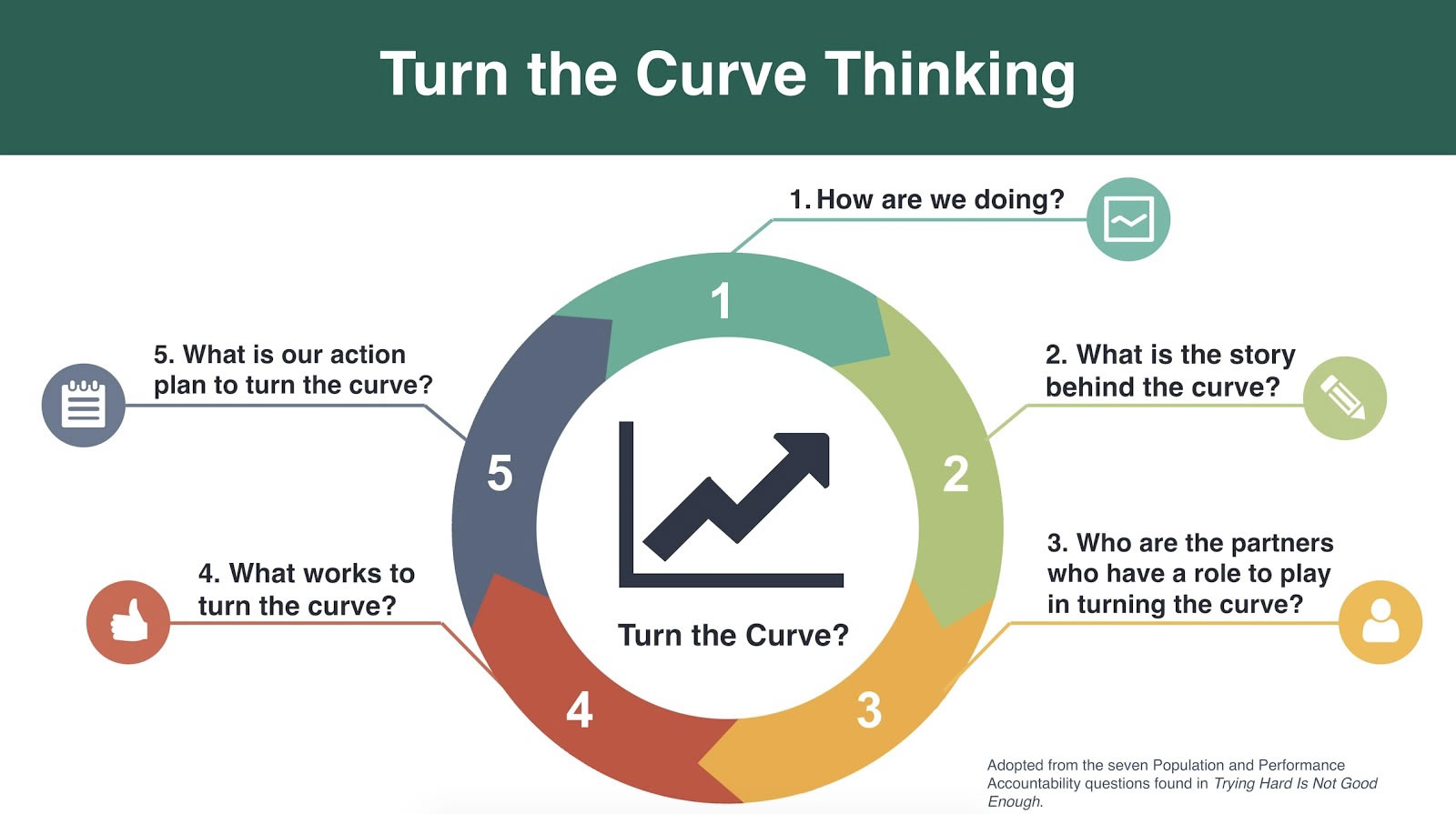
RBA is a population-level framework that distinguishes between population accountability (how are communities doing?) and program accountability (is this program performing?). Useful for government and nonprofit programs that need to connect program-level data to broader population outcomes.
A Step-by-Step Approach to Social Impact Measurement
1. Define Objectives Precisely
Before selecting a framework or building a measurement system, define what change you are trying to produce, for whom, and over what timeframe. Vague objectives produce vague metrics. "We want to improve economic outcomes for women entrepreneurs" is a direction. "We want to increase average monthly business revenue by 25% among program participants within twelve months of graduation" is a measurable objective.
2. Select a Framework That Fits Your Context
The right social impact measurement framework depends on your organizational context, funder requirements, and the type of change you are measuring. A corporate CSR team running employee volunteer programs has different requirements than an impact fund tracking portfolio companies. Most organizations benefit from a hybrid approach: Theory of Change for internal alignment, IRIS+ or GRI for standardized external reporting.
3. Define and Select Your Metrics
This is where most organizations underinvest and later regret it. Metric definition is not a data task. It is a design task. Involve monitoring and evaluation professionals at this stage. Define not just what you will measure but how, from whom, through what instrument, and on what schedule.
Use the SMART criteria as a filter: Specific enough to be unambiguous. Measurable with available tools. Achievable given program timelines. Relevant to the change you are claiming. Time-bound with defined collection windows.
Three tiers of metrics align with the impact chain:
Output metrics count what was delivered. They are necessary for operational management but insufficient for impact claims.
Outcome metrics measure change in participants. These are the core of any credible social impact assessment. They require pre-post design and linked records.
Impact metrics track long-term, systemic change. These are the most difficult to collect cleanly and require multi-year program commitments.
Build your metric set to cover all three tiers, but keep the KPI set tight. Three to five metrics that the whole team watches consistently are more valuable than thirty metrics that appear once in an annual report.
Here’s a conversation with Morgan Buras-Finlay (Raya Cooper Impact Consulting), Michele Darling (LPC Consulting Associates), Heather Meloy (PwC), and Alissa May (Goodera) on building impact measurement frameworks that capture community outcomes, employee outcomes, and business value.
4. Choose the Right KPIs
From your full metric set, identify the three to five that signal most clearly whether the program is working. An early-signal metric (engagement, completion, or early outcome). A primary outcome metric (the central change the program exists to produce). A downstream metric (evidence that the change held over time).
Review KPIs at fixed intervals during the program. If an early signal metric is tracking poorly, you still have time to adjust.
5. Collect and Analyze Data
Start with what already exists. Administrative data from partner organizations, financial records, CRM data, prior program evaluations, and publicly available datasets can provide baselines and comparison benchmarks without additional collection burden.
Then design a collection for what does not already exist. Surveys should be brief, validated where possible, and piloted before full deployment. Pair quantitative rating scales with two or three open-ended prompts to capture context that numbers miss.
Publicly available datasets from government statistical agencies, academic research, and sector databases can provide population-level benchmarks that give your outcome data meaning. A 15% income increase among program graduates means something different if the regional baseline income trend is declining versus growing.
6. Attribute Results Honestly
Attribution is the process of assessing whether the observed change occurred because of your program or because of something else entirely. This is the hardest question in social impact measurement, and it is the question that determines whether your impact claims are credible or not.
Two methods are particularly useful:
Comparative analysis:
Comparative analysis involves comparing your results with similar programs, historical trends, and other environmental factors. If your workforce training graduates show 30% wage gains, and regional wage growth over the same period was 22%, the comparative analysis helps isolate program-specific contribution.
Triangulation:
Triangulation means using multiple data sources to confirm the same finding. Survey data, administrative records, qualitative interviews, and observational data that all point in the same direction produce a much stronger attribution claim than any single source.
Be precise about what you can and cannot claim. Correlation and causation are not the same. If youth in your tutoring program show improved test scores, external factors (family environment, teacher quality, cohort selection effects) may be contributing. Acknowledge them. Impact organizations that overstate attribution erode trust faster than those that acknowledge complexity.
7. Share Insights Across Stakeholders
Impact data that lives in a spreadsheet serves nobody. Design reporting for the audience. Funders need outcome data with a clear methodology. Program staff need operational indicators that drive decisions. Leadership needs the score and the KPI set. Communities served need accessible summaries that reflect their experiences back to them.
Transparent reporting, including results that are mixed or below target, builds more credibility over time than reports that present only successes. Sophisticated funders and partners can tell the difference.
8. Adapt and Improve
The most valuable function of a measurement system is not the report it produces. It is the decisions it enables. Use outcome data to identify which program components drive the most change, which participant segments are underserved, and where resources should shift.
Build formal learning cycles into the program calendar. Review KPIs quarterly. Conduct deeper outcome analyses annually. Adjust program design based on evidence, and document the rationale for changes so that the learning is preserved.
Principles That Separate Rigorous Measurement from Performative Reporting
1. Time your measurement across the full program cycle.
Many organizations measure only at program exit. Baseline assessments before the program begins, intermediate checks during it, and follow-up measurement at six and twelve months after completion produce the data needed to make credible before-and-after claims. Timing is a fundamental design choice.
2. Prioritize data hygiene.
Impact measurement systems produce large volumes of data across cohorts and time periods. Duplicate records, inconsistent entry formats, and outdated information degrade data quality faster than most teams realize. Standardize input formats. Audit regularly. Build data quality into staff onboarding, in addition to annual reports.
3. Play the long game with your data.
Short-term outcomes are encouraging, but sustained behavior change, systemic improvement, and shifts in community norms only appear in longitudinal data. The organizations that build impact credibility over time are the ones that commit to multi-year measurement, even when it is inconvenient.
4. Adhere to high ethical standards.
Participant data carries responsibility. Consent for survey responses, interviews, and any identifying information must be explicit and documented. Data security practices should meet or exceed sector standards, particularly when external platforms are involved. Report impact in ways that represent diverse participant experiences, while reserving the most visible success cases for shorter summaries.
5. Know the difference between causality and correlation.
This is the point where the most well-intentioned organizations create misleading claims. Statistical association between program participation and a positive outcome is not proof that the program caused the outcome. Establish comparison groups where feasible. Acknowledge confounding variables explicitly. Claim what the data supports, as relying on just narratives won’t give a solid foundation to your report and makes your conclusion untrustworthy.
Building the Systems That Make Measurement Sustainable
The measurement practices described in this article require infrastructure. Impact data management platforms that link participant records across time. Survey tools with validated instruments. Reporting pipelines that connect program data to dashboards. Staff capacity to collect, clean, and analyze data at the cadence the program requires.
The organizations that measure social impact most effectively have made these systems a core operational investment rather than a reporting afterthought. They have designated M&E (monitoring and evaluation) capacity, either in-house or through partnerships with impact consultants. They review their social impact indicators at the same frequency they review financial metrics. And they treat measurement as a learning function, not a compliance function.
That shift in framing, from "what do we have to report" to "what do we need to learn," is a sign of exemplary reporting from organizations.
In A Nutshell
The organizations that get social impact measurement right are not necessarily the largest or the best-resourced. They are the ones who decided, early, to build measurement into program design rather than append it at the end.
They defined their outcomes before they collected their first data point. They set up linked records. They measured before, during, and after. They reported honestly, including results that were complicated. And they used the data to make their programs better.
That is what a social impact assessment is actually for. Not to prove that work happened. To prove that change did.
Looking to strengthen your organization's social impact measurement practice? The right tools and frameworks are only as effective as the systems behind them. Start by defining your outcomes, building your metric set, and committing to measurement timelines before your next program cycle begins. Read our Impact Reports 101 article for more information.
Frequently Asked Questions
1. What is social impact measurement?
Social impact measurement is the process of tracking whether a program is creating real change in people’s lives and communities. It goes beyond counting activities or participation and focuses on outcomes such as income change, skill development, or improved well-being over time.
2. Why is social impact measurement important?
It helps organizations understand what is actually working, not just what is being delivered. It also builds trust with funders, improves decision-making, and ensures resources are directed toward programs that create meaningful, measurable outcomes.
3. What is the difference between outputs, outcomes, and impact?
Outputs are the activities completed, such as the number of people trained or meals delivered. Outcomes measure the change in participants, such as improved income or skills. Impact refers to long-term, systemic change in communities or society that results from those outcomes.
4. What are the key metrics in social impact assessment?
Key metrics typically include a mix of output, outcome, and impact indicators. Output metrics track delivery, outcome metrics measure participant change, and impact metrics capture long-term effects such as community or systemic improvements. Strong programs keep a small set of KPIs to stay focused.
5. What frameworks are used for measuring social impact?
Common frameworks include Theory of Change, Logic Models, IRIS+, GRI Standards, Social Return on Investment (SROI), B Impact Assessment, and Results-Based Accountability (RBA). Most organizations use a combination depending on their goals and reporting needs.
6. How do you collect data for social impact measurement?
Data is collected through a mix of quantitative methods like surveys, administrative records, and pre-post assessments, and qualitative methods like interviews and case studies. The most reliable systems use linked participant records over time to track change accurately.
7. What is the biggest mistake organizations make in impact measurement?
The most common mistake is stopping at output tracking. Many organizations report activities like “people trained” without measuring whether those activities led to actual change. Another common issue is collecting data without a clear framework or predefined outcomes.
8. How often should social impact be measured?
Measurement should happen across the full program cycle: before the program starts (baseline), during implementation (progress tracking), and after completion (outcome and follow-up measurement). Long-term impact is best tracked at 6–12 month intervals or beyond.
9. What is a Theory of Change in social impact measurement?
A Theory of Change is a framework that maps how and why a program is expected to create impact. It connects inputs, activities, outputs, outcomes, and long-term impact, helping organizations define what success looks like before the program begins.
10. How do organizations improve their social impact measurement systems?
Organizations improve by defining clear outcomes early, selecting relevant frameworks, building consistent data collection systems, linking participant records over time, and using insights to refine programs rather than just report on them.