International Youth Day: Facts, Event Ideas and Theme

Imagine a young software developer in Bangalore perfecting code, a vocational student in Nairobi mastering an engineering tool, and a high school graduate in Chicago navigating a digital marketing course. Separated by geography, they are bound by an identical ambition: the desire for stable, dignified, and meaningful work.
This shared drive forms the heart of the corporate conversation on August 12. International Youth Day (IYD) serves as a key annual milestone for Corporate Social Responsibility (CSR) and human resources teams to evaluate how their organizations support the emerging generation of global talent.
The scale of this responsibility is underscored by recent global data. There are currently 1.2 billion young people between the ages of 15 and 24 across the globe, comprising roughly 16% of the world's population. However, bridging the gap between ambition and employment remains a significant hurdle.
According to the International Labour Organization (ILO) Employment and Social Trends Report, the global youth unemployment rate stands at 12.4%. Even more striking is that 260 million young people are classified as NEET, i.e., Not in Education, Employment, or Training.
Furthermore, the World Economic Forum’s Youth Pulse Report notes that 57.2% of young people cite financial strain and job creation as their top personal and political anxieties.
By focusing on skill development, mentorship, and workforce readiness, corporate leaders can contribute to sustainable talent pipelines while advancing United Nations Sustainable Development Goals like Quality Education (SDG 4) and Decent Work and Economic Growth (SDG 8).
ALSO READ:
What International Youth Day Is About in 2026
The Official UN Theme: "Different Contexts, Common Aspirations"
The United Nations Department of Economic and Social Affairs has designated this year's theme as "Different Contexts, Common Aspirations." The theme centers on a recognition that is both simple and profound: young people across the globe live in vastly different national and economic realities, yet share the same core desires for dignity, decent work, quality education, and meaningful participation in society.
The 2026 theme gives particular attention to youth in Least Developed Countries (LDCs), Landlocked Developing Countries (LLDCs), and Small Island Developing States (SIDS). These are geographies where structural disadvantages, geographic isolation, climate vulnerability, and limited digital access compound the already-challenging transition from education into opportunity. Three sub-themes anchor the day: Global Solidarity, Shared Challenges, and Youth Innovation.
Why This Theme Matters for the Corporate World
"Different Contexts, Common Aspirations" is an accurate description of your global workforce. Your employees in Bengaluru, São Paulo, and Warsaw arrive at their roles from dramatically different educational backgrounds, economic realities, and career trajectories, and yet they share the same aspirations: growth, purpose, and contribution.
The companies taking this theme seriously are using it as a design brief. They are asking whether their programs account for context-specific barriers to youth participation, whether their partnerships reach young people in underserved geographies, and whether their internal culture genuinely supports the career development of young employees at every level. That design-thinking orientation is the hallmark of meaningful corporate engagement.
The Current Reality of the Global Youth Workforce
1.2 Billion Young People, One Shared Skills Gap
According to the United Nations, there are approximately 1.2 billion young people aged 15 to 24 in the world today. The International Labour Organization's Global Employment Trends for Youth 2024 report estimates the global youth unemployment rate at roughly 13%, meaning young people remain more than three times as likely to be unemployed compared to adults.
In the United States, the picture carries its own urgency. The U.S. Bureau of Labor Statistics recorded a youth unemployment rate of 10.8% for those aged 16 to 24 in July 2025, against an overall rate of 4.3%. Entry-level job postings have fallen by 29 percentage points since January 2024, driven in part by AI adoption and a slower hiring market. Young people are not lacking ambition. The structural pathways into opportunity are narrowing.
The Workplace Readiness Gap Your Hiring Managers Already Know
A landmark July 2026 report from the Chartered Management Institute (CMI), published during Youth Employment Week, brought a striking gap into focus. While 45% of 18 to 24-year-olds believe they entered the workforce equipped with the skills to succeed, just 6% of managers agree. The research drew on over 1,000 UK managers and a nationally representative poll of 514 young people.
Ann Francke OBE, Chief Executive of the CMI, framed it directly in July 2026: "We've spent years asking whether young people are ready for work. It's time we started asking whether work is ready for young people. Government, educators and employers all have a part to play."
This is a structural readiness gap that companies can actively help close through mentorship, workplace exposure programs, skills-based volunteering, and structured onboarding investment.
Supporting the Gen Z Employees Already on Your Team
The youth conversation inside your company is equally important. Novoresume's 2026 Gen Z Workplace Report notes that by 2034, Millennials, Gen Z, and Gen Alpha will collectively account for 80% of the global labor market. That demographic shift is already reshaping how work gets done.
Gen Z employees carry clear expectations. Deloitte's 2025 Gen Z and Millennial Survey found that 44% of Gen Z have turned down job offers because a company's values did not align with their own. And High5Test's 2026 workforce data shows that 69% of Gen Z candidates want to work for companies that genuinely share their values. International Youth Day is a useful mirror for asking how well your organization successfully delivers on that promise.
How Companies Can Take Meaningful Action on International Youth Day 2026
Youth-Focused Skills-Based Volunteering
One of the most impactful things a company can do on and around August 12 is direct its skills-based volunteering capacity toward youth-serving organizations. This means deploying employees with professional expertise in finance, technology, HR, marketing, or design to organizations that support young people's education, employability, and entrepreneurship.
A finance team helping a youth employment nonprofit build its three-year sustainability model, a UX designer improving the digital application experience for a youth scholarship program, a human resources professional building a hiring framework for a youth workforce development organization: these are the contributions that outlast the day itself.
The Global Volunteering Summit 2025 powered by Goodera identified workforce readiness and youth engagement as growing focus areas, with specific opportunities for corporate volunteers to provide mentorship, career exposure, and digital training to better equip young people for the future.
Explore Goodera's skills-based volunteering opportunities to find youth-focused engagements that match your team's specific expertise.

Internal Youth Programs That Honor the Day
August 12 is also an opportunity to recognize and invest in the young professionals already within your organization. Reverse mentoring programs, where Gen Z employees share digital fluency and contemporary perspectives with senior leadership, have gained real traction as a bidirectional development model.
Youth advisory panels that give young employees a formal voice in product decisions, CSR strategy, or company culture add structural weight to what might otherwise be symbolic gestures.
Recognition matters too. Spotlighting young employees who are leading projects, driving community initiatives, or mentoring peers sends a visible signal that youth contributions are valued.
Partnering With Youth-Focused Nonprofits for Structured Skills-Based Volunteering
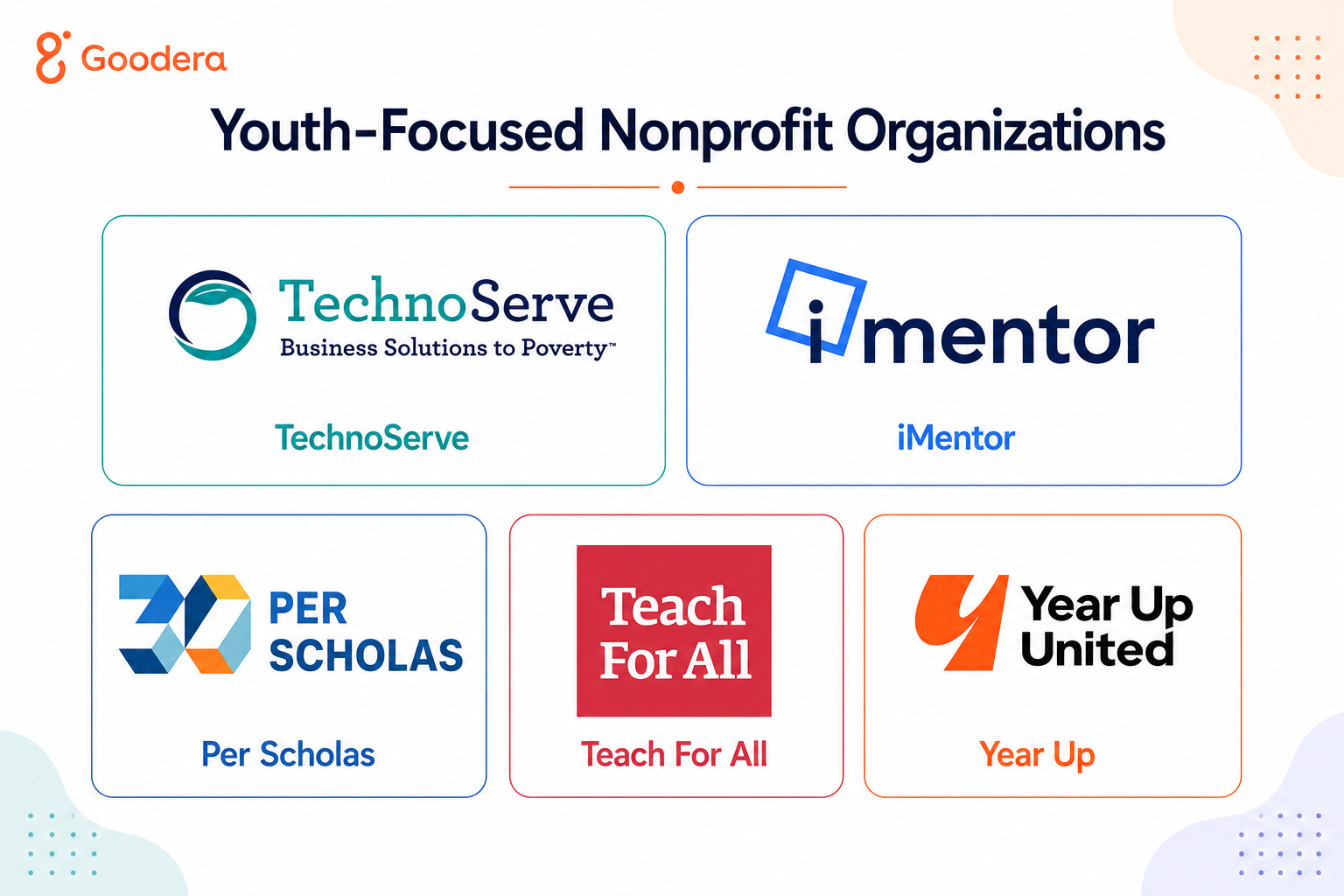
Choosing the right nonprofit partners is central to making August 12 meaningful rather than ceremonial. Organizations such as TechnoServe, iMentor, Per Scholas, and Teach For All have established program frameworks specifically designed to receive and deploy skilled corporate volunteers effectively.
1. TechnoServe
- What they do: Equips young people with business training, financial literacy, and soft skills to launch sustainable enterprises. It also partners with colleges to provide career counseling and job placement, helping students transition smoothly into corporate careers.
- Impact: Benefited 1.2 million people globally in 2025 alone, generating $489 million in additional revenue and strengthening 102,000 jobs. Their programs alone benefited more than 46,315 youth in 2025, per their World Youth Skills Day blog.
2. iMentor
- What they do: Builds mentoring relationships for high school students in low-income communities using a hybrid online and in-person curriculum.
- Impact: Has matched over 20,000 students with mentors, driving an 83% high school graduation rate compared to a 63% citywide baseline in key regions.
3. Per Scholas
- What they do: Provides rigorous, cost-free technology skills training and professional development to individuals often excluded from tech careers.
- Impact: Operates in over 25 cities, with graduates achieving an average 2.5x wage growth upon transitioning into the technology workforce.
- What they do: Recruits and develops promising global graduates to teach in under-resourced schools and become lifelong leaders for educational equity.
- Impact: Spans a network across 60+ countries, directly engaging over 15,000 active teachers and impacting more than 1 million students.
5. Year Up
- What they do: Closes the opportunity divide by providing young adults with professional corporate skills training, higher education credits, and paid corporate internships.
- Impact: Serves over 4,000 students annually across the US, with 72% of graduates securely employed or enrolled in higher education within four months of completion.
Goodera's skills-based volunteer catalog curates youth-focused opportunities across functional domains, making it easier for CSR teams to match the right employee to the right nonprofit need.
Committing Long-Term for Youth Development Programs
The companies with the most credible youth CSR impact stories are not the ones that activate once a year on August 12. They are the ones that treat youth development as a standing strategic commitment, embedded in their volunteer program calendar, their community investment strategy, and their internal talent development framework.
Goodera's Corporate Volunteering Quotient Report 2026 found that companies deploying structured programmatic enablers achieve up to 2.6 times higher workforce participation rates than those without such structures. The sustainability of impact, for young people inside and outside the company, depends on that same structural consistency.
Connecting International Youth Day 2026 to Your ESG and CSR Commitments
How Investing in Youth Helps Meet Your SDG Targets
Corporate investment in youth development maps directly to several of the United Nations Sustainable Development Goals. The four with the clearest connection are SDG 4 (Quality Education), SDG 8 (Decent Work and Economic Growth), SDG 10 (Reduced Inequalities), and SDG 17 (Partnerships for the Goals).
When your company's skilled volunteers help a youth workforce development nonprofit build its career counseling curriculum, that activity generates ESG-reportable outcomes under SDG 4 and SDG 8. When your partnership reaches youth in LDCs or SIDS, the communities at the center of this year's IYD theme, it speaks directly to SDG 10's mandate for reduced inequalities.
Deloitte's worldwide commitment to prepare 50 million lives for a world of opportunity by 2030 is structured explicitly around SDG 4 and SDG 8 through their WorldClass initiative. Alignment of this kind connects youth investment to a globally recognized accountability framework, which increasingly matters to ESG auditors and disclosure stakeholders.
Through its partnership with One Young World, Deloitte develops young professionals into future leaders capable of tackling global challenges. This collaboration directly supports Deloitte's WorldClass initiative, empowering social innovators and youth-led solutions aligned with education and economic opportunities.
Companies Setting the Standard for Youth Investment
Deloitte and One Young World
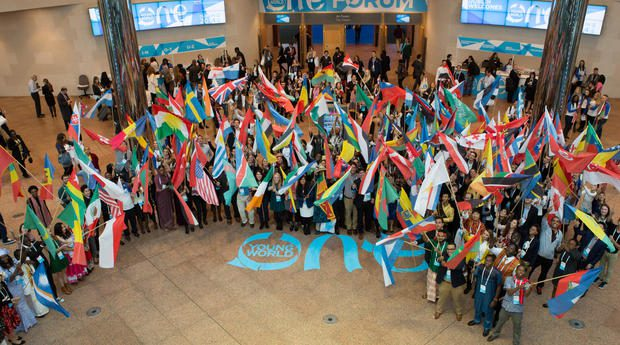
Deloitte's partnership with One Young World is one of the most visible models of corporate youth leadership in the professional services world. At the 2025 OYW Summit in Munich, Deloitte sent a global delegation of approximately 60 participants from over 25 countries, funded 9 scholarships for external social innovators, and engaged 10+ senior executives and OYW Counsellors in mentorship and leadership development experiences alongside delegates.
The Lead2030 grant program, which Deloitte has supported for several consecutive years, funds youth-led solutions aligned with SDG 4 and SDG 13. Winners receive both financial support and mentorship to scale their community impact. This is not a one-day activation. It is a multi-year structural investment in youth leadership.
Microsoft's Youth Skilling Initiatives
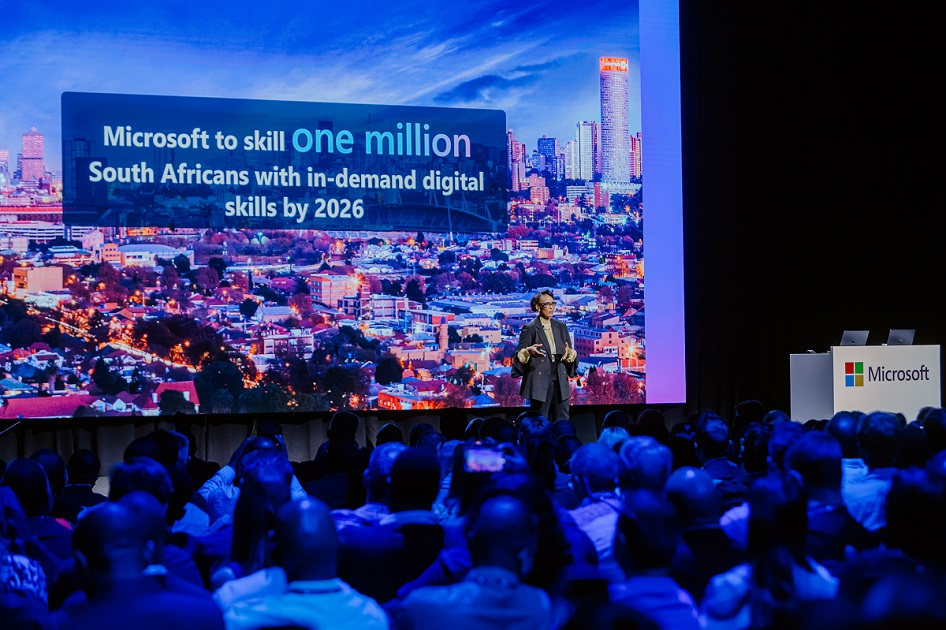
Microsoft's approach to youth investment has increasingly centered on digital skills access at scale, particularly in underserved and emerging markets. In January 2025, Microsoft South Africa announced an AI skilling initiative targeting 1 million South Africans with in-demand digital skills by 2026, setting an ambitious continent-level goal of reaching 4 million African youth with digital, cyber, and AI competencies.
Through the YES x Microsoft AI Skills Initiative, the company partnered with the Youth Employment Service to equip 50,000 young participants with globally recognized certifications, creating direct pipelines from learning into employment. Lillian Barnard, President for Microsoft Africa, noted in January 2025: "By providing skilling opportunities and access to industry-recognised certifications, our youth will be well positioned to compete on the global stage."
TechnoServe's Corporate Partnership Model for Youth Employment
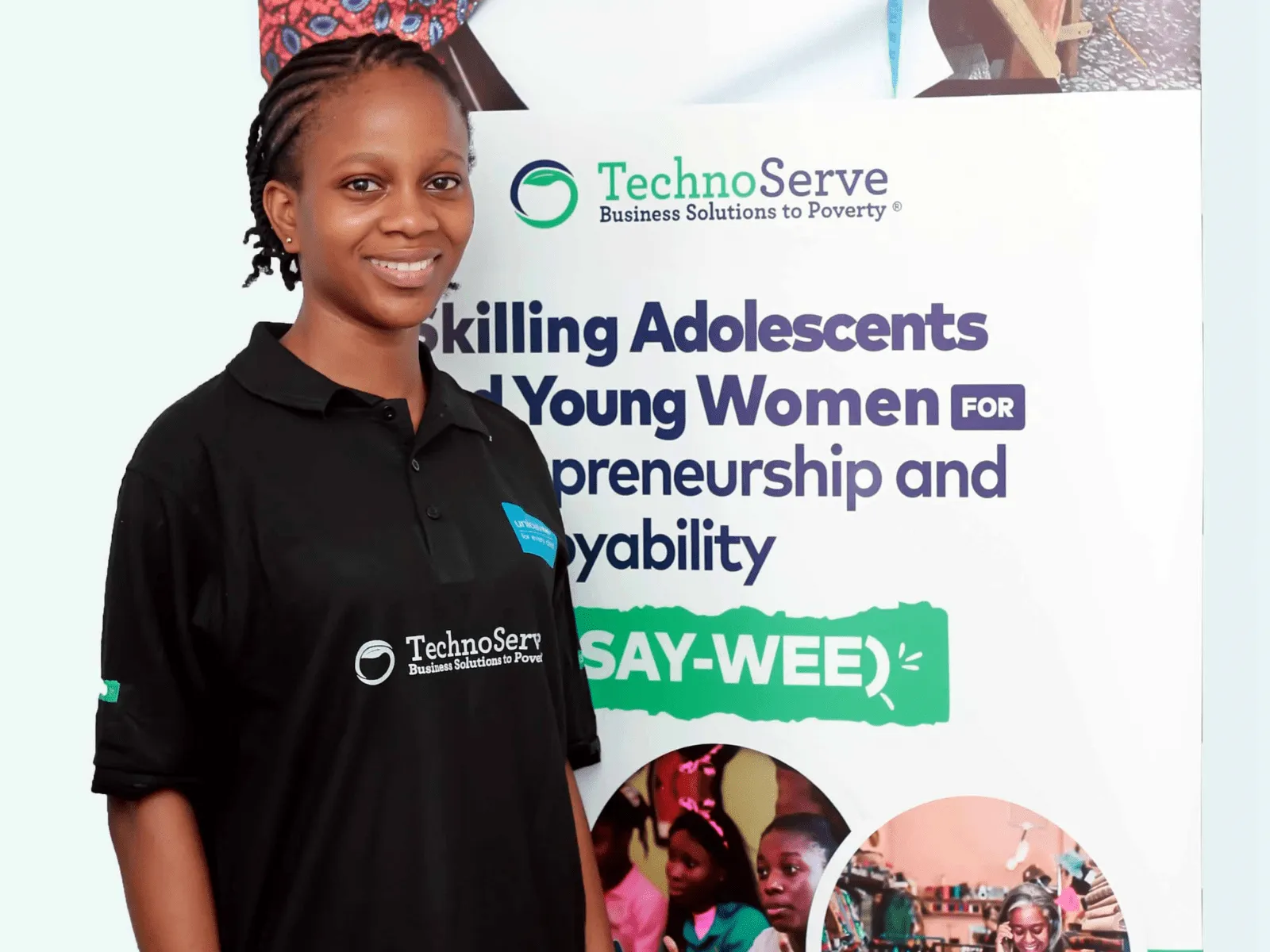
TechnoServe offers one of the most rigorously documented corporate partnership models for youth employment development. The CREEYD program, a partnership with the Citi Foundation, delivered a remarkable return: for every dollar invested, youth income increased by an average of $22.80, driven by improved career placement rates and access to formal employment for students in low-tier colleges.
Their broader 2024 Annual Report documented $491 million in total impact, with corporate partners including Citi Foundation, J.P. Morgan, Nike Foundation, and Anglo American. The Crescer program in Brazil, funded by Anglo American, exemplifies how a corporate-funded youth workforce development initiative can break cycles of informal work in geographies with limited economic opportunity. Their model also benefited more than 46,315 youth in 2025 globally across programs in Africa, Latin America, and Asia.
How to Plan Your Company's International Youth Day 2026 Program
A Simple 3-Step Activation Framework for CSR Teams
International Youth Day does not need to be a logistical production to be meaningful. For CSR teams working within realistic bandwidth and budget constraints, a focused three-step framework covers the essential ground.
Step 1: Choose your orientation
Decide whether your primary activation will be internal (investing in your own young employees), external (directing skills and resources toward youth-serving nonprofits), or both. Both are possible, but it requires scoping each track separately to avoid spreading effort too thin. A clear orientation prevents programs from dissolving into well-intentioned but poorly executed activity.
Step 2: Define your commitment level
There are three levels worth distinguishing: Surface (awareness communications, LinkedIn content, internal recognition messages), Structural (a time-bound, scoped Skills-Based Volunteering project with a youth-serving nonprofit, or a formal internal youth advisory panel), and Systemic (a multi-year partnership, a recurring volunteer program calendar item, or a dedicated youth development budget line). Know which level you are operating at, and be honest about it internally. Structural and systemic commitments compound in value over time.
Step 3: Connect August 12 to a year-round program
The most durable youth CSR impact from corporate programs comes from treating International Youth Day as a launch point or a renewal moment within a continuous commitment rather than as an isolated event. Schedule the next touchpoint before August 12 arrives. Book the follow-up nonprofit survey. Set the next milestone for the SBV project. That continuity is what turns a celebration into a genuine investment.
Wrapping It Up
International Youth Day 2026 lands on August 12 with a theme that challenges organizations to think beyond their most usual partnerships. "Different Contexts, Common Aspirations" is an invitation to ask whether your company's reach matches the full scope of the youth challenge the UN is describing, or whether your youth programs are concentrated in the geographies and demographics that are easiest to serve.
The good news is that the tools to act meaningfully are available right now. Skills-based volunteering platforms like Goodera connect your employees' expertise to youth-serving nonprofits with the infrastructure to receive and use that help effectively. The corporate examples are well-documented and replicable. The SDG alignment is clear and auditable.
What August 12 asks of your company is an honest accounting of what you are doing for young people, and a commitment to do it better and more consistently in the year ahead.
Frequently Asked Questions
What is International Youth Day, and when is it observed?
International Youth Day is an annual United Nations observance held on August 12. Established in 1999 and first celebrated in 2000, it raises awareness about the challenges and opportunities facing young people worldwide and recognizes their role as partners in sustainable development. Governments, civil society organizations, corporations, and youth networks use the day to launch initiatives, host events, and commit to action on youth-related issues.
What is the theme for International Youth Day 2026?
The official 2026 theme, designated by the UN Department of Economic and Social Affairs, is "Different Contexts, Common Aspirations." It highlights that while young people's lives are shaped by very different national and economic realities, their aspirations for dignity, decent work, quality education, and meaningful participation are broadly shared. The theme focuses particular attention on youth in Least Developed Countries, Landlocked Developing Countries, and Small Island Developing States.
How can a company participate in International Youth Day 2026?
Participation can range from internal recognition programs for young employees to structured external volunteering partnerships with youth-serving nonprofits. The most impactful approaches combine both: spotlighting Gen Z employees internally while deploying skilled volunteers to youth-focused nonprofits through platforms like Goodera. Connecting any August 12 activation to a year-round program commitment multiplies the impact significantly.
What types of skills-based volunteering are relevant to youth development?
Career mentoring, resume and interview coaching, digital skills training, financial literacy curriculum development, UX audits for youth-serving nonprofit platforms, HR framework building for youth employment organizations, and legal compliance support for youth-focused NGOs are all high-impact areas. The common thread is professional expertise applied to a specific operational need in a youth-serving organization, with a deliverable that lasts beyond the engagement.
How does youth investment connect to ESG reporting?
Youth-focused programs generate ESG-reportable outcomes under SDG 4 (Quality Education) and SDG 8 (Decent Work and Economic Growth) at minimum. Skilled volunteer hours carry quantifiable community value using published benchmarks. Structured partnerships with youth-serving nonprofits produce outcome data, including employment rates, skills acquisition scores, and income increases, that meet the evidence standards increasingly expected by ESG disclosure frameworks such as GRI 413 and the EU's Corporate Sustainability Reporting Directive.
What is the current youth unemployment situation globally?
The ILO's Global Employment Trends for Youth 2024 report estimates the global youth unemployment rate at approximately 13%, meaning young people are more than three times as likely to be unemployed as adults. In the United States, the Bureau of Labor Statistics recorded a youth unemployment rate of 10.8% for ages 16 to 24 in July 2025. Entry-level job postings have also contracted significantly since 2024, making the transition from education to employment more competitive.
Why is workplace readiness a concern for corporates in 2026?
The CMI's July 2026 report found that just 6% of managers believe young recruits are fully prepared for the workplace, despite 45% of young people feeling they are. This readiness gap affects team performance and slows the integration of new talent. Companies that invest in mentorship, structured onboarding, and youth workforce development programs are better positioned to close that gap from both sides.
What does Deloitte's partnership with One Young World involve?
Deloitte's collaboration with One Young World includes sending an annual global delegation to the OYW Summit, funding fully-paid scholarships for social entrepreneurs and changemakers, and supporting the Lead2030 grant program for youth-led solutions aligned with SDG 4 and SDG 13. At the 2025 Munich Summit, Deloitte's delegation represented over 25 countries and included 9 externally funded scholarships.
How can smaller companies participate meaningfully in International Youth Day without large budgets?
Smaller companies can begin with high-impact, low-cost actions: deploying one or two employees as mentors to a local youth employment nonprofit, hosting a reverse mentoring session with young employees, or completing a micro-volunteering task for a youth-focused organization via a platform like Goodera. A single well-scoped Skills-Based Volunteering project with a local youth serving nonprofit, even a 15-20 hour engagement, can produce lasting outcomes for the organization and real development value for the volunteer.
What is the UN's long-term vision for youth investment through International Youth Day?
The UN's International Youth Day framework is embedded within the broader 2030 Agenda for Sustainable Development. The 2026 theme's emphasis on global solidarity and shared challenges reflects the UN's position that no country can afford to leave its youth population behind, and that the private sector is an essential partner in ensuring that young people in the most constrained geographies have access to education, decent work, and economic participation. The UN DESA has outlined a digital solidarity campaign for August 12, inviting all stakeholders to amplify youth voices and share youth-led initiatives globally.