International Volunteers Day 2026: A Corporate Action Guide for December 5

For an average employee, a corporate volunteer event is rarely just a line item on a calendar. Rather, it is the afternoon they step away from their regular work to mentor a student from an underserved community, plant a community garden, or build a shelter for homeless people. That single day changes how they view their time, their colleagues, and their own capacity to make a difference. The impact often creates a positive ripple effect that extends into other aspects of their personal and professional lives.
As a corporate social responsibility and social impact leader, you are the architect of these life-changing moments, and International Volunteer Day on December 5, 2026, offers the ultimate stage to celebrate them. This year carries unprecedented momentum, serving as the wrap-up for the United Nations' International Year of Volunteers for Sustainable Development, a global effort launched under General Assembly Resolution 78/127.
The direct takeaway for CSR leaders: this December 5 carries more institutional weight than a typical year, since it sits inside a UN-wide initiative built specifically around better measurement, stronger infrastructure, and deeper recognition of volunteer contributions. That framing gives corporate volunteering programs a rare opening to move toward more durable activations. The sections below walk through what International Volunteers Day asks of organizations, the data behind it, and a workable plan for December 5 itself.
Understanding International Volunteers Day
International Volunteers Day, observed globally on December 5, was established by the UN General Assembly in 1985 through Resolution 40/212 and first marked the following year. It exists to recognize volunteer contributions to peace and development and to encourage governments and organizations to support volunteering in all its forms.
The 2026 observance carries extra significance because it falls within International Volunteering Year 2026, whose guiding theme, "Every Contribution Matters," was launched at the United Nations Headquarters on December 5, 2025, alongside the release of the 2026 State of the World's Volunteerism Report.
That 2025 launch theme carries directly into 2026 programming, giving this year's IVD a throughline rather than a fresh, disconnected message. Where past themes such as "If Everyone Did" in 2023 and "Together, Act Now" in 2022 emphasized collective participation, the current framing places more weight on visibility and measurement, asking organizations to document and account for volunteer contributions other than simply celebrate them. For a CSR team, that shift is worth noticing, since it suggests the kind of reporting a program builds this year will matter as much as the activity itself.
Honoring the Foundation and Global Evolution of the Movement
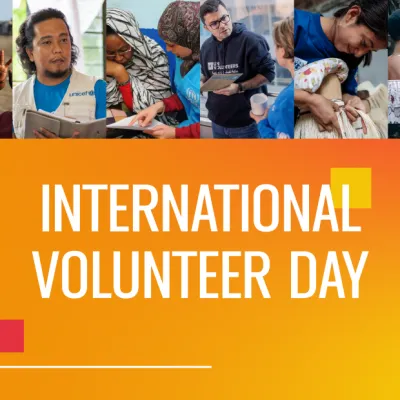
International Volunteer Day (IVD) was officially established by the United Nations General Assembly on December 17, 1985, through Resolution 40/212 A/RES/40/212. Observed annually on December 5th since its inaugural celebration in 1986, the day was created to recognize and celebrate the vital economic and social contributions of grassroots volunteers worldwide. This global platform enables governments, NGOs, and corporations to align localized civic engagement with international development policies.
Over the decades, the observance has evolved from localized community service into a massive digital and strategic corporate tool. The integration of the UNV Online Volunteering service in 2000 opened the doors for borderless skills-based volunteering, paving the way for modern Corporate Social Responsibility (CSR) programs. Today, International Volunteer Day serves as a critical annual benchmark for B2B enterprises to measure, scale, and celebrate how corporate volunteerism directly drives the UN Sustainable Development Goals (SDGs).
The UN designated 2001 as the first International Year of Volunteers, a milestone that helped formalize volunteering as a recognized contributor to development policy worldwide. A tenth-anniversary observance, known as International Year of Volunteers +10, followed in 2011, extending that momentum without carrying the same full UN designation.
International Year of Volunteers 2026 is the third major observance in this lineage and the first built specifically around sustainable development, positioning December 5, 2026 as both a continuation of a four-decade tradition and a distinct new chapter.
Emerging Trends Reshaping the Modern Volunteering Ecosystem
Volunteering itself looks different than it did even a decade ago, shaped by hybrid and virtual formats, skills-based engagement, and platform-driven matching between employees and causes. The 2026 State of the World's Volunteerism Report introduced a new measurement framework called GIVE, the Global Index of Volunteer Engagement, created specifically because prior approaches to counting volunteer contributions were fragmented and incomplete.
The Global Index of Volunteer Engagement (GIVE) framework evaluates impact across four distinct, equally weighted dimensions:
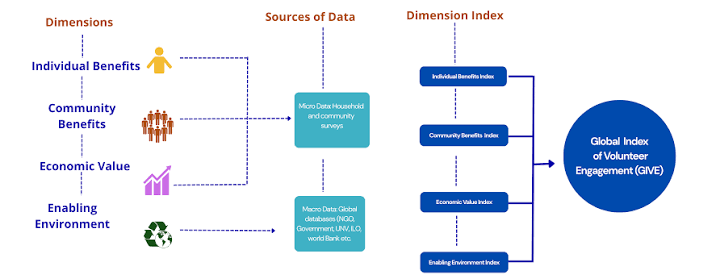
- Value to the Individual (e.g., well-being, skills acquisition)
- Value to the Community / Society (e.g., trust, social cohesion)
- Economic Value (measurable local and macroeconomic impacts)
- The Enabling Environment (supportive policies and institutional infrastructure)
Corporate platforms have followed a similar path, with volunteering technology providers increasingly integrating directly with existing HR and giving systems so that participation, hours, and outcomes can be tracked automatically rather than reconstructed after the fact.
ALSO READ: Explore Global Trends in Corporate Volunteering in 2026.

Mapping the Unprecedented Growth of Global Impact Networks
The scale of global volunteering has become easier to see thanks to this improved measurement. According to the 2026 State of the World's Volunteerism Report from UN Volunteers, an estimated 2.1 billion working-age people volunteer their time and skills every month worldwide. The Global Call to Action associated with International Volunteer Year 2026 was itself shaped through consultations with roughly 14,000 people across 164 countries, illustrating how broadly the initiative reaches beyond traditional nonprofit and government circles into the private sector.
UN Deputy Secretary-General Amina Mohammed said, "As we look ahead to the International Year of Volunteers for Sustainable Development in 2026, let's acknowledge the vital role of volunteers as change-makers who weave through the fabric of the 2030 Agenda, helping to accelerate action in the second half of our journey. Their commitment shapes a world where sustainable development is not merely a goal but a shared reality we create together."
This is a framing that positions corporate volunteer networks as part of a much larger, interconnected system rather than isolated company programs.
Why International Volunteers Day Is a Strategic Moment for Corporate CSR Leaders
International Volunteering Year 2026 comes with specific expectations that make December 5 a genuinely useful checkpoint for a CSR strategy.
The 25-Year Gap Since the Last International Volunteer Year
Twenty-five years separate International Volunteering Year 2026 from the original 2001 International Year of Volunteers, and that gap matters because so much has changed in how work, technology, and global crises intersect with volunteering since then. Programs built around 2001-era assumptions, largely local and in person, do not map cleanly onto a workforce that is now distributed, hybrid, and accustomed to digital coordination.
International Volunteering Year 2026 gives companies a natural moment to reassess whether their volunteering infrastructure has kept pace with everything else about how their workforce actually operates.
The Depth vs. Breadth Problem Corporate Programs Must Address in 2026
Many corporate volunteering programs succeed at reaching a broad number of employees for single events while a smaller group returns for deeper, sustained engagement, and both patterns bring genuine value to a program. The 2026 State of the World's Volunteerism Report notes that volunteer contributions remain underrepresented in policy and development planning partly because measurement historically favored easily countable activities over sustained, harder-to-quantify commitments.
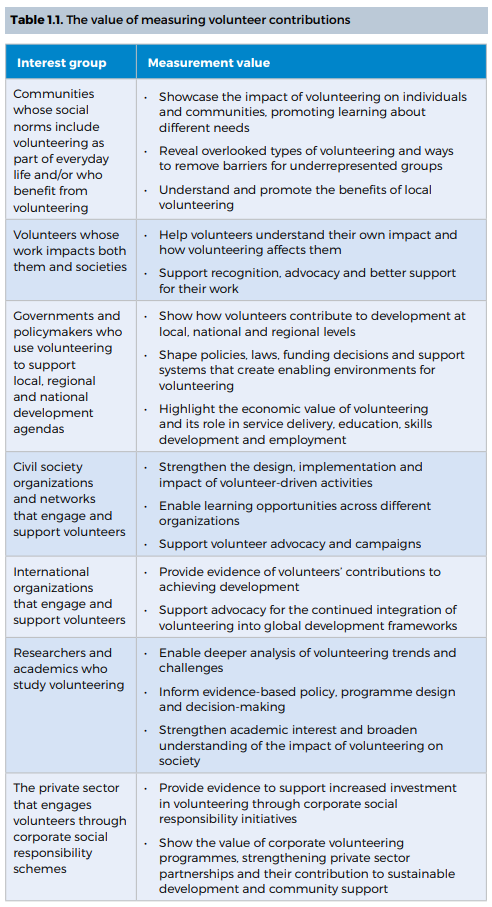
Value of measuring volunteer contributions. Image via UN Volunteers.
International Volunteer Day on December 5 gives corporate social responsibility teams the perfect prompt to rethink how they evaluate success. Instead of simply reporting a single, flat number, this milestone encourages social impact leaders to intentionally track both broad participation, the total volume of employees stepping up, and deep, recurring engagement, which captures the sustained commitments that drive true community transformation. By deliberately tracking both dimensions during your December 5 activations, your team can move past fragmented data and build a far more sophisticated impact report for executive leadership.
The Measurement Gap That International Volunteering Year 2026 Calls Out Directly
The GIVE framework introduced through the 2026 State of the World's Volunteerism Report exists specifically to close a long-standing measurement gap, since the report found that outdated methods have left much of the world's volunteer contribution effectively invisible in economic and policy terms.
For a corporate CSR team, this is a direct, timely invitation to strengthen internal tracking, whether that means logging hours through a dedicated platform, capturing skills-based outcomes in addition to time contributed, or connecting volunteer data to broader ESG disclosures for the first time.
How Companies Can Take Meaningful Action on December 5
With the context established, the practical question becomes what a company can actually do this December 5 that reflects the scale of International Volunteering Year 2026.
Recognition as the Highest-ROI International Volunteers Day Activation
Simple, specific recognition remains one of the most cost-effective activations available. Rather than a general thank you message, naming individual volunteers, the causes they supported, and the measurable outcomes of their work gives recognition far more weight, and it costs a CSR team little more than thoughtful planning. This approach also directly supports the International Volunteering Year 2026 measurement theme, since specific recognition requires the kind of detailed tracking the UN is asking organizations to build.
Skills-Based Volunteering as a Differentiated December 5 Program
Skills-based volunteering lets employees apply the same expertise they use in their day jobs toward a nonprofit's specific need, whether that is financial planning, software development, or communications support.
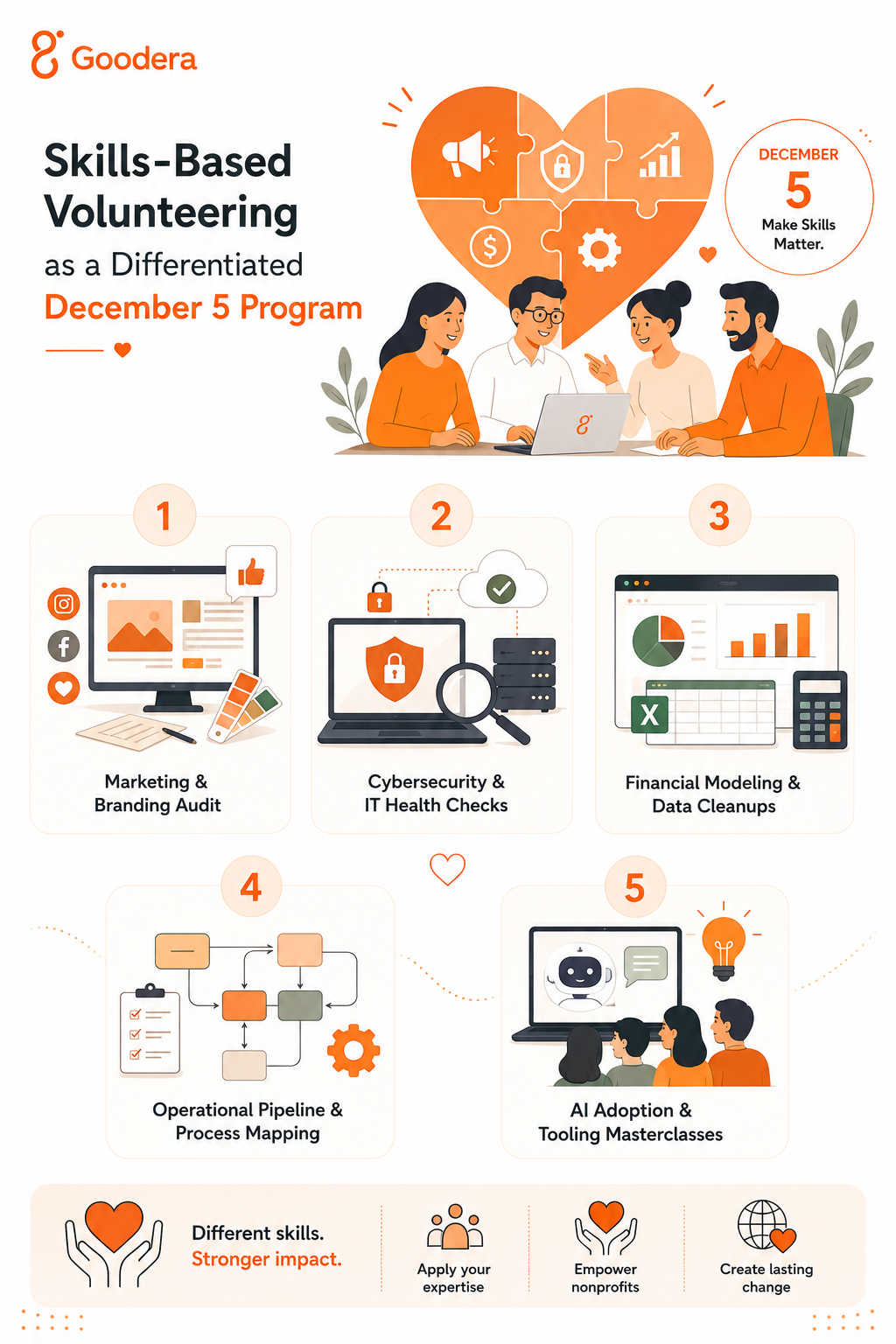
1. The 3-Hour Marketing and Branding Audit
- How it works: Pair your internal marketing, design, and copywriting teams with local or global non-profits for a focused afternoon workshop.
- The output: Employees review the non-profit’s existing website, social media channels, and donor acquisition materials. They leave the organization with a fresh branding kit, optimized social templates, and a concrete 2027 content strategy.
2. Pro-Bono Cybersecurity and IT Health Checks
- How it works: Non-profits handle sensitive donor data but rarely have the budget for robust IT infrastructure. Task your engineering, IT, or security teams with a digital review.
- The output: A comprehensive software audit where your tech talent patches security vulnerabilities, optimizes cloud storage, sets up secure password managers, and trains nonprofit staff on phishing defense.
3. Financial Modeling and Data Strategy Cleanups
- How it works: Connect your finance, accounting, or business intelligence teams with non-profit directors who are preparing their upcoming annual budgets or managing complex grant tracking.
- The output: Your data teams build dynamic Excel models, clean up messy donor spreadsheets, and create automated dashboards that make it easy for the non-profit to present clear financial metrics to their board.
4. Operational Pipeline and Process Mapping
- How it works: Non-profits often scale quickly without the time to build efficient workflows. Assign interested project managers, HR professionals, or operations experts on projects analyzing internal bottlenecks.
- The output: A collaborative session where employees map out a streamlined volunteer onboarding sequence, draft a standardized hiring template, or optimize internal supply chain logistics for physical goods.
5. AI Adoption and Tooling Masterclasses
- How it works: Many lean non-profit teams want to use generative AI to speed up their work but lack the training to do so effectively. Have your tech-forward employees host a live, interactive masterclass.
- The output: Non-profit staff learn how to safely use AI tools to draft grant proposals, generate newsletter outlines, and build basic project timelines, saving them hours of administrative work each week.
Experiential and Field-Based Volunteering Ideas
While leveraging professional skills drives immense strategic value, there is an irreplaceable power in traditional, field-based volunteering. These experiential activations allow employees to step completely away from their screens, work shoulder-to-shoulder with colleagues they might only see on video calls, and witness the tangible, physical impact of their efforts in real-time.
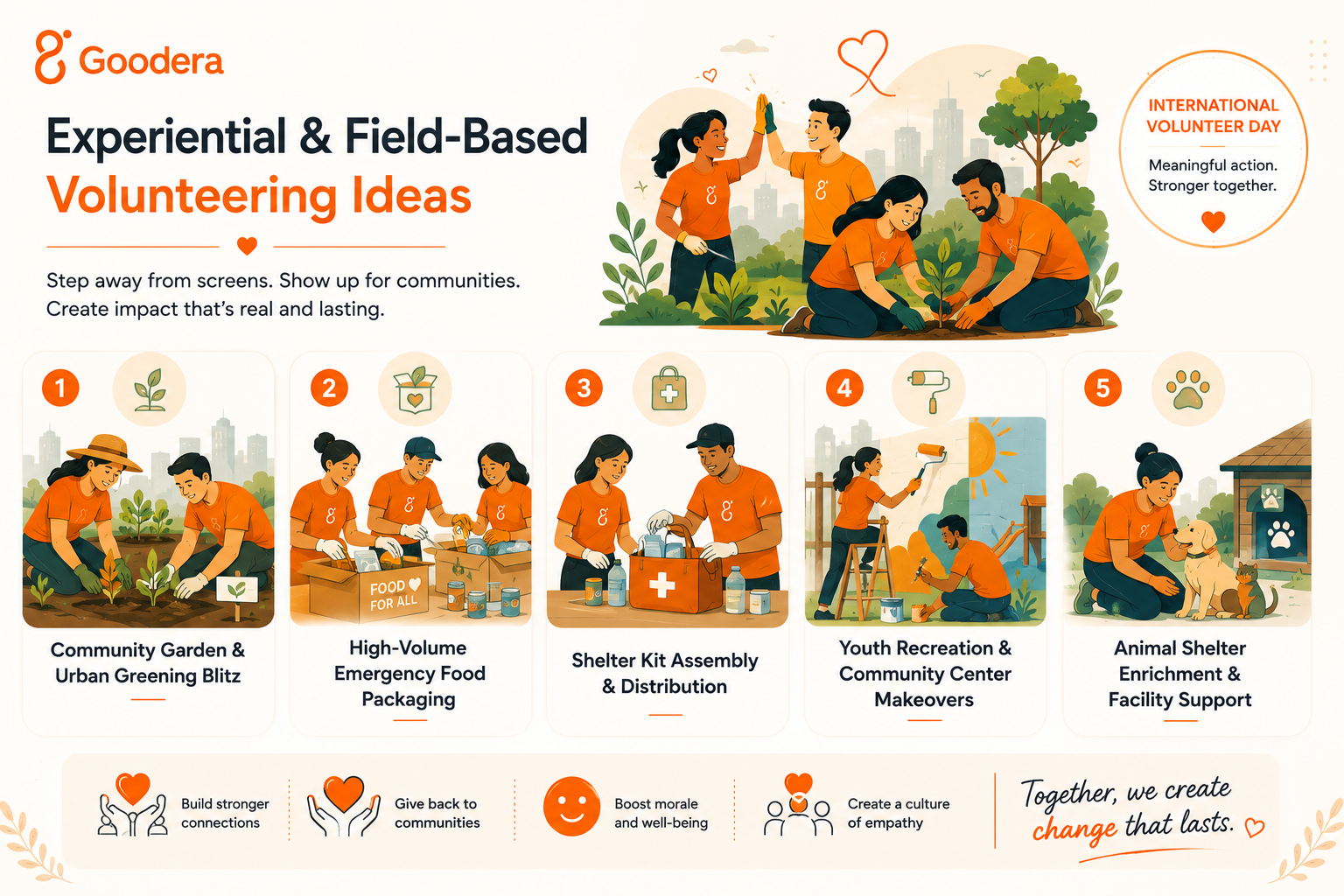
For International Volunteer Day, offering high-energy, community-facing programs is the most effective way to drive broad participation across your entire workforce, boost employee morale, and build a vibrant, shared corporate culture rooted in empathy and action.
- Community Garden and Urban Greening Blitz: Teams partner with local parks or urban farms to clear beds, plant seasonal crops, build compost bins, or plant native trees to combat urban heat islands.
- High-Volume Emergency Food Packaging: Employees gather in a central warehouse or office common room to sort, quality-check, and pack non-perishable meals, supporting local food banks during peak winter demand.
- Shelter Kit Assembly and Distribution: Teams work together to compile essential winter survival kits, disaster relief packs, or hygiene bundles, which are then delivered directly to local unhoused populations or crisis shelters.
- Youth Recreation and Community Center Makeovers: Volunteers spend the day painting murals, assembling new playground equipment, or refurbishing worn-out community facilities to create safe, welcoming spaces for local youth.
- Animal Shelter Enrichment and Facility Support: Employees visit local rescue shelters to build agility equipment, socialize rescue animals, bake healthy treats, and assist staff with deep-cleaning habitats to prepare animals for adoption.
Launching a Year-Round International Volunteering Year 2026 Commitment on December 5
Because International Volunteering Year 2026 spans the full calendar year, December 5 works well as a launch date for a longer commitment for the year 2027. A company might use the day to announce an annual volunteer hours policy, a new nonprofit partnership, or a pledge tied to the UN's Global Call to Action, all of which extend the moment well beyond a single afternoon of activity. This approach also gives CSR teams a natural year-end and year-start narrative for internal communications and external reporting alike.
Employee Volunteer Recognition and Community Storytelling
Sharing specific, individual volunteer stories, rather than broad appreciation graphics, tends to resonate far more with both employees and external audiences. A short profile of one volunteer's ongoing work, paired with a data point about collective impact across the organization, gives December 5 content real substance. This kind of storytelling also builds a natural library of material that a CSR team can draw on throughout the following year.
Connecting International Volunteers Day 2026 to Your ESG and CSR Strategy
December 5 offers a clear opportunity to strengthen the link between volunteering programs and a company's broader sustainability reporting.
SDG Alignment for International Volunteers Day Programs
Volunteering activity connects naturally to several Sustainable Development Goals depending on the cause area, and IVD itself was established specifically to recognize volunteer contributions to the SDGs at local, national, and international levels. A company running education-focused volunteering can map that work to SDG 4, while environmental projects align with SDG 13 or SDG 15, giving CSR teams flexibility to connect December 5 programming to whichever goals already anchor their broader sustainability strategy.
The Business Case for Investing in December 5
Dr. William Fleming, a Research Fellow at Oxford University's Wellbeing Research Centre, referenced a Columbia Business School study on Goodera's “Volunteering for a Better Workplace: The Science Behind Employee Wellbeing” podcast that tracked new employees at large Latin American banks who took part in a single day of impact-focused volunteering and found they were 50 percent less likely to leave their jobs in the years that followed.
That kind of retention signal gives a CSR team a genuinely business-relevant data point to bring into budget conversations, alongside the more traditional case built on brand reputation and community relationships. Framing a December 5 investment around measurable outcomes like this also aligns naturally with the broader measurement push at the center of International Volunteering Year 2026.
Companies Using International Volunteers Day as a Program Anchor
A few companies offer well-documented examples of the kind of infrastructure that makes a meaningful December 5 program possible.
Deloitte's Global Volunteering Infrastructure and December Activations
Deloitte provides its people with a standing allocation of 40 dedicated volunteer hours each year across its global network, supported by a dedicated Volunteer Hub connecting employees to opportunities.
During Impact Day 2025, Deloitte Australia and Papua New Guinea saw more than 4,000 volunteers take part across 326 events supporting 204 charities. Rob Collie, Chair of The Deloitte Foundation, noted that seeing roughly one third of the firm's workforce participate on Impact Day reflected a genuine, sustained commitment to community. This kind of standing infrastructure, built well before any single observance day, is exactly what allows a firm to activate meaningfully around moments like December 5 without starting from scratch each year.
IBM's Corporate Service Corps and the Year-Round Commitment Model
IBM's Corporate Service Corps, launched in 2008, sends teams of employees to work directly with local organizations, nonprofits, and government agencies in developing regions on projects spanning economic development, education, health, and the environment.
By 2018, the program had engaged more than 4,000 employees across over 1,300 projects in 40 countries, generating an estimated $100 million in value for host communities. The program's longevity illustrates how a flagship skills-based initiative, launched with a clear structure and sustained over more than a decade, can anchor a company's volunteering identity well beyond any single calendar date.
In a Nutshell
International Volunteers Day on December 5, 2026, hits at a unique moment, serving as the final wrap-up for the United Nations’ year-long International Year of Volunteers for Sustainable Development. For corporate social responsibility leaders, this built-in momentum is the perfect excuse to focus on deeper metrics like tracking the 50% drop in new-hire turnover that a single afternoon of structured volunteering can spark. By using proven enterprise models like IBM’s skills-focused approach or Deloitte’s permanent support systems, companies can turn this milestone into a launchpad for year-round, genuine community impact.
Frequently Asked Questions
When Is International Volunteers Day 2026?
International Volunteers Day falls on Saturday, December 5, 2026, as it does every year, since the date was fixed by the UN General Assembly in 1985.
What Is the Theme for International Volunteers Day 2026?
The 2026 observance continues under "Every Contribution Matters," the theme launched on December 5, 2025 to open the International Year of Volunteers for Sustainable Development, with International Volunteering Year 2026 providing the broader framework for the year's programming.
What Is International Volunteering Year 2026?
International Volunteering Year 2026 is the International Year of Volunteers for Sustainable Development, proclaimed by the UN General Assembly through Resolution 78/127, marking 25 years since the original International Year of Volunteers in 2001 and focusing specifically on measuring and strengthening support for volunteerism worldwide.
How Many People Volunteer Globally Each Month?
An estimated 2.1 billion working-age people volunteer their time and skills every month, according to the 2026 State of the World's Volunteerism Report published by UN Volunteers.
What Can Companies Do for International Volunteers Day?
Effective options include specific, story-driven employee recognition, a flagship skills-based volunteering project, and using December 5 to launch or renew a year-round volunteering commitment tied to the goals of International Volunteering Year 2026.
How Does International Volunteers Day Connect to the SDGs?
IVD was established specifically to recognize volunteer contributions to the Sustainable Development Goals, and companies can map their own programs to the specific goals most relevant to their cause areas, from education and health to environmental sustainability.
Is There a Business Case for Investing in Corporate Volunteering Around December 5?
Yes. Research referenced by Dr. William Fleming from Oxford University's Wellbeing Research Centre found that employees who took part in a single day of impact-focused volunteering were 50 percent less likely to leave their jobs in subsequent years, giving CSR teams a retention-focused data point to support program investment.
What Makes International Volunteering Year 2026 Different From Past International Volunteer Years?
International Volunteering Year 2026 introduces the GIVE measurement framework and a Global Call to Action shaped by consultations with roughly 14,000 people across 164 countries, giving this observance a stronger emphasis on measurement and global participation than the 2001 International Year of Volunteers or the 2011 IYV+10 anniversary.
How Do We Prevent "Volunteer Stigma" and Encourage Executive Buy-In for Our Program?
Social impact teams can counter this by embedding top leadership directly into the programming; seeing executives participate shoulder-to-shoulder with junior staff actively deconstructs corporate hierarchies and shifts volunteering from a perceived "distraction" into a celebrated component of company culture
How Can Our Corporate Program Formally Align With the United Nations' GIVE Measurement System?
Instead of just logging the hours your staff spent on field or digital projects, modern corporate social responsibility teams should restructure their data dashboards to capture the specific multi-dimensional metrics introduced by the United Nations Volunteers' Global Index of Volunteer Engagement. This means designing post-event tracking surveys that deliberately gauge and measure the value to the individual employee (such as workplace well-being, connectivity, and skills development) alongside the hard economic and social impact generated for your non-profit partners.