How to Celebrate AAPI Month at Work in 2026

"When we say 'Asian American' we are talking about so much more than can be fit in a single stereotype."
– Ijeoma Oluo
Asian American and Pacific Islander (AAPI) Heritage Month, observed every May, honors the histories, cultures, and contributions of millions of people whose stories have helped shape the United States. In workplaces today, this month is an opportunity not just to recognize those contributions, but to create meaningful moments of learning, reflection, and connection.
What Is Asian Pacific Heritage Month and Why Is It Celebrated in May?
It is a nationwide observance held each May to recognize the cultural heritage, historical impact, and ongoing contributions of Asian Americans, Native Hawaiians, and Pacific Islanders across the United States.
May was chosen to commemorate two major milestones in American history:
- The arrival of the first Japanese immigrants to the United States in May 1843
- The completion of the transcontinental railroad in May 1869 was built largely by Chinese immigrant labor
Originally established as a week-long observance in 1978, the celebration was officially expanded into a month-long recognition in 1992.
Today, Asian American and Pacific Islander Heritage Month serves as a time to pause, listen, and learn. It highlights cultural traditions, community leadership, and everyday stories that have often been overlooked.
Did you know?
More than 24 million people in the United States identify as Asian American or Pacific Islander, making these communities among the fastest-growing in the country. Their influence can be seen across technology, healthcare, arts, education, and entrepreneurship.
For workplaces, this month creates an opportunity to:
- Spotlight real stories and lived experiences
- Build cultural understanding across teams
- Create shared moments that encourage connection and respect
When approached thoughtfully, celebrating this month can spark curiosity, empathy, and lasting awareness that extends far beyond May.
Why Should Companies Celebrate Asian American and Pacific Islander Heritage Month at Work?
Celebrating Asian American and Pacific Islander (AAPI) Heritage Month at work helps organizations create space for learning, appreciation, and genuine connection. When employees better understand the histories, cultures, and contributions of the communities around them, collaboration becomes more thoughtful, inclusive, and human.
This recognition also reflects the real influence of AAPI communities across the United States. Asian Americans are among the fastest-growing demographic groups in the country. AAPI-owned businesses contribute hundreds of billions of dollars to the U.S. economy, and AAPI professionals continue to shape industries such as technology, healthcare, education, public service, and entrepreneurship.
For organizations that value innovation, leadership, and resilience, acknowledging the communities driving much of that progress is both meaningful and necessary.
Meaningful Workplace Celebrations Can Help:
- Encourage cross-cultural learning and curiosity
- Build trust through open dialogue and shared experiences
- Highlight leadership stories that inspire growth
- Help employees feel recognized beyond their job titles
These efforts also signal that an organization pays attention to the broader cultural landscape, not just business metrics.
Did you know?
Pew Research Center data shows Asian Americans are one of the most educationally diverse groups in the country, representing dozens of ethnicities, languages, and migration histories. Understanding this range of experiences helps teams move beyond surface-level assumptions.
Meaningful AAPI Heritage Month celebrations begin with intention. That includes seeking out stories that have historically been overlooked, involving AAPI employees and partners in shaping activities, and creating opportunities that influence how teams learn and collaborate throughout the year.
When leadership participates, employees feel genuinely invited into the conversation, and the impact extends well beyond the month of May.
What is the Theme for Asian American and Pacific Islander Heritage Month 2026?
Asian American, Native Hawaiian, and Pacific Islander (AANHPI) Heritage Month is a time to recognize the histories, cultures, and contributions of communities whose stories continue to shape the United States.
The 2026 theme, announced by the Federal Asian Pacific American Council (FAPAC), is “Power in Unity: Strengthening Communities Together.”
This theme highlights the importance of collective action, shared storytelling, and community leadership. It emphasizes how collaboration across cultures, generations, and professions strengthens communities and creates lasting impact.
In the official 2026 artwork, the bridge serves as a central symbol. Bridges represent connection, resilience, and the ability to bring people together across differences. The imagery reflects how AANHPI communities have long acted as bridge-builders, fostering understanding, innovation, and belonging in the broader American story.
For workplaces and organizations, the theme offers an important reminder: meaningful celebration is not only about honoring history, but also about strengthening relationships, amplifying voices, and building stronger communities together.
How to Celebrate AAPI Month at Work in 2026: A Step-by-Step Planning Framework
Great AAPI Month celebrations don’t start with a long activity list. They start with intention.
Teams that plan thoughtfully tend to create experiences that feel genuine, relevant, and memorable. Instead of asking, “What should we run this year?” a better starting point is, “What do we want people to walk away with?”
This mindset shift makes it easier to design moments that lead to learning, connection, and action. Here’s a simple planning framework you can use when thinking through how to celebrate AAPI Month at work in 2026.
Step 1: Get Clear on Your Purpose
Before selecting events, define the purpose behind your celebration.
- Do you want employees to learn something new?
- Do you want to spark a conversation?
- Do you want to support AAPI communities outside your company?
Clarifying this upfront helps you avoid random programming and build a more cohesive experience.
Pro tip: Write one sentence that captures your goal, for example:
“Our goal is to help employees better understand AAPI histories and feel more comfortable engaging across cultures.”
Step 2: Invite AAPI Voices Into the Planning Process
The most meaningful programs are shaped with input from the people they aim to honor.
Invite AAPI employees, employee groups, or trusted partners to share ideas and feedback. Their perspectives help guide content, tone, and format in ways no checklist ever could.
When leaders also show up to listen and participate, it reinforces that the month matters.
Why this works: People are more likely to engage when they feel the programming reflects real voices rather than assumptions.
Step 3: Mix Learning, Action, and Celebration
Variety keeps momentum strong throughout the month.
Consider combining:
- One learning-focused experience
- One hands-on or service-oriented activity
- One cultural or creative moment
This creates multiple entry points so employees can engage in ways that feel comfortable to them.
If you are exploring ways to celebrate AAPI Heritage Month, this balance helps ensure the experience feels rich rather than repetitive.
Step 4: Look Beyond Attendance to Understand Impact
A full calendar does not automatically mean meaningful engagement.
To understand what’s resonating, pay attention to:
- Feedback and comments
- The quality of discussion
- Requests for similar events
- Ongoing participation
These signals show whether your AAPI month activities are encouraging curiosity and connection that extend beyond May.
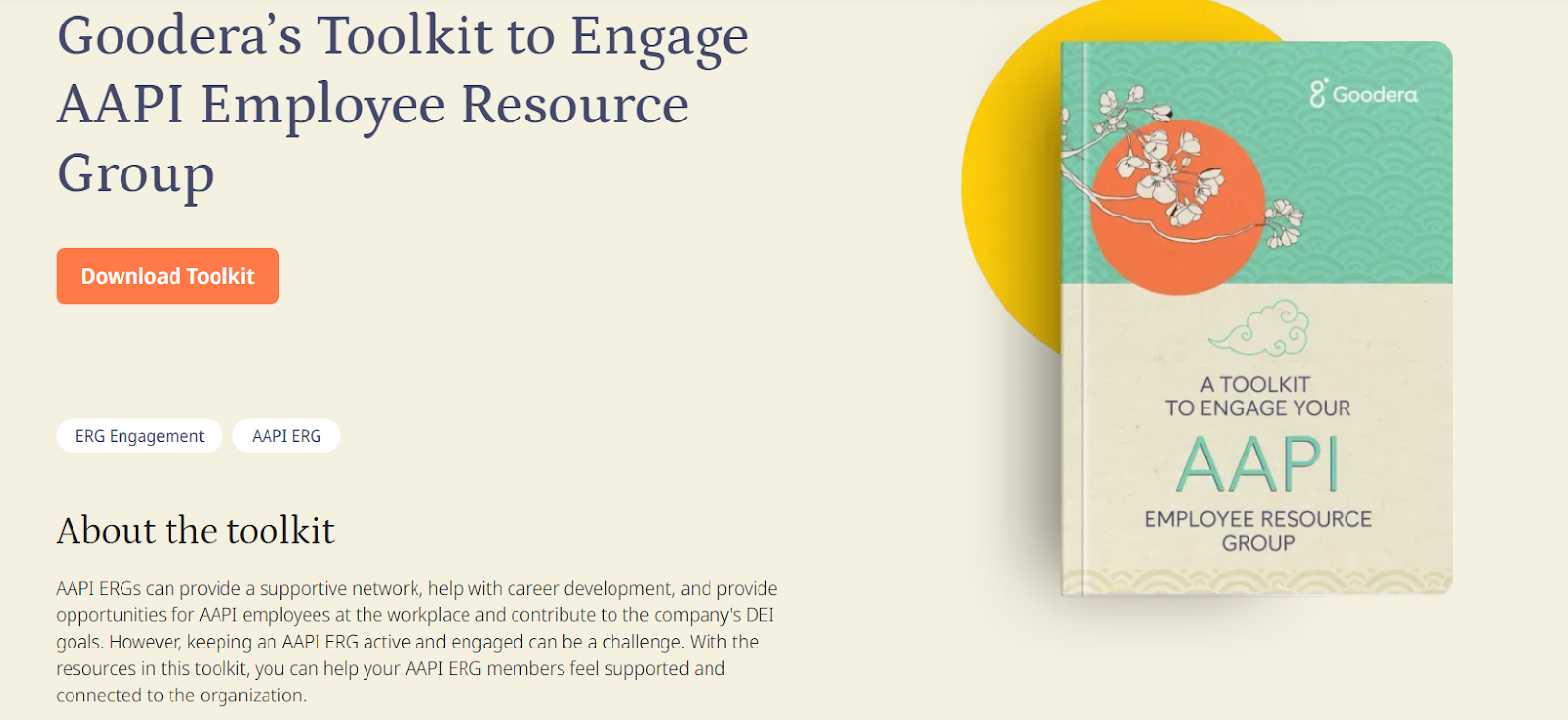
Planning an AAPI ERG or looking to strengthen an existing one? Explore Goodera’s toolkit to engage and support your AAPI Employee Resource Group.
10 Inspiring AAPI Heritage Month Activities for the Workplace
The best AAPI heritage month activities don’t feel like corporate programming. They feel personal. They spark curiosity. They leave employees thinking long after the session ends.
Before diving into ideas, think about this. What if celebrating AAPI Heritage Month wasn’t about adding events to your calendar, but about expanding how your team sees each other?
When the goal shifts from “hosting something” to “understanding someone,” the energy of the entire month changes. Activities become experiences. Conversations become connections.
Here are ten ideas that make that shift possible.
1. AAPI Month Trivia
Trivia turns learning into shared discovery. Instead of a formal presentation, employees engage in friendly competition while uncovering lesser-known facts about Asian American and Pacific Islander history, culture, and achievements.
The key is thoughtful curation. Include questions that highlight innovation, arts, civil rights milestones, and contemporary leaders. After each answer, provide a short context so employees understand why it matters.
Did you know?
Chinese immigrant laborers made up the majority of the workforce that built the western portion of the transcontinental railroad, yet their contributions were historically underrecognized for decades. Sharing facts like this reframes history and sparks reflection.
Trivia works because it lowers barriers. People participate more freely when learning feels collaborative rather than instructional.

2. Making Flashcards and PostersStories change perspective faster than statistics.
A film screening centered on AAPI experiences invites employees to witness narratives around identity, family, resilience, and belonging. The discussion afterward is where the real impact happens.
You don’t need a formal panel. A simple facilitated conversation helps employees process what they’ve seen and connect themes back to workplace culture.

To guide discussion meaningfully:
- Focus on themes rather than critique
- Encourage voluntary participation
- Allow space for reflection before sharing
When people reflect together, empathy deepens. And empathy influences how teams communicate long after the event ends.
3. Organizing an AAPI Heritage Month Film Screening
Organizing a film or documentary screening focused on the AAPI experience invites your team to explore rich cultural stories together. Afterward, hosting a discussion can deepen understanding by encouraging coworkers to share perspectives on themes, cultural depictions, and connections to current events affecting Asian American and Pacific Islander communities.
Here are some film recommendations for an AAPI-focused screening and discussion event:

Following the viewing, you can discuss these topics with your colleagues:
- What themes or messages stood out to you in the film?
- How did the film challenge your preconceptions or opinions on the AAPI experience?
- What parts of AAPI culture does the film depict?
- How does the film connect to current events or concerns impacting the Asian American and Pacific Islander communities?
- What measures can we take to make our community more inclusive and welcoming?
4. Volunteer With AAPI-Focused Nonprofit Organizations
Volunteering with AAPI-focused nonprofits is one of the most impactful ways to honor Asian American and Pacific Islander Heritage Month at work. It allows your team to give back, learn, and engage with the community in meaningful ways.
At Goodera-powered volunteering events, employees participate in curated AAPI month activities that go beyond surface-level celebration. From raising cultural awareness to mentoring young AAPI leaders, these initiatives help break harmful stereotypes and highlight the community’s contributions across generations.
Here are just a few ways your team can make a difference:
- Lead or join sessions that explore and celebrate AAPI heritage and identity.
- Volunteer for programs that support AAPI youth in STEM, the arts, and literature.
- Partner with nonprofits focused on social justice, education, or entrepreneurship within AAPI communities.
- Create safe spaces for employees to reflect on what Asian Pacific Heritage Month means to them and why it matters.
Also read:Top AAPI nonprofit organizations to support and volunteer with in 2025.
5. Build an AAPI Author Exclusive Book Club
Starting a book club focused on AAPI authors allows employees to dive into diverse narratives and cultures. It’s a wonderful way to build connections, foster allyship, and encourage ongoing learning about the rich experiences of the AAPI community.
Here are a few recommendations for you:

6. Organize a Culture-Focused Potluck to Celebrate AAPI Heritage Month at Work
Food has the power to tell stories, spark memories, and build bridges between people. Hosting a workplace potluck is one of the most engaging AAPI Heritage Month activities you can plan. Encourage employees to bring dishes that reflect their cultural backgrounds or explore flavors from across Asian American and Pacific Islander communities.
To make it more meaningful, set up a display with the history and significance of each dish. For example, share how Korean kimchi is traditionally fermented, or the symbolism behind Chinese mooncakes. This turns the lunch table into a place of learning and celebration, making your AAPI month activities both tasty and educational.
7. Start an AAPI Employee Spotlights
One meaningful way to celebrate Asian American and Pacific Islander Heritage Month is by highlighting the personal stories of AAPI team members. Sharing their experiences through blog posts, videos, or social media helps humanize the month and deepen understanding across your organization.
These AAPI Heritage Month activities can explore culture, challenges, traditions, and the impact of representation. You might ask questions like:
- What does your AAPI heritage mean to you?
- Which figure from your community has shaped or inspired you?
- What cultural traditions do you celebrate, and why are they meaningful?
- Have you experienced challenges related to your identity at work, and how did you overcome them?
- What can our workplace do to be more inclusive of AAPI voices?
Employee spotlights give visibility to the people behind the work and create space for honest conversations. They help others better understand what Asian Pacific Heritage Month represents and strengthen your company’s culture of inclusion.
8. AAPI Art and Craft Activities
Creative expression is a joyful way to honor culture, and art-based AAPI month activities can be both relaxing and educational. Host hands-on workshops where employees can try traditional crafts like Japanese origami, Chinese paper cutting, Indian rangoli art, or Hawaiian lei-making.
To deepen the experience, invite local AAPI artists to lead sessions and share the cultural significance behind each craft. This not only makes your celebration more authentic but also connects employees to the broader themes of AAPI Heritage Month—art, tradition, and community. These activities also serve as great team-building moments that are inclusive of all skill levels.

9. Uplift AAPI Communities by Supporting Local AAPI-Owned Businesses
One of the most sustainable ways to celebrate Pacific Islander Month and AAPI Heritage Month is by supporting local businesses owned and operated by AAPI entrepreneurs. Whether you dine at a neighborhood Vietnamese café, order from an Asian-owned stationery shop, or promote small businesses on your company’s intranet, your support matters.
You can also take this a step further:
- Host a team lunch featuring meals from AAPI-owned restaurants.
- Organize a pop-up market with local vendors.
- Volunteer time or skills to help AAPI entrepreneurs scale their businesses.
These actions not only support economic growth but also reflect the core message behind Asian Pacific Heritage Month: Celebrating heritage while empowering future generations.
You might also like: Top 10 AAPI Nonprofit Organizations to Volunteer for In 2025
10. Language Training to Make AAPI Month Activities More Personal and Inclusive
Language connects people in powerful ways. Hosting a series of casual language-sharing sessions is a thoughtful addition to your AAPI Heritage Month activities. Invite AAPI colleagues to teach a few fun phrases in their native language, like greetings, proverbs, or cultural expressions, and share their story.
You can rotate languages each week, provide digital flashcards, and even gamify learning with quizzes or small prizes. These sessions can be conducted virtually or in person and are a simple but effective way to celebrate Asian American and Pacific Islander Heritage Month in a way that promotes understanding, inclusion, and curiosity.
How Can Small Teams Celebrate AAPI Month on a Budget?
Small teams often wonder whether meaningful AAPI month activities are possible without large budgets, guest speakers, or complex logistics. The answer is yes. Thoughtful celebration depends more on intention than scale.
When teams focus on simple, repeatable formats that encourage learning and reflection, they can create experiences as impactful as those of larger programs.
Here are three low-cost approaches that work especially well for lean teams.
1. Host a Virtual Lunch-and-Learn With an Internal or Community Voice
A virtual lunch-and-learn is one of the easiest ways to explore AAPI stories and perspectives without heavy planning.
Invite an internal employee, community partner, or volunteer facilitator to share personal experiences, cultural traditions, or reflections connected to Asian American and Pacific Islander Heritage Month. Keep the session informal and conversational rather than presentation-heavy.
This format solves a common concern: how do we offer learning without overcomplicating things?
By keeping it virtual, optional, and limited to one hour, you lower barriers to participation while still creating space for meaningful dialogue. Employees can listen, reflect, and engage comfortably.
2. Create a Shared Learning Playlist and Release It Gradually
Instead of planning multiple live events, curate a digital playlist of short videos, articles, podcasts, or book excerpts related to AAPI history and lived experiences.
Share one resource per week throughout May to maintain steady engagement without overwhelming schedules.
This approach answers another concern: what if people cannot attend live sessions?
A shared playlist allows employees to learn at their own pace while still participating in the month’s theme.
Did you know?
Bite-sized learning is one of the most effective formats for adult engagement at work. Short modules (2-5 minutes) boost retention rates. Studies show up to 17-80% knowledge retention gains over traditional methods, as they leverage spaced repetition and reduce cognitive overload. Short, focused resources are more likely to be read and remembered.
3. Organize a One-Hour Service Project
Plan a simple volunteer activity that can be completed in about an hour, such as assembling care kits, writing encouragement notes, or supporting a virtual initiative for an AAPI-focused nonprofit.
Many teams wonder whether a short activity can truly matter. It can.
One-hour projects are easier to schedule, welcoming for first-time volunteers, and still produce tangible outcomes. Employees see how their time contributes to something meaningful, which strengthens motivation and connection.
How Do You Make AAPI Month Activities Meaningful Instead of Performative?
Start by creating space to hear from AAPI employees, community partners, or trusted groups about what feels relevant and respectful. This helps answer a common concern: how do we avoid getting it wrong? You reduce that risk by involving people with lived experience and letting their perspectives shape programming. When employees feel heard, trust grows, and participation becomes more genuine.
Meaningful celebration also requires connecting the month to ongoing action. One month alone cannot carry the weight of recognition. Link activities to longer-term efforts such as volunteering partnerships, employee groups, mentorship, or continued learning. This shows that interest in AAPI communities is consistent, not temporary.
Finally, center real voices and keep experiences respectful and voluntary. Spotlight employee stories, community leaders, or nonprofit partners whenever possible, because stories create a deeper impact than polished messaging. Did you know? Story-based learning increases retention and emotional connection compared to purely factual presentations. Offer multiple ways to engage, never pressure anyone to share, and gather feedback after May to keep improving year after year.
Turning AAPI Month Into Lasting Understanding
Asian American and Pacific Islander Heritage Month is more than a moment on the calendar. It is an opportunity to pause, learn, and see one another more fully.
The most meaningful celebrations are not defined by how many events you host, but by the quality of the experiences you create. When employees feel invited to listen, reflect, and connect, something deeper begins to happen. Curiosity grows. Conversations become more thoughtful. Relationships become stronger.
How to celebrate AAPI Month in a way that truly matters comes down to intention. Choosing activities that center real stories, encourage learning, and create space for reflection helps move celebration beyond surface-level recognition.
Even small actions can have a lasting impact. A shared story. A thoughtful conversation. A simple act of service. These moments shape how people show up for one another long after May ends.
When workplaces commit to understanding, not just observing, AAPI Month becomes a catalyst for empathy, respect, and a culture where people feel valued as whole individuals.
Frequently Asked Questions
1. What Is Asian Pacific Heritage Month?
Asian Pacific Heritage Month is a nationwide observance held every May to recognize the histories, cultures, and contributions of Asian Americans, Native Hawaiians, and Pacific Islanders in the United States. The month honors both historical milestones and the ongoing impact of AAPI communities across industries, culture, and civic life.
2. How to Celebrate AAPI Month at Work?
How to celebrate AAPI Month at work starts with intention and listening. Effective approaches include combining learning-focused experiences, cultural celebrations, and community-centered action. Examples include hosting film screenings, organizing volunteering opportunities, spotlighting employee stories, and supporting AAPI-owned businesses. The most meaningful programs invite participation, center real voices, and connect celebration to ongoing learning beyond May.
3. What Are Simple AAPI Month Activities for Small Teams?
Simple AAPI month activities for small teams include hosting a virtual lunch-and-learn, sharing a weekly learning resource, organizing a one-hour volunteer project, or featuring employee spotlights through internal channels. These low-cost options are easy to run and still create meaningful opportunities for learning and connection.
4. What Are Some Ways to Celebrate AAPI Heritage Month Virtually?
Ways to celebrate AAPI Heritage Month in virtual or hybrid settings include hosting online trivia, film screenings with guided discussions, digital book clubs, language exchange sessions, and virtual volunteering. These formats make it easy for distributed teams to participate while maintaining strong engagement.
5. Should You Start an AAPI ERG During AAPI Heritage Month?
Yes, AAPI Heritage Month can be a strong time to launch an AAPI Employee Resource Group, as interest and awareness are already high. Launching during May allows organizations to introduce the group’s purpose, invite founding members, and build early momentum. Long-term success comes from leadership support, clear goals, and consistent programming throughout the year.
6. What Is the Difference Between AAPI Month and Pacific Islander Month?
AAPI Month broadly recognizes Asian Americans, Native Hawaiians, and Pacific Islanders together, while Pacific Islander Month focuses specifically on the unique cultures, histories, and experiences of Pacific Islander communities. Both observances aim to increase awareness and appreciation, and they can be honored together through inclusive programming.
7. What Are Common Mistakes Companies Make During AAPI Heritage Month?
The most common misstep is reducing AAPI Heritage Month to a single food tasting or trivia event. A second pitfall is treating AAPI as a monolith, when the community spans over 50 ethnic groups and 100+ languages. Programs limited to May, without follow-through, also signal performative engagement rather than genuine allyship or long-term inclusion.
8. Why Is AAPI Heritage Month Celebrated in May?
May was chosen to commemorate two milestones in Asian American history. The first is the arrival of the earliest Japanese immigrants in May 1843. The second is the completion of the transcontinental railroad in May 1869, built largely by Chinese immigrant workers. Congress designated a week in 1978, later expanded to a full month in 1992.
9. How Can Companies Sustain AAPI Engagement Beyond May?
Treat May as a springboard rather than a finish line. Strong programs run year-round speaker series, mentorship circles pairing AAPI employees with senior sponsors, and quarterly volunteering with AAPI-led nonprofits. Embedding AAPI representation into supplier diversity, career development, and DEI metrics ensures the community stays visible in decisions made every other month of the calendar.
10. What AAPI-Led Nonprofits Can Employees Volunteer With?
Companies often partner with community groups such as Asian Americans Advancing Justice, the National Queer Asian Pacific Islander Alliance, and Asian Health Services. These organizations support legal advocacy, LGBTQ+ inclusion, and community health respectively. Employees can contribute through skills-based projects, fundraising drives, or on-site service days coordinated by their ERG or CSR team throughout the year.


.webp)