Breast Cancer Awareness Month 2026: Everything You Should Know

Somewhere in the world, four women are diagnosed with breast cancer every minute, and one woman dies from it every minute. Behind each of those numbers is a daughter, a mother, a colleague, a friend, and a family quietly learning how to keep going. Breast Cancer Awareness Month is a call to action. One that pushes us to speak up, spread awareness, and show up, year after year to make a difference.
For a lot of us, October feels like a blur of pink ribbons, pink water bottles, and pink social media posts. But if we are being honest, the month was never really about the color. It is about pushing for earlier screenings, better access to treatment, and the honest conversations that genuinely save lives. In this guide, we will walk through what the month is, why it lands in October, the data that actually matters, and the practical ways you, your workplace, and your community can make the 31 days count.
What is Breast Cancer Awareness Month?
Breast Cancer Awareness Month is a global campaign observed every October, but for many, it is something far more personal. It is a moment to pause, reflect, and bring attention to a disease that touches millions of lives every year.
At its core, the month is about raising awareness, encouraging earlier detection, and supporting research into better prevention and treatment. It brings together cancer charities, hospitals, governments, and companies, all working toward the same goal. You will often see it represented by the pink ribbon, a small symbol that has come to stand for a much larger movement.
The idea behind it is simple, but it can make all the difference. The earlier breast cancer is detected, the better the chances of survival.
The month was founded in 1985 as a partnership between the American Cancer Society and Imperial Chemical Industries (now part of AstraZeneca). It began as a week-long campaign with one clear message, "get a mammogram," and has since grown into an international movement spanning 30+ countries.
Today, the month focuses on four big things:
- Education about risk factors, signs, and symptoms
- Early detection through screenings and self-examination
- Fundraising for research, treatment, and patient support
- Solidarity with survivors, patients, and the people who love them
When is Breast Cancer Awareness Month Observed?
Breast Cancer Awareness Month is observed every October. In 2026, it runs from Thursday, October 1 to Saturday, October 31. A few related observances fall within the same window too, including World Breast Cancer Day on October 15 and Men's Breast Cancer Awareness Week in the third week of October.
Why is Breast Cancer Awareness Month Observed in October?
The answer goes back to 1985, when the first large-scale campaign to promote mammograms was launched in the United States by the American Cancer Society and Imperial Chemical Industries. October turned out to be an ideal window, a quieter moment in the public health calendar, with enough space to capture attention. As awareness grew, the timing stuck, eventually becoming a global observance.
The iconic pink ribbon joined the story a few years later. In 1991, the Susan G. Komen Foundation handed out pink ribbons at its New York City Race for the Cure. Then in 1992, Self magazine's editor-in-chief Alexandra Penney teamed up with Evelyn Lauder of Estée Lauder to distribute 1.5 million pink ribbons at cosmetics counters across the U.S. That was the moment pink officially became the color of the movement.
Here is a footnote most people do not know: the very first breast cancer ribbon was not pink at all. A woman named Charlotte Haley, whose grandmother, sister, and daughter had all battled the disease, was hand-making peach-colored ribbons in the early 1990s with a note asking people to pressure the government to fund more cancer prevention research.
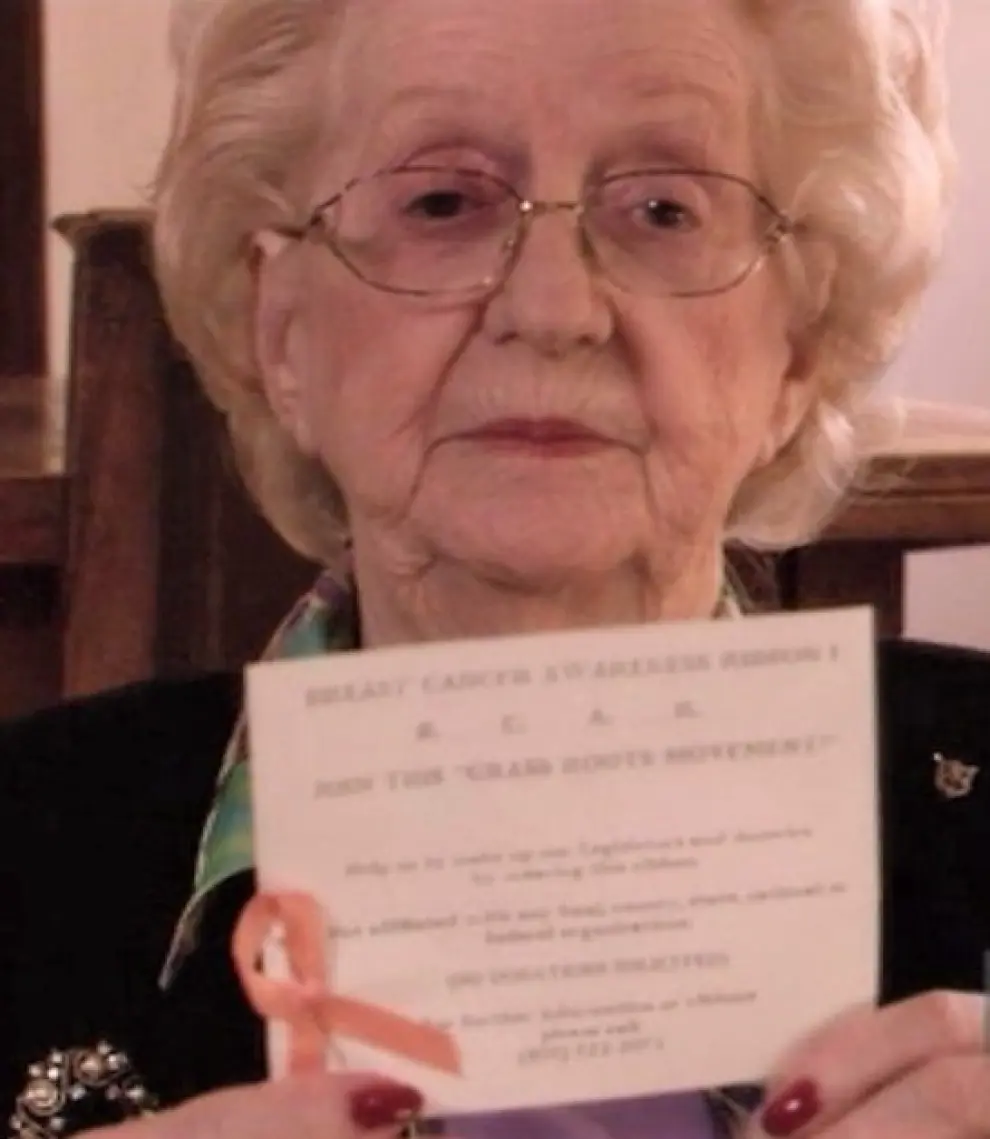
When Self and Estée Lauder asked to use her idea, she refused, saying they were "too corporate." The companies changed the color to pink, and the rest is history.
What Are the Key Breast Cancer Statistics You Should Know in 2026?
Breast cancer is the most commonly diagnosed cancer in women worldwide and the leading cause of cancer-related death among women. Recent data from the World Health Organization and the International Agency for Research on Cancer paints a picture that is sobering but also, in some ways, hopeful. Survival is improving in high-income countries, yet the global burden is still rising fast.
Here are the numbers worth knowing as we head into Breast Cancer Awareness Month 2026:
- 2.3 million women were diagnosed with breast cancer globally in 2022, and 670,000 women died from it that same year.
- 1 in 20 women worldwide will be diagnosed with breast cancer in their lifetime, according to the IARC's 2025 Nature Medicine study.
- By 2050, annual cases are projected to rise by 38% (to 3.2 million) and deaths by 68% (to 1.1 million) if current trends continue.
- In the U.S., roughly 1 in 8 women (about 13%) will develop invasive breast cancer at some point in her life.
- Cases in younger women are climbing. Incidence in women under 50 has risen about 1.4% per year over the last decade.
- Survival gaps are stark. In high-income countries, 83% of women diagnosed survive, while in low-income countries, more than half of those diagnosed die from it.
- Men get breast cancer too. It accounts for less than 1% of all breast cancers, but the risk and stigma are real.
- In the U.S., Black women have a 5% lower incidence than white women but a 38% higher risk of dying from the disease, largely because of access-to-care gaps.
The headline takeaway for us: breast cancer is not a "Western" disease or an "older woman's" disease. It is a global, cross-demographic challenge, which is exactly why awareness in October is still very much needed.
What Are the Signs and Symptoms We Often Miss?
The most common early sign of breast cancer is a new lump or thickening in the breast or underarm, but not all breast cancers show up as a lump. Many of us miss subtler changes in skin texture, nipple shape, or sensation, and those can be just as important. Self-awareness matters as much as self-examination.
Here is what to watch for:
- A new lump, knot, or thickening in the breast or armpit
- Changes in breast size or shape, especially on one side
- Dimpling, puckering, or skin that looks like an orange peel
- Nipple changes, like turning inward, flattening, or unusual discharge (especially if bloody)
- Redness, flakiness, or a rash around the nipple or breast
- Persistent pain in one specific area of the breast
If any of these stick around for more than a week or two, the advice from every major cancer body (the WHO, the American Cancer Society, and Breastcancer.org) is the same: get it checked. Most lumps turn out to be non-cancerous, and the ones that are not are very treatable when caught early.
A quick note on screening: Most guidelines recommend women start annual or biennial mammograms at age 40, with earlier screening for those with a family history or BRCA gene mutations. It is worth having that conversation with a doctor to figure out what is right for you.
What Are the Top Breast Cancer Awareness Month Events in 2026?
Breast Cancer Awareness Month events range from 5K walks and cycling rallies to virtual webinars, free screening camps, and fundraising galas. Almost every major cancer nonprofit runs something in October, so there are low-effort, high-impact ways to get involved no matter where we are or how much time we have.
1. Susan G. Komen Race for the Cure
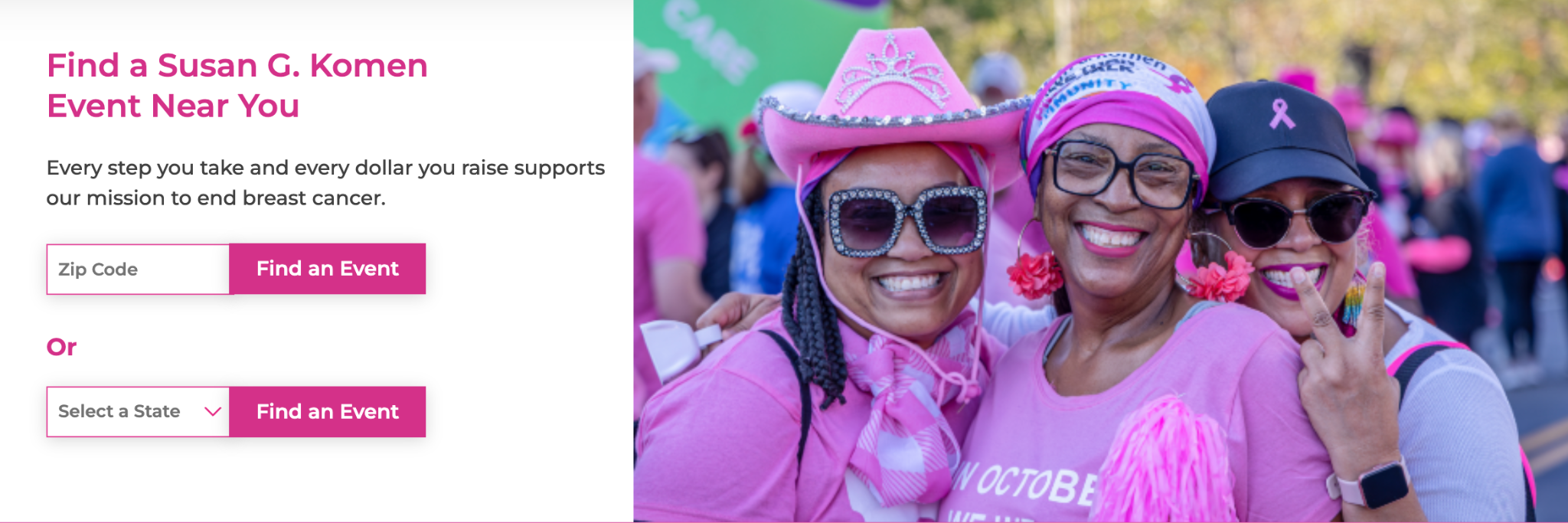
One of the most recognized breast cancer awareness events globally, these annual 5K runs and walks bring together survivors, families, and supporters across cities in the U.S. and beyond. Participants often run or walk in honor of loved ones, while funds raised go toward research, treatment access, and patient support programs. The atmosphere is equal parts community, remembrance, and collective action.
2. Making Strides Against Breast Cancer Walks
Organized by the American Cancer Society, these walks are held in communities across the U.S., often on Sunday mornings throughout October. They are designed to be accessible to everyone, regardless of age or fitness level. Beyond fundraising, these events create space for storytelling, survivor recognition, and community solidarity.
3. Pink Ribbon Walks (UK)
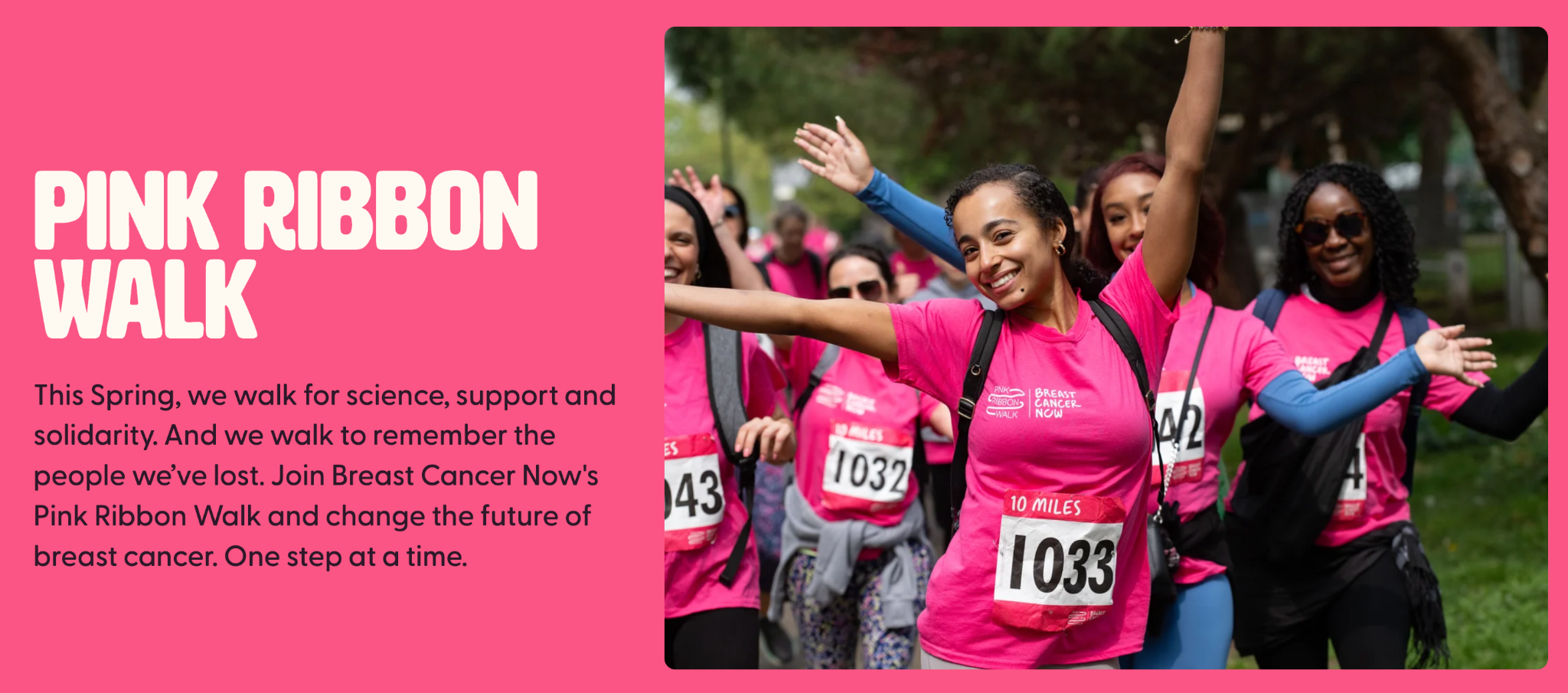
Hosted by Breast Cancer Now, these walks take place in scenic locations across the United Kingdom. They combine physical activity with awareness, encouraging participants to come together in support of research and care. Many of these walks also include moments of reflection, making them both uplifting and deeply personal.
4. Estée Lauder's Breast Cancer Campaign
Known for its global reach, this campaign lights up iconic landmarks such as the Empire State Building, Sydney Opera House, and Niagara Falls in pink. These illuminations are more than symbolic — they spark conversations, draw media attention, and remind millions of people worldwide about the importance of early detection and continued research.
5. "Wear It Pink" Day
Typically held in mid-October, this one-day fundraiser invites workplaces, schools, and communities to wear pink as a show of solidarity. It is simple to organize but highly visible, making it a popular way to start conversations, raise funds, and involve large groups in a shared cause.
6. Free Mammogram Camps
Across regions like India, Africa, Latin America, and Southeast Asia, hospitals and NGOs organize free or subsidized screening camps throughout the month. Initiatives by organizations such as Tata Memorial Hospital in India, Pink Drive in South Africa, and Fundación CIMA in Mexico bring mammograms and early detection services directly to communities. These efforts are critical in improving early diagnosis, especially in underserved areas where access to regular screenings may be limited.
7. Virtual Webinars and Survivor Panels
For those who cannot attend in person, virtual sessions offer a meaningful way to participate. These often include expert talks, survivor stories, and Q&A discussions that provide both education and emotional support. They are especially valuable for remote teams and global audiences.
8. Corporate Volunteering Events
Many organizations use the month to engage employees through internal initiatives such as letter-writing drives for patients, care package assembly, fundraising challenges, and awareness sessions. These activities not only contribute to the cause but also help teams connect around a shared purpose.
If we are planning something at work, October gives us 31 days to spread engagement out, so it does not all have to happen in a single event.
How Can Companies and Employees Participate in Breast Cancer Awareness Month 2026?
Companies can use Breast Cancer Awareness Month 2026 to support their employees, raise awareness, and fund real research, and it does not have to cost a fortune. The most meaningful programs combine education (so people know what to look for), action (fundraising or volunteering), and care (making space for employees affected by the disease).
A few ideas that consistently work well in workplaces:
- Host a "lunch and learn" with an oncologist or survivor. A 45-minute session on breast health, risk factors, and early detection goes a long way.
- Organize a free mammogram drive for employees and their families, either on-site or through a partner hospital.
- Run a team fundraising challenge. Think step challenges, bake sales, or peer-to-peer fundraising pages for charities like Susan G. Komen, Breast Cancer Now, or a local nonprofit.
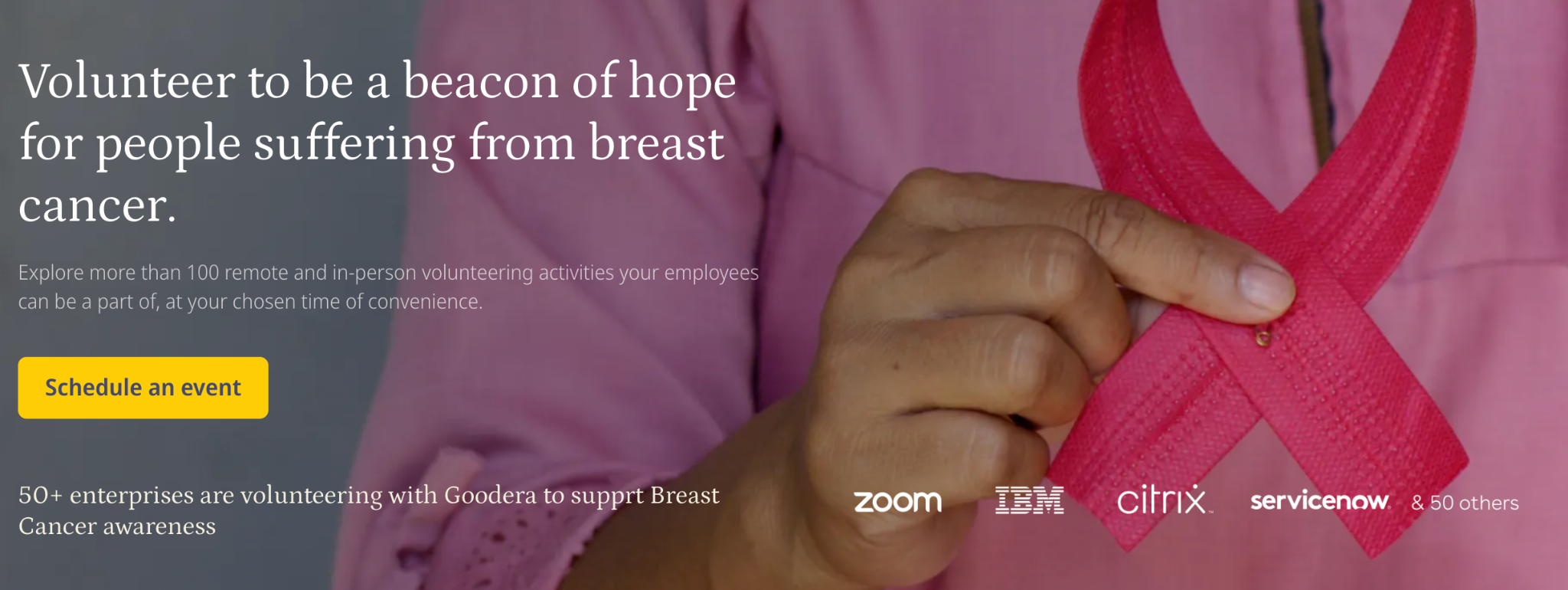
- Volunteer with breast cancer nonprofits. Pack care kits for chemo patients, write notes of encouragement, or volunteer at a walk.
- Match employee donations. Companies that match 1:1 (or higher) consistently see the biggest participation bumps.
- Extend sick leave and flex-work policies for employees going through treatment, or caring for someone who is.
- Illuminate the office in pink and share survivor stories (with consent) on internal channels.
- Turn it into a global campaign. For multinational teams, syncing activities across offices helps everyone contribute, from Bangalore to Boston.
One real-world example worth borrowing from: Estée Lauder's Breast Cancer Campaign has funded more than $156 million in lifesaving global research, education, and medical services since 1992, along with lighting up over 1,200 landmarks pink each year. On the corporate volunteering side, companies like Goldman Sachs, Deloitte, and Unilever run annual walks, pledge drives, and employee matching programs every October.
The best programs treat October as a launchpad, not a checkbox. Awareness in one month, support all year.
A Final Thought
Breast Cancer Awareness Month is not about pink. It is about the people behind the pink. Every October is a reminder that early detection saves lives, that research is still chronically underfunded in most of the world, and that small actions from a lot of people add up to something real. Whether we are survivors, caregivers, employees, or just someone starting to learn about the disease, Breast Cancer Awareness Month 2026 is a chance to do one thing that matters. And then keep doing it after October ends.
Frequently Asked Questions
1. When is Breast Cancer Awareness Month 2026?
Breast Cancer Awareness Month 2026 runs from October 1 to October 31, 2026. The dates do not change year to year; it is always the full month of October.
2. What month is Breast Cancer Awareness Month?
October. Every year, globally.
3. Why is October Breast Cancer Awareness Month?
Because that is the month the American Cancer Society and Imperial Chemical Industries chose when they launched the original campaign in 1985. The timing stuck, and other countries adopted it to keep the global message aligned.
4. What color represents Breast Cancer Awareness Month?
Pink, specifically the pink ribbon. Variations exist too: hot pink for inflammatory breast cancer, pink and blue for male breast cancer, and teal, pink, and green for metastatic breast cancer.
5. Who started Breast Cancer Awareness Month?
The American Cancer Society and Imperial Chemical Industries (now AstraZeneca) co-founded it in 1985. Former U.S. First Lady and breast cancer survivor Betty Ford played a big role in building early public attention.
5. Is Breast Cancer Awareness Month only for women?
Not at all. While the vast majority of breast cancer cases occur in women, men, trans men, and non-binary people also develop breast cancer, with about 2,800 men in the U.S. diagnosed each year. The third week of October is dedicated to Men's Breast Cancer Awareness Week.
6. What is the best way to support Breast Cancer Awareness Month 2026?
Pick one concrete action: book your own screening, donate to a reputable charity, join a walk, volunteer with a cancer nonprofit, or organize something at work. Any of those beats a pink profile picture on its own.
8. What are common mistakes companies make during Breast Cancer Awareness Month?
The most common mistake is pinkwashing — displaying pink ribbons or selling themed merchandise without contributing meaningfully to research or patient support. Other pitfalls include overlooking survivors and caregivers in messaging, treating the month as a one-off marketing moment, and ignoring men who can also be diagnosed. Programs work best when awareness is paired with funding, volunteering, and workplace health resources.
9. How can employers support employees personally affected by breast cancer?
Offer flexible leave and remote-work options during treatment and recovery, ensure health plans cover screenings and reconstruction, and share Employee Assistance Program resources for mental health support. Train managers to have private, judgment-free conversations, and enable peer support groups or Employee Resource Groups focused on cancer or chronic illness so affected employees feel less isolated during and after treatment.
10. How can Goodera help companies run Breast Cancer Awareness Month programs?
Goodera curates vetted activities including virtual survivor panels, care-kit assembly for chemotherapy patients, letter-writing for those in treatment, and fundraising drives for organizations like Susan G. Komen. The platform manages logistics for global and hybrid teams, tracks Volunteer Time Off hours, and enables matching donations, helping companies extend impact through October and into year-round support with minimal internal lift.