Nelson Mandela Day: Facts, Volunteering Ideas, and Celebration Tips

There are very few figures in modern history whose name carries the weight that Nelson Mandela's does. A lawyer who became a revolutionary, a prisoner who became a president, a man who spent 27 years behind bars and emerged without bitterness to lead one of the most remarkable peaceful transitions of power the world has ever seen.
International Nelson Mandela Day is the United Nations' invitation to honor that life not with ceremony, but with action. Not with speeches, but with 67 minutes of service to another human being, one minute for every year Mandela spent fighting for the rights of humanity.
The ask is small. The idea behind it is enormous.
When Is Nelson Mandela Day?
July 18, Every Year, Worldwide
Nelson Mandela International Day, also known as Mandela Day, is held on July 18 each year. The date marks Mandela's birthday. Nelson Rolihlahla Mandela was born on July 18, 1918, in a village called Mvezo in the Eastern Cape, South Africa.
The first Mandela Day was launched in New York on July 18, 2009, but the UN's resolution to declare the day occurred later that year. On November 10, 2009, the United Nations General Assembly adopted a resolution declaring July 18 as "Nelson Mandela International Day."
The day is not a public holiday in most countries. It is something more demanding than that. It is a global call to action. One that asks every person, regardless of their country, background, or resources, to give 67 minutes of their day to someone who needs it.
Why Do We Celebrate Nelson Mandela Day? What’s the Idea Behind the 67 Minutes Celebration
We celebrate Nelson Mandela Day to honor Nelson Mandela’s lifelong commitment to justice, equality, and service to others. It is observed on his birthday, July 18, as a global call to action to give back to communities.
The idea of “67 minutes” reflects the 67 years Mandela spent working for human rights. It encourages people to dedicate at least 67 minutes of their time to helping others, whether through volunteering, supporting a local cause, or doing something meaningful for their community.
But to understand why this day matters, you need to understand the man it honors.
Who Was Nelson Mandela?
The Lawyer Who Became a Global Symbol
Nelson Rolihlahla Mandela was trained as a lawyer and joined the African National Congress, where he became one of the most prominent voices against apartheid, the South African government's system of legalized racial discrimination that denied Black South Africans their fundamental rights, their movement, their vote, and their dignity.
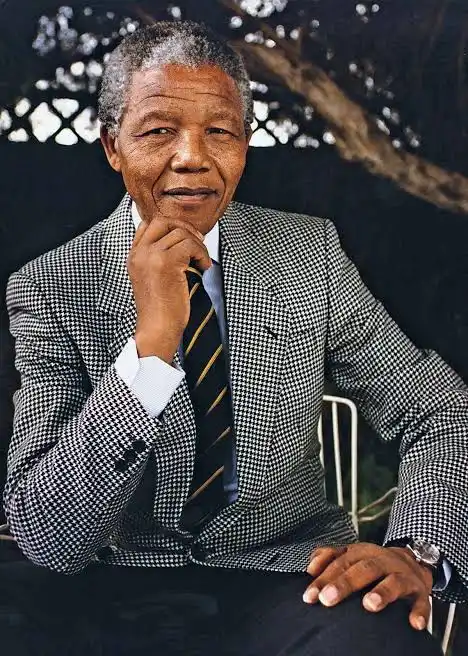
Image Source: Britannica
Mandela spent 27 years in prison, from 1964 to 1990. After his release, he and the then-president, Mr. F. W. de Klerk, negotiated an end to apartheid. In 1994, Nelson Mandela became the first Black president of South Africa in the country's first multiracial elections.
He received more than 260 honours during his life, including the 1993 Nobel Peace Prize. This unprecedented recognition reflected his global impact on human rights and peaceful conflict resolution. The Nobel Prize, shared with F.W. de Klerk, specifically honoured their work in ending apartheid through negotiation rather than violence.
He led the country toward reconciliation and not toward revenge, a rare example of true leadership. That choice, to choose peace over retaliation after 27 years of imprisonment, is what made Mandela not just a political leader but a moral one.
What the UN Recognized in Him
Recognizing the long-standing dedication of former South African President and Nobel Peace Prize laureate Nelson Mandela to humanity, particularly in the areas of conflict resolution, race relations, human rights promotion, reconciliation, and gender equality, the Assembly adopted a text declaring 18 July, his birthday, as an International Day to be observed annually starting in 2010.
The resolution recognizes Mandela's values and devotion to the cause of humanity in the prevention and resolution of conflict, race relations, protection and promotion of human rights, reconciliation, gender equality, and other vulnerable groups' rights, the fight against poverty, and promotion of social justice. The resolution remembers his contribution to the cause of democracy everywhere and the promotion of the culture of peace everywhere.
International Nelson Mandela Day: The Global Scope of the Observance
Nelson Mandela Day celebrates Nelson Mandela's life and is also a global call to action for people to recognize their ability to have a positive effect on others around them.
The day marks Nelson Mandela's contribution to peace through his active involvement in resolving conflicts, promoting human rights, international democracy, and reconciliation, and in addressing racial issues.
Since 2010, the United Nations General Assembly has marked the day with an informal plenary meeting, and the annual New York City volunteer event brings together participants from around the world for coordinated service activities. In 2025, the UN volunteer event was held at Governors Island in New York Harbor.
The United Nations Nelson Rolihlahla Mandela Prize, established by General Assembly resolution in 2014, is presented once every five years to honor two individuals from different geographic regions whose work reflects Mandela's values of democracy, justice, and reconciliation. In 2025, the prize was awarded to Mrs. Brenda Reynolds and Mr. Kennedy Odede.
The observance has also expanded beyond a single day. While July 18 continues to be the campaign's main focus, the Nelson Mandela Foundation urges campaign supporters to participate in long-term, sustainable initiatives. The idea is that 67 minutes of service on July 18 should be a starting point for year-round engagement, not the entirety of it.
Mandela Day Activities: 67 Ways to Spend Your 67 Minutes
The beauty of the 67-minute framework is its deliberate openness. Mandela Day activities are not prescribed. The Nelson Mandela Foundation and the United Nations ask only that you give your time to someone who needs it. What that looks like depends entirely on where you are, what you have, and who around you could use a hand.
Here are meaningful ways to spend those 67 minutes, organized by context:
At Work or With Your Organization
1. Organize a Team Service Day
Use Mandela Day as the anchor for a coordinated volunteer day. Book a session at a local food bank, shelter, or community garden. Team volunteering builds culture, creates shared memory, and produces real community impact simultaneously. The 67-minute structure gives any organization a ready-made framework: two-thirds of a two-hour session dedicated to active service.
2. Run a Donation Drive
Collect food, clothing, books, or hygiene items and donate them to a local organization that needs them. Use the day to launch it, set a goal, and close the drive with an impact summary shared across the team. Mandate Day donation drives work well in workplaces because the goal is tangible, the deadline is clear, and the act is collective.
3. Host a Mandela Day Lunch-and-Learn
Use 67 minutes to educate your team on Mandela's life, the history of apartheid, the values the day honors, and what service looks like in your community. Combine it with a discussion about your organization's own social impact commitments. Education is a service too.
4. Mentor Someone Who Needs It
Mandela was a lawyer who used his skills in the service of justice. Skills-based service is one of the most valuable things a professional can offer. Use your 67 minutes to mentor a young person entering your field, help a nonprofit with a challenge in your area of expertise, or offer a career coaching session to someone who cannot otherwise access it.
In Schools and Universities
5. Study the History Behind the Day
A structured 67-minute lesson on apartheid, Mandela's trial, the Robben Island imprisonment, the negotiated transition to democracy, and what forgiveness looks like in practice gives students context that stretches far beyond South Africa. It is a lesson in history, moral courage, civic responsibility, and leadership that no subject boundary contains.
6. Write Letters to People Who Need to Hear From Someone
Students can write letters or draw cards for elderly residents of local care homes, hospitalized children, veterans, or incarcerated individuals in rehabilitation programs. Writing to a stranger with kindness as the only motive is one of the most direct ways to practice the spirit of Mandela Day.
7. Clean Up a Local Public Space
Organize a school-wide clean-up of a park, playground, beach, or community garden. Physical, visible, collective service connects students to their environment and to each other in ways that a classroom discussion alone cannot. It also leaves something behind that everyone can see.
8. Share Mandela's Words
Have students research a Mandela quote that resonates with them and explain why. Then share those reflections publicly, on a classroom wall, a school newsletter, or social media. Some of the most powerful words ever spoken about courage, freedom, and dignity came from this man's life, and they bear repeating in every generation.
In Your Community
9.Volunteer at a Food Bank or Soup Kitchen
South African volunteers handed out blankets and books, distributed toys at orphanages, and cleaned up public areas on the first Mandela Day in 2009. Food banks, soup kitchens, and shelters need consistent volunteer support far more than they need occasional dramatic gestures. Sixty-seven minutes of sorting, packing, or serving is exactly the kind of unglamorous, necessary work that makes a material difference.
10. Visit Elderly Residents
Isolation among older adults is one of the most widespread and underacknowledged forms of suffering in modern communities. Visiting a care facility, community center for seniors, or the home of an elderly neighbor to spend an hour in genuine conversation is one of the most direct expressions of Mandela's values. He was, in the end, a man who believed that every human being deserves to be seen.
11. Donate Blood
A 67-minute blood donation appointment can save up to three lives. South African and international blood services regularly highlight Mandela Day as a moment to encourage first-time donors. It is one of the most concrete, measurable acts of service available to any healthy adult.
12. Read to or With Children
Literacy programs, school reading initiatives, and children's libraries consistently need adult volunteers willing to read with and to children. Mandela believed deeply in the transformative power of education. Sixty-seven minutes spent opening a book with a child who struggles to read is exactly the kind of quiet, lasting service he spent his life advocating for.
13. Support a Cause You Believe In Financially
If time is genuinely unavailable, a donation to an organization working on the issues Mandela cared most about, education, poverty, human rights, HIV/AIDS, gender equality, or peacebuilding, is a meaningful way to honor the day. The Nelson Mandela Foundation itself runs programs in South Africa focused on food security, education, and dialogue.
The Values Nelson Mandela Day Asks Us to Carry Forward
Mandela Day is structured around 67 minutes because the threshold needs to feel achievable. But the values it invokes are not 67-minute values. They are lifetime ones.
1. Reconciliation Over Revenge
Mandela's most extraordinary quality was not his endurance. It was his choice, after 27 years of imprisonment, not to respond with bitterness or hatred. He chose to build a country rather than punish those who had tried to destroy him. That choice is both the most radical and the most replicable thing about him.
2. Education as Liberation
Mandela famously said that education is the most powerful weapon you can use to change the world. He pursued his own legal education partly in prison, through correspondence courses. His conviction that knowledge is the foundation of freedom shaped his presidency and his post-presidential work with children and youth.
3. Service as Identity
Mandela did not see service as something you do on special occasions. He saw it as how a person of conscience lives. The 67-minute ask is designed not as a ceiling but as an entry point into a way of being in the world that gives back more than it takes.
4. Dignity as Non-Negotiable
At the core of everything Mandela stood for was the belief that every human being, regardless of race, gender, nationality, or circumstance, possesses inherent dignity that cannot be stripped away by law, by force, or by circumstance. That conviction drove every choice he made, in the courtroom, in prison, in the negotiating room, and in the presidency.
Final Thoughts
Nelson Mandela was asked, more than once, how he survived 27 years in prison without becoming consumed by hatred. His answer, in various forms, was always the same. He said that if he carried hatred out of prison, he would still be a prisoner.
That is the man the world celebrates on July 18. Not a saint. Not a myth. A human being who made a daily choice to build rather than destroy, to forgive rather than punish, and to serve rather than seek power for its own sake.
Sixty-seven minutes is not much to ask. And on July 18, all over the world, millions of people choose to give them.
Frequently Asked Questions About Nelson Mandela Day
1. When Is Nelson Mandela Day in 2026?
Nelson Mandela International Day falls on July 18 every year. In 2026, it falls on a Saturday. The day remembers Mandela's achievements in working towards conflict resolution, democracy, human rights, peace, and reconciliation.
2. Why Is the Number 67 Significant on Mandela Day?
The 67 minutes symbolically represent the number of years the former President fought for human rights and the abolition of apartheid. Mandela began his activism with the African National Congress in 1944 and continued his public service until late in his life, a span of 67 years. The Nelson Mandela Foundation asks everyone to donate 67 minutes of service in recognition of that commitment.
3. Who Established International Nelson Mandela Day?
The United Nations General Assembly adopted a text declaring 18 July, his birthday, as an International Day, to be observed annually starting in 2010. The resolution was adopted on November 10, 2009. The request Nelson Mandela made in 2009 to honor him through serving communities rather than by celebrating his birthday still serves as the foundation of the Nelson Mandela International Day initiative.
4. What Was Apartheid, and Why Did Mandela Fight It?
Apartheid, meaning "apart-ness" in Afrikaans, was South Africa's system of legalized racial segregation and discrimination that formally classified and separated citizens by race, denying Black South Africans the right to vote, to live where they chose, to travel freely, and to access equal education, healthcare, and employment. Mandela joined the African National Congress and initially pursued legal and nonviolent resistance, later turning to sabotage of government infrastructure as a last resort after peaceful protest was met with state violence. His arrest, trial, and 27-year imprisonment made him the most visible symbol of resistance to apartheid in the world.
5. How Do Organizations Celebrate Mandela Day?
Organizations mark Mandela Day in many ways: coordinating team volunteer days, running food and clothing drives, hosting educational events about Mandela's life and values, partnering with local nonprofits for service projects, and encouraging employees to dedicate their own 67 minutes to a cause they care about. The most impactful organizational observances are the ones that connect Mandela's values to the organization's own commitment to community, equity, and service in concrete and lasting ways.
6. What Is the Nelson Mandela Prize?
The United Nations Nelson Rolihlahla Mandela Prize is an honorary award presented once every five years to two individuals, one male and one female, from different geographic regions, whose work reflects the values Mandela embodied: democracy, justice, reconciliation, and service to humanity. It was established by UN General Assembly resolution in 2014. The 2025 prize was awarded to Mrs. Brenda Reynolds and Mr. Kennedy Odede.
Frequently Asked Questions
1. What is Nelson Mandela International Day and why is it observed?
Nelson Mandela International Day, observed each year on July 18, honors the life and values of former South African President Nelson Mandela. Declared by the UN General Assembly in November 2009, it is a global call to action inviting individuals to spend at least 67 minutes serving their communities — one minute for every year Mandela devoted to fighting injustice.
2. When is Nelson Mandela Day celebrated each year?
Nelson Mandela Day is observed every year on July 18, the birthday of Nelson Mandela, who was born in 1918 in the village of Mvezo, South Africa. First marked in 2009 following a United Nations General Assembly resolution, the day falls on a fixed calendar date rather than a public holiday, encouraging service and reflection wherever people live or work.
3. Why is Nelson Mandela Day linked to 67 minutes of service?
The 67 minutes represents the 67 years Nelson Mandela spent fighting for human rights, from his first activism in 1942 to his retirement from public life in 2009. The Nelson Mandela Foundation encourages people to dedicate at least 67 minutes on July 18 to community service, symbolizing that small, sustained contributions can create meaningful change over time.
4. How did the United Nations establish Nelson Mandela Day?
The United Nations General Assembly adopted Resolution 64/13 on November 10, 2009, declaring July 18 as Nelson Mandela International Day. The resolution recognized Mandela's contribution to peace, reconciliation, and human rights. The first official observance took place in New York City in 2009, and the day has since become a global movement rooted in service and civic responsibility.
5. What are meaningful ways to observe Nelson Mandela Day?
Meaningful observances include 67 minutes of community volunteering, meal-packing drives, letter-writing to isolated seniors, tutoring students, neighborhood cleanups, blood donation, and fundraising for causes Mandela championed. Others use the day for reflection, reading Mandela's speeches, or hosting conversations on racial justice, education access, and reconciliation within their communities and workplaces.
6. How can companies celebrate Nelson Mandela Day at work?
Companies often host 67-minute team volunteering shifts, learning sessions on Mandela's leadership, and matched donations to nonprofits such as the Nelson Mandela Foundation, Nelson Mandela Children's Fund, or Amref Health Africa. Leadership reflections on servant leadership, employee-led service projects, and inclusive dialogues on equity are practical ways to honor his legacy at work.
7. What are virtual volunteering ideas for Nelson Mandela Day?
Virtual options include writing letters or cards to hospital patients, tutoring students online, transcribing archival documents for museums, mentoring youth via video calls, fundraising through peer-to-peer campaigns, and joining webinars hosted by organizations like the Nelson Mandela Foundation. Remote teams can dedicate 67 minutes together on a shared platform, keeping the spirit of collective service alive.
8. What causes did Nelson Mandela champion that inspire this day?
Nelson Mandela championed children's welfare, education access, HIV/AIDS awareness, poverty alleviation, and racial justice. He founded the Nelson Mandela Children's Fund in 1995 and later the Nelson Mandela Foundation and the Mandela Rhodes Foundation. Volunteers and donors often direct their July 18 activities toward these enduring causes, extending his work across generations and continents.
9. Is Nelson Mandela Day a public holiday in South Africa?
Nelson Mandela Day is not an official public holiday in South Africa or elsewhere; it is a UN-recognized international day of service. Businesses, schools, and government offices remain open, but many organizations pause for 67 minutes of volunteering or reflection. The intent is action, not rest — treating service itself as the tribute to Mandela's life.
10. Why does Nelson Mandela's legacy still matter today?
Mandela's legacy of peaceful transition, forgiveness, reconciliation, and servant leadership continues to guide movements for equity worldwide. His 27 years of imprisonment and later role as South Africa's first democratically elected president in 1994 remind leaders that principled patience and dialogue can dismantle injustice. His 1993 Nobel Peace Prize underscored global recognition of that approach.