Mental Illness Awareness Week

Mental health shapes how people show up at work every day. It influences how they collaborate with teammates, navigate challenges, support one another, and stay engaged over time. Yet many employees continue to struggle in silence, making it difficult for managers and colleagues to recognize when someone needs support.
That is why Mental Illness Awareness Week has become an important moment for workplaces. Observed from October 5 to October 11, 2026, this year's NAMI theme, "Building Community: Supporting Mental Well-Being Together," encourages organizations to create environments where conversations about mental health feel normal, support is accessible, and employees know they are not alone.
For CSR, HR, and People teams, the week is an opportunity to turn awareness into action. Whether through manager education, employee-led conversations, volunteer opportunities with mental health nonprofits, or workplace campaigns that reduce stigma, organizations can use this week to strengthen both employee well-being and community impact. This guide explores why Mental Illness Awareness Week matters, how leading companies are marking it, and practical ideas your team can implement this October.
What is Mental Illness Awareness Week?
Mental Illness Awareness Week traces back to 1984, when the National Alliance on Mental Illness (NAMI) began observing it as a grassroots effort to educate the public and push back against stigma. Congress formally recognized the first full week of October as Mental Illness Awareness Week in 1990, following sustained advocacy from NAMI, and the observance has run every year since. World Mental Health Day, coordinated globally by the World Federation for Mental Health, falls on October 10 and sits inside the week, giving the observance both a national and an international dimension.
Explore mental health awareness activities for teams:
The 2026 Theme Is "Building Community: Supporting Mental Well-Being Together"
NAMI has set this year's theme as Building Community: Supporting Mental Well-Being Together, underscoring the role of meaningful connections, grassroots advocacy, and local action in strengthening mental health support nationwide. For employers, that theme translates cleanly into a workplace mandate. Community and connection are things a company culture can actually build, which makes this year's framing more actionable for CSR teams than a purely clinical or awareness-only theme might be.
The Scale of Mental Illness in the American Workforce
More than 1 in 5 U.S. adults experience a mental illness each year, and about 1 in 20 experience a serious mental illness that substantially limits daily functioning, according to NAMI's Mental Health by the Numbers data, compiled from SAMHSA, CDC, and NIMH sources. Since most of those adults are working age, the odds are strong that mental illness already sits inside every team a company has, whether or not it has ever come up in a one-on-one. That scale alone is reason enough for MIAW to sit on the CSR calendar with the same weight as any other major health observance.
The Workplace Mental Health Gap in 2026
Awareness has clearly grown, but a real gap remains between what employees say they need and what most companies currently provide.
What the 2026 NAMI-Ipsos Poll Found
The third annual NAMI-Ipsos Workplace Mental Health Poll, conducted in January and February 2026 among 2,153 full-time employees at companies with 100 or more workers, found that only 54 percent of employees believe their company makes their mental health a priority.
Reported stress is climbing too, with the share of employees who say they feel very stressed rising from 19 percent in 2024 to 30 percent in 2026, and 53 percent reporting they felt burned out because of their job in the past year.
One in four employees, 26 percent, said they had considered quitting because of the impact work was having on their mental health.
“We see a growing trend of increased stress among American workers, but we also see how the right mental health supports can make a difference.” –Daniel H. Gillison Jr., NAMI's chief executive officer
Demand for training is especially clear from the numbers.
Between 79 and 81 percent of respondents said training on mental health conditions, crisis response, and stress or burnout management would be helpful, yet fewer than one in three said they had actually received any mental health-related training at work. That gap matters because training appears to work.
Employees at companies offering it reported feeling more supported by their manager, 86 percent compared with 70 percent among those without training, and more supported by leadership overall, 58 percent compared with 43 percent.
The Stigma Problem Is Actually a Program Design Problem
Stigma is still the biggest barrier between employees and the support they say they want. Only 61 percent of employees feel comfortable discussing mental health at work, a notably lower comfort level than for conversations about race and ethnicity (87 percent), gender identity (85 percent), or physical health (75 percent), based on the same 2026 poll. Nearly half of employees, 48 percent, worry they would be judged for sharing a mental health struggle with colleagues, and a third feel that doing so might make them appear weak.
This pattern suggests stigma is less a matter of individual attitude and more a matter of how a program is designed, since employees are already comfortable discussing other sensitive identity topics at similar or higher rates.
The Equity Dimension Companies Need to Address
Certain groups of employees are carrying a disproportionate share of this burden. Employees who fall into the sandwich generation, caregiving for both aging relatives and children at the same time, report burnout at 61 percent compared with 49 percent among non-caregivers, and 37 percent say they have considered quitting specifically because of the mental health impact of their job, according to the 2026 NAMI-Ipsos poll.
An earlier wave of the same research, released by Ipsos in February 2025, similarly found that women, caregivers, and LGBTQ+ employees were particularly vulnerable to burnout. Building Mental Illness Awareness Week programming with these groups specifically in mind, rather than designing for an average employee who may not exist, tends to produce more meaningful participation.
Explore Online Volunteering Ideas for Mental Health Awareness at the Workplace:
How Companies Can Take Meaningful Action in October 2026
The more practical question for CSR teams is what this data means for their October plans.
Manager Training as the Highest-ROI Investment
Given that trained employees report meaningfully higher confidence in both their manager and their leadership, manager training is one of the clearest, most defensible investments a company can make during Mental Illness Awareness Week.
A short, well-facilitated manager training session, ideally delivered live rather than as a self-serve module, gives managers language and confidence for a conversation many are currently avoiding out of uncertainty rather than indifference.
Building a StigmaFree Workplace Culture
NAMI's own StigmaFree Workplace initiative offers a ready-built framework, including a pledge, toolkit, and annual survey benchmarking, that companies can adopt rather than build from scratch.
Anchoring MIAW activities to an established framework like this gives the campaign built-in credibility and a clear measurement structure for the following year. It also signals to employees that the company's commitment extends beyond the observance week itself.
Skills-Based Volunteering for Mental Health Nonprofits
Skills-based volunteering gives employees a concrete, visible way to support the cause beyond internal awareness content. Communications professionals can help mental health nonprofits sharpen public-facing materials, data teams can support local NAMI affiliates with grant reporting, and HR professionals can lead resume and interview coaching for people navigating a return to work after a mental health-related leave.
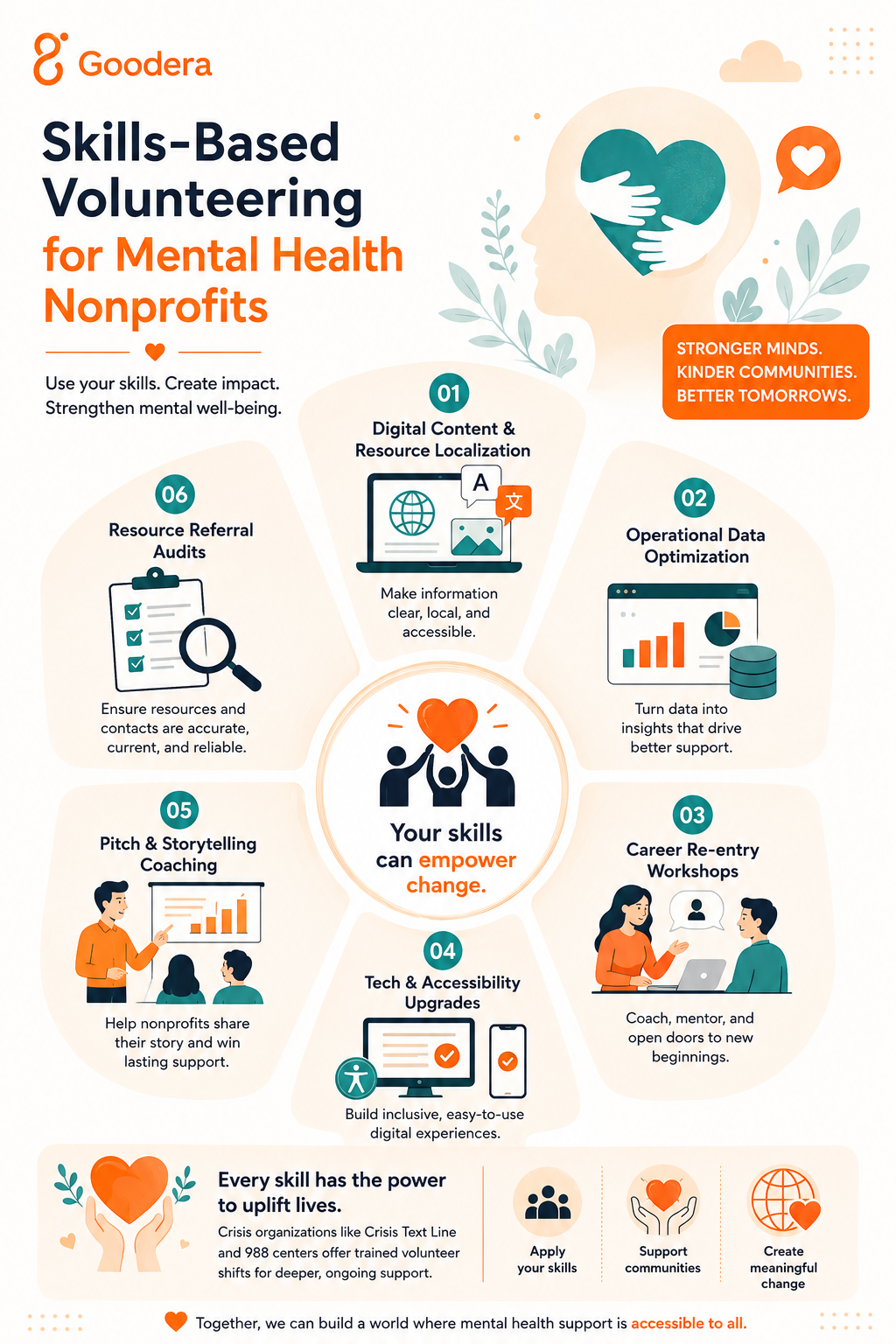
Skills-based volunteering for mental health NPOs
1. Digital Content and Resource Localization
- Target Team: Marketing, Copywriting, and Design.
- The Project: Volunteers audit and update public-facing educational materials or resource directories for local mental health charities. They can translate crisis helpline infographics into multiple languages or redesign complex brochures into easy-to-read, accessible digital assets for community centers.
2. Operational Data Optimization for Grant Compliance
- Target Team: Data Analytics, IT, and Finance.
- The Project: Employees work with local mental health affiliates to clean up anonymized donor spreadsheets, set up automated dashboards for tracking volunteer hours, or optimize data structures to help the nonprofit meet strict reporting requirements for state and federal grants.
3. Career Re-entry Workshops and Mentorship
- Target Team: Human Resources, Recruitment, and Talent Development.
- The Project: Volunteers partner with vocational rehabilitation non-profits to host virtual resume clinics, LinkedIn profile optimization workshops, and mock interviews tailored specifically for individuals re-entering the workforce following a mental health leave or medical sabbatical.
4. Technical Infrastructure and Accessibility Audits
- Target Team: Software Engineering, IT Support, and UI/UX Design.
- The Project: A structured hackathon focused on auditing the digital platforms of regional mental health counseling clinics. Teams focus on enhancing website loading speeds, implementing screen-reader accessibility standards, and streamlining online intake or appointment scheduling forms.
5. Corporate Pitch and Storytelling Coaching
- Target Team: Sales, Corporate Development, and Public Relations.
- The Project: Employees run interactive training sessions for mental health nonprofit directors on how to build compelling pitch decks, refine their value propositions for corporate sponsors, and deliver persuasive presentations to unlock long-term B2B funding.
6. Mental Health Resource Referral Audits
- Target Team: Legal, Compliance, and Operations.
- The Project: Volunteers assist small advocacy groups in auditing and verifying their local resource matrices, ensuring that external contact numbers, emergency housing contacts, and low-cost psychiatric clinic details are accurate, up to date, and compliant with privacy standards.
Crisis support organizations, including Crisis Text Line and local 988-affiliated centers, also periodically open trained volunteer shifts, which can serve as a meaningful, longer-term commitment for employees who want to go beyond a single day of activity.
ALSO READ: Ideas to Celebrate Mental Health Awareness Month at Work
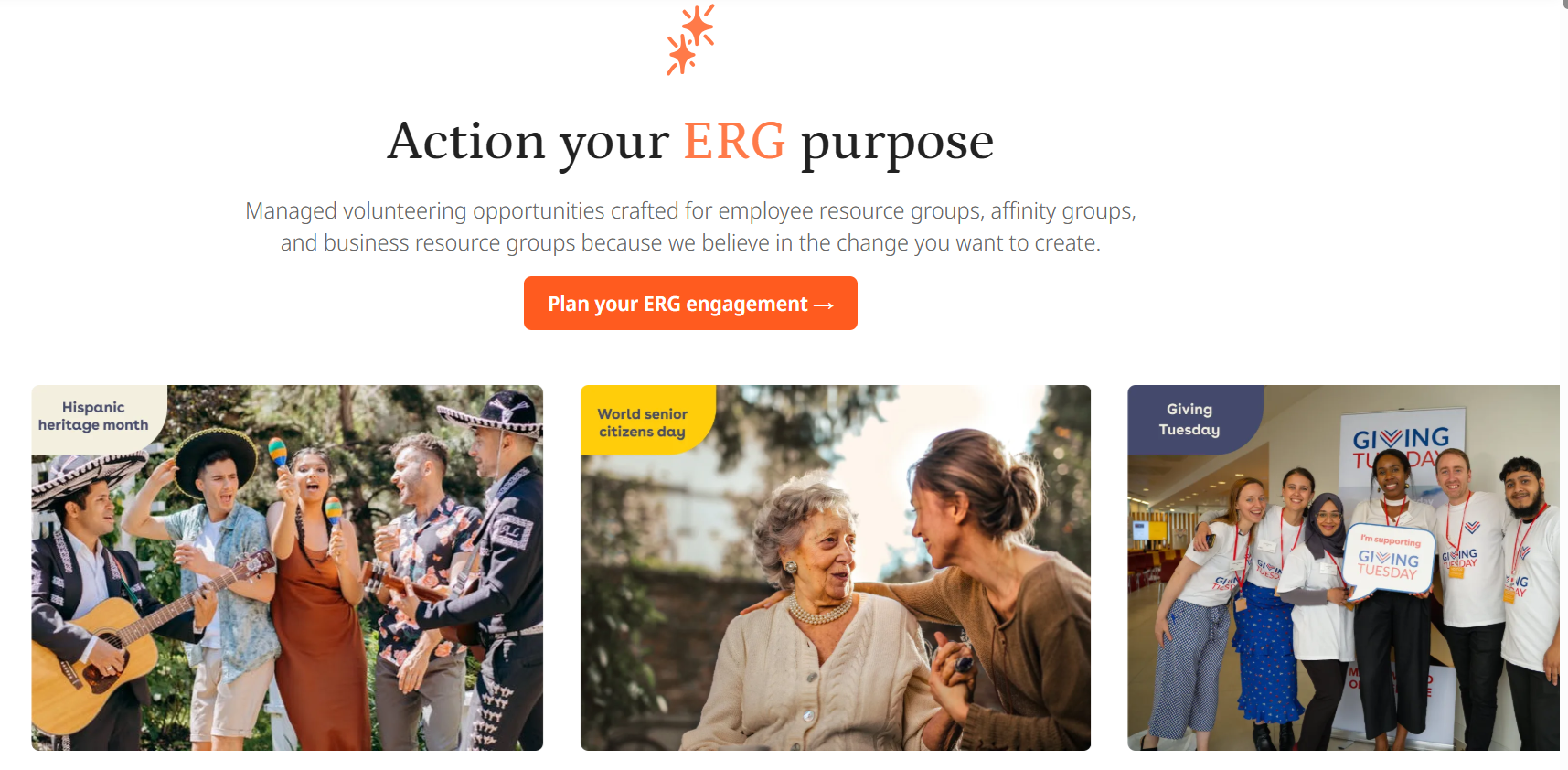
ERG-Led Mental Health Programming
Employee resource groups are often the most credible messengers for mental health programming because the content comes from peers with lived experience rather than solely from HR. Johnson & Johnson's Mental Health Diplomats, discussed in more detail below, grew almost entirely through this model, starting inside an existing disability and inclusion-focused ERG rather than as a top-down HR initiative.
Giving an existing ERG a budget, an executive sponsor, and a direct line to the CSR team during Mental Illness Awareness Week tends to produce more authentic programming than a centrally designed campaign alone.
Explore our other workplace activities for ERGs:
Connecting Mental Illness Awareness Week to Your ESG and CSR Strategy
A strong program is also an opportunity to strengthen the mental health thread running through a company's broader sustainability reporting.
SDG Alignment for Mental Health Programs
Workplace mental health programming maps directly onto United Nations Sustainable Development Goal 3, Good Health and Well-Being, which explicitly names the promotion of mental health and well-being as one of its targets.
Framing Mental Illness Awareness Week outcomes, training completion rates, ERG growth, and volunteer hours within this language allows CSR teams to fold the observance into an existing sustainability report rather than treating it as a stand-alone initiative each year.
The ROI Case for Mental Health Investment
The financial case is well documented at both the global and national level. The World Health Organization has estimated that depression and anxiety alone cost the global economy roughly $1 trillion a year in lost productivity, and in the United States, serious mental illness is responsible for an estimated $193.2 billion in lost earnings annually, according to NAMI's compiled data from SAMHSA and related federal sources.
Companies Setting the Standard
A handful of organizations offer useful, well-documented reference points for what sustained mental health programming can look like in practice.
Johnson and Johnson's Mental Health Ambassador Program
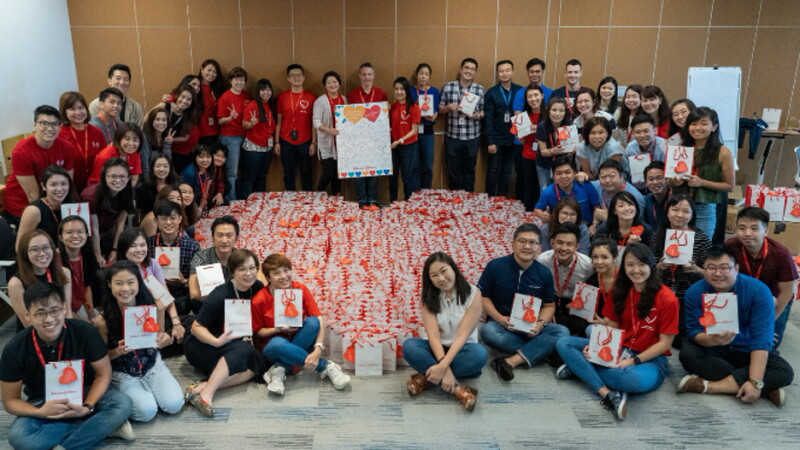
Johnson&Johnson employees breaking barriers to good mental health. Image via Johnson&Johnson
Johnson & Johnson's mental health work traces back to Craig Kramer, the company's Global Mental Health Ambassador, whose 2017 TEDxJNJ talk about his own family's experience with mental illness led directly to the founding of the Mental Health Diplomats, an employee resource group launched that same year by Kramer and colleague Geralyn Giorgio.
What began with fewer than 100 employees has grown into a global community of nearly 3,000 members across roughly 80 countries, running programming on depression, anxiety, addiction, caregiving, and related topics tied to World Mental Health Day each year.
Reflecting on his tenure in a public retrospective of his six years as Mental Health Ambassador at J&J, Kramer noted the profound cultural shift the initiative achieved, recalling that even senior executives openly shared their personal family stories once given a supportive framework.
This trajectory demonstrates how embedding these initiatives deeply into corporate culture, rather than treating them as a seasonal HR exercise, remains the gold standard for long-term organizational health.
Explore Mental Health Nonprofit Organizations to Support in 2026:
Lyra Health's Corporate Partnership Model
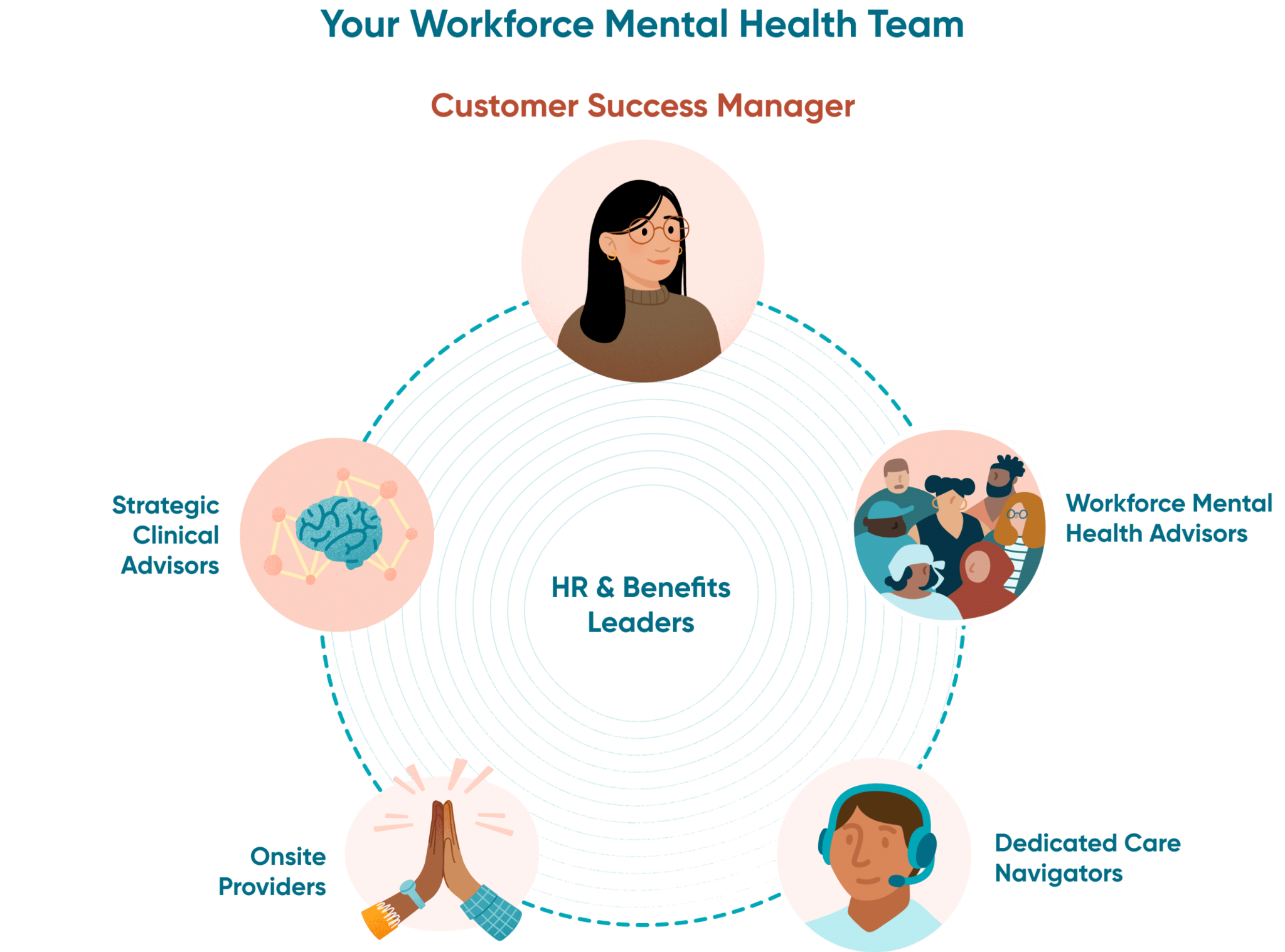
Lyra Workforce Mental Health Team. Image via Lyra Health.
Lyra Health illustrates a different model, providing workforce mental health benefits directly through employer contracts rather than through internal ERG programming. The company was named the Preferred Mental Health Partner within the Workday Wellness ecosystem in March 2026, a designation that lets Workday customers add Lyra's therapy, coaching, and manager training directly into existing benefits infrastructure.
Sean McBride, President of Lyra Health Workforce Mental Health, said the partnership is a step toward delivering on our mission to transform access to life-changing mental health care and deliver the clinical outcomes that define the Lyra standard. Independent published research cited by the company has linked its care model to a 26 percent reduction in overall health care claims costs among participants, giving benefits and CSR teams a shared, quantifiable metric to point to.
BetterHelp and the AFSP Partnership Model
BetterHelp offers better well-being. Image via BetterHelp.
BetterHelp and the American Foundation for Suicide Prevention represent two distinct, complementary partnership models companies can draw from separately for Mental Illness Awareness Week planning.
BetterHelp has built its own track record of cause-aligned partnerships, including a continuing collaboration with Sandy Hook Promise that provides free therapy to survivors of gun violence and their families, illustrating how a teletherapy platform can extend access to specific, vulnerable populations rather than only serving as a generic employee benefit.
AFSP, separately, runs a formal corporate partner program with named partners such as J.B. Hunt and a co-founded initiative with Bechtel called Hard Hat Courage, which had reached more than 188,000 construction industry professionals with suicide prevention education as of early 2026.
Companies exploring Mental Illness Awareness Week partnerships can look to either model, a direct benefits provider relationship or a cause marketing and education partnership through an organization like AFSP, depending on whether the immediate goal is expanding access to care or building awareness and prevention skills.
In a Nutshell
Mental Illness Awareness Week 2026 arrives at a moment when the data leaves little room for a purely symbolic response, with over half of employees reporting burnout and a persistent, measurable stigma gap standing between people and the support they say they want. The most effective response combines manager training, a StigmaFree culture framework, skills-based volunteering, and ERG leadership, all tied to metrics that already have a home in ESG reporting under SDG 3.
Companies like Johnson & Johnson, Lyra Health, and organizations partnering with AFSP each show a different, well-documented path toward building that culture, and any of them offer a workable starting point for a CSR team building its October plan now.
Frequently Asked Questions
1. When Is Mental Illness Awareness Week in 2026?
Mental Illness Awareness Week 2026 runs from October 5 through October 11, with World Mental Health Day falling on October 10 within that same week.
2. What Is the 2026 Theme for Mental Illness Awareness Week?
NAMI's theme for 2026 is "Building Community: Supporting Mental Well-Being Together," emphasizing meaningful connections, grassroots advocacy, and local action as tools for strengthening mental health support.
3. How Is Mental Illness Awareness Week Different From Mental Health Awareness Month?
Mental Illness Awareness Week takes place in October and was established by NAMI and later recognized by Congress, while Mental Health Awareness Month runs every May and was founded separately by Mental Health America in 1949.
4. What Should Companies Do for Mental Illness Awareness Week?
Effective activities include manager training on recognizing and responding to mental health concerns, adopting a framework like NAMI's StigmaFree Workplace pledge, offering skills based volunteering opportunities with mental health nonprofits, and giving ERGs a budget and executive sponsorship to lead peer-driven programming.
5. Why Do Employees Still Feel Uncomfortable Discussing Mental Health at Work?
According to the 2026 NAMI-Ipsos poll, stigma remains the core barrier, with nearly half of employees worried about being judged and a third concerned that disclosing a mental health struggle could make them appear weak, even though most employees say discussing mental health at work is appropriate.
6. Does Manager Training Actually Make a Difference?
Yes. Employees at companies offering mental health training report feeling more supported by both their manager and their leadership than employees at companies without it, based on the 2026 NAMI-Ipsos Workplace Mental Health Poll.
7. How Does Mental Illness Awareness Week Connect to ESG Reporting?
Workplace mental health programming aligns directly with UN Sustainable Development Goal 3, Good Health and Well-Being, allowing CSR teams to report training completion, ERG growth, and volunteer participation as part of their existing sustainability disclosures.
8. What Is the Business Case for Investing in Workplace Mental Health?
The World Health Organization estimates that depression and anxiety cost the global economy about $1 trillion annually in lost productivity, while serious mental illness accounts for an estimated $193.2 billion in lost earnings each year in the United States alone, making workplace mental health investment a measurable financial priority alongside a cultural one.
9. How Can Small or Mid-Sized Corporate Teams Support Mental Illness Awareness Week on a Limited Budget?
Impactful programming does not require an enterprise-scale budget. Smaller social impact teams can drive meaningful change by utilizing free, open-source workplace toolkits provided by major advocacy organizations like NAMI or the Dementia Society of America. Additionally, teams can host structured, internal "Lunch & Learn" sessions led by employee resource groups (ERGs), or organize virtual, skills-based volunteering hackathons where remote employees use existing work hours to optimize digital resources for grassroots regional charities.
10. How Do We Keep Our Mental Health Programming From Creating Legal or Compliance Risks for the Company?
CSR and people leaders often worry that driving deep conversations around mental illness might cross ethical boundaries or trigger privacy issues. The key is to design programs around a strict "two-way street" rule: use internal tools like NAMI’s StigmaFree pledge or Employee Assistance Programs (EAPs) exclusively for educational awareness and corporate policy updates.
Then, route all direct personal support, crisis interventions, or clinical counseling strictly through your external, credentialed non-profit partners. This separation ensures your initiative builds a safe corporate culture without accidentally turning internal managers or volunteers into unlicensed counselors.