Discover how Google.org uses AI and skills-based volunteering to scale nonprofit impact, improve disaster response, and close the AI adoption gap.
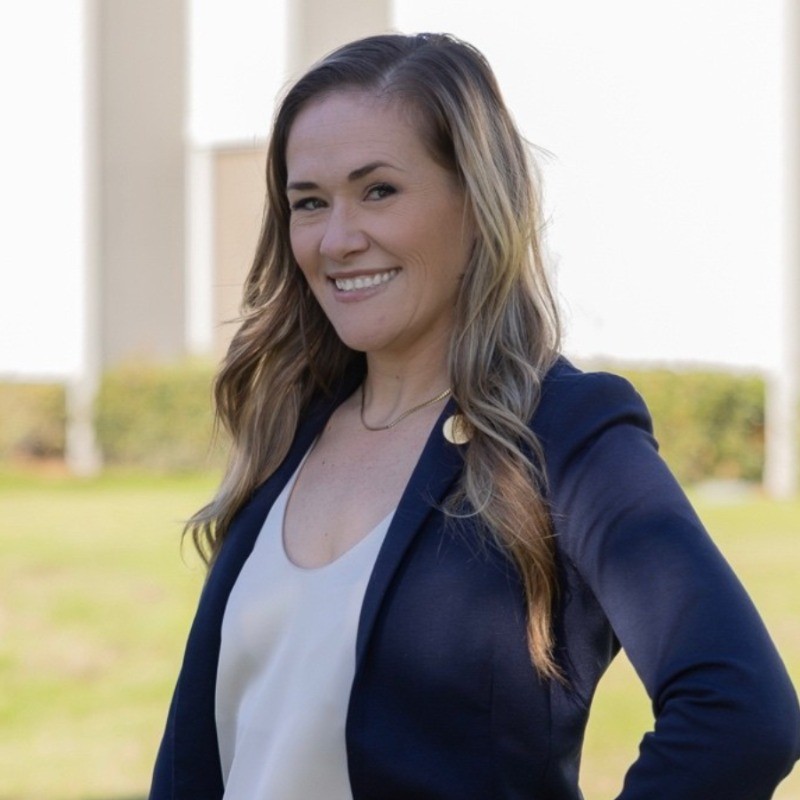
This spotlight session explores what AI for social impact looks like at scale, through the lens of Google.org’s work with nonprofits and governments around the world. Jen Carter, Head of Tech and Volunteering at Google.org, shares how Google applies AI, funding, and skills-based volunteering to help nonprofits scale both productivity and innovation.
Using a detailed case study with GiveDirectly, Jen demonstrates how AI-powered tools can fundamentally change how aid is targeted after natural disasters, reducing bias, speeding up response times, and ensuring support reaches the most vulnerable communities. The session also addresses the growing AI divide in the nonprofit sector, highlighting the critical role of philanthropy, capacity building, and volunteering in closing that gap.
The conversation concludes with practical guidance for organizations just beginning their AI journey, emphasizing small pilots, cross-sector collaboration, open and scalable solutions, and a strong focus on real problems rather than technology for technology’s sake.
Q: What challenge does AI help address in disaster response and humanitarian aid?
After major disasters, inequality often increases because aid is difficult to target objectively and quickly. Traditional approaches rely on news coverage and on-the-ground assessments, which can be slow, biased, and incomplete, often overlooking the most marginalized communities.
Q: How did Google.org support GiveDirectly in solving this problem?
Google.org provided grant funding and a team of Google.org Fellows, including engineers, product managers, and designers, who worked full-time with GiveDirectly to build a scalable platform called Delphi that improves how aid is targeted.
Q: How does AI power the GiveDirectly solution?
The platform uses a machine learning tool called SKAI to analyze aerial imagery and automatically assess building damage after disasters. This data is combined with socioeconomic indicators to identify the most vulnerable and impacted communities.
Q: What impact did this AI-driven approach have?
The AI-based assessment was four times faster than traditional, boots-on-the-ground methods and enabled more objective, comprehensive targeting of aid, ensuring support reached communities that might otherwise be overlooked.
Q: What is Google.org’s broader approach to social impact?
Google.org combines grant funding, technology, and skills-based volunteering to support nonprofits. Flagship programs include the Google.org Fellowship, where Googlers work full-time with nonprofits, and the Google.org Accelerator, which provides funding, cloud credits, and expert mentorship.
Q: Why is AI adoption uneven across the nonprofit sector?
Many nonprofits lack access to tools, training, expertise, and funding. While most nonprofits believe AI could help them, nearly half are not currently using it, highlighting a growing AI divide.
Q: How does Google.org define AI’s role in scaling nonprofit impact?
AI helps nonprofits scale in two key ways: boosting productivity by automating routine tasks, and unlocking innovation by enabling entirely new approaches to solving problems.
Q: Why is AI for innovation different from AI for productivity?
AI for productivity improves existing processes, while AI for innovation enables fundamental shifts in how problems are solved, such as using computer vision instead of manual damage assessments.
Q: What best practices does Google.org recommend for using AI responsibly?
Start with a clear problem statement, ensure models are designed to avoid bias, prioritize cross-sector collaboration, and build solutions that are open, scalable, and extensible beyond a single organization.
Q: How does skills-based volunteering benefit employees and companies?
Employees gain new skills, build cross-functional connections, and increase career mobility. Even employees who do not participate directly report higher pride in the company and stronger intent to stay.
Q: What advice do you have for organizations just starting their AI journey?
Start small, pilot projects, learn quickly, and iterate. Focus on what your organization can uniquely contribute, address barriers one step at a time, and build momentum through early wins.
Q: How should companies design skills-based volunteering programs around AI?
Programs should align with both nonprofit needs and employee development goals, offering mentorship, real-world problem-solving, and opportunities to stretch skills in complex, low-resource environments.
Q: What is the biggest takeaway for CSR and social impact leaders?
AI should never be the goal. Start with real-world problems, combine technology with human expertise, and use cross-sector collaboration to scale impact responsibly and equitably.