How to Help Homeless People: Volunteer Ideas for Teams

Picture this.
It's 6:47 on a Tuesday morning. Your team is filing into a conference room for a quarterly all-hands; laptops open, coffee cooling in paper cups. Seven miles away, a 58-year-old former warehouse supervisor named Gerald is waking up on a concrete sidewalk. He lost his job in 2022, his apartment a few months later, and his sense of himself slowly after that, as one month passed into the next and nobody met his eye.
Gerald isn't a statistic. But his story is one version of a crisis that's growing across the country.
Here's the real question: Are you helping people experiencing homelessness for a day, or helping change what happens next?
It isn't whether your company cares about homelessness; most do, at least in the abstract. It's whether your team is doing something that moves the needle, or whether you're running an annual coat drive and calling it a strategy. I want to walk you through the difference, because once you see it, you can't unsee it.
The Scale of the Problem (And Why It Should Matter to Your Leadership Team)
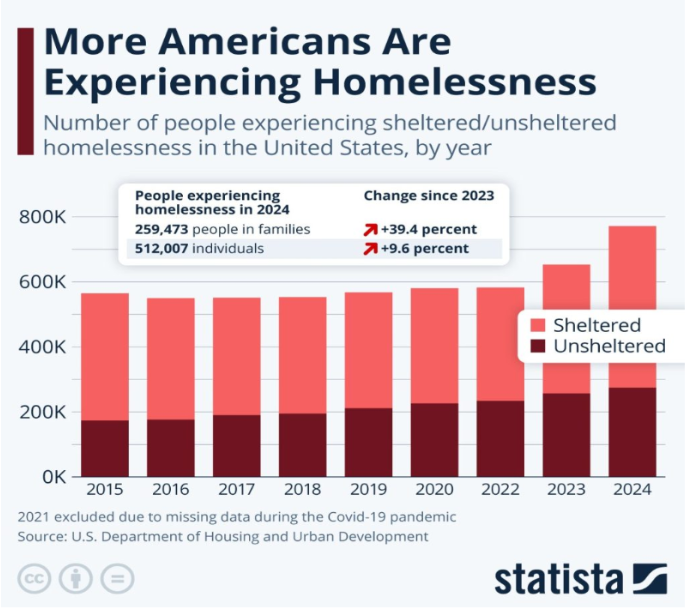
Source: https://thinktv.org/2026-brings-new-homelessness-directive-local-agencies-scrambling/
The numbers are an eye-opener.
According to the U.S. Department of Housing and Urban Development's 2024 Annual Homeless Assessment Report, more than 1.1 million people in the United States were counted as homeless on a single night in 2024. That is not a historical figure or an estimate. That is a point-in-time snapshot, which means the cumulative number of people experiencing homelessness across a full year is significantly higher.
HUD's own data confirms that no U.S. state currently has enough permanent housing to shelter all people who need it. In 2024 alone, the homelessness system added roughly 60,000 new shelter beds. In that same period, approximately 600,000 people entered homelessness for the first time. That gap is not a policy footnote. It is a structural emergency.
The demographics shift the conversation even further:
Families with children saw the steepest growth, with homeless children increasing by 33% in 2024. Young people under 25 now comprise roughly 28% of the total homeless population, many arriving on the street with interrupted education and no professional network to fall back on.
Research published in The Lancet via the NIH shows that the median age of the homeless population has actually risen closer to 50 years old. Older adults aged 55 and over account for roughly 20% of homeless individuals, with nearly half living unsheltered outdoors or in vehicles, because most shelters are not designed with seniors in mind.
Black, Indigenous, and other people of color are disproportionately represented across all homeless subgroups, the direct result of systemic inequities that have compounded over generations. Any volunteer or CSR program worth running acknowledges this plainly and builds culturally informed approaches accordingly.
For social impact leaders building a business case internally, homelessness is not a fringe issue. It sits at the intersection of housing, employment, healthcare, and economic mobility, the exact domains where corporate volunteering generates its most credible impact. Understanding the numbers is step one in figuring out how to help homeless people with real systemic weight behind the effort.
Who Is Actually Living Without a Home? Understanding the Subgroups
Helping the homeless effectively requires understanding that "the homeless" is not a monolithic group. A 17-year-old LGBTQ+ youth who was kicked out of his home has almost nothing in common, practically speaking, with a 61-year-old veteran managing PTSD or a single mother fleeing domestic violence. Yet all three need support, and the support they need is very different.
Here is what corporate teams and CSR leaders should know before building programs. How can we help the homeless well? By knowing who we are actually talking about.
1. Youth and Young Adults (Under 25)
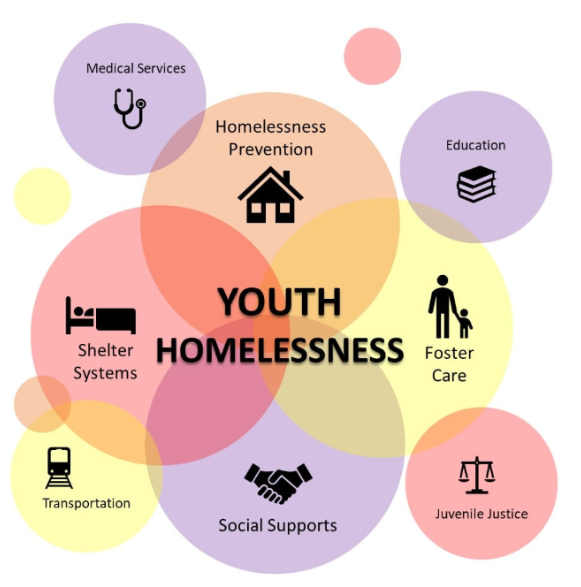
Solving Youth homelessness (Image via Social System Design Lab)
Nearly half of homeless youth under 25 lack a high school diploma or GED. Many arrive at shelters with no professional history, no references, and no pathway to stability without intensive support. What actually helps: one-on-one tutoring, mentorship from professionals, donated laptops or internet access for e-learning, and funded internships or trade program scholarships.
Organizations like School on Wheels have run successful models using weekly volunteer tutors to keep K-12 homeless students engaged in school. If you are asking how to help homeless people in the youngest age bracket, education continuity is the answer.
2. Families with Children
Single mothers with children represent one of the fastest-growing segments. Over 90% of homeless women report histories of past abuse, making domestic violence a leading driver of family homelessness. These households need family shelter units that keep parents and children together, access to childcare and after-school programs, and nutritious food.
Corporate toy drives, diaper collections, and back-to-school campaigns are useful starting points for volunteers to help homeless families. But funding transitional housing for survivors and sponsoring childcare vouchers for families in shelters goes deeper.
3. Single Working-Age Adults (25 to 54)
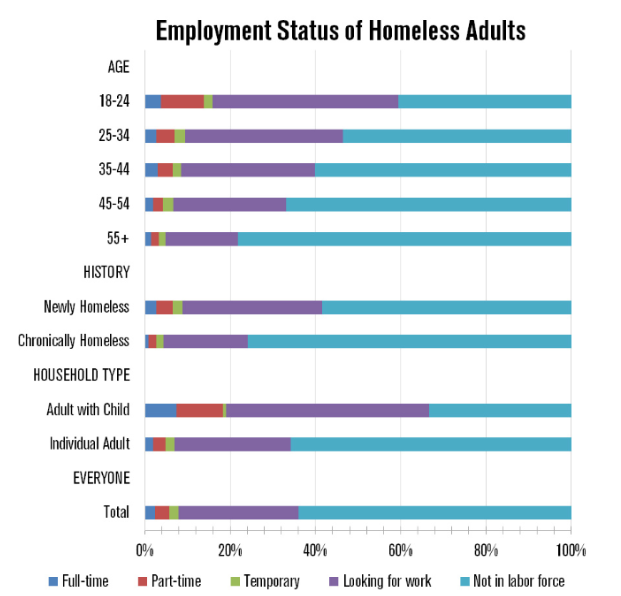
Source: Economic Roundtable
This group accounts for roughly two-thirds of the total homeless population. Many lost housing through a combination of sudden crises: unexpected medical bills, low wages, job loss, or eviction without a safety net.
They need access to rapid rehousing, job training, and behavioral health support. Companies can make a tangible difference through resume workshops, skills-training seminars, and job fairs specifically accessible to people experiencing homelessness.
Helping the homeless in this age bracket often means addressing the employment gap head-on, because work is the most reliable route to housing stability.
4. Veterans
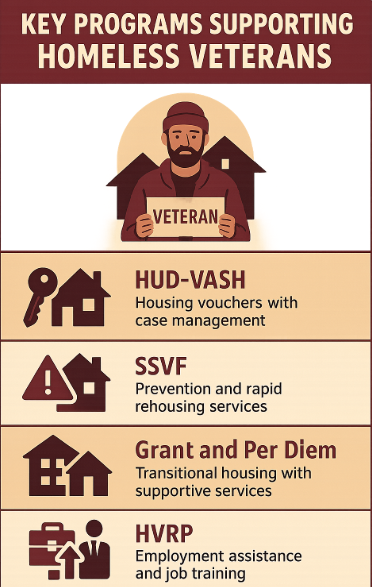
Source: Life Step USA
Despite representing only about 5% of the homeless adult population (32,882 veterans counted in 2024), homeless veterans carry distinctive burdens, including PTSD, physical disability, and addiction. The VA's HUD-VASH voucher program has helped reduce veteran homelessness significantly. Corporate partners can assist by funding voucher programs, creating veteran hiring pipelines, or partnering with veteran-focused organizations on apprenticeship programs.
The Home Depot's Team Depot program has renovated over 65,000 housing units for veterans, a compelling benchmark for what sustained corporate commitment can look like. For companies asking how to help homeless people with military backgrounds, the model is proven: stable housing plus wraparound services.
5. Older Adults (55 and Over)
Homeless seniors often end up on the street after a cascading series of crises: loss of a spouse, a major health event, or the eviction that follows months of unpaid bills. They need age-appropriate housing (accessible, ground-level), reliable healthcare access, transportation to medical appointments, and companionship.
Nearly half of this group lives unsheltered, because most shelters do not accommodate their physical needs. Corporate volunteers can help by supporting mobile health clinics, assisting with Medicaid enrollment, or simply showing up at transitional senior housing to spend time with isolated older adults. Helping the homeless who are 55 and older often begins with the most basic human resource: presence.
6. LGBTQ+ Youth
LGBTQ+ young people face family rejection at dramatically higher rates than their peers, making them acutely vulnerable to homelessness. They need shelters with inclusive, affirming policies that protect them from harassment.
Employee resource groups can raise dedicated funds for LGBTQ+ shelters, and companies can visibly partner with organizations like The Trevor Project or support Covenant House's Strides for Pride fundraiser. How can we help the homeless who belong to this group? Inclusion starts with ensuring the spaces designed to help them are actually safe.
7. People with Disabilities and Chronic Homelessness

Source: Invisible People
Permanent supportive housing (PSH), which combines stable housing with wraparound healthcare, mental health, and social services, has a documented retention rate above 90%. This is the gold standard for helping those experiencing chronic homelessness.
Companies can fund PSH units, volunteer at supportive housing agencies, or sponsor telehealth infrastructure within shelters. How can we help the homeless who are chronically displaced? By funding the proven model rather than reinventing the wheel.
The through-line across all of these groups is the same: food and a bed is a floor, not a ceiling. Helping the homeless at any meaningful scale means addressing the upstream causes, employment barriers, healthcare gaps, housing shortages, and the quiet erosion of self-worth that comes with long-term displacement.
Systematic and Impactful Volunteering: Ways to Scale Impact
There is nothing wrong with a food drive. But there is something deeply limiting about it when it is the entirety of your homelessness strategy. Companies genuinely committed to helping the homeless need to think beyond the single event.
Research on homelessness interventions is consistent: recurring, relationship-based support generates outcomes that single events simply cannot. Someone who receives one meal from a corporate team on a Saturday in November has had a pleasant Saturday. Someone who receives eight weeks of job-readiness coaching from the same company's HR professionals has had their trajectory changed.
The most impactful volunteer programs for helping the homeless share three structural characteristics.
- First, they recur. Monthly support, weekly tutoring, and ongoing job training build trust. Trust is the precursor to almost every positive outcome in homelessness recovery. A person who has experienced housing instability has often also experienced repeated betrayal by systems and institutions. Reliability is itself a form of generosity.
- Second, they address root causes. Job training programs that teach marketable skills and connect participants to actual hiring pipelines move people from dependence to self-sufficiency. Educational programs that help homeless youth finish school or earn certifications change lifetime earnings trajectories. Medical care access reduces hospitalizations and crisis episodes that cycle people back into homelessness.
- Third, they leverage professional skills. Volunteering to help homeless communities with generic labor is useful, but underutilizes what corporate teams actually have. An attorney who volunteers at a legal aid clinic, a financial planner who teaches budgeting to adults transitioning out of shelter, a software engineer who helps a nonprofit modernize its client database. These contributions are rare and disproportionately valuable to the organizations receiving them.
If your company is focused on helping homeless communities more effectively, the shift is usually from event-based volunteerism to structured, skills-based, and recurring engagement. Volunteering to support people experiencing homelessness should go beyond team-building exercises and become an intentional, managed program with clear accountability built in.
What to Know Before Volunteering for the Homeless
Before your team shows up to volunteer to help homeless communities, a few things are worth understanding clearly. These are not disclaimers. They are the difference between a volunteer experience that helps and one that merely makes your team feel like it helped.
- Any Skill You Bring Has Value
The stereotype of homeless volunteering is ladling soup. That is one useful thing. It is also one of many. Most shelters run complex operations that need kitchen volunteers, yes, but also administrative support, clothing room coordination, marketplace management, thrift store operations, maintenance, and general logistics. If someone on your team has an eye for organization, a background in cooking, or experience in office administration, there is almost certainly a role that puts those skills to work.
This is important context for anyone wondering how to help homeless people in a way that matches their actual capabilities rather than their assumptions about what volunteering looks like.
Professional expertise is equally valuable. Financial advisors can run budgeting workshops. Doctors and nurses can staff medical clinics. Lawyers can provide pro bono counsel. Teachers can run tutoring sessions. IT professionals can set up computer labs or provide digital literacy training to older adults. The question to ask before volunteering is not "what does a volunteer do?" but "what do I know how to do that this community needs?"
- Short-Term and Long-Term Volunteering Are Both Valuable
Many people hesitate to explore ways to volunteer to help people experiencing homelessness because they assume it requires a long-term commitment. It doesn’t, at least not at the start. Short-term volunteering is a valid and valuable entry point. It gives employees direct exposure to what homelessness looks like beyond headlines, helping build empathy and laying the groundwork for more sustained, meaningful engagement over time
Once employees find their fit, long-term volunteering builds something harder to replicate: meaningful, trust-based relationships with the people they serve, and deeper operational knowledge that makes them more effective over time.
A practical structure for corporate teams is to start with a single one-day event, gather feedback, identify employees with high engagement and relevant skills, and build a recurring cohort from there.
- Approach with Curiosity, Not Pity
The most common mistake first-time volunteers make is arriving with a savior narrative. People experiencing homelessness are not broken. They are people navigating circumstances that are frequently the result of structural failures, not personal ones. The most effective volunteers show up with professional respect, genuine curiosity about what would actually help, and an understanding that the person in front of them has experience and knowledge that the volunteer does not.
Listening is a skill. In homeless services, it is arguably the most underrated one.
Ways to Volunteer to Help the Homeless: A Comprehensive Menu for Corporate Teams
The following section covers the core categories through which teams can contribute to helping the homeless, with concrete examples within each. Volume matters less than alignment. Choose what matches your team's skills, availability, and the specific needs of your local partner organizations.
1. Volunteering to Solve Food Insecurity
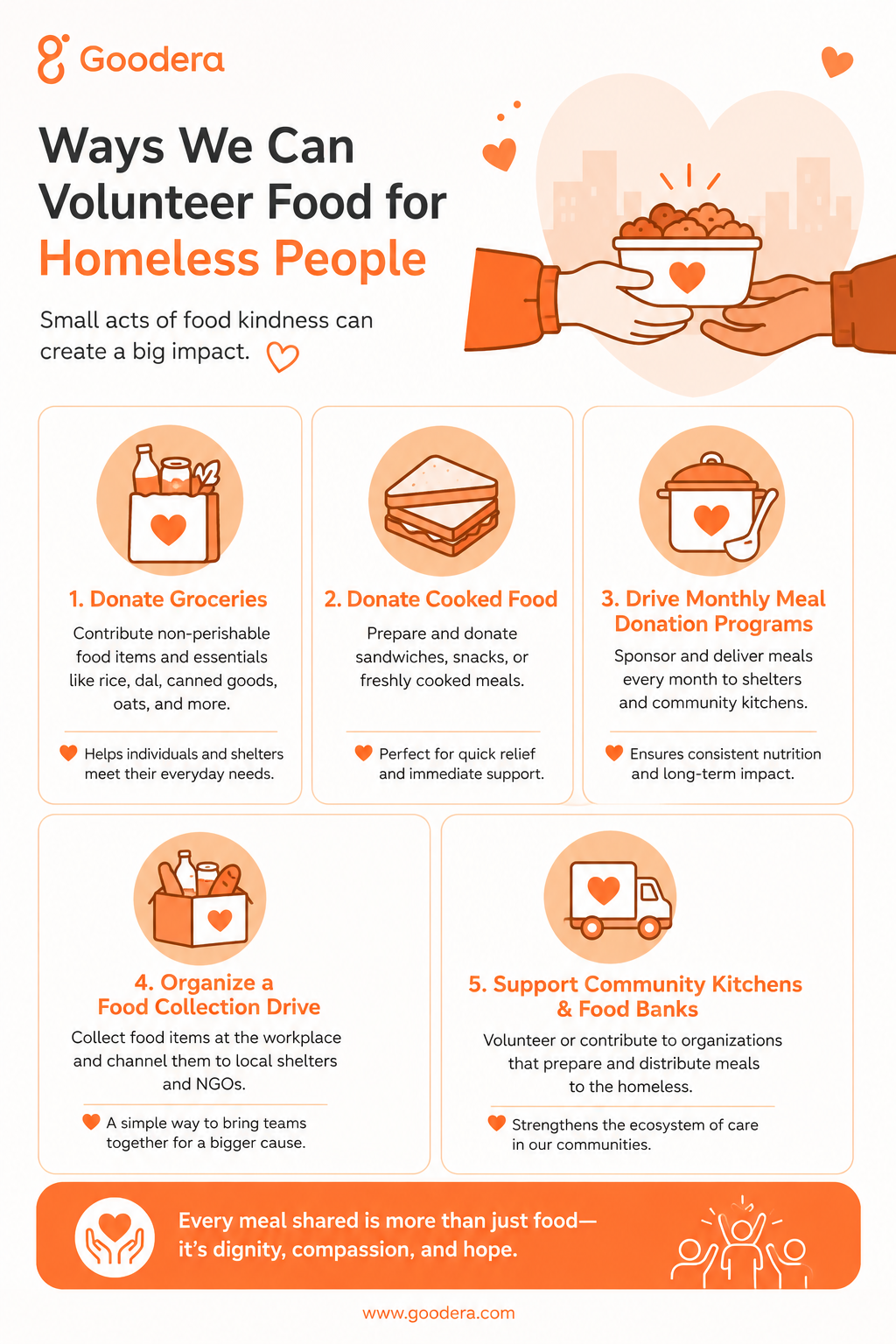
Food is the most immediate and visible form of help, and there are far more ways to contribute than most teams realize. It is also one of the most popular ways to volunteer to help homeless communities for the first time, which makes it a natural gateway to deeper involvement.
Ways to volunteer to help the homeless through food include: organizing a weekly cooked meal delivery to a local shelter using a rotating team sign-up; partnering with local restaurants or caterers to donate surplus meals on a scheduled basis; running a daily grocery donation drive at the office where employees bring non-perishables tied to a specific shelter's weekly meal plan and much more.
2. Providing Warm Clothing Through Donations and Drives
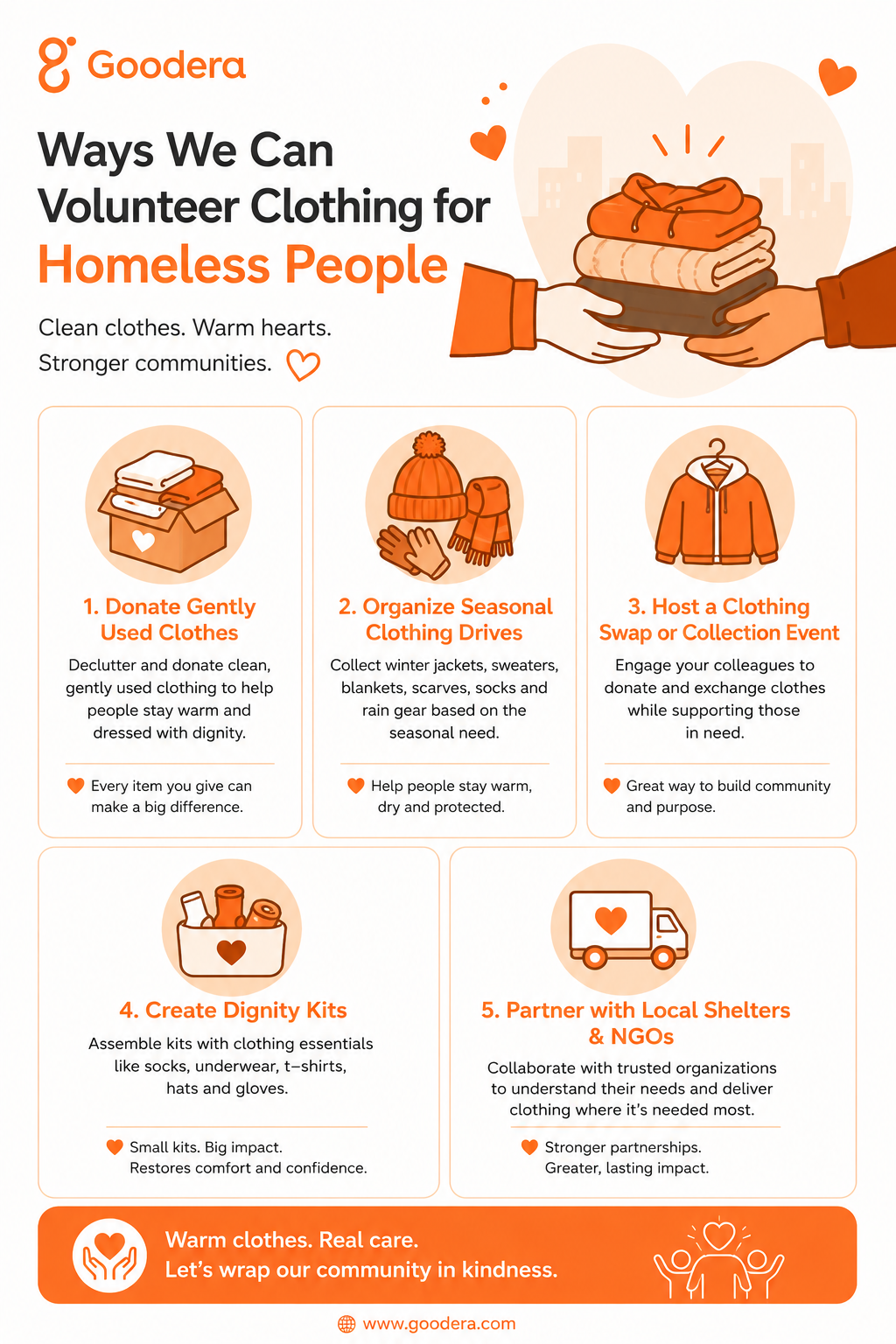
Clothing donations are perennially undersupplied in certain categories, especially socks, underwear, and weather-appropriate outerwear. This is a low-barrier, high-frequency way to volunteer to help homeless individuals in your city, and it requires almost no special skill or prior experience.
Ways to volunteer include organizing quarterly drives for high-need essentials like socks and underwear, which are rarely donated but consistently in demand; hosting seasonal coat and blanket drives aligned with weather changes; and assembling hygiene kits that include basics such as a t-shirt, socks, deodorant, and a toothbrush.
You can also partner with shelter clothing rooms to help sort, size, and organize donations for faster distribution, run internal clothing swaps where employees contribute quality used clothing to fund new purchases for shelters, or collaborate with clothing brands to source bulk donations of unsold inventory.
3. Opening up Pathways for Stable Shelter and Housing
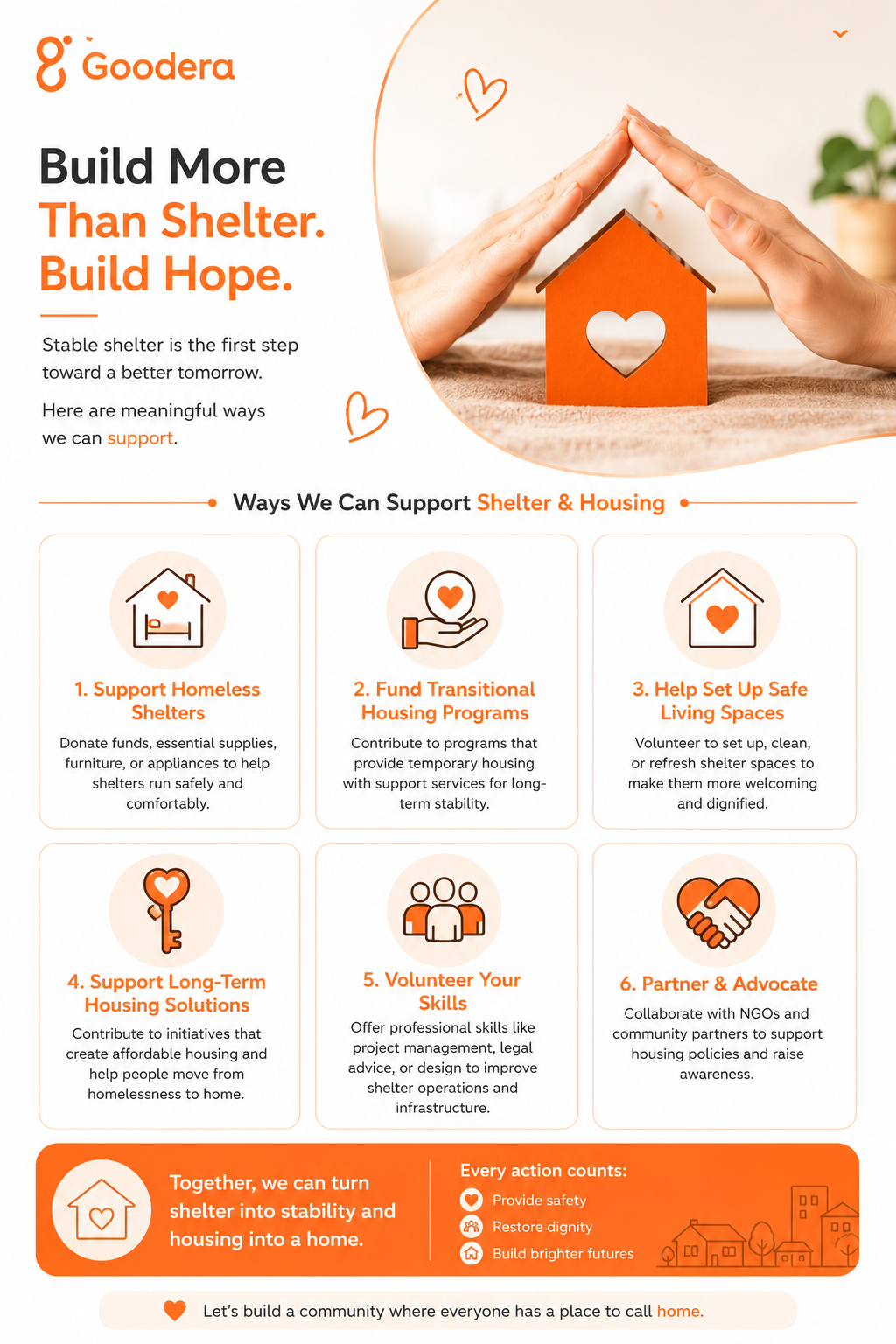
Helping people find and maintain stable housing is one of the most direct ways to reduce homelessness, rather than just managing its symptoms. It’s also where volunteer efforts tend to create the most lasting impact.
Corporate teams often contribute through hands-on workdays at shelters, helping with cleaning, painting, minor repairs, or landscaping to improve living spaces. Some organizations partner with housing nonprofits to build or renovate transitional housing units; for example, Seattle’s Low Income Housing Institute has hosted corporate groups in tiny home construction programs. Others assemble move-in kits with essentials like linens, kitchen basics, toiletries, and cleaning supplies for individuals transitioning into permanent housing.
Support can also extend beyond volunteering time. Companies sometimes fund housing vouchers for veterans through programs like HUD-VASH, sponsor units in permanent supportive housing developments, or commit to “Adopt-a-Shelter” initiatives that provide consistent financial and volunteer support to a single shelter throughout the year.
4. Facilitating Essential Needs via Basic Medical Care
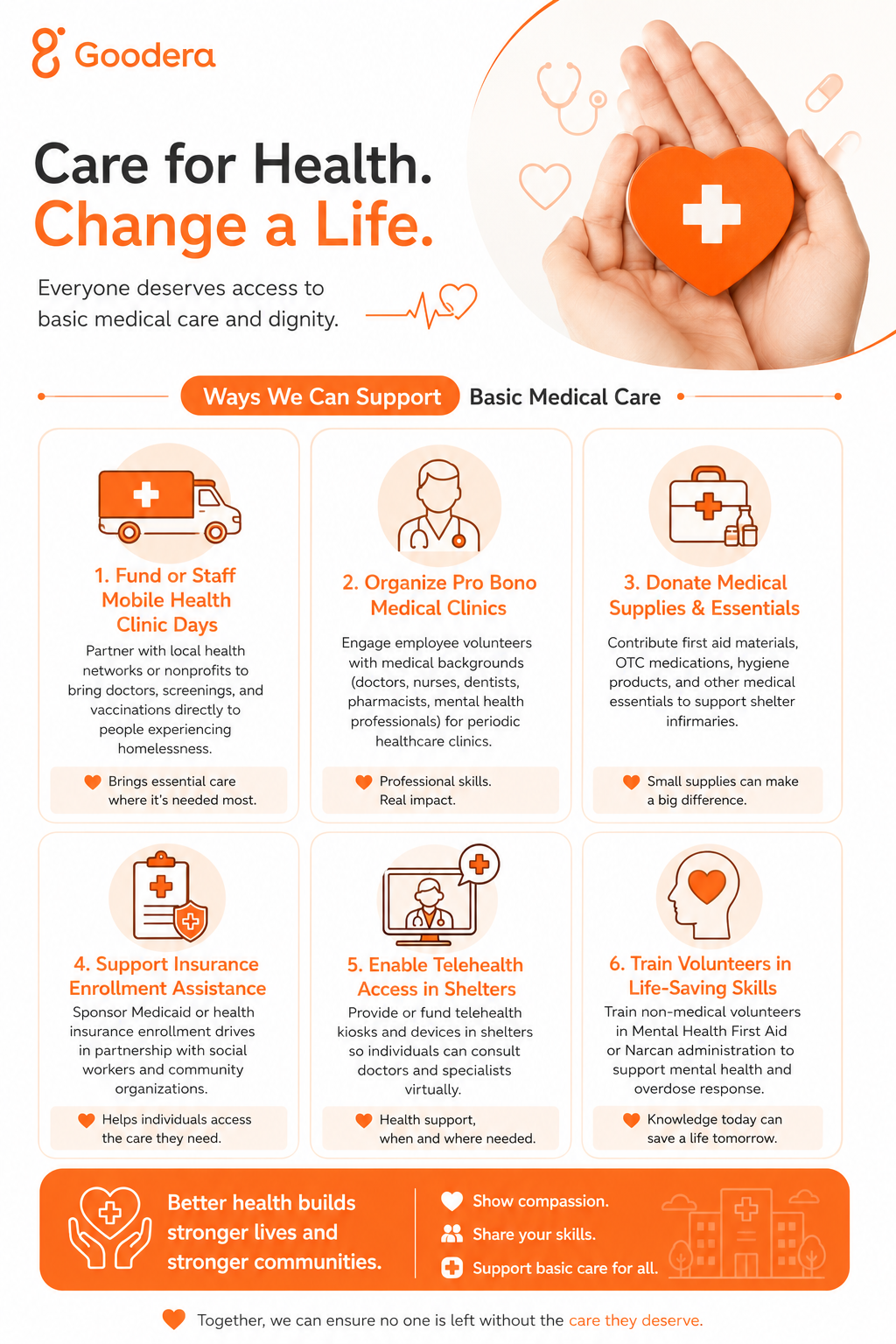
Unaddressed health issues are among the strongest drivers of chronic homelessness. When someone is living with an unmanaged illness, holding a job or maintaining stable housing becomes significantly harder. Improving access to healthcare is often a missing link in breaking that cycle.
Corporate teams can support this in a few practical ways. Some partner with local health networks or nonprofits to fund or staff mobile clinic days that bring care directly to shelters. Others mobilize employees with medical backgrounds, doctors, nurses, dentists, pharmacists, and mental health professionals, to volunteer at periodic pro bono clinic events. Another option is donating essential medical supplies to shelter infirmaries, including first aid kits, over-the-counter medications, and basic hygiene health products.
Support can also extend into system access. Companies may help fund Medicaid or health insurance enrollment assistance through social worker partnerships, or support telehealth kiosks in shelters, which some tech and healthcare organizations are already piloting. Training non-medical volunteers in Mental Health First Aid or Narcan administration is another impactful step, giving shelter teams practical skills that can be life-saving in crisis situations.
5. Running Regular Educational Programs
Education is one of the most powerful long-term interventions in addressing homelessness. A GED or vocational certification can change not just income potential, but also confidence, stability, and long-term opportunity. For organizations focused on sustained impact, education-based support offers one of the clearest pathways to lasting change.
Corporate volunteering in this space can take several forms. Teams often support weekly one-on-one tutoring for homeless K–12 students, either in shelters or through flexible virtual platforms. Others sponsor GED preparation programs by engaging employee volunteers as tutors, or by providing learning tools like laptops, tablets, and hotspots to shelters and transitional housing facilities where digital access is limited.
Beyond direct tutoring, companies can also fund college application support for homeless youth, including essay coaching, fee assistance, and financial aid guidance. Some create internal scholarship programs for individuals experiencing or exiting homelessness to pursue community college or vocational training. Digital literacy classes for adults are another meaningful option, especially for those who have been excluded from the digital economy for years.
6. Incorporating Job Training Programs in Volunteering Campaigns
Employment is the bridge between temporary shelter and permanent stability. Corporate teams are uniquely positioned here because they have something most nonprofits cannot offer at scale: actual jobs and the people who hire for them. Supporting employment pathways for people experiencing homelessness is one of the highest-leverage investments a company can make.
This can take many forms, including running structured resume-building workshops led by HR professionals; hosting mock interview sessions where employees coach job seekers on communication, posture, and common interview scenarios; and organizing job fairs within shelter facilities so employers can meet candidates where they already are.
A more intentional approach goes further. Companies can create formal hiring pipelines for people exiting homelessness through policy commitments, including more flexible background check practices. They can also offer apprenticeship programs or entry-level roles reserved for candidates referred through workforce development nonprofits.
In addition, employee mentorship programs can support individuals over a 12-week job-search journey, helping with resumes, cover letters, interview preparation, and navigating public benefits and basic workplace readiness needs like appropriate interview attire.
Diving Into Advocacy, Awareness, and Giving
Volunteering to support homeless communities doesn’t stop at direct service. Corporate teams can also run internal awareness campaigns tied to World Homeless Day (October 10) to build organizational understanding of the issue.
Use matching gift programs to double employee donations to homelessness nonprofits, or host internal charity auctions and fun runs, with proceeds directed to a shelter partner.
For a more grassroots-level impact, teams can also engage in local affordable housing advocacy by supporting Housing First policy initiatives. Companies can use their public platforms to run awareness campaigns that challenge common myths about homelessness and help humanize the people behind the statistics.
Organizations Currently Leading the Fight Against Homelessness
Before your team builds a volunteering program, knowing who to partner with makes all the difference. The right nonprofit partner amplifies corporate resources, provides structure, and connects volunteers to the people who most need what they have to offer. This is foundational to any plan for how to help homeless people with a genuine, lasting impact.
Goodera has compiled a detailed resource on the top organizations helping homeless people in 2026, covering nonprofits with proven track records across housing, healthcare, education, and workforce development. It is worth reading before you begin outreach to local partners.
Some of the most impactful organizations operating nationally include:
- National Alliance to End Homelessness leads policy advocacy and research that informs every serious homelessness response in the country. Corporate partnerships here can amplify policy-level change.
- Covenant House serves homeless youth across 34 cities in North America, running crisis shelters, transitional housing, and job training programs. Their Strides for Pride fundraiser specifically supports LGBTQ+ homeless youth.
- The Home Depot Foundation, through Team Depot has constructed or renovated over 65,000 homes and shelters, primarily for veterans, making it one of the largest corporate volunteering models in the housing space.
- Volunteers of America operates homeless services across hundreds of communities, with particular depth in veteran programs and transitional housing.
- School on Wheels provides tutoring and school supplies to homeless K-12 students across multiple U.S. states, offering one of the most accessible points of entry for skilled education volunteers.
The right partner often depends on where you’re located, who your employees are, and what your company actually does well. The most effective corporate volunteering programs aren’t one-size-fits-all; they work best when there’s a clear fit between what a company can offer and what a nonprofit genuinely needs.
Best-Practice Corporate Volunteering Models: How the Most Impactful Companies Structure It
There is a structural difference between companies that do volunteering and companies that have built volunteering into their organizational identity. The latter tend to share a few design principles, and understanding them is central to knowing how to help homeless people in a way that creates institutional momentum rather than one-time goodwill.
1. Embed Volunteering in the Employee Experience
Offering paid volunteer time off, celebrating volunteer hours in company communications, and tying volunteering to performance reviews, not as a checkbox but as a genuine expression of company values, all correlate with higher participation and deeper engagement. One industry survey found participation rates in organized company volunteer programs run at rates 7.6 times higher than in informal, opt-in programs. This infrastructure is what makes it feasible to consistently volunteer to help homeless communities rather than doing it once and calling it done.
2. Commit to a Partner, not just a Cause
The "Adopt-a-Shelter" model, where a corporate team selects one shelter or housing organization to support over a multi-year period, produces better outcomes than rotating through different nonprofits every quarter. Sustained relationships let companies understand the real needs of a partner organization and deploy resources accordingly. It is also one of the most effective answers to how we can help the homeless in a way that builds trust on both sides.
3. Use Skills
Verizon's "Citizen Verizon" initiative has logged over 2.5 million volunteer hours since 2020, much of it through structured digital literacy and tutoring programs that deploy employees' professional expertise. The quality of contribution is higher, and so is employee satisfaction. How can we help the homeless with what we actually know how to do? Verizon's model answers that question at scale.
4. Measure Impact
The best corporate programs track outputs (volunteer hours, meals served, participants coached) and outcomes (job placements, housing stability after 12 months, GED completions). Impact measurement creates accountability, informs program design, and builds the internal business case for continued investment. Companies that take time to measure outcomes are also the ones that stay motivated to volunteer to help homeless communities year after year, rather than burning out after a few events.
5. Start with a Platform, Beyond a One-off Event
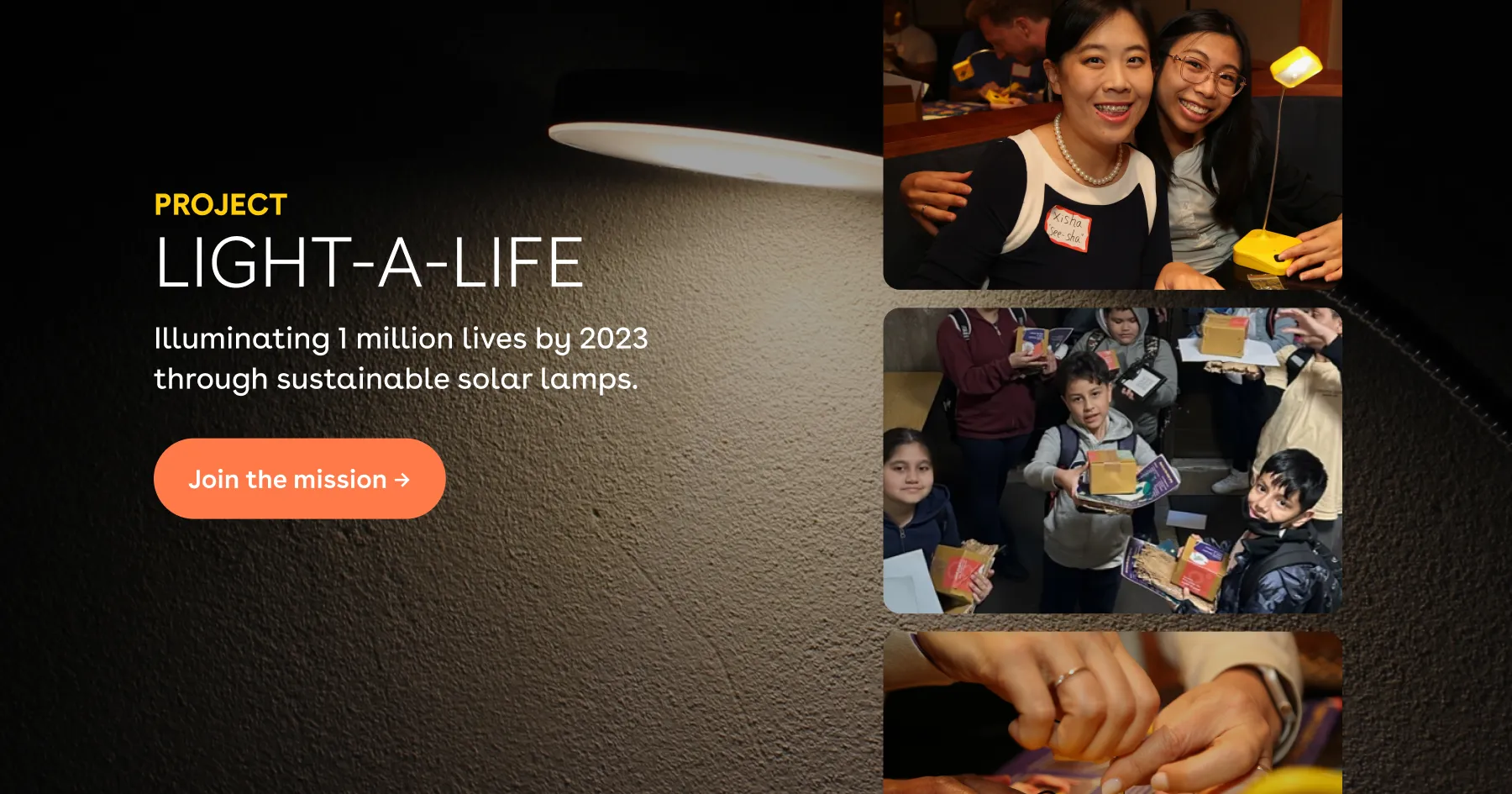
Goodera's Project Light-A-Life is a strong example of a structured volunteer program framework that enables companies like IBM, ServiceNow, and Autodesk to run coordinated, high-impact CSR initiatives at scale.
Rather than improvising each volunteer day from scratch, these companies plug into a structured system that manages logistics, tracks participation, and connects corporate teams to vetted nonprofits. That kind of infrastructure is what separates a program with momentum from a one-time feel-good exercise.
In A Nutshell
The homelessness crisis is not going to be solved by any single company's volunteer program. But it is not going to be solved without corporate involvement either.
The most honest thing a social impact leader can say right now is this: we have been doing enough to feel good about it, and not enough to make it matter. The coat drives and soup kitchen days do serve a real purpose. But the people who need help getting off the street need something harder to give: skills, opportunities, sustained relationships, and the kind of economic access that only employers and corporate institutions can truly open.
Helping the homeless at scale requires moving from charity to partnership. From events to programs. From presence to commitment.
The families, the veterans, the youth, the seniors, all of the people living without stable housing right now, they do not need your company's pity. They need your expertise, your time, your hiring decisions, and your willingness to show up next month, not just this one.
Volunteer to help homeless individuals in your community, not once, but consistently. Build programs that your employees are proud of and that your nonprofit partners genuinely depend on. That is how to help homeless people in a way that actually changes something.
Frequently Asked Questions
1. How can we help the homeless as a corporate team if we have no prior CSR experience?
Start by identifying a local shelter or homelessness nonprofit and scheduling an orientation visit. Most organizations will help you understand where volunteers are genuinely needed. Begin with one structured volunteer day, gather employee feedback, and build from there. The key to knowing how to help homeless people as a first-time corporate partner is to start with a partner relationship rather than a pre-built program.
2. What are the most impactful ways to volunteer to help the homeless beyond food drives?
Job training workshops, resume coaching, legal aid clinics, tutoring, digital literacy classes, and medical volunteer days generate significantly more lasting impact than food or clothing donations alone. Helping the homeless rebuild economic and social stability requires skills-based, recurring involvement. These are the kinds of ways to volunteer to help the homeless that produce measurable, life-changing outcomes.
3. How much time does corporate volunteering for homeless programs typically require?
It varies widely. Short-term events can run in a single day. Mentorship or tutoring programs typically ask for one to two hours per week over eight to twelve weeks. Many companies find that offering employees two to four paid volunteer days per year, combined with organized programs, creates meaningful participation without excessive burden.
4. Are there volunteers to help homeless programs that work entirely virtually?
Yes. Virtual tutoring, online resume coaching, legal consultations via video call, digital literacy workshops, and remote fundraising campaigns all operate fully online. Several platforms now connect corporate volunteers with homeless youth and adults regardless of geography. Knowing how to help homeless people remotely means a geographically distributed team can still run a cohesive, high-impact program.
5. How do we measure the impact of our company's homelessness volunteering efforts?
Focus on outcome metrics rather than activity metrics. Track job placements (not just job fair attendance), housing stability at 6 and 12 months post-program (not just nights in shelter), and GED or certification completions (not just tutoring hours). Partner with your nonprofit to build shared measurement frameworks from the start. Helping the homeless effectively means being willing to track whether your help actually helped.
6. What organizations should we partner with to help homeless people through corporate volunteering?
This depends on your geography, team skills, and CSR focus. National partners like Covenant House, Volunteers of America, School on Wheels, and The Home Depot Foundation offer well-tested models. For structured corporate volunteering programs with logistics and impact tracking built in, platforms like Goodera can connect your team with vetted nonprofit partners and manage the operational side of large-scale employee engagement. How can we help the homeless through the right partner? Start by reviewing Goodera's curated list of top organizations.
7. How can we help the homeless in a way that respects their dignity?
Lead with listening. Avoid savior narratives. Partner with organizations that center the voices of people with lived homelessness experience in program design. Treat participants in job training or educational programs as professionals in progress, not as charity recipients. The most effective way to help homeless communities is by building relationships on the pillars of mutual respect and genuine solidarity.
8. What does the current homelessness crisis in the US look like for corporate teams?
HUD's 2024 AHAR counted more than 1.1 million people experiencing homelessness on a single night in the US, with roughly 600,000 people entering homelessness for the first time that year. Homeless children rose 33% and adults over 55 now make up about 20% of the population. Understanding this scale helps corporate teams design programs that address immediate needs and structural housing gaps.
9. What common mistakes do companies make when volunteering to help homeless people?
The most common mistake is treating a one-off service day as sufficient without pairing it with structural investment. Other pitfalls include showing up without partner coordination, taking photos that compromise dignity, or focusing only on visible street homelessness while overlooking families, youth under 25, and older adults. Effective programs combine immediate relief like meal service with longer-term commitments such as workforce training.
10. How can Goodera help our company build a lasting homelessness volunteering program?
Goodera connects companies with vetted nonprofit partners across shelter meal service, coat drives, financial literacy workshops, and workforce readiness sessions, then measures outcomes across employee participation and community impact. Programs can run onsite, hybrid, or fully virtual so distributed teams contribute together. This makes it easier to move from one-day events to a sustained, dignity-first strategy that pairs relief with structural change.