Volunteer Opportunities for Seniors: Finding Purpose When Time Slows Down

There’s a quiet moment that comes for many people later in life.
An elderly man sits by the window in a care home, watching the afternoon stretch longer than it once used to. A woman traces the edge of an old photograph, remembering the noise of a full house, the rhythm of being needed. Around them, others sit in similar silence; stories intact, but rarely asked for.
It’s not just about aging. It’s about disconnection. From routine, from purpose, from the feeling of being part of something that still moves. Moreover, it’s not exclusive to senior citizens in care homes. Even those living closer to their children and grandchildren can feel it, not loneliness exactly, but a fading sense of relevance.
This is where volunteering begins to matter, not as a way to pass time, but as a way to re-enter it.
The research backs what many already feel. The 2025 study by Social Science & Medicine found that volunteering was associated with reduced hypertension and chronic inflammation, and with improved stress regulation, cognitive function, and the ability to perform daily activities, as quoted in United Way Worldwide's guide.
The same research suggests that a moderate amount of volunteer work may be enough to slow the aging process at the biological level.
Senior Corps volunteers described improved mental and physical health, reduced feelings of isolation and loneliness, and less depression, according to a federal Corporation for National and Community Service study cited by Amada Senior Care.
This is not a story about staying busy. It is a story about staying well. And finding the right volunteer opportunity is where it starts.
If your organization is looking to support seniors and the elderly through structured volunteering, Goodera offers curated activities specifically designed to support seniors and older adults, both virtually and in person, across 100+ countries.
Why Volunteer Opportunities for Older Adults Matter More Than Ever
29.2% of older people aged 50 to 80 said they felt socially isolated in 2024, according to the Elderly Loneliness Statistics 2025 Report. That is nearly three in ten older adults feeling cut off from others at least some of the time. The U.S. Surgeon General declared loneliness a public health epidemic in 2023, and older adults bear a disproportionate share of that burden.
Volunteering is one of the most well-evidenced responses to that crisis. A 12-year longitudinal study published in the Journal of Gerontology and Social Work found a significant inverse relationship between formal volunteering and the occurrence of loneliness among older adults over time.
Put plainly, older adults who volunteer consistently are significantly less likely to experience loneliness than those who do not, and the protective effect accumulates over the years.
Over 60% of seniors involved in intergenerational programs report improved mood and decreased feelings of loneliness, and communities with established intergenerational programs see a 15% reduction in senior hospital admissions, according to the Benefits of Intergenerational Volunteer Programs for Seniors 2025 Report.
While the case for volunteer opportunities for older adults is often framed around what seniors give to their communities, it is also about what they receive in return.
Volunteer Opportunities for Retirees: Where to Start
The challenge for many retirees is not motivation. It is orientation. Decades of structured work leave people well-equipped to contribute, but without an idea of where to start. Here is how you could kickstart your volunteering journey:
1. Start With What You Know: The most fulfilling volunteer work for older adults tends to draw on existing expertise. A retired teacher tutoring students. A former nurse volunteering at a health clinic. An ex-accountant helping a nonprofit manage its books. These roles create an immediate sense of competence and purpose because they are grounded in genuine capability, not just availability.
2. Figure Out What You Care About: If your career was in one direction but your heart has always been elsewhere, retirement is the moment to follow that. Someone who spent 30 years in finance but has always cared deeply about animal welfare, environmental conservation, or youth mentorship can bring real skills to causes that genuinely move them.
3. Start Small and Expand: Two to four hours per week is enough to produce measurable health and well-being benefits, according to the research. There is no need to overcommit at the outset. A single role, done consistently, is more valuable to a nonprofit and more beneficial to the volunteer than a packed calendar that creates pressure and leads to burnout.
4. Consider Both In-Person and Virtual Options: Virtual volunteering has expanded significantly since 2020 and now represents a genuine, high-quality option for older adults with mobility limitations, health considerations, or simply a preference for flexibility. Goodera's virtual volunteering activities for remote and hybrid teams include a range of senior-focused options, from recording audiobooks for visually impaired elderly individuals to virtual companionship and wellness programs, all accessible from home.
Specific Volunteer Opportunities for Seniors by Interest Area
1. For Those Who Love Working With Children: Tutoring, reading programs, STEM mentorship, and school garden projects. Intergenerational programs that pair seniors with young children consistently show some of the strongest outcomes in the research, both for the children's development and for the seniors' well-being.
Programs like AARP's Experience Corps place older adult volunteers in public elementary schools where they support literacy and learning.
2. For Those With Professional Skills to Share: Skills-based volunteering, sometimes called pro bono volunteering, places professional expertise directly in the service of nonprofits that could never afford to hire for it. A retired lawyer providing legal counsel. A former marketing director helping a community organization build its communications strategy. A retired engineer advising a social enterprise on infrastructure planning.
These contributions are among the most impactful available, and for older adults, they provide the dual benefit of continued professional engagement and meaningful community connection.
ALSO READ: Empowering Communities through Skill-Based Volunteering
3. For Those Who Want to Support Other Seniors: This is one of the most overlooked and most important categories of volunteer work for older adults. Programs like Meals on Wheels rely heavily on older volunteers to deliver food and, just as importantly, to provide the human contact that many homebound seniors go days or weeks without. Older adults who volunteer with other seniors often report that the relationship is mutually beneficial in ways they did not anticipate.
4. For Those Who Want to Serve Veterans: Many older adults, particularly retirees who served in the military themselves, find profound meaning in volunteering with and for veterans. This includes care kit assembly, career mentorship for veterans transitioning to civilian life, letter writing, and visiting veterans at care facilities.
Goodera's Veterans Day volunteering activities page offers 30+ curated, customizable activities for supporting veterans, including care kit assembly, skill-based volunteering to empower veterans in career reintegration, and donation drives.
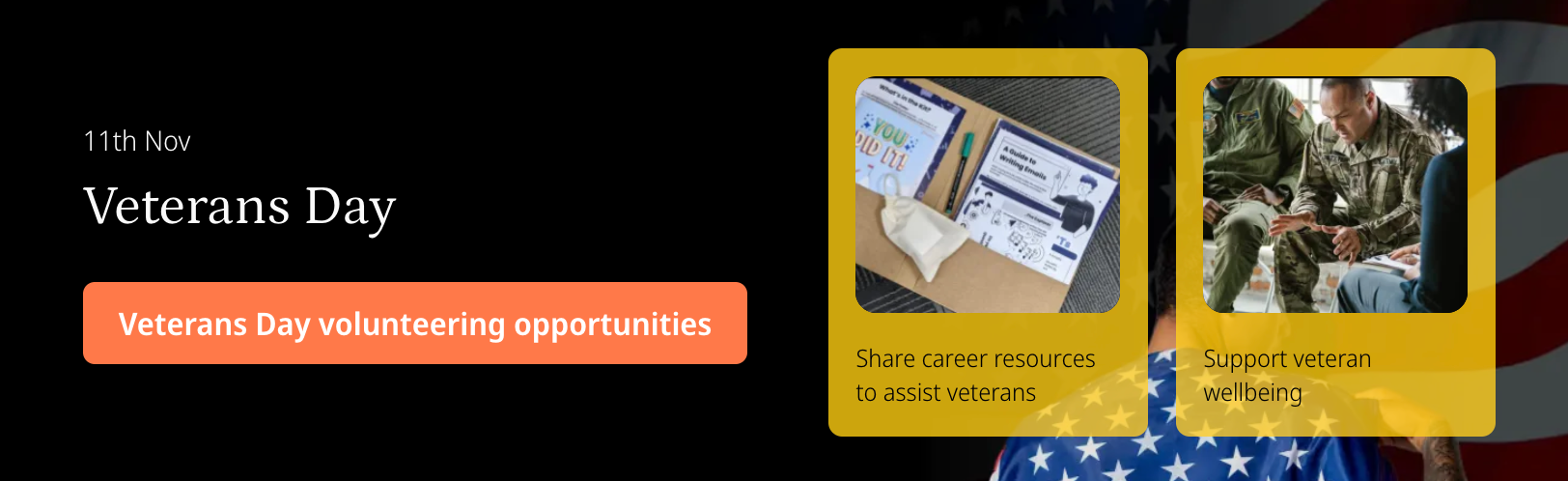
These programs are available year-round, not just on November 11th, reflecting the reality that veterans' needs do not follow a seasonal calendar. For a deeper look at how to turn appreciation into action, Goodera's Veterans Day volunteering ideas blog offers a full guide to meaningful engagement.
5. For Those Who Want to Support Environmental Causes: Gardening programs, urban greening projects, park and trail maintenance, tree planting, and environmental education are all well-suited to older adults who want to combine physical activity with purposeful outdoor work. Many of these programs are designed to be accessible at different mobility levels and can be organized as team volunteer days for groups of retirees.

6. For Those Who Want to Work From Home: The growth of virtual volunteering has been particularly significant for older adults. Options include transcribing historical documents, creating accessible content for people with disabilities, recording audiobooks, providing virtual tutoring, and supporting nonprofit operations remotely.
Goodera's virtual volunteering blog highlights virtual programs specifically for seniors, including audiobook recording for elderly individuals who are visually impaired or have limited mobility, with research showing that engaging in literary activities can enhance cognitive function by up to 35% and significantly reduce feelings of loneliness.
Volunteering With the Elderly: An Action Plan for Individuals and Organizations
While much of this guide has focused on older adults as volunteers, the other side of this relationship is equally important: people who want to volunteer with the elderly and organizations looking to serve older communities.
Volunteering with older people is one of the most consistently meaningful experiences available to individuals of any age. It is also one of the most needed. Here is what effective elderly volunteering looks like in practice:
1. Companionship Visits
Regular visits to seniors in care facilities, nursing homes, or their own homes. These are not about bringing anything except time, attention, and genuine conversation. For many older adults, a weekly visit from a volunteer is the most anticipated event of their week. The impact on mood, cognitive engagement, and sense of connection is well-documented.
2. Technology Support
Growing concerns around digital inequity among older adults have highlighted the need for better access to technology across all ages. Helping a senior navigate a smartphone, set up video calls to stay connected with family, or access telehealth services is one of the most practical and lasting contributions a volunteer can make.
3. Meal Delivery and Food Support
Programs like Meals on Wheels deliver not just nutrition but the daily human contact that reduces isolation for homebound seniors. Volunteer drivers and meal preparers are consistently among the most needed roles in elderly support organizations across the country.
4. Intergenerational Programs
Structured programs that pair younger volunteers with older adults for shared activities, whether that is storytelling, arts and crafts, gardening, cooking, or skill sharing, create benefits for both parties. The research on intergenerational programs consistently shows improvements in well-being, reduced loneliness, and stronger community cohesion.
For organizations looking to build structured elderly volunteering programs, Goodera's year-round volunteer campaigns include dedicated programming to promote well-being among the elderly, available as both virtual and in-person engagements across the calendar year.
Volunteer Work for Older Adults: Formal Programs Worth Knowing
Several national programs have been specifically designed to connect older adults with meaningful volunteer opportunities. These are worth knowing whether you are a retiree looking to get involved or an organization looking to recruit experienced volunteers.
1. RSVP (Retired and Senior Volunteer Program)
Part of AmeriCorps Seniors, RSVP matches volunteers aged 55 and older with service opportunities in their communities, from food banks to schools to disaster response. The program works by understanding a volunteer’s interests and connecting them with nonprofits that need those skills. Volunteers do not need to be computer-savvy; paper applications are available, and the onboarding process is simple.
2. Foster Grandparent Program
Also part of AmeriCorps Seniors, this program places older volunteers in one-on-one mentoring relationships with children who need additional support. It is one of the strongest intergenerational programs available and consistently shows significant benefits for both the children served and the older volunteers involved.
3. Senior Companion Program
Designed specifically for seniors who want to support other older adults, this program pairs volunteers with homebound seniors for regular companionship visits and practical assistance. The mutual benefit is well documented: both the companion and the person being visited tend to report lower loneliness and improved well-being over time.
4. Experience Corps
An AARP program that places older adult volunteers in elementary schools to support literacy and learning. Evidence from the program's evaluation consistently shows cognitive benefits for older adult participants alongside academic gains for the children they support.
5. Meals on Wheels
One of the most widely recognized elderly volunteering programs in the country. Volunteer drivers and meal preparers are needed across virtually every community. The program's impact extends well beyond nutrition to the daily human connection that many homebound seniors cannot otherwise access.
Volunteering to Help Seniors: How Organizations Can Show Up Better
For nonprofits, community organizations, and corporate teams looking to volunteer with and for older adults, a few principles consistently separate the most impactful programs from the well-intentioned ones that fall short.
1. Ask What Is Actually Needed
The most common mistake in elderly volunteering programs is designing activities around what volunteers enjoy rather than what older adults need. A visit from a group of corporate volunteers is valuable. A visit that includes something the resident genuinely wants, whether that is a card game, a garden walk, or a technology lesson, is transformational.
2. Show Up Consistently
For many older adults, the hardest part of receiving volunteer support is the unpredictability. A volunteer who visits twice and then disappears creates disappointment that is harder to recover from than never having a visitor at all. The programs that make the biggest difference are the ones built around a consistent, reliable presence over time.
3. Train Volunteers for the Reality of the Work
Volunteering with the elderly can include interactions with dementia, grief, physical frailty, and profound loneliness. Volunteers who are prepared for these realities, who have been given basic training in communication, patience, and how to respond with dignity to difficult moments, serve far more effectively than those who arrive with only enthusiasm.
4. Measure Beyond the Visit Count
The most meaningful metrics in elderly volunteering are not how many volunteers showed up or how many hours were logged. They are whether the older adults served report less loneliness, a greater sense of connection, and improved well-being over time. Building those outcome measures into your program design from the start is what transforms a well-meaning initiative into an evidence-backed one.
For teams looking to build structured, impactful volunteering programs for seniors, Goodera's Veterans Day activities page includes specific activities for supporting veteran seniors, while the broader Goodera volunteer opportunities platform allows organizations to discover, plan, and host senior-focused volunteering experiences both virtually and in person.
Final Thoughts
The research, the lived experience, and the common sense all point in the same direction. Older adults who volunteer live longer, feel better, experience less loneliness, and bring an irreplaceable combination of wisdom, patience, and commitment to the communities they serve. And the communities that welcome them as volunteers, rather than only as beneficiaries, are the ones that thrive.
Whether you are a retiree looking for your next chapter, a family member trying to support an older loved one, or an organization building programs for or with older adults, the starting point is the same: show up. Find the role that fits. Keep going.
That is, as it turns out, most of what it takes.
Frequently Asked Questions
1. What are the best volunteer opportunities for seniors?
The best opportunities are the ones that match a senior's existing skills, personal interests, and physical capacity. Tutoring and mentoring programs are ideal for former educators. Skills-based roles suit professionals with specific expertise. Companionship programs and Meals on Wheels suit those who prioritize human connection. Virtual options are increasingly available and high-quality for those with mobility limitations. The most important factor is consistency: regular engagement produces far stronger health and well-being benefits than occasional participation.
2. What are the health benefits of volunteering for older adults?
The research is extensive and consistent. Volunteering is associated with reduced hypertension and chronic inflammation, improved stress regulation, better cognitive function, and greater independence in performing daily activities, according to a 2025 study in Social Science & Medicine. Older adult volunteers also show lower rates of depression and anxiety, reduced loneliness, and, in longitudinal studies, lower mortality rates than non-volunteers, even after controlling for age and existing health.
3. How many hours per week should a senior volunteer?
The research points to 2 to 4 hours per week as the threshold for measurable, sustained wellbeing benefits. This is an accessible commitment for most older adults and does not require a significant restructuring of daily life. The key is regularity rather than volume: a consistent two-hour weekly commitment produces better outcomes than a once-monthly four-hour burst.
4. Are there volunteer opportunities for seniors who cannot leave their homes?
Yes, and this category has grown significantly. Virtual volunteering options include audiobook recording for visually impaired individuals, online tutoring and mentoring, transcription and data entry for nonprofits, virtual companionship programs, and remote skills-based consulting.
Goodera's virtual volunteering catalog offers a range of options accessible entirely from home.
5. How can organizations recruit older adult volunteers effectively?
Meet older adults where they already gather: senior centers, faith communities, libraries, and retirement communities. Partner with programs like RSVP, which already have relationships with older volunteers and can handle matching and onboarding. Make the volunteer role flexible, accessible, and clearly described in terms of time commitment and physical requirements. And communicate impact: older adults who can see the difference their contribution makes are far more likely to continue and to recruit others.
6. What is the difference between volunteering for seniors and volunteering with seniors?
Volunteering for seniors means providing services that benefit older adults directly: companionship visits, meal delivery, technology support, and transportation. Volunteering with seniors means participating alongside older adults as co-volunteers, in programs like RSVP or intergenerational community projects where seniors and younger people work together toward a shared goal. Both models produce meaningful benefits, and many programs incorporate elements of both.
7. What are examples of volunteer programs designed for older adults?
Common programs include foster grandparent initiatives pairing seniors with at-risk children, phone reassurance calls to isolated peers, community gardening, youth mentoring, disaster response coordination, and tax preparation assistance through IRS VITA. Many nonprofits also run technology tutoring, meal delivery routes, and companionship visits. Programs like Senior Corps in the US formalize these roles with modest stipends and structured schedules.
8. How does volunteering help combat loneliness in older adults?
Regular volunteering builds sustained social contact, purpose, and belonging, which the US Surgeon General cited when declaring loneliness a public health epidemic in 2023. A 2025 Social Science & Medicine study links volunteering to better stress regulation and cognitive function, while Senior Corps research documented reduced depression among participants. Weekly commitments create predictable relationships that counter the 29.2% isolation rate among adults 50-80.
9. Can seniors volunteer virtually or from home?
Yes, homebound seniors can tutor students online, staff crisis text lines, transcribe historical documents, provide phone reassurance to other isolated adults, or share professional expertise through skills-based platforms. Virtual roles remove mobility and transport barriers while preserving social connection. Many programs pair phone-based buddies on weekly calls, and organizations increasingly train older volunteers on video conferencing for remote mentoring and companionship shifts.
10. How can companies include retirees in Corporate Volunteering programs?
Alumni volunteer programs let former employees join active staff on service days, mentor early-career hires, or lead skills-based projects for nonprofit partners. Structured offerings work best when retirees can choose in-person or virtual shifts across time zones. Goodera curates activities designed for mixed generations across 100+ countries, so alumni and employees can serve together without heavy internal coordination.