12+ Employee Engagement Ideas To Make a Difference in 2026

There is a version of work that looks fine on the surface.
Deadlines are met. Meetings are fruitful. Teams are delivering whatever's asked of them. The revenue numbers are scaling.
Take a longer glance at the daily deliverables, and a different story unfolds.
Energy feels inconsistent. People do what is required, but not always more. Not because they do not care, but because something has quietly shifted in how they experience work.
It is not loud enough to trigger alarms, but it is steady enough to affect outcomes over time. That is the space where employee engagement now sits. Not as an abstract concept sitting on your HR's KPIs, but as a very real factor shaping performance, retention, and how work is actually done.
Employee engagement is at a bit of a crossroads right now, and most leaders can feel it even before they see the data.
If you look at the latest findings from Gallup, the picture becomes hard to ignore. Only 21% of employees globally are engaged at work today, which is a drop back to levels we last saw during the disruption of 2020.
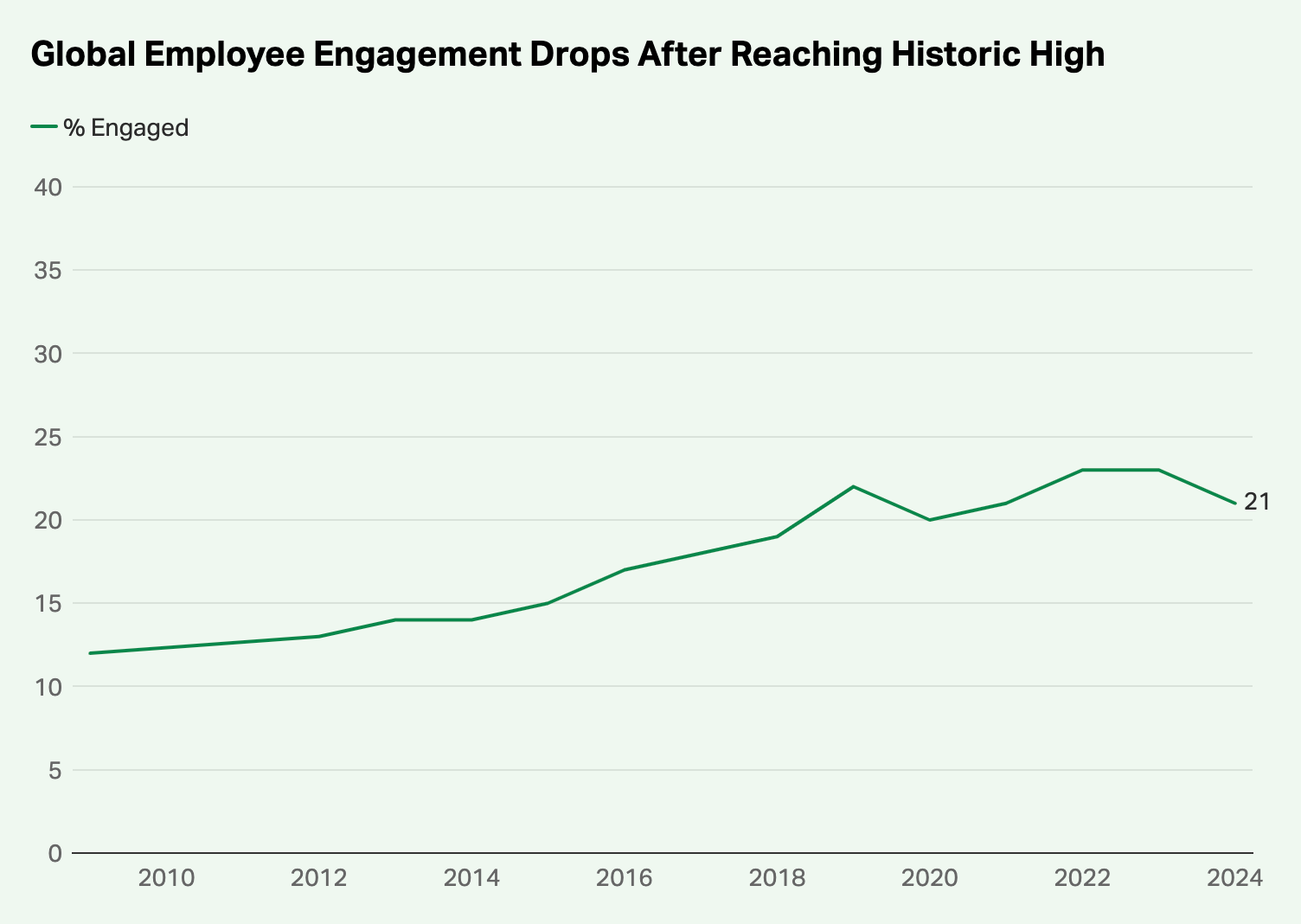
And this is not just an HR metric quietly sitting in a dashboard somewhere. It shows up directly in business performance. The same research estimates that disengagement is costing the global economy $438 billion in lost productivity every year.
Put simply, most organizations are operating with a significant portion of their workforce not fully invested in the work they are doing.
Why This Matters More Than Ever
What makes this moment different is not just the decline, but the context around it. Engagement has only dropped twice in over a decade, once during the peak of COVID disruption, and now again.
That tells us something important. This is not a temporary dip. It is a structural shift in how employees are experiencing work.
The encouraging reality is that engagement is no longer a vague concept. The core drivers are well established. Employees are far more likely to be engaged when they feel recognized for their contributions, connected to a clear purpose, supported in their growth, and trusted by their managers. Organizations that get these fundamentals right consistently outperform on retention, productivity, and team performance.
This guide is designed to be a practical resource. Inside, you will find 12+ employee engagement ideas that work, grounded in research and built for real-world execution across remote, hybrid, and in-office teams. Each idea goes beyond surface-level suggestions. You will understand why it works, where it fits within a broader employee engagement action plan, and how to apply it effectively within your organization.
What is Employee Engagement?
Employee engagement is, at its core, about connection.
It is the emotional and mental commitment people feel toward their work, their team, and the organization. Not just whether they are satisfied, but whether they actually care about outcomes.
That distinction matters more than most teams realize.
Someone can be perfectly satisfied with their role, a good manager, flexible hours, fair pay, and still feel largely indifferent about whether the company succeeds. Satisfaction is passive. Engagement shows up in behavior.
You see it in what is often called discretionary effort. A leader staying back to resolve a client issue, a team member mentoring someone without being asked, or someone speaking up with an idea that challenges the status quo. None of this is mandated, yet it is exactly where performance gains are created.
That is why the conversation around employee engagement ideas has shifted so much in recent years. Leaders are no longer asking how to keep employees happy. They are asking how to build environments where people choose to go the extra mile.
12+ Best Employee Engagement Ideas That Actually Work
These ideas are organized into six proven categories, from recognition and communication to well-being and professional growth. Each one is backed by data and real-world application.
Category 1: Recognition And Appreciation
There are days at work that feel heavier than they should.
Your calendar is packed, deadlines keep stacking, and by the end of the day, it is hard to tell what actually made a difference. You are delivering, responding, solving, yet a quiet question creeps in: Am I doing enough? Does this really matter?
Most high-performing employees do not need recognition to do their jobs. They show up and take ownership regardless. But even the best teams have moments of fatigue and self-doubt, especially during long stretches of pressure.
And then something small cuts through.
A manager acknowledging a tough situation you handled well. A peer calling out the clarity you brought to a meeting. A simple, specific note that says, “it mattered.”
It does not reduce the workload, but it changes how the work feels. It replaces doubt with clarity, and often, a renewed sense of momentum.
That is what makes recognition one of the most effective employee engagement ideas that work. Not because people need praise to perform, but because, on the toughest days, being seen makes all the difference.
Idea #1: Build A Frequent, Real-Time Recognition Program
Recognition continues to be one of the most powerful and most underutilized employee engagement ideas.
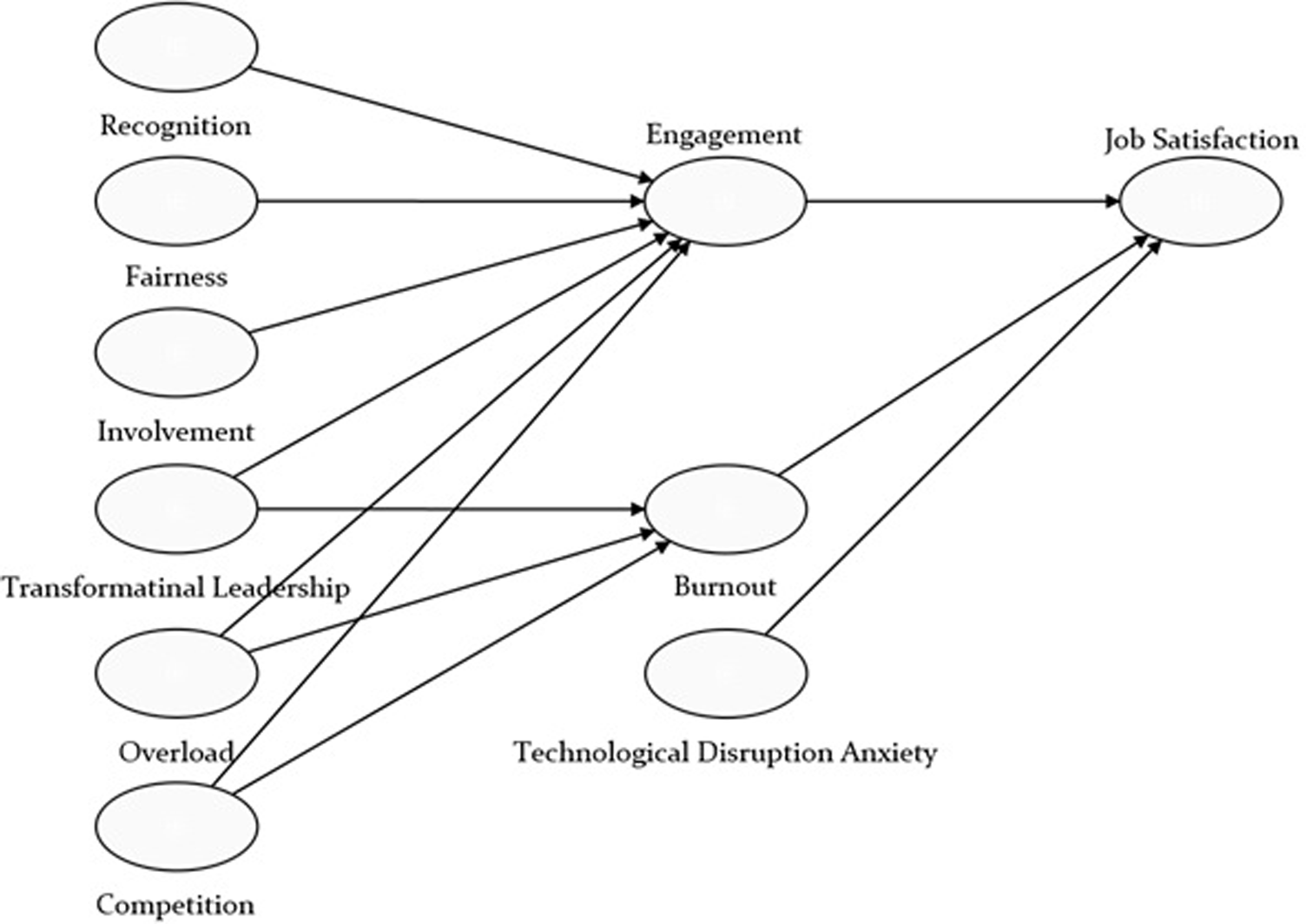
A large-scale study published in PLOS ONE, analyzing over 25,000 employees, found that recognition has a measurable impact on both higher engagement and lower burnout levels. In one biopharmaceutical organization included in the study, recognition had a stronger effect on engagement than compensation changes.
How to implement it:
- Give managers a monthly micro-budget for spot recognition
- Enable peer-to-peer recognition through tools like Bonusly or Kudos
- Create a “wins” channel in Slack or Teams where achievements are shared in real time
- Celebrate milestones, not just performance, including work anniversaries and personal achievements
Key principle: Smaller, timely recognition consistently outperforms large, delayed rewards.
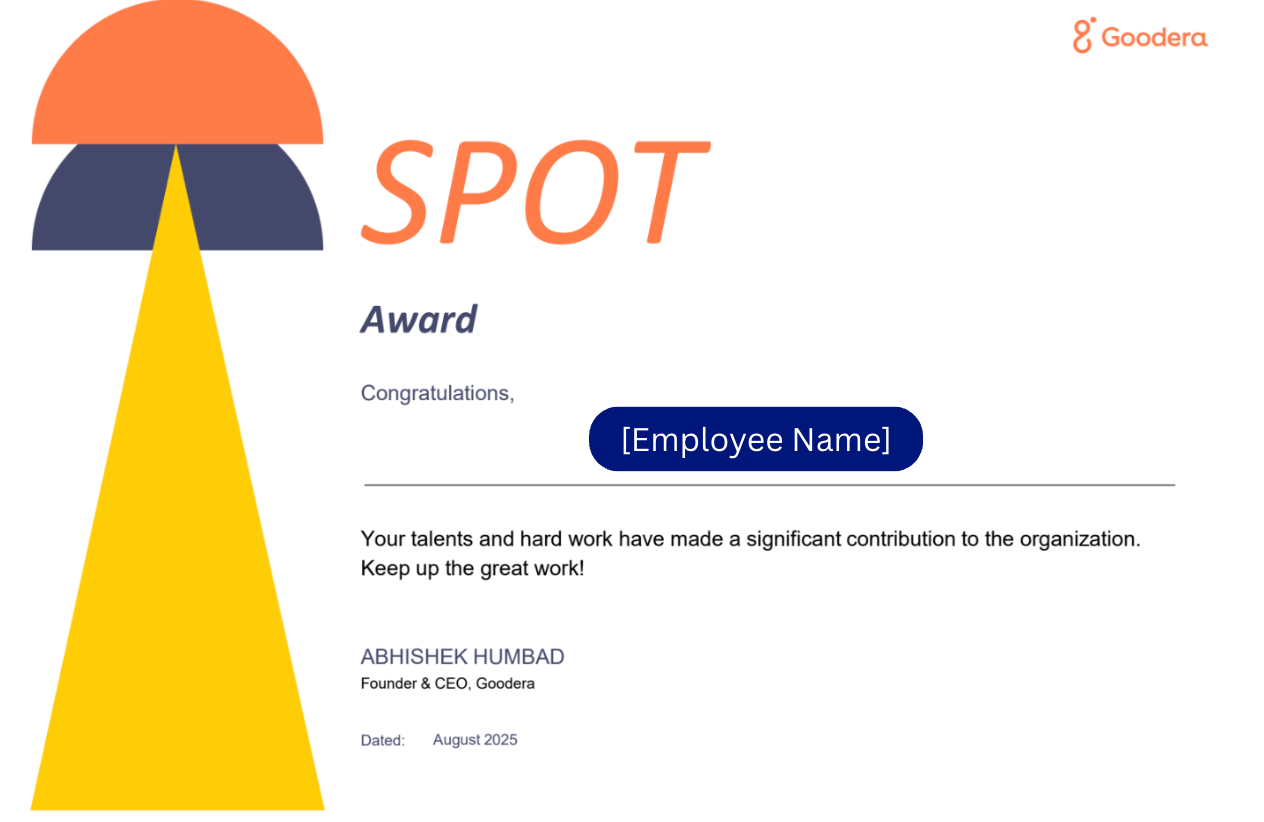
For example, Goodera runs an internal SPOT Award program where each team nominates one standout employee every month. The recognition is shared during the company-wide all-hands, along with a personalized note highlighting their specific contributions, and is paired with a gift voucher for them to treat themselves.
Idea #2: Create An Employee Spotlight Program
Sometimes, engagement is about visibility.
An employee spotlight program creates space to recognize individuals beyond metrics and deliverables. It reinforces that people are valued not just for what they produce, but for who they are and how they contribute.
How to implement it:
- Feature one employee weekly or monthly in internal communications
- Include their role, current work, a personal insight, and peer recognition
- Rotate across teams to ensure diverse representation
- Extend recognition externally through platforms like LinkedIn
This is a low-cost but high-impact employee engagement event idea that builds morale and strengthens internal culture over time.
Category 2: Social Impact And Purpose
For many employees today, engagement is no longer just about the work itself. It is about the impact that work enables.
Idea #3: Give Employees Volunteer Days And CSR Opportunities
Social impact is one of the most underleveraged employee engagement ideas today. When employees connect their work to a broader purpose, engagement deepens in a way traditional programs often cannot achieve.
Goodera’s Volunteering Quotient (VQ) Reports show that structured corporate volunteering programs significantly enhance engagement. Companies that offer enablers like Volunteer Time Off and Dollars for Doers see 1.5x higher participation rates, with 20 to 25.6% workforce participation and average volunteer hours of 7.2 per employee. These programs consistently drive stronger loyalty, purpose, and culture.
High-Impact Volunteering Ideas Across Formats
If you are building employee engagement activity ideas around social impact, depth matters just as much as variety. The most effective programs are designed with clear intent, not just participation in mind.
1. Skill-Based Volunteering (Virtual Or In-Person)
Skill-based volunteering taps into what your employees already do best and applies it to real-world challenges.
Instead of general volunteering, employees contribute their professional expertise to nonprofits that need it but often cannot afford it. This could mean a marketing team helping a nonprofit refine its campaign strategy, a finance team supporting budgeting and forecasting, or engineers building digital tools.
What makes this powerful is the level of ownership it creates. Employees are not just participating, they are solving meaningful problems.
Also Read: Empowering Communities Through Skills-Based Volunteering
How to run it effectively:
- Identify nonprofit partners with clearly defined needs
- Match projects to employee skill sets, not just availability
- Set timelines and deliverables, similar to internal projects
- Recognize contributions formally to reinforce impact
Why it works: It combines purpose, mastery, and autonomy, three key drivers of engagement. It is also one of the most impactful ideas for employee engagement for mid-to-senior talent.
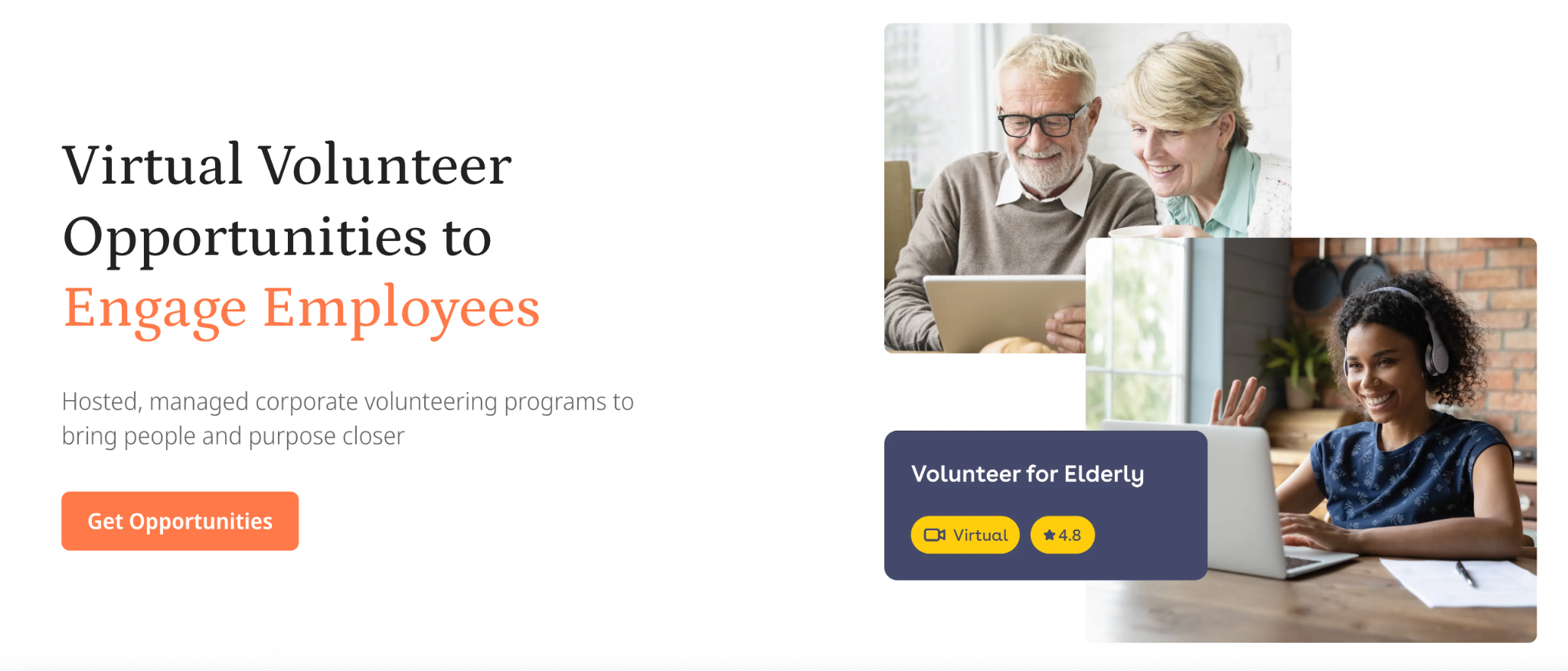
2. Micro-Volunteering And Virtual Volunteering
Not every employee can commit to a full day of volunteering. That is where micro-volunteering becomes essential.
These are short, flexible activities that can be completed in 15 to 60 minutes, often remotely. Examples include reviewing resumes for job seekers, recording audiobooks for visually impaired individuals, or translating educational content.
This format lowers the barrier to entry significantly.
How to run it effectively:
- Offer a library of always-available opportunities
- Integrate volunteering into existing workflows, such as dedicating one hour per month
- Encourage team participation during low-intensity work periods
Why it works: Accessibility drives participation. This is one of the most scalable employee engagement ideas because it meets employees where they are, especially in hybrid and global teams.
3. Team-Based Volunteer Days (In-Person Or Hybrid)
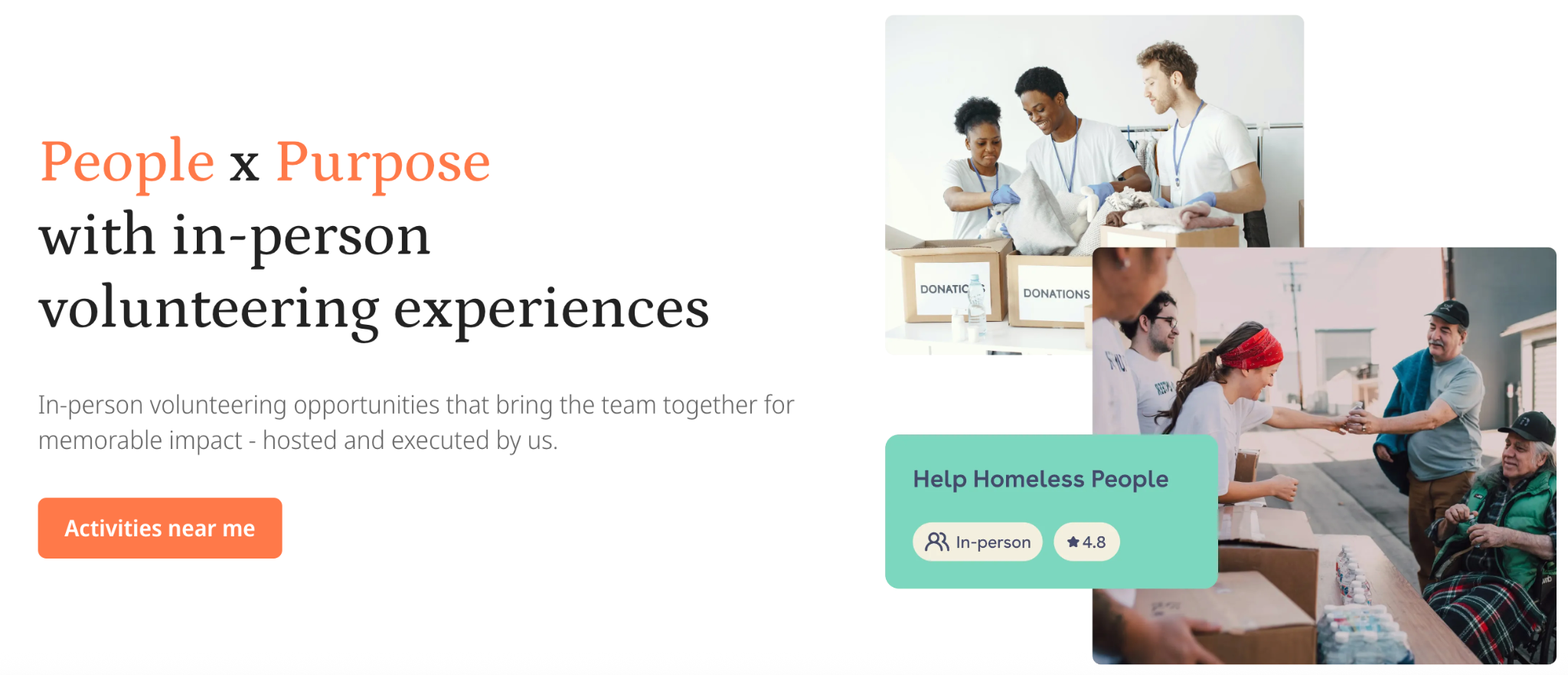
These are structured, shared experiences where teams come together to contribute to a cause.
It could be a group volunteering at a food bank, participating in a tree-planting initiative, or supporting a local school. The key is that it is done together.
Unlike individual volunteering, the value here is as much about connection as it is about impact.
How to run it effectively:
- Align activities with company values or key CSR themes
- Schedule during work hours to signal organizational commitment
- Include a short reflection or debrief session after the activity
Why it works: It blends purpose with team bonding, making it one of the most effective employee engagement event ideas. Teams that volunteer together often collaborate better afterward.
4. Cause Campaigns And Giving Challenges
Cause campaigns create a sense of momentum and shared purpose across the organization.
These are typically time-bound initiatives, such as a month-long hunger relief drive, a climate action campaign, or a back-to-school donation program. They often combine volunteering, fundraising, and awareness.
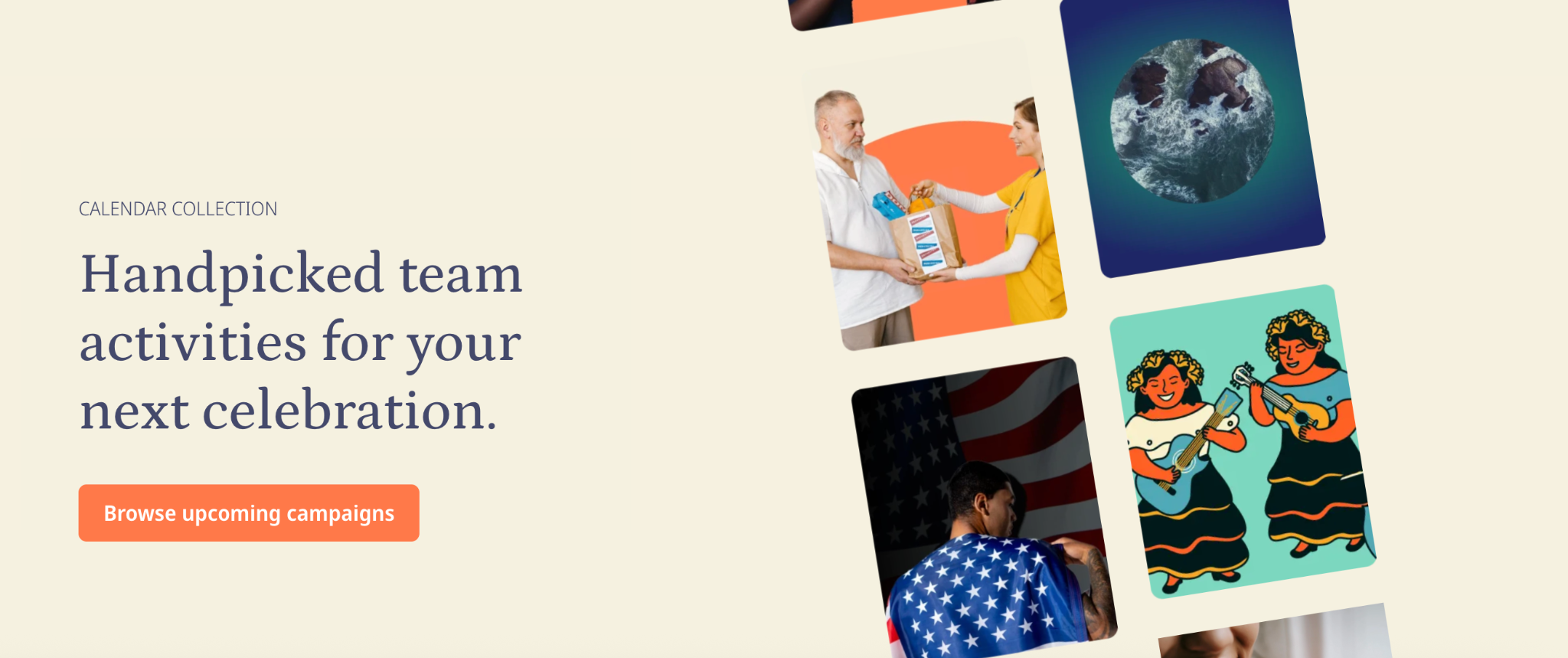
Many organizations align these campaigns with key moments across the year, from Women’s History Month and Hispanic Heritage Month to Earth Month, disaster relief efforts, Thanksgiving volunteering, and back-to-school drives. This alignment not only increases participation but also connects employee efforts to larger, widely recognized causes.
How to run it effectively:
- Set a clear goal, such as meals donated or funds raised
- Use gamification, such as team challenges or leaderboards
- Share progress updates regularly to maintain momentum
- Celebrate outcomes visibly at the end of the campaign
Note: Goodera can help you plan, ideate, execute and measure volunteering events and their impact in 4 easy steps.
Why it works: Campaigns create urgency and visibility. They are some of the most engaging employee engagement activity ideas because they bring the entire organization together around a common goal.
5. Year-Long Employee Volunteering Opportunities
One-off events are valuable, but sustained engagement requires continuity.
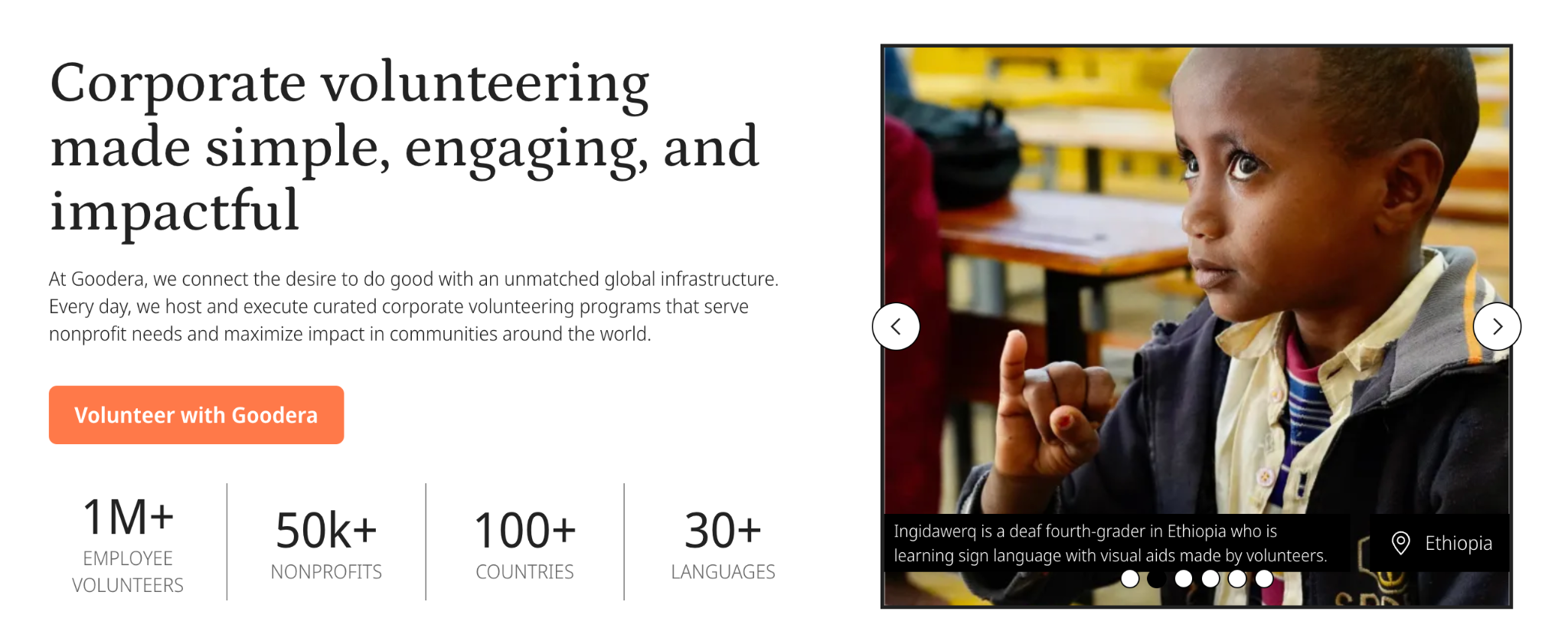
Always-on platforms provide employees with ongoing access to curated volunteering opportunities, both virtual and in-person. This allows employees to participate when it fits their schedule, rather than waiting for organized events.
Platforms like Goodera make this scalable across geographies and team sizes.
How to run it effectively:
- Integrate the platform into internal systems for easy access
- Highlight featured opportunities regularly in internal communications
- Track participation and recognize consistent contributors
- Offer paid volunteer days annually
- Introduce donation matching programs
- Let employees nominate causes
Why it works: It embeds purpose into everyday work life. This shifts volunteering from a one-time activity to a sustained engagement driver, making it one of the most effective employee engagement action plan ideas.
Each of these formats serves a different need, participation, flexibility, connection, or depth. The strongest programs do not choose one, they combine multiple formats to create a well-rounded social impact strategy.
Category 3: Professional Growth And Development
Idea #4: Build Personalized Learning And Development Paths
Development remains one of the largest gaps in most organizations.
Data from Gallup shows that only about 30% of employees strongly agree that someone at work encourages their development. At the same time, research from LinkedIn finds that companies investing in learning see significantly higher retention.
How to implement it:
- Offer structured learning budgets
- Use scalable platforms like Coursera or LinkedIn Learning
- Build personalized development plans tied to career goals
Google popularized the concept of “20% time,” where employees were encouraged to spend a portion of their workweek exploring projects outside their core responsibilities.
What made this powerful was not just the flexibility, but the signal it sent. The organization trusted employees to pursue ideas they found meaningful, even if those ideas did not have immediate business outcomes.
In practice, this led to the creation of products like Gmail and Google Maps. But beyond innovation, the deeper impact was on engagement. Employees felt a stronger sense of ownership, autonomy, and creative freedom.
For leaders thinking about employee engagement ideas that work, the takeaway is not to replicate the exact model, but to create structured space for exploration. Even small pockets of time dedicated to learning, experimentation, or passion projects can significantly improve motivation, retention, and long-term performance.
Idea #5: Launch An Internal Mentorship Program
Mentorship sits at the intersection of growth, belonging, and retention. Employees with mentors are more likely to feel supported and stay longer, making this one of the best employee engagement ideas for long-term impact.
How to implement it:
- Match employees based on goals and interests
- Set a structured cadence for sessions
- Encourage cross-functional pairings
Mentorship programs are one of the most effective ways to build a strong, connected culture across levels.
They create structured opportunities for knowledge transfer, accelerate leadership development, and strengthen cross-functional relationships. Over time, this leads to better collaboration, higher retention, and a more resilient talent pipeline within the organization.
Idea #6: Host Monthly Lunch-And-Learn Sessions
A lunch-and-learn is a simple, structured session where employees come together for 30 to 60 minutes, typically over lunch, to learn something new in a relaxed setting. The format is intentionally light. One person, either an internal team member or an external speaker, shares insights on a topic while others join in, listen, and often participate in discussion.
What makes this format effective is its accessibility. It does not require extensive planning, large budgets, or time away from core work. It fits naturally into the workday while still creating space for learning.
Over time, these sessions do more than just transfer knowledge. They help break down silos by giving teams visibility into each other’s work. They create opportunities for employees to step into teaching or storytelling roles, which builds confidence and recognition. They also introduce moments of informal connection, which are often missing in structured work environments.
There is also a compounding effect. When learning becomes visible and shared, it signals that growth is part of the culture, not an occasional initiative.
How to implement it:
- Rotate presenters across teams to diversify perspectives
- Mix professional and personal topics to keep sessions engaging
- Offer stipends for remote employees so participation feels inclusive
Simple formats like this often see the highest participation because they feel easy to join, relevant, and immediately valuable.
Category 4: Wellbeing And Work-Life Balance
Idea #7: Introduce Flexible Work Arrangements
Flexibility has shifted from a benefit to an expectation.
Research from CIPD shows that 78% of employees report improved wellbeing with flexible work. Data from FlexJobs indicates that 30% of employees have left roles due to lack of flexibility. This makes flexibility one of the most cost-effective ideas to improve employee engagement.
How to implement it:
- Offer flexible hours and hybrid options
- Define core collaboration hours
- Allow autonomy in how work is structured
Flexibility signals trust, and trust directly impacts employee sentiment and engagement.
Idea #8: Launch A Wellbeing Program That Goes Beyond The Gym
Wellbeing is now directly tied to performance.
According to Deloitte, organizations that prioritize employee wellbeing see improvements in productivity, retention, and overall performance.
How to implement it:
- Introduce meeting-free time blocks
- Provide access to mental health tools
- Partner with wellness providers to facilitate confidential one-on-one sessions, giving employees safe, private access to support when they need it
The key is to keep participation voluntary and supportive.
Category 5: Team Building And Connection
Idea #9: Run Structured Team-Building Activities
Human connection remains the foundation of engagement.
When people feel genuinely connected to their teams, work becomes easier to navigate. Collaboration is more fluid, feedback is more open, and decisions move faster because there is already a baseline of trust. In contrast, even highly capable teams struggle when that connection is missing. Work becomes transactional, communication becomes cautious, and small misalignments take longer to resolve.
That is why structured team-building efforts continue to matter. Not as one-off events, but as intentional moments that help people interact beyond immediate deliverables.
Well-designed team experiences create space for informal conversations, shared problem-solving, and a sense of familiarity that carries back into day-to-day work. Over time, this leads to stronger alignment, higher morale, and more resilient teams, especially in hybrid and distributed environments.
The key is to maintain a balanced mix:
- In-person experiences such as offsites, team challenges, or collaborative workshops help deepen relationships through shared physical presence and focused time together
- Virtual formats like trivia, coffee chats, or interactive sessions ensure that remote and distributed teams have consistent opportunities to connect
What matters most is not scale or complexity, but consistency. Smaller, regular interactions tend to build stronger connections than occasional large events.
Idea #10: Create Interest-Based Communities
People engage more when they can show up as themselves.
Interest-based groups, from book clubs to fitness communities, create informal connections that strengthen belonging.
These are often overlooked ideas for employee engagement, yet they drive sustained cultural impact.
Category 6: Leadership, Autonomy And Execution
Idea #11: Connect Work To Organizational Purpose
Purpose becomes real at the team level, not in mission statements.
Most organizations have a well-articulated mission. The gap is not in defining purpose, it is in translating it into everyday work. For many employees, especially in complex or fast-moving environments, that connection is not always obvious.
People are more engaged when they can clearly see how their work contributes to something meaningful. Not just in abstract terms, but in tangible outcomes, a customer problem solved, a community impacted, a product improved.
When that line of sight is missing, work can start to feel like a series of tasks. When it is clear, the same work carries a very different sense of ownership and motivation.
This is particularly important for high-performing teams. They are already capable of delivering results. What sustains their energy over time is understanding why those results matter.
How to make purpose visible in everyday work:
- Regularly share customer or end-user impact stories, not just metrics
- Connect team goals to broader organizational priorities in meetings and reviews
- Use frameworks like OKRs to show how individual contributions ladder up to company outcomes
- Recognize and celebrate behaviors that align with the organization’s mission, not just final results
When purpose is consistently reinforced at the team level, it stops being a statement and starts becoming part of how decisions are made and how work gets done.
Idea #12: Invest In Manager Training And Coaching
Managers remain the single biggest driver of engagement.
With 70% of engagement variance linked to managers, according to Gallup, this is one of the highest ROI investments.
Great managers create engaged teams. The reverse is also true.
Idea #13: Build A Real Employee Engagement Action Plan
Finally, no list of employee engagement ideas works without execution.
Most organizations are not short on ideas. What they often lack is a structured way to turn feedback into consistent, visible action. Without that, even well-designed initiatives lose credibility over time.
An effective employee engagement action plan does something simple but powerful. It creates a clear path from insight to outcome, and just as importantly, it makes that path visible to employees.
Because from an employee’s perspective, being asked for feedback is only valuable if something changes as a result.
What A Strong Action Plan Actually Does
A strong plan brings focus and accountability into the process. It helps leaders avoid trying to fix everything at once and instead concentrate on the areas that will have the most meaningful impact.
It also shifts engagement from being an HR-owned initiative to a shared responsibility across leadership and teams.
Core Steps To Build An Effective Plan
1. Measure Engagement Consistently
Start with a reliable baseline. This could be a detailed engagement survey or regular pulse checks. The goal is not just to collect data, but to identify patterns across teams, roles, and locations.
2. Identify Key Gaps
Look beyond overall scores. Where is engagement breaking down? Is it manager effectiveness, growth opportunities, workload, or communication? The more specific the insight, the more actionable the response.
3. Prioritize Focused Actions
Avoid the temptation to address everything at once. Select one or two high-impact areas per cycle. Focus creates clarity, and clarity increases the likelihood of execution.
4. Communicate Transparently
This is where many plans fall short. Share what you heard, even if the feedback is uncomfortable. Then clearly outline what will change and what will not, along with the reasoning.
A simple structure works well: “Here’s what you told us. Here’s what we are prioritizing. Here’s what comes next.”
5. Assign Ownership And Timelines
Every action should have a clear owner and a defined timeline. Without this, plans remain intent rather than execution.
6. Track Progress And Close The Loop
Regularly update employees on progress. Even small updates reinforce trust. Closing the loop is what turns engagement efforts into long-term credibility.
Why This Matters
Execution is what separates intent from impact.
Organizations that see real improvements in engagement are not the ones running the most programs. They are the ones that consistently listen, prioritize, act, and communicate.
Over time, this builds a culture where employees believe their voice matters, and that belief, more than any single initiative, is what sustains engagement.
How Do You Measure Employee Engagement?
You can't improve what you don't measure. The most useful employee engagement metrics to track include:
- eNPS (Employee Net Promoter Score): "On a scale of 1–10, how likely are you to recommend this company as a great place to work?"
- Pulse survey scores: Tracked over time to identify trends, not just snapshots
- Voluntary turnover rate: High turnover is often the first measurable sign of disengagement
- Absenteeism rate: Disengaged employees take more unplanned leave
- Participation rates: In surveys, town halls, learning programs — low participation signals low engagement
- Manager effectiveness scores: From 360-degree feedback processes
Review these metrics quarterly at minimum, and share results across the leadership team.
What Employee Engagement Ideas Work Best for Remote and Hybrid Teams?
Remote and hybrid engagement requires intentional structure. Connection doesn't happen by accident when people aren't in the same room.
According to ContactMonkey's GSIC 2026 report, 57% of organizations employ deskless or frontline workers, underscoring the urgent need for reliable, mobile-optimized communication channels.
The most effective ideas for remote and hybrid teams include:
1. Virtual Coffee Chats
These are short, informal 15-minute conversations between randomly paired employees, with no agenda attached.
The goal is not productivity, it is familiarity. In distributed environments, people rarely interact outside their immediate teams. Over time, that creates silos and weakens organizational cohesion.
Virtual coffee chats reintroduce the kind of spontaneous interactions that naturally happen in an office setting.
How to make them work:
- Automate pairings across teams or geographies
- Keep them optional but encouraged
- Provide light prompts for those who prefer structure
Why it matters: Small, consistent interactions build trust faster than occasional large events.
2. Asynchronous Recognition
Recognition in remote teams cannot rely on in-person moments. It needs to be visible, timely, and accessible across time zones.
Asynchronous formats, such as Slack shoutouts, short video messages, or digital appreciation cards, allow recognition to happen without requiring everyone to be online at the same time.
How to make it effective:
- Create dedicated channels for recognition
- Encourage peer-to-peer participation, not just manager-led
- Tie recognition to values or specific contributions
Why it matters: Visibility replaces proximity. When people see their work being acknowledged, even asynchronously, it reinforces belonging.
3. Home Office Stipends
Remote work shifts the responsibility of the work environment to the employee. Without support, this can directly impact comfort and productivity.
Offering a structured stipend, typically in the range of $500 to $1,000 annually, allows employees to invest in ergonomic chairs, desks, lighting, or other essentials.
Buffer's State of Remote Work report indicates that 20% of remote workers experience increased burnout compared to the previous year, often linked to physical strain and focus challenges that undermine sustained wellbeing.
Why it matters: Practical support signals that the organization is invested in the employee’s day-to-day experience, not just their output.
4. Virtual Team Rituals
Rituals create consistency in environments that can otherwise feel fragmented.
These are small, repeatable moments built into the team’s routine. A weekly opener question, a Friday wins round-up, or a quick Monday check-in.
They are not time-intensive, but they create a shared rhythm that helps teams stay connected.
How to make them stick:
- Keep them short and predictable
- Rotate ownership so different voices are included
- Avoid over-engineering, simplicity drives adoption
Why it matters: Rituals create a sense of continuity, which is critical for engagement in distributed teams.
5. Overlapping Core Hours
One of the biggest challenges in remote and hybrid work is coordination across time zones and schedules.
Establishing 2 to 3 hours of overlapping core working time ensures there is a predictable window for real-time collaboration, decision-making, and problem-solving.
Outside of these hours, employees retain flexibility for focused work.
How to implement it:
- Align core hours across regions where possible
- Use this time for meetings and collaborative work
- Protect non-core hours for deep work
Together, these approaches address the core gaps in remote work, connection, visibility, structure, and support, making them some of the most reliable ways to sustain engagement across distributed teams.
Key principle: The goal isn't to replicate the office online, it's to create new, meaningful ways of connecting that are native to the digital environment.
Employee Engagement Ideas by Budget
This is where many engagement efforts start to lose momentum, not because the ideas are weak, but because the follow-through is inconsistent. Without a clear plan, even the best ideas tend to fade over time.
Low-Cost Employee Engagement Ideas (Free–$50/month)
- Peer-to-peer shoutouts in Slack or Teams
- Monthly spotlight newsletter feature
- Lunch-and-learn sessions (internal presenters only)
- Virtual trivia or quiz nights
- Ask-Me-Anything sessions with leadership
- Interest-based Slack communities
- Structured one-on-one meetings
Mid-Range Employee Engagement Ideas ($50–$500/month)
- Pulse survey tools (Culture Amp, Lattice)
- Monthly micro-bonus recognition budget
- Virtual escape rooms or activity platforms
- Online learning platform subscriptions
- Monthly virtual team activities (cooking class, art session)
High-Impact Investment Ideas ($500+/month or annual programs)
- Annual learning and development budget per employee
- Formal mentorship program with dedicated tooling
- Comprehensive wellbeing stipend
- Team off-sites or retreats
- External manager coaching programs
What Are the Main Drivers of Employee Engagement?
If engagement feels complex, the drivers behind it are surprisingly consistent.
Across multiple studies, four needs show up repeatedly: purpose, autonomy, belonging, and mastery.
- People want to understand why their work matters
- They want a degree of control over how they do it
- They want to feel part of a team that values them
- And they want to grow, not stay static
When these are present, engagement tends to follow. When they are missing, disengagement rarely announces itself loudly; it spreads quietly across teams.
What is more concerning is how often organizations misread these drivers.
Research from Deloitte highlights a clear disconnect. While 78% of employees say they understand what motivates them, only 33% strongly believe their managers or organizations understand those motivations.
That gap is where many well-intentioned ideas to improve employee engagement start to fall apart. The effort is there, but the alignment is not.
At the same time, Gallup finds that managers account for around 70% of the variance in team engagement.
That changes how you think about execution.
It means even the best employee engagement ideas will fall flat without capable, aligned managers. And it also means that some of the most effective employee engagement action plan ideas are not programs at all, they are investments in how managers lead, communicate, and support their teams every day
Why Is Employee Engagement Important?
At a leadership level, engagement stops being a cultural metric and starts becoming a performance lever.
Research from Gallup consistently shows a clear relationship between engagement and business outcomes. Highly engaged business units see:
- 23% higher profitability
- 18% higher productivity, measured through sales and output metrics
- Up to 59% lower turnover in low-turnover organizations
- 10% higher customer loyalty and engagement scores
- Significantly lower absenteeism, often cited as up to 78% lower in high-engagement environments
These are not marginal gains. They compound across teams, geographies, and business cycles.
So when leaders invest in employee engagement activities or larger employee engagement events, the goal is not participation for its own sake. It is to influence these exact outcomes in a sustained way.
In 2026, this becomes even more relevant. With ongoing conversations around quiet quitting, shifting expectations from work, and a more mobile workforce, engagement is increasingly tied to retention and performance stability.
Organizations that treat engagement as a strategic priority are not just improving culture. They are building a measurable competitive advantage.
Frequently Asked Questions
What are the most effective employee engagement ideas?
The most effective employee engagement ideas combine recognition, meaningful work, professional growth, and strong relationships with managers. Research consistently shows that recognition programs, flexible work arrangements, personalized development paths, and transparent leadership have the greatest impact on engagement scores.
How often should we run employee engagement activities?
A good cadence is one casual team activity per month, with a larger structured initiative, like a wellness challenge, hackathon, or team offsite, once per quarter. Pulse surveys should run every 2–4 weeks to track trends in real time.
What employee engagement ideas work best for a small team?
Small teams benefit most from frequent, personal recognition (verbal or written), structured one-on-ones, transparent communication from leadership, and informal team rituals like a Friday wins round-up or Monday check-in. Low-cost, high-connection activities work particularly well when budgets are lean.
How do you engage employees who work remotely?
Remote engagement requires intentional design. The most effective ideas include virtual coffee chats, async recognition via Slack, home office stipends, core collaboration hours, and virtual team events that are genuinely fun rather than obligatory. The key is consistency: remote employees need regular touchpoints to feel connected to the team and the mission.
What is an employee engagement action plan?
An employee engagement action plan is a structured process for measuring engagement gaps, identifying priorities, assigning ownership, and tracking improvement over time. It typically starts with a survey, identifies 1–2 key focus areas per quarter, communicates results transparently, and closes the loop by reporting what changed as a result of employee feedback.
6. Why is Employee Engagement declining globally in 2024?
Gallup's 2024 report shows only 21% of employees globally are engaged, the second decline in a decade after COVID. Disengagement costs the global economy $438B in lost productivity each year. The core drivers slipping are recognition, purpose, growth, and trust, not perks. Hybrid transitions, manager burnout, and thinner development conversations have widened the gap between how work is framed and how it actually feels day-to-day.
7. How can Volunteer Time Off boost Employee Engagement?
Volunteer Time Off gives employees paid hours to serve a cause they care about, linking daily work to purpose, one of the strongest engagement drivers. When paired with skills-based volunteering, it also builds capabilities and cross-team relationships. Companies that run structured VTO programs typically see higher participation among younger cohorts and stronger scores on purpose and pride items in engagement surveys, especially in hybrid or distributed teams.
8. What role do ERGs play in Employee Engagement strategies?
Employee Resource Groups and affinity groups give people belonging, visibility, and a voice inside the company, which lifts engagement scores on inclusion and trust. Well-run ERGs have executive sponsors, budgets, and clear charters covering community, career, and culture. They also surface early signals of disengagement in specific populations, letting HR and managers act before regretted attrition rises across the affected teams.
9. How do you measure the impact of Employee Engagement ideas?
Combine sentiment and behavior. Track employee NPS and pulse or annual engagement surveys for perception, then layer in retention deltas, internal mobility, and participation rates in optional programs like volunteering, mentorship, and learning. Segment results by manager, tenure, and location to spot pockets of disengagement. A rising participation rate paired with flat survey scores usually signals activity theater rather than real engagement.
10. What are common mistakes companies make with Employee Engagement?
The biggest trap is assuming perks equal engagement. Snack walls, swag, and offsites do not fix weak managers, unclear purpose, or missing recognition. Other frequent mistakes include running surveys without visible follow-up, treating DEI and ERGs as optional add-ons, launching too many disconnected initiatives, and ignoring frontline or remote workers in program design. Engagement improves when leaders change how daily work feels.