Earth Day Volunteering Opportunities and Ideas for Work

A defining crisis of our time, ‘Climate change’ is progressing beyond control. Truth is, we are far from powerless to make a difference.
As António Guterres, Secretary-General of the United Nations, put it:
“The climate emergency is a race we are losing, but it is a race we can win.”
Every year on April 22, Earth Day brings millions of people together to take action for the planet. For companies, it’s one of the most meaningful moments in the calendar to engage employees in sustainability efforts that create real environmental impact.
Organizing Earth Day volunteer opportunities at work allows employees to move beyond awareness and contribute directly to environmental causes. Whether restoring ecosystems, reducing waste, or supporting climate education, the right Earth Day volunteer activities can turn a single day of action into lasting change.
In this guide, we’ll explore impactful Earth Day volunteer events, practical ideas companies can organize, and ways teams can volunteer for Earth Day while making a measurable difference.
Why Should Companies Offer Earth Day Volunteer Opportunities?
Earth Day gives companies a powerful moment to turn sustainability commitments into visible action. By organizing Earth Day volunteer opportunities, organizations enable employees to contribute directly to environmental solutions while strengthening engagement and shared purpose at work.
These initiatives also help translate corporate sustainability goals into real-world impact. At a time when employees and stakeholders increasingly expect businesses to address climate and environmental challenges, Earth Day volunteer activities provide a meaningful way to demonstrate that commitment.
Why Earth Day Volunteering Matters for Companies
Earth Day volunteering helps companies translate sustainability commitments into visible, collective action. When employees participate in environmental initiatives together, the impact extends beyond a single day; it strengthens company culture, advances ESG priorities, and contributes to real environmental outcomes.
1. Measurable Environmental Impact
Well-designed Earth Day volunteer activities create measurable benefits for local ecosystems and communities. Tree planting initiatives improve air quality and biodiversity, while clean-up drives reduce waste in parks, rivers, and coastal areas.
For example, planting a single mature tree can absorb around 22 kg of carbon dioxide per year, helping offset emissions over time. Similarly, large-scale community clean-ups organized on Earth Day have collectively removed millions of pounds of litter worldwide each year. When companies organize Earth Day volunteer events, employees can see the immediate environmental results of their efforts.
2. Great for Employee Engagement
Purpose-driven experiences have a powerful effect on employee motivation and workplace satisfaction. Research from Deloitte has shown that employees who regularly participate in volunteering programs report higher levels of engagement and stronger loyalty to their organizations.
Environmental volunteering in particular resonates with younger workforces. Surveys suggest that more than 70% of employees want to work for companies that actively support environmental and social causes. Providing opportunities to volunteer for Earth Day helps employees connect their personal values with their work, which can lead to improved morale, retention, and collaboration.
3. Align With Sustainability goals
Many companies integrate volunteering into their broader ESG and sustainability strategies. Environmental volunteering programs can support corporate goals such as reducing waste, restoring ecosystems, or promoting climate awareness in communities.
For example, global initiatives like those led by World Wildlife Fund and The Nature Conservancy frequently partner with companies to support conservation and restoration projects. By organizing structured Earth Day volunteer opportunities, businesses can align employee action with their environmental commitments while demonstrating tangible progress toward sustainability targets.
4. Promote Team building
Participating in Earth Day volunteer events also strengthens connections across teams. Working together outside the traditional office environment encourages collaboration, problem-solving, and shared accomplishment.
Whether employees are planting trees, restoring habitats, or participating in a recycling initiative, these experiences create memorable moments that build stronger relationships across departments and locations. In many companies, Earth Day volunteering becomes one of the most widely attended annual engagement activities, bringing together employees who may not otherwise collaborate.
Many organizations now integrate Earth Day volunteer opportunities into broader corporate social impact programs. By tracking outcomes such as volunteer hours, waste removed, or trees planted, companies can ensure employee participation contributes to measurable environmental impact while reinforcing their commitment to sustainability.

What Are the Best Earth Day Volunteer Opportunities for Employees?
Environmental challenges such as improper waste disposal, declining green cover, plastic pollution, and habitat loss affect communities everywhere. Addressing these issues often requires collective effort; something workplaces are uniquely positioned to mobilize. With strength in numbers, a deliberate intention to drive change, and access to resources and structured time, organizations can turn environmental concern into coordinated action.
That’s where Earth Day volunteer opportunities come in. From tree planting and beach cleanups to recycling drives and climate education, these initiatives connect employees with meaningful environmental work while making participation engaging and accessible.
Some of these Earth Day volunteer activities involve hands-on outdoor work, while others focus on digital or remote initiatives that allow distributed teams to volunteer for Earth Day regardless of location. Below are some of the most impactful ways organizations turn Earth Day into real environmental action.
1. Community Clean-Up Volunteer Events
Community clean-ups are among the most common Earth Day volunteer activities, helping remove waste from parks, beaches, and public spaces. These events improve local environments while raising awareness about pollution and waste management.
Some examples include:
- Park clean-ups
- Beach or riverbank clean-ups
- Urban neighborhood litter drives
- Trail restoration projects
Companies often partner with local environmental nonprofits to organize large-scale Earth Day volunteer events that engage entire teams. For instance, Goodera organized a lake clean-up drive for Honeywell, India, where volunteers worked together to remove plastic waste and debris from the lakeside ecosystem.
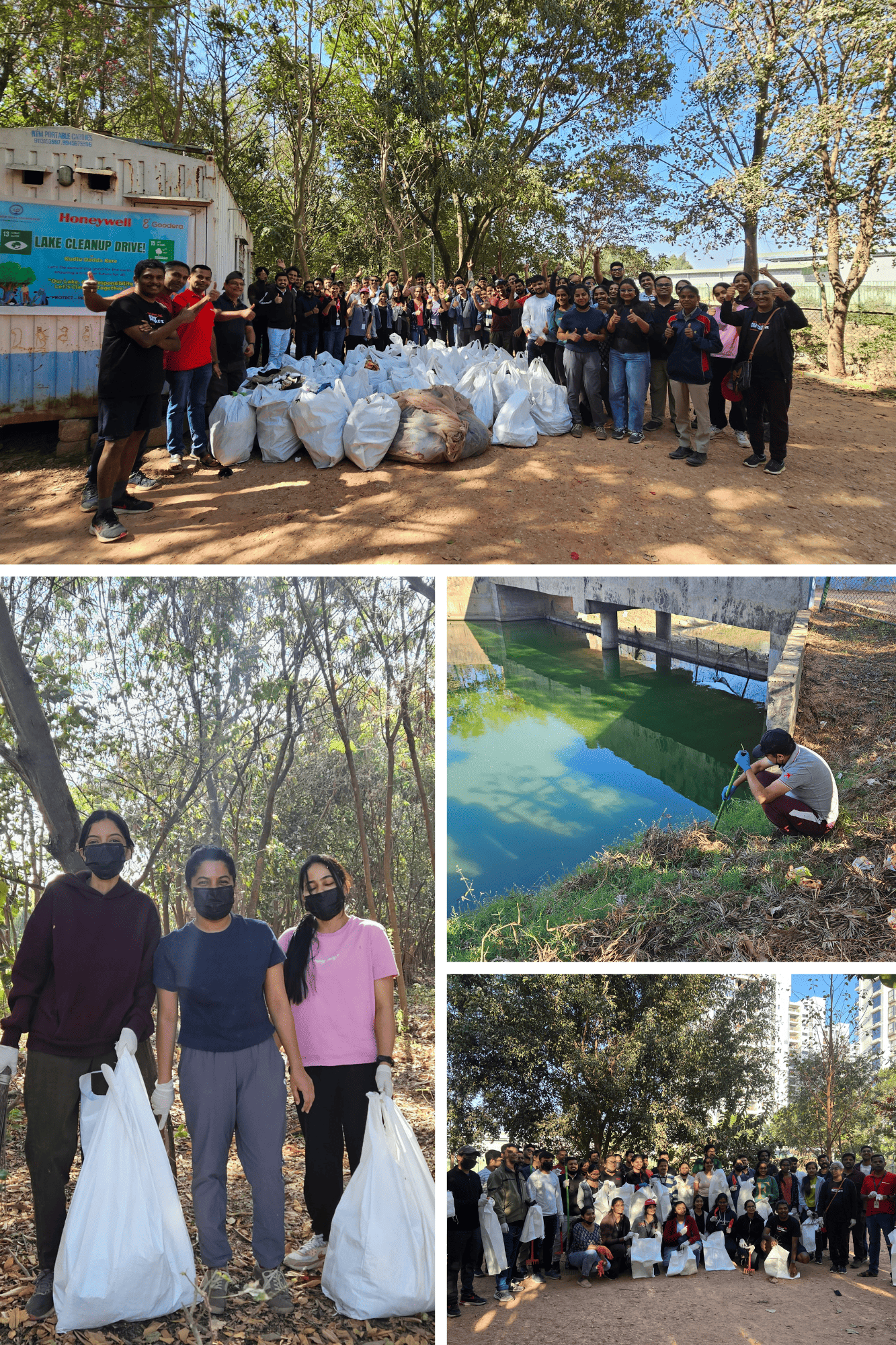
Over the course of the event, teams collected bags of litter from the shoreline and surrounding areas, helping restore the lake’s natural environment while learning about the impact of plastic pollution on freshwater ecosystems. Activities like these demonstrate how simple Earth Day volunteer opportunities can make a visible difference, protecting local habitats while bringing employees together around a shared environmental purpose.
2. Tree Planting and Urban Reforestation
Tree planting is one of the most visible and impactful Earth Day volunteer opportunities. Trees improve air quality, increase biodiversity, and help reduce urban heat.
Employees can participate in:
- Urban tree planting initiatives
- Community garden planting
- Reforestation projects
- Native plant restoration
A creative extension of tree planting and urban reforestation initiatives is seedball making; a simple yet effective activity that helps restore green cover in areas where traditional planting may be difficult.
For example, Goodera organized a seedball-making volunteering event for employees at NVIDIA. During the session, volunteers assembled seedballs containing a mix of soil, clay, compost, and native seeds. These seedballs were then donated to Árbol Conrazón, a nonprofit partner working on environmental restoration.

Seedballs are later dispersed in areas that need vegetation recovery. The protective clay coating shields the seeds from birds and harsh weather, allowing them to germinate naturally when the conditions are right. This method helps increase the survival rate of seeds while supporting urban reforestation and biodiversity restoration.
Activities like seedball making make Earth Day volunteer opportunities more accessible for teams. In just a few hours, employees can prepare hundreds of seedballs that contribute to expanding green cover, improving soil health, and supporting local ecosystems.
3. Climate Education and Environmental Workshops
Not every Earth Day initiative has to be outdoors. Many companies organize educational Earth Day volunteer activities where employees help teach environmental awareness to schools or community groups.
Examples include:
- Climate literacy workshops for students
- Sustainability education sessions
- Recycling awareness programs
- Environmental storytelling sessions
These volunteer opportunities combine knowledge-sharing with community engagement, making them ideal for hybrid or distributed teams.
4. Recycling and Waste Reduction Drives
Waste reduction initiatives are effective Earth Day volunteer events that help communities manage electronic waste, plastics, and recyclable materials.
Common examples include:
- E-waste collection drives
- Plastic recycling campaigns
- Textile donation and recycling drives
- Community composting programs
These events help employees understand the lifecycle of waste while supporting circular economy initiatives.
5. Virtual Earth Day Volunteer Opportunities
For global teams or remote workplaces, virtual Earth Day volunteer opportunities make it possible to engage employees regardless of location.
Popular virtual volunteering ideas include:
- Remote environmental mentoring programs
- Online sustainability awareness campaigns
- Digital advocacy for climate causes
- Crowdsourced environmental research projects
Virtual opportunities ensure that more employees can volunteer for Earth Day, even when in-person participation isn’t possible.
How Can Companies Organize Successful Earth Day Volunteer Events?
Organizing meaningful Earth Day volunteer events requires thoughtful planning, clear objectives, and collaboration with experienced nonprofit partners. When done well, these initiatives not only benefit the environment but also inspire employees to take an active role in sustainability efforts.
Below is a simple step-by-step approach companies can follow to design impactful Earth Day volunteer opportunities that drive both environmental and employee engagement outcomes.
Step 1: Identify Environmental Causes You Want to Support
The first step is choosing environmental causes that align with your company’s sustainability goals and the needs of the communities you operate in. Focusing on clear themes helps ensure that your Earth Day volunteer activities contribute to long-term environmental impact rather than one-off efforts.
Many organizations start by identifying the environmental challenges most relevant to their region or industry. For example, companies operating in coastal cities may prioritize ocean conservation, while organizations in urban centers might focus on tree planting or waste reduction.
Common environmental causes for Earth Day volunteer opportunities include:
Climate Action
Activities that address climate change through reforestation, carbon reduction, or environmental awareness campaigns. Tree planting and habitat restoration are common examples. According to the United Nations Environment Programme, restoring forests and ecosystems could help deliver over one-third of the climate mitigation needed by 2030.
Biodiversity Aonservation
Initiatives focused on protecting wildlife and restoring natural habitats. Volunteers might help restore wetlands, plant native species, or support conservation education programs.
Waste Reduction
Clean-up drives and recycling initiatives that help remove plastic and other pollutants from parks, beaches, and neighborhoods. These Earth Day volunteer activities not only improve public spaces but also raise awareness about responsible waste management.
Water Protection
Efforts that protect rivers, lakes, and oceans from pollution. Volunteers can support shoreline cleanups, watershed restoration projects, or water conservation campaigns.
Choosing one or two priority themes helps organizations design Earth Day volunteer events that are focused, impactful, and easy for employees to understand and support.
Step 2: Partner With Environmental Nonprofits
Collaborating with experienced nonprofit organizations ensures that your Earth Day volunteer opportunities create genuine environmental value. Nonprofits bring the expertise, local knowledge, and infrastructure needed to organize safe and effective volunteering activities.
Partnerships also help companies connect employees with credible environmental initiatives already making a difference in communities.
Examples of well-known environmental organizations that frequently collaborate with corporate volunteers include:
- World Wildlife Fund – A global conservation organization working on wildlife protection, climate solutions, and ecosystem restoration.
- The Nature Conservancy – Focused on protecting land and water ecosystems around the world through conservation and restoration programs.
- Surfrider Foundation – Dedicated to protecting oceans, waves, and beaches, often organizing coastal clean-ups and ocean conservation initiatives.
These partnerships ensure that Earth Day volunteer events are structured, safe for employees, and aligned with real environmental needs.
Also Read: Top Environmental Charities to Support for Earth Day Volunteering
Step 3: Offer Flexible Volunteer Formats
Participation increases significantly when companies offer employees multiple ways to volunteer for Earth Day. Not every employee will be able to attend an outdoor event, especially in global or remote workplaces.
Providing flexible volunteering formats ensures that more people can participate in Earth Day volunteer activities, regardless of location or schedule.
Companies often combine several formats, including:
- In-person Earth Day volunteer events
These are the most popular and visible initiatives. Activities such as tree planting, park clean-ups, community gardening, and habitat restoration allow employees to work together outdoors while seeing the immediate environmental impact of their efforts. - Virtual volunteer opportunities
Remote teams can participate through digital initiatives like environmental education programs, climate awareness campaigns, or online mentorship with sustainability-focused nonprofits. - Hybrid volunteering programs
Hybrid models combine local in-person events with virtual engagement opportunities. For example, some employees might participate in a local clean-up while others support environmental nonprofits through online workshops or advocacy campaigns.
Flexible formats make it easier for employees across different regions and roles to engage with Earth Day volunteer opportunities.
Step 4: Track and Celebrate Impact
Tracking the results of your volunteering initiatives helps demonstrate the real value of employee participation. Measuring outcomes also motivates employees by showing how their contributions make a difference.
Many companies track key metrics such as:
- Number of volunteers: How many employees participated in the Earth Day initiative.
- Hours contributed: Total volunteer hours donated by employees.
- Trees planted: A commonly tracked metric for reforestation initiatives.
- Waste removed: The amount of trash collected during community clean-ups.
Sharing these results internally helps reinforce the importance of Earth Day volunteer activities and encourages employees to participate in future programs. Many organizations also highlight these outcomes in sustainability reports and ESG disclosures.
Celebrating impact through internal communications, employee spotlights, and storytelling ensures that Earth Day volunteer events continue to inspire long-term engagement with environmental causes.
Frequently Asked Questions
1. What are Earth Day volunteer opportunities?
Earth Day volunteer opportunities are activities that allow individuals or teams to support environmental causes, such as clean-ups, tree planting, conservation projects, and sustainability education.
2. What are common Earth Day volunteer activities?
Popular Earth Day volunteer activities include:
- Community clean-ups
- Tree planting initiatives
- Recycling drives
- Climate education workshops
- Habitat restoration projects
These activities help communities address environmental challenges while engaging volunteers.
3. How can companies organize Earth Day volunteer events?
Companies can organize Earth Day volunteer events by partnering with environmental nonprofits, choosing impactful causes, offering flexible volunteering formats, and tracking participation and outcomes.
4. Can remote teams volunteer for Earth Day?
Yes. Remote employees can participate through virtual Earth Day volunteer opportunities, such as online environmental education programs, sustainability advocacy, or digital research projects.
5. When is Earth Day celebrated?
Earth Day is celebrated every year on April 22. The global event brings together individuals, communities, organizations, and governments to raise awareness about environmental challenges and encourage collective action to protect the planet.
6. Why should companies encourage employees to volunteer for Earth Day?
Encouraging employees to volunteer for Earth Day helps companies translate sustainability commitments into real-world action. These initiatives support environmental causes while strengthening employee engagement, collaboration, and a shared sense of purpose across teams.
7. What are some easy Earth Day volunteer activities for offices?
Simple Earth Day volunteer activities for workplaces include organizing recycling drives, hosting sustainability workshops, planting trees in nearby communities, supporting environmental nonprofits, or participating in local clean-up initiatives. These activities allow teams to contribute meaningfully without requiring extensive planning.
8. How can large companies scale Earth Day volunteer events?
Large organizations can scale Earth Day volunteer events by partnering with multiple nonprofit organizations, offering both in-person and virtual volunteering formats, and organizing region-specific initiatives across offices. Using structured volunteering platforms can also help track participation and measure environmental impact.
9. What impact can Earth Day volunteering create?
Well-organized Earth Day volunteer opportunities can lead to measurable environmental outcomes such as trees planted, waste removed, habitats restored, and communities educated about sustainability. When companies mobilize hundreds or thousands of employees, these initiatives can create lasting environmental and social impact.
10. How can companies partner with environmental nonprofits for Earth Day volunteering?
Start by researching local and global nonprofits whose work aligns with your sustainability goals — think habitat restoration, waste reduction, or climate education. Reach out early (ideally 6–8 weeks before Earth Day) to co-design activities that fit both your team's size and the nonprofit's real needs. Formalize the partnership with a clear scope, volunteer-hour commitments, and shared impact metrics. Platforms like Goodera maintain a vetted global nonprofit network, making it easier for corporate teams to book Earth Day activities in multiple cities without doing outreach individually.