Mes Nacional de Concientización sobre el Hambre: Por qué junio merece su propia atención

Cada verano, millones de niños esperan con ansias dormir hasta tarde, jugar al aire libre y disfrutar de un merecido descanso escolar. Pero para muchas familias en todo Estados Unidos, el verano también marca el comienzo de una realidad diferente, una en la que una fuente confiable de comidas diarias desaparece repentinamente.
Más de 14 millones de niños viven en hogares con inseguridad alimentaria, y casi 30 millones de estudiantes dependen de comidas escolares gratuitas o a precio reducido durante el año académico. Cuando las escuelas cierran por el verano, esa red de seguridad esencial desaparece de la noche a la mañana.
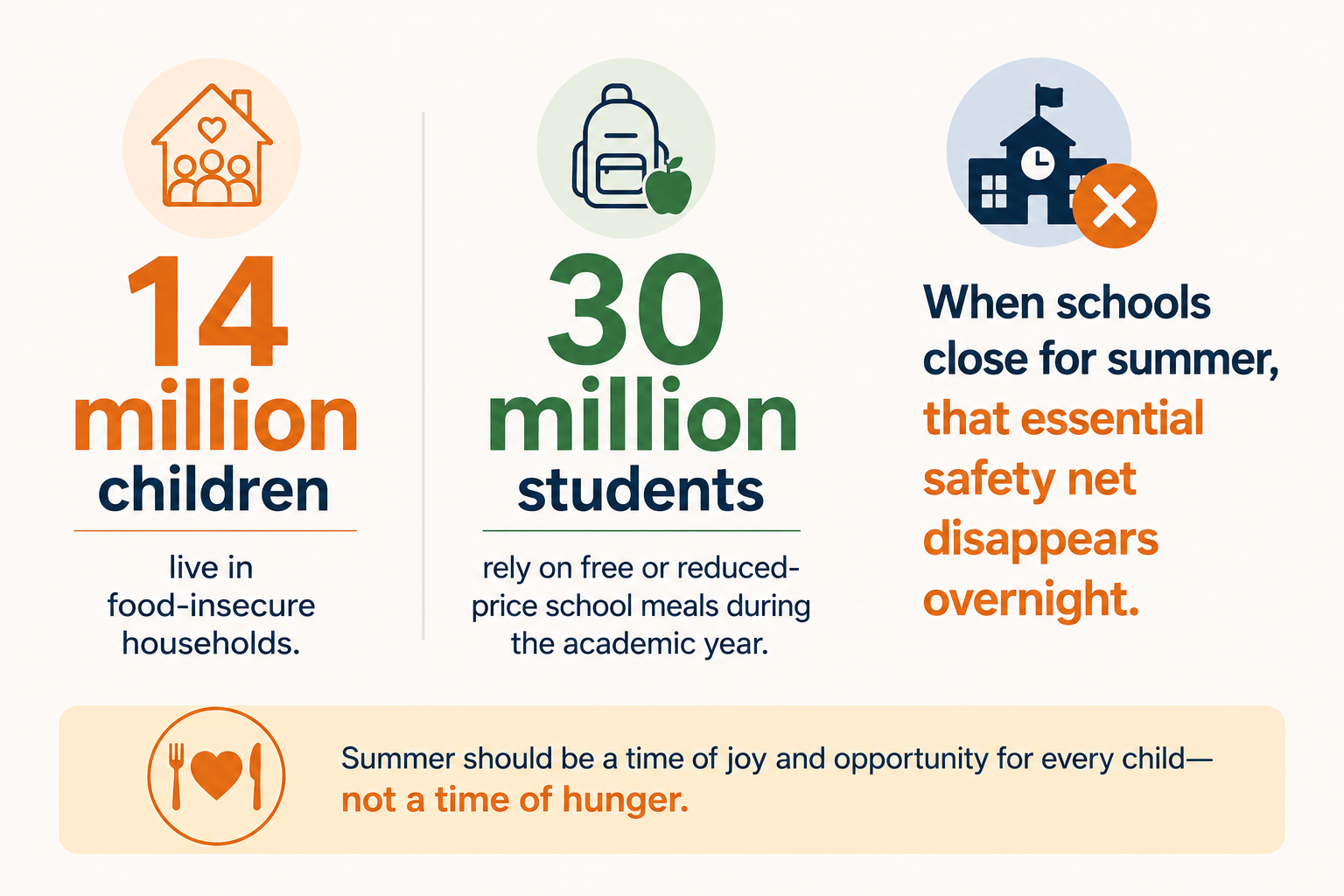
Por eso es importante el Mes Nacional de Concientización sobre el Hambre, que se observa cada junio. Pone de relieve el desafío, a menudo ignorado, del hambre en verano, crea conciencia sobre los recursos ya disponibles y alienta a las comunidades, empleadores, organizaciones sin fines de lucro y particulares a garantizar que ningún niño se quede sin una comida nutritiva simplemente porque no hay clases.
En esta guía, exploraremos qué es el Mes Nacional de Concientización sobre el Hambre, por qué junio es un momento tan crítico en la lucha contra el hambre, datos clave sobre la inseguridad alimentaria en Estados Unidos y formas significativas en las que puede marcar la diferencia durante los meses de verano.
¿Por qué junio, específicamente?
El momento en que se celebra el Mes Nacional de Concientización sobre el Hambre no es arbitrario. Junio marca el fin del año escolar en la mayor parte del país y, para millones de niños, ese cierre significa algo mucho más trascendental que un descanso de las tareas escolares.
Casi 30 millones de estudiantes en EE. UU. reciben comidas gratuitas o a precio reducido durante el año escolar. Para muchos de estos niños, esas comidas no son un complemento de lo que comen en casa. Son la fuente de nutrición constante más confiable, y a veces la única, que tienen. Cuando terminan las clases, esa infraestructura desaparece de la noche a la mañana.
Los datos sobre lo que sucede después son aleccionadores. Los hogares con niños que viven cerca de un centro de comidas de verano tienen inseguridad alimentaria a una tasa del 45%, más de tres veces la tasa nacional de inseguridad alimentaria del 14% para hogares con niños. El verano no es una ligera disminución en el acceso a los alimentos. Es un abismo.
Esta es precisamente la brecha que el Mes Nacional de Concientización sobre el Hambre busca resaltar: no el hambre como una abstracción durante todo el año, sino el hambre como una realidad estacional y estructural vinculada directamente al calendario académico.
La brecha del hambre en verano de la que nadie habla lo suficiente
Esta es la parte de la historia que suele sorprender a quienes no han trabajado de cerca con los problemas de seguridad alimentaria: la infraestructura para abordar el hambre en verano ya existe. Simplemente está subutilizada.
Los programas federales de alimentación de verano, incluidos el Programa de Servicio de Alimentos de Verano y la Opción de Verano sin Interrupciones del Programa Nacional de Almuerzos Escolares, están diseñados específicamente para cubrir esta carencia. Sin embargo, las investigaciones demuestran que solo 15 de cada 100 niños que califican para recibir almuerzos gratuitos o a precio reducido durante el año escolar acceden realmente a los programas de alimentación de verano. Esto representa una tasa de participación de aproximadamente 1 de cada 7, frente a una necesidad que afecta a casi 1 de cada 5 niños en todo el país que no tienen suficiente comida cada día.
Las razones de esta brecha son prácticas, no por falta de necesidad. El desconocimiento de los programas es el motivo más frecuente por el que las familias no participan, según el Estudio Nacional de Comidas de Verano del USDA. Muchos padres simplemente no saben que existe un centro cerca, cuáles son los requisitos de elegibilidad o que, en la mayoría de los casos, los programas están abiertos a todos los niños, independientemente de su estatus migratorio.
Aquí es donde la concienciación, en el sentido más literal, se convierte en la intervención real. A diferencia de muchos desafíos relacionados con el hambre que requieren nuevas políticas o nuevos fondos, cerrar la brecha de las comidas de verano es, en gran medida, una cuestión de hacer llegar la información a las familias que ya califican.
Por qué 2026 es un año especialmente importante para esta conmemoración
El Mes Nacional de la Concienciación sobre el Hambre siempre es importante. Pero el contexto que lo rodea en 2026 lo hace especialmente urgente.
La ley de reconciliación presupuestaria federal de 2025, H.R. 1, introdujo los recortes más profundos en la historia del Programa de Asistencia Nutricional Suplementaria (SNAP). Dado que la elegibilidad para SNAP a menudo está vinculada a la inscripción automática en programas de comidas de verano gratuitos, los recortes a SNAP crean efectos dominó que se extienden directamente al acceso a la nutrición durante el verano. Más niños corren el riesgo de perder tanto su asistencia alimentaria principal como la red de seguridad secundaria diseñada para protegerlos cuando terminan las comidas escolares.
Para agravar esto, varios estados han tomado la decisión de rechazar por completo los fondos federales para comidas de verano en los últimos años, incluso cuando la necesidad ha crecido. Mientras tanto, el déficit presupuestario nacional de alimentos, la cantidad total de dinero que las personas en hogares con inseguridad alimentaria necesitan solo para cubrir sus costos básicos de alimentación, ha seguido aumentando, alcanzando los 32.2 mil millones de dólares según lo rastreado por Feeding America's investigación Map the Meal Gap.
Nada de esto significa que la situación sea desesperada. Significa que el momento para una concienciación genuina, aquella que se traduce en que las familias encuentren y utilicen los recursos que ya tienen a su disposición, nunca ha sido tan importante.
En qué se diferencia el Mes Nacional de la Concienciación sobre el Hambre del Mes de Acción contra el Hambre
Vale la pena ser directo sobre esta distinción porque ambas conmemoraciones suelen confundirse, y entender la diferencia ayuda a aclarar dónde es mejor invertir su tiempo y atención dependiendo del momento.
El Mes de Acción contra el Hambre, que se celebra cada septiembre, fue lanzado por Feeding America en 2007 y se centra en un llamado a la acción amplio y nacional: colectas de alimentos, campañas de recaudación de fondos, eventos de voluntariado y trabajo de defensa vinculado al Día Naranja. Es la conmemoración más grande y coordinada institucionalmente, respaldada por la red de bancos de alimentos de Feeding America en todo el país.

El Mes Nacional de la Concienciación sobre el Hambre, que se celebra cada junio, está menos coordinado centralmente, pero aborda una realidad más específica y urgente: el aumento estacional del hambre infantil que comienza en el momento en que terminan las clases. Mientras que la conmemoración de septiembre pregunta "¿cómo movilizamos la acción colectiva contra el hambre en general?", la de junio plantea una pregunta más estrecha y urgente: "¿cómo nos aseguramos de que los niños no pierdan el acceso a la comida el día que comienzan las vacaciones de verano?".
Ambos son importantes. Pero el enfoque de junio en la concienciación sobre los programas de comidas de verano, la planificación de la transición de la escuela al verano y la vulnerabilidad específica de los niños durante este periodo es un trabajo genuinamente distinto, no un eco menor de lo que sucede en otoño.
Esta sección se compartió directamente en la conversación en lugar de guardarse en un archivo. Aquí la tienes con encabezados numerados, lista para copiar y pegar:
Datos sobre el Mes Nacional de Concientización sobre el Hambre que replantean el problema
El Mes Nacional de Concientización sobre el Hambre se celebra cada junio, y la fecha no es casual. Junio marca el fin del año escolar, el inicio del verano y, para decenas de millones de estadounidenses, el comienzo de tres de los meses con mayor escasez de alimentos del año. Los siguientes datos provienen de la información más reciente disponible y se centran en las realidades que esta conmemoración busca abordar.
1. Casi 48 millones de estadounidenses enfrentaron hambre en 2024
La fuente más autorizada sobre el hambre en EE. UU., el Servicio de Investigación Económica del USDA, en su informe anual sobre la seguridad alimentaria en los hogares, reveló que 47.9 millones de personas vivían en hogares con inseguridad alimentaria en 2024, lo que representa el 13.7% de todos los hogares estadounidenses.
Esto equivale aproximadamente a 1 de cada 7 hogares en el país más rico del mundo sin acceso fiable y constante a suficientes alimentos. Lo que hace que esta cifra sea especialmente significativa en junio de 2026 es que la administración Trump anunció que dejaría de realizar esta encuesta anual después de 2024, lo que significa que las futuras cifras sobre el hambre ya no contarán con una base de referencia federal autorizada para medir el impacto de los recortes continuos en los programas.
2. 14 millones de niños viven en hogares con inseguridad alimentaria
La inseguridad alimentaria no es un concepto abstracto y no se distribuye de manera uniforme.
Según el Informe anual sobre la seguridad alimentaria en los hogares de 2024 del Servicio de Investigación Económica del USDA, 14.1 millones de niños vivían en hogares con inseguridad alimentaria en 2024, un ligero aumento respecto a los 13.8 millones de 2023.
Para estos niños, junio no es solo el comienzo del verano. Es el momento en que el desayuno y el almuerzo escolar, a menudo su fuente más fiable de nutrición diaria, desaparecen de la noche a la mañana. Children's HealthWatch declaró a principios de 2026 que los datos de 2024 "borran efectivamente una década de progreso, volviendo a niveles de inseguridad alimentaria cercanos a los de 2014" para los hogares con niños.
3. Solo 1 de cada 7 niños elegibles accede a los programas de comidas de verano
La infraestructura federal para alimentar a los niños durante el verano existe. El Programa de Servicio de Alimentos de Verano y la Opción de Verano sin Interrupciones están diseñados específicamente para cubrir el vacío que dejan las comidas escolares. Sin embargo, solo unos 15 de cada 100 niños que califican para recibir comidas gratuitas o a precio reducido durante el año escolar acceden realmente a los programas de alimentación de verano, una tasa de participación de aproximadamente 1 de cada 7. Según el Estudio Nacional de Comidas de Verano del USDA, la falta de información es la razón más citada por la que las familias elegibles no participan. Es precisamente por esto que el Mes Nacional de Concientización sobre el Hambre en junio es importante: cerrar la brecha de las comidas de verano es, en gran medida, un problema de falta de información y no de falta de fondos.
4. Los hogares con niños cerca de los centros de comidas de verano tienen una inseguridad alimentaria del 45%
La proximidad a un centro de comidas de verano no elimina el hambre estival, pero ilustra lo concentrada que se vuelve la necesidad. Los hogares con niños que viven cerca de un centro de comidas de verano experimentan inseguridad alimentaria a una tasa del 45%, más de tres veces el promedio nacional del 14% para los hogares con niños durante todo el año. Para aproximadamente uno de cada cinco niños que dependen del almuerzo escolar como fuente principal de nutrición, junio no es una temporada de libertad. Es una brecha alimentaria que se extiende durante tres meses.
5. Los hogares monoparentales encabezados por mujeres enfrentan una inseguridad alimentaria del 36.8%
El hambre en Estados Unidos no afecta por igual a todos los tipos de hogares. Los hogares monoparentales encabezados por mujeres experimentaron una inseguridad alimentaria del 36.8% en 2024, según el análisis de FRAC del informe final de seguridad alimentaria del USDA, casi 2 puntos porcentuales más que el año anterior. Esta cifra, que casi triplica el promedio nacional, refleja las vulnerabilidades estructurales que hacen que el verano sea particularmente difícil para las familias monoparentales: la falta de infraestructura de comidas escolares, los mayores costos de cuidado infantil durante los meses de verano y un margen financiero limitado para absorber cualquier interrupción en los ingresos o el acceso a los alimentos.
6. Los hogares negros y latinos soportan una parte desproporcionada del hambre
La inseguridad alimentaria en Estados Unidos no es neutral desde el punto de vista racial. La tasa de inseguridad alimentaria en los hogares negros no hispanos se situó en el 24.4% en 2024, más del doble que la tasa de los hogares blancos no hispanos, que fue del 10.1%. La tasa en los hogares latinos fue del 20.2%. En el caso específico de los hogares negros con niños, el salto del 27.5% en 2023 al 31% en 2024 fue el aumento anual más pronunciado registrado entre cualquier subgrupo racial; un incremento que los investigadores han atribuido en parte a la vulnerabilidad económica y geográfica concentrada de las comunidades negras en la región sur, donde la tasa general de inseguridad alimentaria se sitúa en el 15.0%.
7. Se espera que los recortes al SNAP agraven la crisis hasta 2026
El Mes Nacional de Concientización sobre el Hambre en junio de 2026 llega en un contexto político particularmente urgente. La Ley One Big Beautiful Bill, promulgada el 4 de julio de 2025, recorta la financiación del SNAP en aproximadamente 187 mil millones de dólares a lo largo de diez años, una reducción del 20% que, según estimaciones de la Oficina de Presupuesto del Congreso, eliminará la asistencia del SNAP para aproximadamente 4 millones de personas. Ahora se aplican nuevos requisitos laborales a adultos de entre 55 y 64 años y a padres con hijos de 14 años o más, grupos que anteriormente estaban exentos, y por primera vez en los 60 años de historia del programa, se exige a los estados que compartan los costos del programa SNAP. Hasta 2025, 42 millones de estadounidenses recibían beneficios del SNAP. La magnitud de lo que se está recortando y quiénes sufren las consecuencias es el contexto político que define este mes de junio.
8. El sur de Estados Unidos tiene la tasa regional de inseguridad alimentaria más alta
El hambre en Estados Unidos tiene una geografía. Ocho de los diez estados con las tasas más altas de inseguridad alimentaria se encuentran en la región sur, y la tasa general del sur, del 15.0%, es más alta que la de cualquier otra región censal. Arkansas encabeza la lista con una tasa de inseguridad alimentaria del 19.4%, casi uno de cada cinco hogares, una cifra que se ha mantenido como la más alta de la nación durante varios años consecutivos. Comprender la geografía del hambre es fundamental durante el Mes Nacional de Concientización sobre el Hambre, ya que determina dónde se necesitan con mayor urgencia la defensa, los recursos y la capacidad de voluntariado.
9. Una nueva campaña nacional se moviliza ahora mismo contra el hambre en verano
Junio de 2026 también ha sido testigo del lanzamiento de una importante iniciativa directamente vinculada a los temas de este mes. La campaña Nourish the American Dream, lanzada a finales de junio de 2026 por la Albertsons Companies Foundation, ha unido a más de 250 organizaciones sin ánimo de lucro, entre ellas No Kid Hungry, Feeding America y Hunger Free America, con el objetivo de recaudar 5 millones de dólares para combatir el hambre infantil entre el 1 y el 7 de julio. La Fundación igualará las donaciones que cumplan los requisitos hasta un máximo de 2,5 millones de dólares. El anuncio de servicio público nacional de la campaña, "Feed This", se está difundiendo en televisión, radio y canales digitales, centrándose en lo que el hambre cuesta a los niños más allá de las calorías: participación, confianza y la capacidad de simplemente estar presentes.
Qué ayuda realmente durante junio
Dado que el Mes Nacional de Concienciación sobre el Hambre se centra en un problema estructural y limitado en el tiempo, en lugar de en una llamada general a las donaciones, las acciones más eficaces durante junio son algo diferentes a las de una colecta de alimentos típica.
1. Difunda información sobre los centros locales de comidas de verano
Uno de los mayores obstáculos para los programas de comidas de verano es la falta de información. Muchas familias que reúnen los requisitos simplemente no saben dónde están los centros de comidas gratuitas ni que pueden acceder a ellos. Compartir información a través de un boletín informativo de la empresa, un grupo comunitario de Facebook, una asociación de vecinos o las comunicaciones de fin de curso de una escuela puede ayudar a conectar a las familias con estos servicios. Recursos como el buscador de centros de comidas de verano del USDA y el localizador de comidas de No Kid Hungry facilitan la búsqueda de lugares cercanos en cuestión de segundos.
2. Apoye los programas móviles y temporales de comidas de verano
Muchas comunidades gestionan programas móviles de comidas que llevan alimentos directamente a parques, complejos de apartamentos, bibliotecas y barrios donde el transporte es limitado. Estas iniciativas suelen estar gestionadas por organizaciones locales sin ánimo de lucro con fondos y personal limitados. Ser voluntario, hacer una contribución económica o ayudar con la logística durante junio puede fortalecer estos programas y ayudarles a llegar a más niños durante todo el verano.
LEA TAMBIÉN: Las mejores organizaciones contra el hambre a las que apoyar en el Mes de Acción contra el Hambre 2026
3. Abogue por la participación estatal en los programas federales de verano
Los estados desempeñan un papel importante a la hora de determinar si ciertos programas federales de nutrición de verano están disponibles para las familias. Crear conciencia, ponerse en contacto con los representantes electos o apoyar los esfuerzos de defensa locales durante junio puede fomentar una mayor participación y ayudar a ampliar el acceso a las comidas de verano para los niños que más las necesitan.
4. Organice una campaña de concienciación sobre las comidas de verano en el lugar de trabajo
Junio es el momento ideal para que las empresas complementen sus tradicionales colectas de alimentos con una campaña centrada en la concienciación. Comparta localizadores de centros de comidas de verano con los empleados, colabore con organizaciones sin ánimo de lucro que gestionen programas de comidas de verano o apoye iniciativas de transporte que ayuden a las familias a llegar a los centros existentes. Estos esfuerzos específicos abordan los desafíos únicos a los que se enfrentan los niños durante los meses de verano.
5. Cree conciencia sobre los efectos más amplios del hambre en verano
El hambre en verano afecta a mucho más que al hecho de que un niño se salte una comida. La inseguridad alimentaria está relacionada con mayores tasas de ansiedad, depresión y problemas de desarrollo, mientras que los educadores llevan mucho tiempo documentando una mayor pérdida de aprendizaje entre los niños que carecen de un acceso fiable a alimentos nutritivos durante las vacaciones escolares. Compartir estos impactos más amplios ayuda a las comunidades a entender por qué el Mes Nacional de Concienciación sobre el Hambre merece una atención centrada y una acción sostenida.
Reflexiones finales
Septiembre recibe las campañas más grandes, los hashtags nacionales y las colectas de alimentos coordinadas. Junio recibe algo más silencioso, pero no menos importante: una brecha estructural, predecible y casi totalmente solucionable mediante la concienciación, que se abre en el momento en que termina el año escolar.
El Mes Nacional de Concientización sobre el Hambre plantea una pregunta sencilla: ¿saben las familias que necesitan los programas de comidas de verano que estos existen? Para 85 de cada 100 niños elegibles que actualmente no reciben ayuda, la respuesta honesta sigue siendo no.
Esa es la brecha que este mes de junio busca cerrar.
Frequently Asked Questions
1. ¿El Mes Nacional de Concientización sobre el Hambre es lo mismo que el Mes de Acción contra el Hambre?
No. El Mes Nacional de Concientización sobre el Hambre se observa en junio y se centra específicamente en el hambre durante el verano y la pérdida del acceso a las comidas escolares cuando termina el año académico. El Mes de Acción contra el Hambre se observa en septiembre, fue fundado por Feeding America en 2007 y se centra en una acción más amplia y coordinada a nivel nacional, que incluye colectas de alimentos, recaudación de fondos y promoción. Son celebraciones relacionadas pero distintas que abordan el hambre desde diferentes ángulos y en diferentes momentos del año.
2. ¿Por qué el verano es especialmente difícil para las familias con inseguridad alimentaria?
Casi 30 millones de niños dependen de comidas escolares gratuitas o a precio reducido durante el año académico. Cuando terminan las clases, ese acceso estructurado desaparece. Las investigaciones muestran que los hogares con niños que viven cerca de un centro de comidas de verano experimentan inseguridad alimentaria a una tasa del 45%, más del triple del promedio nacional para hogares con niños, lo que ilustra cuán concentrada se vuelve la necesidad una vez que termina el apoyo nutricional escolar.
3. ¿Por qué más familias elegibles no utilizan los programas de comidas de verano?
Según el Estudio Nacional de Comidas de Verano del USDA, la falta de información es la razón más citada por la que las familias que califican no participan. Solo alrededor de 15 de cada 100 niños elegibles acceden a los programas de comidas de verano, a pesar de que son gratuitos y, en la mayoría de los casos, están abiertos a cualquier niño sin importar su documentación o estado de inscripción. Esta es precisamente la brecha que las campañas de concientización durante junio pretenden cerrar.
4. ¿Cómo ha cambiado la situación en 2025 y 2026?
La ley de reconciliación presupuestaria federal de 2025 introdujo recortes significativos al programa SNAP, el cual está estrechamente vinculado a la inscripción automática en los programas de comidas de verano en muchos estados. Al mismo tiempo, algunos estados han rechazado por completo los fondos federales para programas de comidas de verano, incluso cuando la necesidad documentada ha crecido. Estos cambios han hecho que la concientización y la promoción durante el Mes Nacional de Concientización sobre el Hambre sean más importantes que en años recientes.
5. ¿Qué puede hacer una persona durante el Mes Nacional de Concientización sobre el Hambre?
Las acciones individuales más efectivas en junio se basan en la concientización más que en las donaciones: compartir la ubicación de los centros locales de comidas de verano con familias que quizás no sepan que existen, ser voluntario en organizaciones que operan programas de comidas de verano móviles o temporales, y contactar a los representantes estatales sobre las decisiones de financiamiento de los programas de comidas de verano, las cuales se toman anualmente y responden directamente a la presión pública.
6. ¿Qué es el Summer Food Service Program y cómo funciona?
El Summer Food Service Program (SFSP) es una iniciativa federal del USDA que ofrece comidas gratuitas a menores de 18 años en sitios comunitarios autorizados cuando las escuelas están cerradas. Cubre el vacío que dejan los programas de desayuno y almuerzo escolar durante el verano. A pesar de atender a millones cada año, la participación se mantiene muy por debajo de la elegibilidad debido a la distancia, el transporte y la falta de información.
7. ¿Cómo pueden las empresas contribuir de forma significativa durante el Mes Nacional de Concienciación sobre el Hambre?
Las empresas pueden financiar programas de comidas de verano, patrocinar delegaciones de Feeding America u organizar turnos de empaquetado de alimentos con bancos locales. Las campañas de donación con contrapartida vinculadas al último día de clases crean urgencia estacional. Ofrecer tiempo libre remunerado para voluntariado en junio, fomentar el voluntariado familiar y contar con líderes que amplifiquen el mensaje impulsa una participación medible.
8. ¿Qué opciones de voluntariado adaptadas a familias hay en junio?
Los turnos comunitarios de empaquetado admiten a niños desde los ocho años junto a sus padres, lo que convierte a junio en el mes ideal para voluntariado familiar durante las vacaciones. Ensamblar kits de comida, jornadas de huerto comunitario, clasificación en despensas móviles y colectas escolares acompañadas de distribución alimentaria funcionan bien para equipos multigeneracionales. Estos formatos desarrollan empatía en los más jóvenes y amplían la capacidad de fin de semana.
9. ¿Cómo pueden las empresas medir el impacto de sus iniciativas contra el hambre?
Los indicadores habituales incluyen comidas servidas, kilos de alimentos distribuidos, dólares igualados, horas de voluntariado registradas y tasa de participación de los empleados. Métricas más profundas rastrean la capacidad añadida a las ONG socias, la cobertura geográfica de los sitios de verano y la participación repetida entre junio y agosto. Combinar datos con historias de socios como Feeding America ofrece a la dirección una visión completa.
10. ¿Cómo puede Goodera ayudar a las empresas con una campaña contra el hambre en junio?
Goodera organiza eventos de voluntariado virtuales y presenciales con ONG contra el hambre verificadas en Estados Unidos, coordina turnos de empaquetado de comidas y gestiona la logística de donaciones con contrapartida para equipos globales. Los calendarios llave en mano de junio combinan arranques liderados por la dirección, turnos familiares los fines de semana y paneles de impacto que reportan comidas entregadas y horas contribuidas.