Volunteering Calendar: Your Complete Guide to Planning Meaningful Impact

Volunteering brings people together in powerful ways, but great impact rarely happens by accident. It takes structure, clarity, and a shared rhythm of giving. A well-planned volunteer calendar helps teams map their year, stay inspired, and participate in causes that matter in a way that feels easy and joyful. Whether you lead employee volunteering, manage nonprofit partnerships, or simply want to make volunteering more organized, this guide will walk you through everything you need to know.
Did you know? Teams with structured volunteering plans see up to 40 percent higher participation compared to those that plan activities at the last minute.
When you use a simple volunteer calendar template, scheduling becomes smoother, communication becomes clearer, and volunteers feel more confident about showing up. For global or remote teams, an online volunteer calendar creates transparency and consistency across time zones. And once everything is in place, a volunteer scheduling calendar takes your planning from reactive to intentional.
Everything starts with intention, but it thrives with organisation. Imagine your team knowing in advance the volunteering themes for the year, aligning those themes with local community needs, and using a shared online tool that everyone can access, no matter where they are based. That vision is realistic when you commit to the right systems, and this blog will help you build that foundation.
If you’re looking for deeper help and resources, consider checking out our e-book “Flagship Volunteering Campaigns: A Comprehensive Guide to Planning and Executing Your Volunteering Program” on Goodera for a step-by-step companion guide.

Let’s build this journey of meaningful volunteering together in a way that feels simple, welcoming, and truly impactful.
What is a Volunteer Calendar?
Imagine starting the year with a roadmap that not only shows where to go but also how your people can create real change month after month. A well-crafted volunteer calendar turns scattered good intentions into a steady rhythm of impact, giving your teams a clear view of how they can contribute throughout the year. Instead of scrambling for opportunities at the last minute, your teams will know exactly what lies ahead and can plan for it with ease.
A volunteer calendar is a yearly or monthly plan that outlines when and how your workforce or community will volunteer. It brings structure to your social impact efforts by helping you map opportunities, track dates, connect with nonprofit partners, and plan activities that match themes, seasons, and cultural moments. Think of it as a living handbook that keeps your people aligned and keeps your purpose visible.
This approach works beautifully in practice. For instance, Salesforce uses an annual volunteering calendar to coordinate global cleanups, mentoring programs, and local community events across dozens of time zones. Their predictable structure not only boosts participation but also helps them maintain their famous Volunteer Time Off program more efficiently. Similarly, Deloitte’s Impact Day runs smoothly every year because it is planned months ahead using an internal volunteer scheduling calendar that organizes activities, partners, and team roles well in advance.
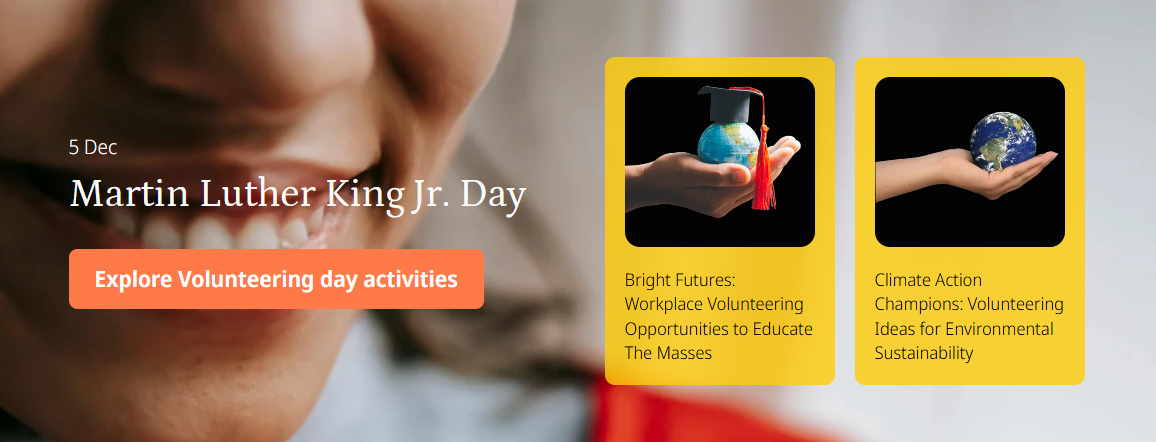
When you build a volunteer calendar, cultural moments such as MLK Day, Earth Month, Giving Season, Pride Month, and International Volunteer Day naturally fall into place. Planning becomes intentional instead of reactive, and teams feel more confident and excited to join in. Over time, this simple tool becomes a long-term asset that strengthens engagement, deepens community partnerships, and builds trust between your people and your mission.
Ready to turn these cultural moments into meaningful action? Explore activities that bring your volunteer calendar to life.
Let’s now explore why using a volunteer calendar can transform the way your organization approaches social impact.
Why Should You Use a Volunteer Calendar?
A volunteer calendar streamlines planning, boosts participation, and keeps teams aligned with organizational goals and cultural moments. It helps nonprofits prepare, employees plan ahead, and global teams stay connected through a shared roadmap. The result is smoother operations, higher engagement, and stronger impact over time.
Here is a simple breakdown for you:
1. Increases Participation and Reduces Confusion
People show up more when they know what to expect. A well-planned volunteer calendar gives employees plenty of time to check schedules, coordinate with teammates, and feel genuinely prepared. This reduces friction, removes confusion, and prevents the common problem of last-minute communication gaps.
A practical example of this is IBM, which employs an internal volunteering calendar to organize mentoring sessions, STEM activities, and local community events well in advance. This structured approach instills confidence in employees to commit early, leading to a notable increase in participation each year. When volunteering opportunities are clear and predictable, it naturally encourages greater involvement.
2. Helps You Align Activities With Company Values
When you build your volunteer calendar template with intention, you can anchor your activities to themes that reflect your values. Whether your focus is sustainability, education, equity, or public health, your calendar lets you create a cohesive narrative across the year instead of scattered one-off efforts.
Accenture’s annual volunteering calendar reflects its global priorities around digital inclusion and youth empowerment. Because their activities follow a clear theme, their impact storytelling becomes stronger, and employees understand the bigger purpose behind their efforts. Your calendar becomes a mirror of what your organization stands for.
3. Makes Global and Remote Volunteering Easier
As teams become more hybrid and multinational, an online volunteer calendar becomes incredibly valuable. It allows volunteers to browse activities, track availability, sign up instantly, and receive reminders without long email chains or timezone confusion. This creates a more inclusive experience for remote workers who often feel left out of in-person volunteering events.
Microsoft uses an online volunteer scheduling calendar for its global employee giving program. This allows employees in the United States, India, and Europe to access consistent volunteering opportunities regardless of location. The result is a more equitable and connected volunteering culture.
4. Simplifies Coordination With Nonprofits
Nonprofits work best when they have clarity. A predictable schedule helps them secure resources, align facilitators, prepare materials, and plan for volunteer capacity well in advance. When your partners know your volunteering calendar early, your collaborations become smoother and more meaningful.
Salesforce Philanthropy Cloud often coordinates with nonprofits months ahead using internal calendars. This reduces operational challenges and ensures nonprofits feel supported rather than rushed. Your volunteer scheduling calendar becomes an essential tool for stronger partnership management.
5. Creates a More Purpose-Driven Workplace
Volunteering becomes more powerful when it becomes part of your cultural rhythm. A consistent calendar builds a shared sense of purpose, belonging, and pride. It sends a message that your organization cares about giving back, not just once a year but throughout the year.
Deloitte’s Impact Day is a perfect example. Because it is planned well in advance and embedded in their culture through a year-round schedule of activities, employees feel genuinely connected to their social impact efforts. A volunteer calendar can help any organization create similar energy and anticipation.
In short, using a volunteer calendar is not just about organization; it is about unlocking a more thoughtful, inclusive, and energizing approach to social impact. Whether you choose a simple template or a more advanced online volunteer calendar, the structure you build today will shape the engagement, enthusiasm, and impact you create throughout the year.
Key Components of a Volunteer Calendar
A strong volunteer calendar acts like the backbone of your entire social impact program. It simplifies planning, helps nonprofits prepare, and gives employees the clarity they need to participate confidently. When these foundational components come together, your volunteer calendar template becomes more than a schedule. It becomes a system that inspires action throughout the year.
Below is an expanded breakdown of the elements every effective volunteer calendar should include.
1. Clear Dates and Times for Every Activity
Dates and times are the anchors of your volunteer calendar. They help employees commit early, reduce confusion, and allow nonprofit partners to prepare volunteers and materials. When your calendar lists monthly themes, special observances, and flexible volunteering windows, participation naturally becomes smoother and more predictable.
Did you know? Organizations that publish their volunteering schedules at least one month ahead see significantly higher volunteer retention across the year. Advanced visibility creates trust and removes the uncertainty that often holds volunteers back from signing up.
Clear timelines make your calendar feel dependable, structured, and easy to follow.
2. Themes and Causes That Bring Meaning to Each Month
Grouping your volunteering activities around themes brings emotional depth and helps employees feel connected to something bigger. Themes can be global, like Earth Month, Pride Month, Season of Giving, or they can be local community needs that matter right where your teams live and work.
Many global teams have adopted this approach successfully. Salesforce, for instance, aligns its yearly volunteering calendar with global observances to create a sense of shared purpose across continents. Meanwhile, Deloitte’s annual Impact Day is strengthened by months of thematic pre-planning, which boosts anticipation and inclusivity company-wide.
Themes turn your volunteer calendar into a meaningful journey instead of a list of disconnected events.
3. Defined Volunteer Roles and Skill Requirements
Every volunteer activity becomes smoother when people know exactly what they will be doing. Your volunteer calendar template should clearly outline roles, required skills, preparation steps, and expected time commitments. This helps employees self-select the activities that match their interests and strengths.
In Goodera’s webinar on skills-based volunteering, Kenrick Fraser from PayPal highlighted how structured role-matching helps nonprofits receive the right expertise while helping employees feel valued and confident. He shared that their team only selects employees whose skills directly align with the nonprofit’s needs to ensure meaningful impact.
When your calendar clearly defines roles, volunteers feel prepared and motivated, not uncertain or overwhelmed.
4. Modes of Volunteering: In-Person, Virtual, and Hybrid
Volunteering today is no longer limited to one format. With distributed teams, remote work environments, and flexible schedules, offering multiple modes of volunteering is one of the biggest advantages you can build into your volunteer scheduling calendar.
Here is something interesting. Companies that offer at least one virtual volunteering option per month report more consistent participation from employees who travel frequently or balance caregiving responsibilities. Flexible modes also make it easier for global teams to join without worrying about time zones or commuting.
A multi-format approach ensures your volunteer calendar is accessible and inclusive for everyone.
5. Signup Links, Instructions, and Resources
A strong volunteer calendar removes friction by making signups simple and clear. Each event should include signup links, requirements, the purpose of the activity, and any preparation needed. When employees know what to expect, they feel more excited and less hesitant to participate.
Rachel Kesselman, Communications Advisor at FedEx, shared an insightful point in a recent webinar hosted by Goodera on Internal Communications. She emphasized that participation increases significantly when employees receive practical details like what to wear, whether the activity is indoors or outdoors, and how long it will take. People want clarity before they commit.
This small step builds confidence and helps volunteers arrive prepared, enthusiastic, and ready to contribute.
Explore these webinars and many more to unlock smarter, more impactful volunteer planning.
6. Impact Metrics and Tracking Fields
Tracking impact completes the loop. Your volunteer calendar should include space for participation numbers, hours contributed, beneficiary data, and stories that reflect real outcomes. These metrics help you tell powerful impact stories across your organization.
Many companies find that sharing volunteer stories and photos is more effective than sharing volunteer hours alone. Storytelling creates emotional resonance, while metrics demonstrate scale and progress. Together, they build a deeper connection to your social impact goals.
By integrating tracking directly into your volunteer scheduling calendar, you set yourself up for stronger reporting, better recognition programs, and richer year-end storytelling.
If your team is exploring ways to measure impact with more confidence and clarity, Goodera’s CSR Impact Assessment Framework is a great place to begin. It breaks down what effective evaluation looks like, how to set measurable goals, and how to translate outcomes into meaningful stories. This guide can help you build a stronger reporting system that supports your volunteer calendar and your long-term CSR strategy.

These components work together to transform your volunteer calendar from a simple planning tool into a strategic, engaging, and inspiring guide for your organization’s social impact journey. When your calendar feels organized, meaningful, and accessible, volunteers show up with more enthusiasm and nonprofits receive more consistent support. It sets the tone for a year filled with purpose, connection, and meaningful action.
How to Build Your Own Volunteer Calendar Template
Building your volunteer calendar template is much simpler than most teams expect. It starts with understanding your goals and ends with creating a clear, organized plan that volunteers can follow effortlessly. A strong template gives you a year-long blueprint that guides planning, communication, and execution. When built well, your calendar becomes a strategic asset that boosts participation, supports nonprofit partners, and aligns employee efforts with the moments that matter.
Begin by thinking about what you want your volunteering program to achieve this year. Some teams focus on boosting engagement, others on deepening community partnerships, and many want a balance of both. Your goals shape your structure. Once that is clear, pick the themes or causes you want to anchor your year around, such as environmental sustainability, literacy, mental health awareness, hunger relief, or youth empowerment. Themes make your calendar meaningful and help you avoid random, scattered activities.
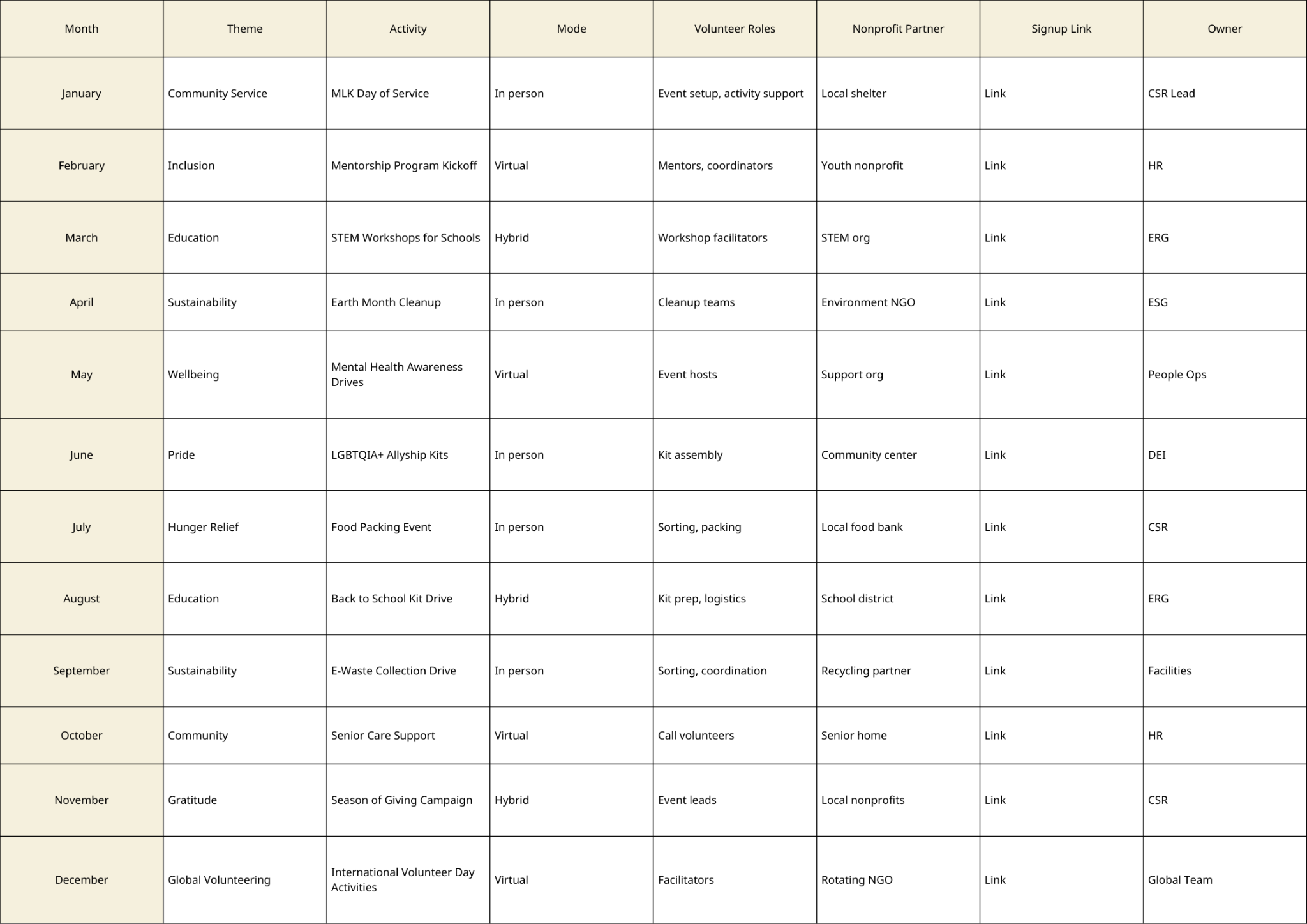
Then map out the important dates. Include globally celebrated days like Martin Luther King Jr. Day, Earth Day, Women’s History Month, World Environment Day, International Volunteer Day, Giving Season, and Pride Month. Add regional observances relevant to your US, India, and EU audiences as well. This ensures representation and cultural relevance. After that, list activities for each month. Mix in a variety of virtual options so teams can join through your online volunteer calendar, especially useful for hybrid or distributed workforces.
Assign clear owners for each activity so responsibilities stay organized. A volunteer scheduling calendar helps teams understand who coordinates what, which nonprofits are involved, and how to prepare volunteers. Once you add dates, themes, activity names, volunteer roles, and signup links, your volunteer calendar template becomes easy to use, easy to manage, and easy to communicate across your organization.
When you combine thoughtful planning with simple structure, your calendar becomes a predictable, inspiring roadmap that guides your entire volunteer program all year long.
Sample Volunteer Calendar Template (Ready to Use)
Below is a clean, professional template you can embed directly in your blog.
Volunteer Calendar Template
1. Program Overview
- Year: 2025
- Primary Goals:
- Increase employee participation
- Support nonprofit partners consistently
- Create a mix of virtual and in-person activities
- Key Themes: Education, Sustainability, Inclusion, Community Development
2. Monthly Breakdown
3. Impact Tracking Fields
- Total hours volunteered
- Number of volunteers
- Number of virtual vs in-person activities
- Beneficiary outcomes
- Stories and photos
- Volunteer feedback score
4. Communication Plan
- Monthly announcements
- Reminder emails one week before each event
- Slack or Teams channel updates
- Celebratory recap at the end of the month
5. Review and Reflection
- Quarterly review meetings
- Feedback from volunteers and nonprofits
- Calendar adjustments for upcoming months
How to Use an Online Volunteer Calendar Effectively
An online volunteer calendar is where your planning turns into real participation. Instead of relying on scattered emails or one-off announcements, an online volunteer calendar brings everything together in one accessible space that employees can explore effortlessly. It allows volunteers to browse upcoming activities, check time slots, sign up instantly, and receive automated reminders that keep them engaged and on track. For global and hybrid teams, this level of accessibility removes common barriers and makes volunteering feel seamless no matter where employees are located.
Did you know? Organizations that use centralized online scheduling tools report up to 60 percent higher volunteer turnout compared to those relying on manual coordination.
Visibility and ease of access are two of the strongest predictors of participation. When employees can quickly see what is happening and commit without friction, they are far more likely to join and stay involved throughout the year.
Another advantage is real-time updates. Plans can shift, nonprofits may adjust capacities, or new opportunities might open mid-month. An online volunteer calendar ensures everyone sees the most accurate, current information without multiple follow-ups. When synced with internal channels like Slack, Teams, Outlook, or Google Calendar, volunteers also receive friendly nudges that help them stay aware and excited about upcoming events. This creates a smoother experience for organizers and a more engaging experience for volunteers.
Your volunteer scheduling calendar becomes even more powerful when paired with dashboards showing participation numbers, progress toward quarterly goals, and upcoming themed events. Visual cues help employees see the collective impact they are contributing to. When volunteers can explore, sign up, track progress, and celebrate impact all in one place, your online volunteer calendar becomes more than just a tool. It becomes a central hub that energizes your program, strengthens consistency, and elevates your year-round engagement.
If you are looking for fresh, meaningful ideas to enrich your volunteer calendar, Goodera’s curated collection of activities can help you plan celebrations that your teams will genuinely enjoy. From cultural moments to global observances and community-centered campaigns, these handpicked activities are designed to spark participation, build connection, and make every celebration feel intentional and inclusive. Explore upcoming campaigns to find the perfect fit for your team and bring your volunteer calendar to life.

Key Pitfalls to Avoid When Using a Volunteer Calendar
Even the best-planned volunteer calendar can lose its impact if a few common pitfalls slip in. Avoiding these challenges helps your calendar stay effective, engaging, and easy for teams to follow throughout the year.
1. Overscheduling Without Considering Capacity
It is easy to get carried away and fill your volunteer calendar with too many activities. Overscheduling often leads to low turnout, rushed preparation, and volunteer fatigue. Plan intentionally and prioritize quality over quantity. This approach keeps your teams energized and your nonprofit partners supported without overwhelming anyone involved.
A helpful way to balance capacity is to create quarterly themes and limit activities per month. This brings focus and gives everyone enough space to participate meaningfully throughout the year.
2. Forgetting Virtual or Hybrid Volunteering Options
Many teams work remotely, across time zones, or with different levels of schedule flexibility. Relying entirely on in-person activities can unintentionally exclude a large portion of your workforce. Virtual and hybrid options make your calendar more inclusive and help more people feel connected.
Did you know? Organizations offering at least one virtual volunteering opportunity each month see up to 35% higher participation among distributed teams. Flexibility creates access, and access drives engagement.
3. Not Updating the Calendar When Plans Change
An outdated volunteer calendar can cause confusion, miscommunication, and missed opportunities. Plans shift, capacities change, new nonprofit needs arise, and sometimes activities need to move to different dates. Make it a habit to update your calendar in real time so volunteers always see accurate information.
A simple rule is to review your calendar briefly at the start of each week. This practice keeps your planning tidy and your volunteers well-informed.
4. Missing Clear Instructions and Signup Details
Volunteers hesitate when instructions are unclear. Missing details like what to bring, how long the activity will take, where to assemble, or what skills are required can reduce participation. Your calendar becomes much more effective when every activity includes clear signup links and basic logistics.
Aim to give volunteers a quick snapshot of what to expect. This creates confidence and reduces unnecessary questions for organizers.
5. Skipping Impact Tracking and Story Collection
When organizations forget to capture volunteer hours, outcomes, or stories, they lose valuable insights that help them evaluate their program. Tracking impact helps you celebrate wins, identify gaps, and show leadership how volunteering contributes to company culture and community value.
A simple impact section in your volunteer calendar can help you gather this information consistently and avoid scrambling for data at the end of the year.
For deeper support on measuring outcomes, explore Goodera’s blog: The Most Complete Guide You Will Find on Corporate Volunteerism Programs
Avoiding these pitfalls keeps your volunteer calendar purposeful, accessible, and easy for teams to trust and follow. With careful planning, clear communication, and thoughtful updates, your calendar becomes a tool that strengthens your volunteering program month after month.
Wrapping It Up!
A volunteering calendar is far more than a planning tool. It is a bridge between intention and action, and a way for organizations to bring people together around causes that create real change. When thoughtfully designed, a volunteer calendar becomes the heartbeat of your social impact program, helping teams stay aligned, motivated, and consistent throughout the year. It gives volunteers the clarity they need, gives nonprofits the support they deserve, and gives organizations a clear path to build deeper community connections.
Did you know? Employees who volunteer regularly are more likely to stay engaged, feel connected to their company’s mission, and speak positively about their workplace. Structure makes this possible. When dates, themes, and opportunities are easy to understand and easy to access, volunteering becomes a natural part of your culture rather than an occasional extra. A well-built volunteer calendar template empowers people to show up with confidence and feel proud of the impact they are creating together.
As you begin designing or refining your volunteer scheduling calendar, remember that the most impactful programs are the ones that stay flexible, inclusive, and aligned with the communities they serve. Start simple, build with intention, update consistently, and let your calendar evolve as your team grows more connected and engaged. Your small steps today will shape a year filled with positive action and stories worth celebrating.
If you want support in bringing your volunteer calendar to life, Goodera offers tools, resources, and global volunteering experiences that make planning easier and impact more meaningful. Explore upcoming campaigns, browse best practice guides, or connect with nonprofits ready to collaborate. With the right plan and the right partners, your volunteering calendar can become a catalyst for powerful, lasting change.
Let this be the year your team volunteers with purpose, clarity, and joy.
Frequently Asked Questions
1. What Is a Volunteer Calendar?
A volunteer calendar is a yearly or monthly plan that outlines volunteering dates, themes, activities, and nonprofit partnerships. It helps teams stay organized, prepares nonprofits for volunteer support, and ensures employees know exactly how and when they can participate. Many organizations use a volunteer scheduling calendar to boost consistency and to keep their social impact programs running smoothly.
2. Why Should My Company Use a Volunteer Calendar?
Using a volunteer calendar helps increase participation, improves communication, and removes the confusion that often comes with last-minute planning. It also allows your teams to align volunteering activities with company values, cultural observances, and community needs. Did you know organizations with structured volunteering calendars see up to 40 percent higher engagement? Predictability drives participation.
3. How Do I Create a Volunteer Calendar Template for My Team?
Start by listing your goals, selecting themes, mapping key dates, and identifying activities for each month. Add volunteer roles, signup links, impact tracking fields, and owners for each event. If you need inspiration, you can explore Goodera’s blogs, toolkits, and activity catalogs to build a volunteer calendar template that works for global, hybrid, or fully remote teams.
4. What Should I Include in a Volunteer Calendar?
Every effective volunteer calendar includes dates, themed activities, volunteer roles, modes of volunteering, signup links, and basic instructions. It also includes a section for tracking impact, such as volunteer hours, participation numbers, and beneficiary outcomes. Including these fields in your volunteer scheduling calendar helps you measure what worked and what needs improvement.
5. How Does an Online Volunteer Calendar Help Remote or Global Teams?
An online volunteer calendar lets employees browse events, choose times that work for them, sign up instantly, and receive reminders. This removes barriers for teams spread across time zones or working remotely. Companies using centralized digital scheduling tools often see up to 60 percent higher turnout because volunteers can access opportunities anytime and from anywhere.
6. How Do I Choose Themes for My Volunteer Calendar?
Choose themes that align with your company values, community needs, and global observances such as Earth Month, Pride Month, Mental Health Awareness Month, and International Volunteer Day. Using themes helps your volunteer calendar template stay cohesive and helps employees understand the purpose behind each initiative.
7. What Are the Most Common Mistakes to Avoid When Managing a Volunteer Calendar?
Common pitfalls include overscheduling, forgetting virtual options, failing to update the calendar, skipping logistics details, and not tracking impact. Avoiding these mistakes helps your volunteer scheduling calendar stay accessible, accurate, and meaningful. A good rule is to plan intentionally, update often, and always provide clear instructions for volunteers.
8. Can I Use a Volunteer Calendar for Hybrid or Virtual Volunteering?
Yes. A volunteer calendar works for virtual, in-person, and hybrid experiences. You can include hosting links, facilitator details, digital toolkits, and online training sessions to make participation seamless. Virtual opportunities also help increase inclusivity for caregivers, remote workers, or employees with different schedules.
9. How Do I Keep Employees Motivated Throughout the Year?
Consistency, communication, and variety help sustain motivation. Use your online volunteer calendar to share monthly themes, activity spotlights, impact stories, and reminders. Recognizing volunteers regularly also keeps enthusiasm strong. Linking activities to cultural moments makes participation feel timely and meaningful.
10. Where Can I Find Volunteer Activity Ideas to Add to My Calendar?
Goodera offers a wide range of curated activities across themes like sustainability, education, community building, wellbeing, and inclusion. You can explore guides such as: