Micro Volunteering: Small Ways to Give Back, Anytime

In today’s fast-paced world, finding time to volunteer can feel impossible. Between work, family, and personal commitments, dedicating hours to a cause isn’t always realistic, but that doesn’t mean you can’t make a difference. That’s where micro volunteering comes in: quick, meaningful actions that empower anyone to contribute to the social good, no matter how busy life gets.
Micro-volunteering opportunities can be as simple as writing thank-you notes to healthcare workers or recording audiobooks for the visually impaired. Small acts that create powerful ripple effects of change.
According to Goodera’s Corporate Volunteering Quotient Report 2025, companies that introduced short, flexible volunteering formats saw up to 60% higher participation rates among employees, proving that small commitments can lead to big engagement.According to Goodera’s Corporate Volunteering Quotient Report 2026, median workforce participation in corporate volunteering reached 25.6% in 2026 across the 240 companies analyzed. The report also found that companies using structured volunteering accelerators, including digital platforms, annual campaigns, and Volunteer Time Off, achieved substantially higher participation, reinforcing the value of making volunteering easy to discover and fit into employees’ schedules.
In this blog, we’ll explore what Micro Volunteering is, why it’s gaining momentum globally, and how both individuals and organizations are weaving it into their corporate volunteering strategies to create scalable, lasting impact.
What Is Micro-Volunteering?
Modern schedules can make volunteering feel out of reach, but the drive to create change remains strong. Micro-volunteering makes it easier to act on that purpose, offering simple, flexible ways to contribute without long-term commitments.
At its core, Micro-Volunteering means participating in small, manageable acts of service that take anywhere from a few minutes to a few hours. These are simple, often one-time tasks that collectively create a big impact. You might spend a few moments translating a document for a nonprofit, designing a poster for a local fundraiser, or writing a note of encouragement to someone in need. None of these tasks demands weeks of commitment, yet together, they help sustain community movements and social causes around the world.
So, what is Micro-Volunteering in today’s context? It’s volunteering reimagined for busy lives. The idea is simple: instead of asking people to dedicate full days to volunteering, it invites them to contribute in short bursts that fit seamlessly into their routines. With technology making virtual participation effortless, individuals can now lend their time and skills globally, from their desks, phones, or even while commuting.
Beyond individual participation, Micro-Volunteering has become a key component of modern corporate volunteering programs. Many organizations are realizing that employees are eager to contribute but struggle to find time. By offering micro-volunteering options, such as one-hour mentoring sessions, quick online challenges, or short community drives, companies can make social impact accessible to all, not just those who can take full volunteering days. This approach fosters stronger employee engagement, builds community trust, and makes volunteering part of workplace culture rather than a once-a-year activity.
For nonprofits, this model opens doors to a global pool of volunteers. A few dozen people completing small, distributed tasks can collectively deliver the same results as one large, time-consuming event. It’s an efficient, scalable way to harness goodwill without overwhelming participants or organizations.
Ultimately, Micro-Volunteering challenges the old belief that you need ample free time to make a difference. It proves that generosity isn’t about duration, it’s about consistency and intent. Every action, no matter how small, contributes to a greater wave of positive change.
Why Is Micro-Volunteering So Popular Today?
In today’s dynamic and constantly changing world, time remains our most limited asset. Between work, family, and personal goals, few people can commit to traditional, long-term volunteering programs. Yet, the desire to do good hasn’t faded; it’s simply evolved. Micro-Volunteering has emerged as a way to bridge this gap, offering quick, low-barrier, and purpose-driven ways for people to contribute to causes they care about. It’s volunteering reimagined for a generation that wants flexibility without losing impact.
Did You Know? Recently, 76% of volunteers worldwide engaged in micro or digital volunteering activities, with 18% of formal volunteers serving exclusively online,a significant jump from previous years. This shift is driven by the growth of online platforms and the need for flexible, low-commitment opportunities.
Here’s a closer look at why Micro-Volunteering opportunities are becoming a global movement:
1. Convenience and Flexibility
Micro-Volunteering thrives because it respects people’s time. You can contribute in as little as five minutes, during your commute, lunch break, or even while scrolling online. Whether it’s signing a petition, reviewing resumes for job seekers, or helping nonprofits test digital tools, these actions fit into existing routines.
This flexibility also helps individuals maintain consistency. Instead of feeling overwhelmed by big commitments, people can engage regularly in smaller, more manageable ways, building habits of compassion that last longer.
2. Accessibility Through Virtual Volunteering
Technology has made giving back borderless. With the rise of virtual volunteering, anyone with an internet connection can support global causes, from translating educational materials for NGOs to mentoring youth online. These digital channels eliminate barriers like location, mobility, and travel costs, making participation inclusive and practical.
Virtual platforms also help nonprofits tap into specialized global talent; a marketing professional in New York can assist a grassroots campaign in Kenya within minutes. That global connectivity is a defining strength of modern Micro-Volunteering.
3. Inclusivity and Belonging for All
Micro-Volunteering is built on the belief that everyone can make a difference, regardless of age, background, or professional experience. Students can start small by sharing awareness posts or joining local drives; retirees can dedicate spare time to causes that align with their passions; busy professionals can use their skills to help nonprofits virtually.
Because there’s no fixed schedule or skill requirement, these opportunities create a more inclusive and diverse volunteering ecosystem. Everyone, from introverts to executives, can find ways to contribute meaningfully.
4. Corporate Support and CSR Integration
Companies are increasingly recognizing that employee engagement doesn’t have to be limited to full-day volunteering events. By introducing Micro-Volunteering into their corporate volunteering and CSR programs, they give employees a flexible way to participate in social good, especially in hybrid or remote work environments.
For instance, many organizations now run short skill-based sessions, “impact challenges,” or virtual micro actions that employees can complete in under an hour. This approach not only boosts participation rates but also nurtures empathy, teamwork, and a sense of shared purpose within the company culture.
In the Skills-Based Volunteering webinar hosted by Goodera, leaders from Salesforce and IBM highlighted that Micro-Volunteering opportunities foster continuous learning and skill development among employees, enhancing their professional growth while contributing positively to nonprofit causes.
In essence, Micro-Volunteering captures the spirit of the digital age: fast, flexible, and deeply connected. It empowers individuals to turn spare moments into meaningful contributions and helps companies weave purpose into everyday work life. What was once seen as “too little to matter” is now redefining how we measure generosity, one action at a time.
The Micro-Volunteering Revolution: Should Your Organization Join In?
As work, technology, and social purpose continue to evolve, so does the way organizations approach community impact. Gone are the days when volunteering only meant dedicating full days to on-ground events. Today, Micro-Volunteering offers a fresh, agile way for organizations, from lean nonprofits to large enterprises, to empower people to give back in ways that fit modern lifestyles.
Did You Know? Micro-Volunteering especially appeals to younger generations, with Gen Z participation rising to 27% of the workforce engaging in volunteer activities, often through short-term, skills-based projects. Additionally, 40% higher participation rates are observed among women compared to men when it comes to micro-volunteering activities.
For many small businesses, start-ups, and nonprofits operating with limited resources, Micro-Volunteering opportunities provide an ideal model. They enable organizations to invite support through short, skill-based, or task-specific contributions that can often be completed remotely. Whether it’s a volunteer creating a social media graphic, proofreading content, or offering marketing advice, these small acts collectively create significant value for resource-constrained teams.
Also read: 12 Inspiring Corporate Social Responsibility Examples from Brands in Action to know about CSR examples from leading companies.
Why Micro-Volunteering Works for Small and Mid-Sized Organizations
1. Flexible Contribution Model:
Unlike traditional volunteering, which requires fixed schedules and longer commitments, Micro-Volunteering allows organizations to design opportunities that fit both their needs and volunteers’ availability. This makes participation easier, more consistent, and sustainable over time. Volunteers can complete tasks in bite-sized portions, an hour of graphic design here, 20 minutes of translation there, and still make tangible contributions without overwhelming either side.
2. Remote-friendly Impact:
The rise of virtual volunteering has broken down geographical barriers. A nonprofit in Chicago can now collaborate with a volunteer in Manila or Madrid. This accessibility not only widens the pool of supporters but also brings diverse perspectives and skill sets into organizational projects. Remote micro actions like research assistance, editing, or data cleanup can be coordinated seamlessly through online tools, reducing costs and improving efficiency.
3. Skill-based Empowerment:
Small organizations often need specialized help but lack the resources to hire experts. Micro-Volunteering creates a bridge between need and expertise. A digital marketer, HR professional, or designer can contribute small portions of their professional skill, providing high-value outcomes without long-term contracts. These micro collaborations help nonprofits function at higher professional standards and grow sustainably.
4. Broader Reach and Engagement:
Micro-Volunteering opens doors to individuals who care deeply about causes but can’t commit to traditional schedules, students balancing studies, parents managing families, or professionals with demanding jobs. By lowering the time and commitment barrier, you attract a larger, more diverse pool of participants, creating a community that’s vibrant and continuously active.
What About Larger Organizations?
For established companies with structured CSR or corporate volunteering programs, Micro-Volunteering doesn’t replace traditional volunteering; it enhances it. Many enterprises are integrating micro actions into their annual impact calendars as “continuous engagement moments.”
For example:
- A global tech firm might run a 20-minute “Digital Literacy Challenge,” where employees record quick tutorial videos for underprivileged students.
- A consumer goods company could organize a one-hour virtual mentoring drive, connecting employees with social entrepreneurs.
These shorter, more frequent opportunities keep employees engaged year-round and complement larger, flagship volunteering days. They also appeal to remote and hybrid workers who want to stay connected to the company’s social mission from wherever they are.
Did You Know? Companies implementing Micro-Volunteering have seen a 35% rise in overall employee engagement scores, particularly among remote and hybrid workers, with 65% of these initiatives focused on short, skill-based, and time-efficient tasks.
Moreover, Micro-Volunteering reinforces a sense of shared ownership in company culture. Employees feel they can make a difference without waiting for the “big day of service.” It keeps purpose continuous, not episodic.
Finding the Right Fit
Choosing whether to adopt Micro-Volunteering comes down to aligning opportunities with your organization’s goals, team bandwidth, and operational structure. Here’s how to make that assessment:
- Identify suitable tasks: Start with small, well-defined projects that can be completed independently, like content translation, data verification, or feedback collection.
- Test and scale: Pilot a few short volunteering activities, collect feedback, and then expand based on what resonates most with your volunteers.
- Blend formats: Combine Micro-Volunteering with traditional on-ground or skill-based programs to maintain a steady rhythm of engagement throughout the year.
- Measure outcomes: Use simple tracking tools to record participation, completion rates, and community feedback to evaluate overall impact and volunteer satisfaction.
While Micro-Volunteering offers agility, inclusivity, and scalability, it’s not a one-size-fits-all model. Organizations should balance it with structured initiatives that provide deeper, sustained impact. When done right, the two can coexist beautifully, micro actions feeding momentum, and larger programs anchoring strategy.
Pro Tip:
Use Micro-Volunteering as a “gateway” into your broader CSR ecosystem. A volunteer who completes a 30-minute virtual task today might become your most committed on-ground participant tomorrow. Think of micro-volunteering not as the end goal, but as the spark that keeps your community engaged and inspired throughout the year.
Benefits & Challenges of Micro-Volunteering
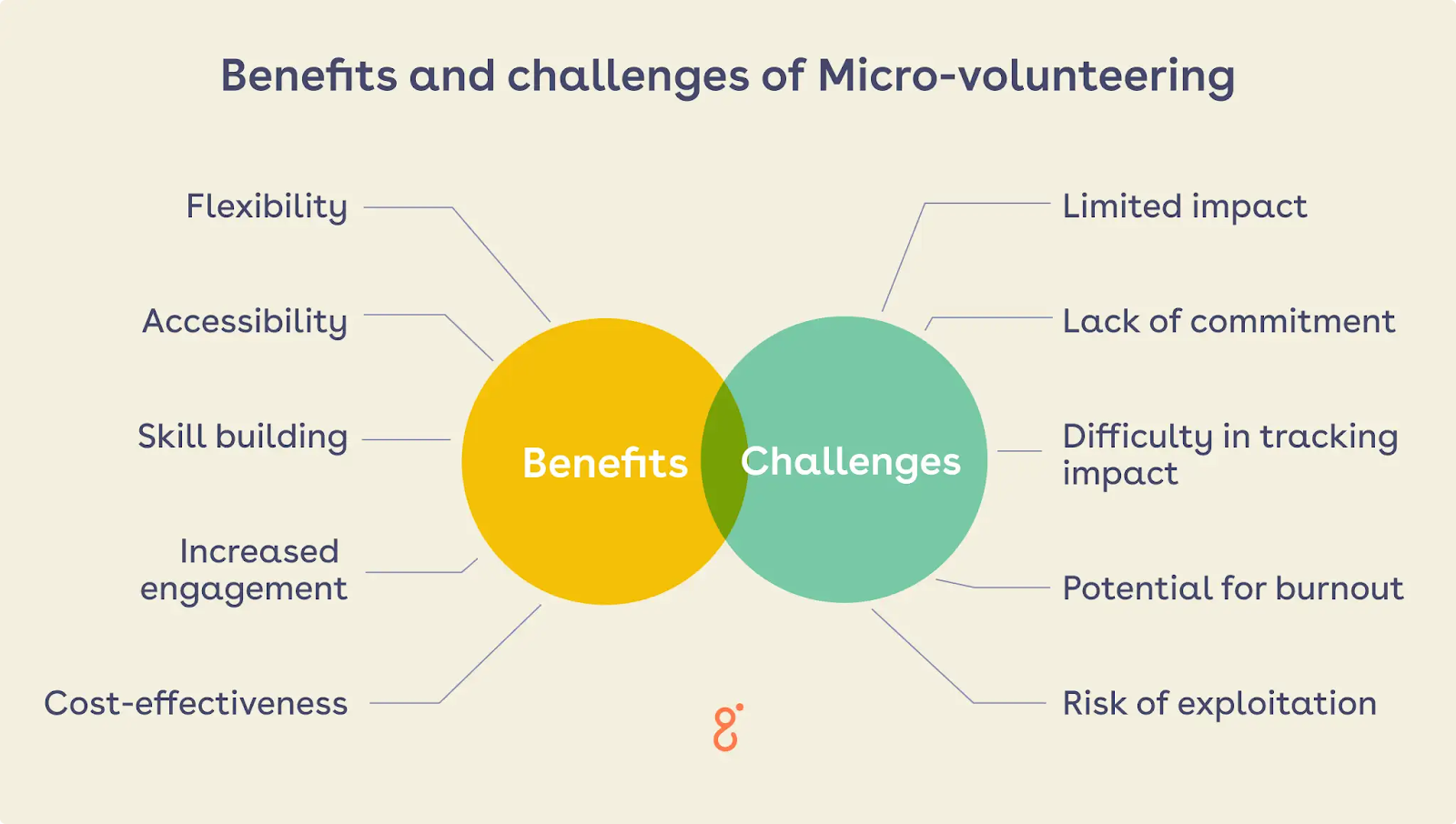
Alt text: Venn diagram showing benefits and challenges of micro-volunteering. Benefits include flexibility, accessibility, skill building, increased engagement, and cost-effectiveness. Challenges include limited impact, lack of commitment, difficulty in tracking impact, potential for burnout, and risk of exploitation.
As more organizations and individuals embrace short, purpose-driven acts of service, Micro-Volunteering is proving that even small contributions can create big ripples of change. However, like any model, it brings both opportunities and challenges. Understanding both sides helps organizations design programs that are impactful, inclusive, and sustainable.
Benefits of Micro-Volunteering
1. Flexibility That Fits Modern Life
One of the greatest strengths of Micro-Volunteering is its adaptability. Volunteers can choose when, where, and how they contribute, whether that’s five minutes spent reviewing a nonprofit’s website or an hour mentoring virtually. This flexibility attracts busy professionals, students, and retirees alike, expanding the volunteer pool dramatically.
2. Accessibility Through Technology
The rise of virtual volunteering has made social impact borderless. All that’s needed is an internet connection and a desire to help. People from different geographies can now collaborate on causes that matter; a volunteer in Boston can edit grant proposals for a nonprofit in Nairobi, while another in Austin helps design posters for a wildlife campaign. This inclusivity ensures that anyone, anywhere, can be a changemaker.
3. Skill Building and Personal Growth
Many Micro-Volunteering opportunities involve skill-based contributions, like writing, marketing, design, or translation. This not only benefits organizations but also helps volunteers enhance their resumes, confidence, and sense of purpose. In Goodera’s CSR webinars, leaders from Salesforce and IBM shared how Micro-Volunteering fosters continuous learning, particularly among employees looking to apply professional skills to meaningful causes.
4. Employee and Stakeholder Engagement
For companies, offering corporate volunteering options in micro formats boosts participation and morale. Short, achievable actions make volunteering accessible to all employees, not just those who can spare full days. It’s a simple yet effective way to weave purpose into workplace culture and strengthen connections among teams, customers, and communities.
Did You Know? Harvard research noted people volunteering as little as 2 hours weekly through Micro-Volunteering experience increased optimism, happiness, and life purpose,all vital outcomes that appeal to busy individuals seeking manageable, meaningful involvement.
5. Cost-Effectiveness for Organizations
Because most Micro-Volunteering tasks can be done remotely and require minimal coordination, they’re an affordable option for nonprofits and small businesses. There’s less need for physical venues, logistics, or equipment, yet the potential reach and visibility of these programs are significant.
Challenges of Micro-Volunteering
1. Limited Depth of Impact
While micro actions add up over time, individual tasks often address small parts of larger challenges. A single social media post or data-entry session might not generate measurable long-term outcomes. Organizations need clear aggregation strategies to capture the collective value of many small efforts.
2. Lower Volunteer Retention
Because Micro-Volunteering requires minimal commitment, some participants may treat it as a one-time effort rather than an ongoing relationship. Maintaining engagement over time requires thoughtful follow-ups, community building, and consistent communication.
3. Measuring and Tracking Impact
With hundreds of micro tasks happening asynchronously, quantifying the overall effect can be complex. Tools and platforms that centralize volunteer activity, like dashboards or impact reports, can help organizations visualize progress and demonstrate accountability to stakeholders.
Ready to turn your CSR efforts into measurable impact? Dive into our blog and get started today: Effective Strategies for Evaluation of CSR Projects
4. Volunteer Burnout from Overextension
Ironically, the very flexibility that attracts people can also lead to burnout if volunteers take on too many small tasks simultaneously. Encouraging pacing, balance, and realistic expectations is key to sustaining long-term participation.
5. Ethical and Operational Risks
Without clear boundaries, Micro-Volunteering can blur into unpaid labor. Organizations must ensure that opportunities are ethical, purposeful, and respectful of volunteers’ time. The focus should always remain on mutual benefit, helping volunteers grow while advancing a meaningful mission.
Did You Know? Despite the rapid growth, 22% of micro-volunteers report feeling less connected to organizations due to the short nature of tasks, underscoring the importance of deliberate community-building efforts within micro-volunteering programs.
How to Find Balance
The success of Micro-Volunteering lies in balance, pairing flexibility with purpose, accessibility with structure, and individual freedom with collective impact. For nonprofits, it offers scalability. For companies, it deepens engagement. And for individuals, it’s a chance to give meaning to even the smallest moments of their day.
When designed thoughtfully, Micro-Volunteering becomes more than just “quick help”, it becomes a sustained movement of empathy, connection, and everyday impact.
Learn how to measure what truly matters, get your CSR impact assessment framework.

How Can Companies Integrate Micro-Volunteering into CSR Programs?
For modern organizations, Micro-Volunteering is redefining how employees engage in social impact. Not everyone can dedicate a full day to volunteering, but nearly everyone can contribute 10–15 minutes toward a cause that matters. This shift reflects a growing awareness that corporate volunteering doesn’t need to be a large-scale event; it can be a series of small, meaningful actions woven into everyday work life.
Did You Know? Corporate America has embraced micro-volunteering, with 48% of companies incorporating “5 Minutes for Good” style initiatives in their employee engagement programs in 2025, driving a 22% increase in sustained volunteer participation among hybrid and remote workers.
Here are some practical and effective ways for companies to integrate Micro-Volunteering opportunities into their CSR strategies:
1. Curate Impactful and Accessible Opportunities
Develop a catalog of quick, skill-based, or virtual activities that employees can complete individually or in small teams. These might include reviewing resumes for job seekers, recording short mentorship videos, or designing awareness materials for nonprofits. The key is to offer flexibility and variety, so employees can choose causes aligned with their passions and expertise.
Example: A company could run a monthly “Impact Hour,” where employees choose from a list of 15-minute volunteering tasks hosted on an internal platform.
2. Launch Team-Based Micro Challenges
Gamify engagement with short, purpose-driven challenges. Team-based campaigns, like a “5 Minutes for Good” week or “100 Acts of Kindness” drive, foster collaboration, healthy competition, and a sense of shared purpose. When participation feels fun and social, employees are more likely to join in and stay engaged.
These campaigns can also bridge departments and geographies, especially in hybrid workplaces. Employees from different locations can unite around the same mission through shared micro tasks, amplifying both connection and impact.
3. Recognize and Celebrate Participation
Recognition turns micro efforts into macro motivation. Acknowledging volunteers through internal newsletters, leaderboards, or shout-outs during team meetings reinforces the company’s commitment to purpose. Even small tokens, digital badges, certificates, or CSR points, can make employees feel valued and encourage repeat participation.
This continuous reinforcement transforms Micro-Volunteering from a one-off activity into a sustainable habit of giving back.
4. Leverage CSR and Volunteering Platforms
Partnering with technology platforms like Goodera can help streamline virtual volunteering and CSR management. Such tools simplify the process of curating opportunities, tracking participation, and measuring impact, ensuring every micro action is visible and celebrated. Automated reporting also helps CSR leaders communicate outcomes clearly to stakeholders and align volunteering efforts with broader ESG goals.
5. Embed Purpose into Daily Work Culture
Ultimately, the goal is to make Micro-Volunteering part of the company’s rhythm, not a once-a-year CSR event. Encourage teams to integrate short volunteering sessions into work calendars, celebrate social impact during town halls, and share stories of change internally. When purpose becomes part of the everyday conversation, engagement follows naturally.
In essence, integrating Micro-Volunteering into CSR isn’t just about convenience; it’s about inclusion, consistency, and culture. By giving employees opportunities to contribute in small but meaningful ways, companies can build a workforce that sees doing good not as an extra task, but as part of who they are and what they do.
Also read the blog: Create a Volunteering Policy That Drives Real Impact at Work to create a volunteering policy that drives impact.
What Are Some Great Micro-Volunteering Ideas?
Micro-Volunteering is as diverse as the people who take part in it. From digital advocacy to hands-on community work, these short, purposeful actions allow anyone to give back, no matter how busy life gets. What makes it remarkable is its flexibility: every small effort, when multiplied across thousands of participants, creates a powerful, measurable impact.
Below are some Micro-Volunteering examples that show just how creative, accessible, and scalable this approach can be.
1. Digital & Virtual Micro-Volunteering Opportunities
Technology has made it easier than ever to contribute to social causes without leaving home. Through virtual volunteering, individuals can collaborate with nonprofits globally, share their expertise, and drive awareness in meaningful ways, all from a laptop or smartphone.
- Online mentoring: Professionals can spend 15–30 minutes reviewing a student’s resume, conducting mock interviews, or refining a LinkedIn profile. These brief but impactful sessions help youth and job seekers gain confidence, improve employability, and access valuable guidance they might not otherwise receive.
- Digital advocacy: Sharing verified campaigns, petitions, or nonprofit stories on social media may seem small, but it amplifies visibility exponentially. Each share or retweet extends a cause’s reach to new audiences, helping organizations raise awareness and attract support.
- Crowdsourced translation: Volunteers fluent in multiple languages can translate short snippets of text, captions, or awareness materials for nonprofits working across borders. This removes communication barriers and enables organizations to engage beneficiaries in their native languages, building inclusion and trust.
- Tech for good: For those with digital skills, testing nonprofit websites or reviewing accessibility features is an impactful contribution. Simple feedback on navigation or readability can make online resources more user-friendly, particularly for people with disabilities.
These Micro-Volunteering opportunities demonstrate how technology transforms kindness into scalable impact, connecting global citizens in a shared mission of change.
2. Community & Environmental Micro Actions
Micro-Volunteering extends beyond screens; it’s also about taking small, tangible steps to improve the spaces we live in. These community-based examples combine environmental awareness with personal involvement, allowing people to see the difference they make firsthand.
- Community mapping: Volunteers can assist disaster response teams or environmental organizations by tagging schools, hospitals, or affected zones on open-source maps. This real-time data helps responders allocate resources efficiently during crises or urban development planning.
- Environmental action: Picking up litter during a morning walk, planting a sapling in your garden, or joining a 10-minute park cleanup may seem small, but they contribute to cleaner, greener communities. When multiplied across hundreds of participants, these acts form the backbone of sustainable living.
- Local engagement: Micro-Volunteering at the neighborhood level, such as delivering donated books to libraries, dropping off care kits, or writing thank-you cards to frontline workers, helps strengthen local networks of kindness. These small gestures create immediate emotional impact and foster a culture of compassion.
Every action, no matter how localized, ripples outward, reminding us that global change begins with small, personal responsibility.
3. Corporate & Team-Based Micro-Volunteering
For businesses, corporate volunteering is evolving, from annual events to everyday engagement. Micro formats allow companies to integrate purpose into routine work life, keeping employees connected to social causes throughout the year.
- “5 Minutes for Good” campaigns: Teams can participate in bite-sized impact challenges such as writing appreciation notes, recording short thank-you videos, or pledging eco-friendly habits. These quick, coordinated actions boost morale, create friendly competition, and reinforce shared company values.
- Skill-sharing sessions: Employees can offer professional expertise to nonprofits in short bursts, from a 20-minute digital marketing consultation to a one-hour data analysis session. This approach allows companies to deliver high-value impact while helping employees build confidence and leadership skills.
- Micro donations and impact tracking: Some organizations encourage employees to make small, recurring contributions through payroll round-ups or CSR apps. For instance, donating spare change from transactions can collectively fund educational kits or meals for underprivileged communities.

Through these initiatives, Micro-Volunteering strengthens employee engagement and nurtures a culture where doing good becomes part of daily work, not just an annual event.
4. Creative & Skill-Based Contributions
Creativity has the power to inspire and mobilize, and Micro-Volunteering provides an outlet for creative professionals to use their talents for impact.
- Graphic design and storytelling: A designer can create a simple infographic or awareness poster, while a writer can craft a short story highlighting a nonprofit’s success. These materials help organizations communicate effectively and attract donors or volunteers.
- Photography and content creation: Volunteers can donate existing photos or create new visuals that nonprofits can use in their campaigns. A single compelling image can elevate a cause’s credibility and connect emotionally with supporters.
- Virtual brainstorming sessions: In 30-minute online ideation meetups, volunteers can collaborate with nonprofit teams to generate ideas for events, outreach strategies, or creative campaigns. Such sessions bring fresh perspectives to causes that may otherwise lack marketing or communication expertise.
These Micro-Volunteering examples showcase how creativity, combined with purpose, can drive visibility, empathy, and change at scale.
Inspiring Micro-Volunteering Examples
Micro-Volunteering proves that even the smallest actions can spark large-scale impact. Around the world, companies and communities are using creativity, technology, and compassion to redefine how we give back. Below are some inspiring Micro-Volunteering examples that highlight how organizations are turning minutes into meaningful change.
1. Salesforce’s “1-1-1 Model”, Scaling Impact with Purpose
Salesforce is one of the earliest champions of purpose-driven business. Its celebrated 1-1-1 model dedicates 1% of the company’s time, product, and equity to nonprofits and social causes. Employees are empowered to take part in Micro-Volunteering opportunities, such as offering pro-bono consulting, mentoring students, or supporting local nonprofits through virtual micro actions.
This model blends corporate volunteering with business strategy, proving that social impact can scale alongside profit. By encouraging employees to donate even small blocks of time, Salesforce ensures that community engagement becomes a habit, not an exception.
Fun fact: Salesforce employees have collectively contributed over 7 million volunteer hours worldwide, much of it through short, skill-based activities that fall under Micro-Volunteering.
2. Deloitte’s “Impact Day”, Short Acts, Long-Term Value
Deloitte’s Impact Day is one of the world’s most recognized Micro-Volunteering programs. What started as a single day of service has evolved into a global tradition where tens of thousands of employees volunteer simultaneously, both in person and through virtual volunteering.
Employees choose from quick, high-impact projects such as hosting digital literacy workshops, leading sustainability awareness drives, or helping nonprofits with data analysis. These actions may last only a few hours, but the ripple effects extend for months. Deloitte’s approach showcases how Micro-Volunteering can complement large CSR initiatives, providing consistent engagement without overwhelming participants.
Pro Tip: Want to see how Micro-Volunteering fits into hybrid work models? Explore insights from Goodera’s CSR webinars on employee engagement and remote volunteering; they illustrate how companies like Deloitte keep impact continuous across global teams.
3. Microsoft’s “Give” Program, Powering Change Through Connection
Microsoft’s Give campaign empowers employees to take action in flexible, meaningful ways. From mentoring underprivileged youth to developing tech solutions for nonprofits, employees can choose from a range of Micro-Volunteering ideas that match their expertise and availability.
One standout feature is how Microsoft integrates virtual volunteering directly into its internal systems. Employees can log time, donate matching funds, and share success stories, all within the company’s collaborative platforms. This seamless integration makes social impact part of everyday work culture, reflecting how corporate social responsibility (CSR) is evolving for the digital age.
Did you know? In 2024 alone, Microsoft employees raised over $255 million for global causes, with thousands contributing through short, skill-based micro actions.
4. Be My Eyes, Technology that Empowers Humanity
The Be My Eyes app is a shining example of how technology can democratize volunteering. The platform connects blind and low-vision users with sighted volunteers through live video calls. In under five minutes, a volunteer can help read medication labels, describe colors, or navigate unfamiliar settings.
With more than 3.5 million volunteers in 180 countries, this is one of the most impactful Micro-Volunteering examples in accessibility and inclusion. It perfectly embodies the spirit of virtual volunteering, making a global difference from the palm of your hand.
How many lives could we touch if everyone gave just five minutes of their day to help another person?
5. Feeding America’s “50 States, 50 Meals” Campaign, Local Impact, National Reach
Feeding America, in partnership with General Mills, launched the 50 States, 50 Meals initiative, a campaign that mobilized volunteers across the U.S. to serve meals to people in need. While preparing and distributing meals might seem like a small gesture, the combined national participation created a wave of compassion that fed thousands of families.
This initiative illustrates how Micro-Volunteering can bring together communities, corporations, and individuals under a shared purpose. It also highlights how corporate volunteering and CSR programs can address systemic challenges, like food insecurity, through small, coordinated acts of service.
Insight: According to Feeding America, every volunteer hour translates to roughly 10 meals distributed, meaning a single lunch break can help feed an entire family.
These Micro-Volunteering opportunities show that impact doesn’t always require grand gestures or long-term commitments. What unites all these efforts, from Salesforce’s global volunteering framework to Be My Eyes’ digital community, is the shared belief that anyone can contribute, no matter how much time they have.
Micro-Volunteering turns empathy into action and time into transformation. And when individuals and companies join hands, these seemingly small moments of service build into something far greater, a global movement of purpose-driven change.
How to Get Started with Micro-Volunteering
Getting started with Micro-Volunteering is easier than you might think. You don’t need specialized skills, extra hours, or a huge network, just curiosity, compassion, and a few minutes to spare. Whether you want to help from your couch or get hands-on in your community, there are endless ways to make an impact.
Here’s a simple guide to help you begin your journey:
1. Identify What Matters Most to You
Before jumping into opportunities, reflect on the causes that truly move you, whether it’s education, climate action, animal welfare, gender equality, or digital literacy. When you choose a cause that resonates, your contributions feel more fulfilling and sustainable.
Tip: Think about your passions or professional strengths. If you’re a writer, you could help nonprofits craft awareness posts; if you love nature, consider micro clean-ups or local greening drives.
2. Find Trusted Micro-Volunteering Platforms
Explore platforms that curate verified Micro-Volunteering opportunities so you can contribute safely and effectively. Sites like Goodera, VolunteerMatch, DoSomething.org, and Catchafire connect individuals and companies with quick, vetted ways to give back, from virtual volunteering tasks to community challenges.
Many CSR and corporate volunteering programs also integrate with such platforms, allowing employees to log small acts of service through centralized dashboards that track time and impact.
3. Start Small, But Stay Consistent
Begin with one 5- to 10-minute activity per week. Write a thank-you note to a frontline worker, share an awareness post, or mentor a student online. The goal isn’t volume; it’s rhythm.
Over time, these micro actions become a meaningful habit. They also help you discover which kinds of volunteering align best with your lifestyle and interests.
4. Go Virtual and Global
Virtual volunteering makes it possible to contribute anytime, anywhere. From helping NGOs translate materials to designing simple posters or providing marketing advice, online tasks let you collaborate with nonprofits across borders. This flexibility means your impact isn’t limited by geography; your effort could touch lives continents away.
5. Share and Inspire Others
The spirit of Micro-Volunteering multiplies when shared. Encourage friends, family, or coworkers to join you. Turn micro actions into group challenges or add them to team meetings and CSR days. The more people involved, the greater the collective impact.
Example: A small team challenge, “10 minutes for good”, can lead to hundreds of completed tasks, amplifying community impact exponentially.
Consistency > Scale
In Micro-Volunteering, consistency matters far more than scale. Regular, bite-sized efforts, week after week, create long-term change. A single act might seem insignificant, but together, these moments form movements.
In short:
Start where you are. Use what you have. Do what you can, even if it’s just for a few minutes. With every message shared, skill offered, or idea contributed, you become part of a global wave proving that small acts can build a better world.
To Sum It Up
Micro-Volunteering isn’t just a passing trend; it’s a quiet revolution transforming how people and organizations drive change. In a world where time is scarce, it offers a new language of giving, one built on accessibility, empathy, and momentum. It shows us that impact doesn’t always require grand gestures; sometimes, it’s the smallest actions that create the loudest echoes.
For individuals, Micro-Volunteering is an invitation to turn idle moments into meaningful contributions, to make kindness part of everyday life. For organizations, it’s a chance to democratize social impact, opening doors for every employee, partner, or customer to participate in purpose in their own way. When integrated into corporate volunteering and CSR programs, these short, flexible acts weave empathy into the very fabric of company culture.
The beauty of Micro-Volunteering opportunities lies in their scalability. A student writing a note of encouragement, a designer creating a poster for a nonprofit, or a professional mentoring online for fifteen minutes, together, they form a global ecosystem of compassion powered by collective effort.
As technology connects us and workplaces become more human-centered, virtual volunteering will continue to expand this reach, allowing anyone, anywhere, to make a difference. What once required full days or physical presence can now be achieved in moments that matter, with purpose, not pressure.
In the end, Micro-Volunteering reminds us that change doesn’t begin with massive movements; it begins with a single decision to act. Every click, every message, every minute given to a cause adds to a larger wave of good. And when millions of people take small steps together, the world moves forward, one microact at a time.
Explore 50+ online CSR volunteering opportunities for remote teams
Frequently Asked Questions
1. What is Micro-Volunteering?
Micro-Volunteering refers to short, flexible volunteer opportunities that allow individuals to contribute their time and skills in small, manageable increments, often online. These activities can take anywhere from a few minutes to a few hours and are designed to fit into busy schedules while still making a measurable social impact. It’s an inclusive model that lowers the barrier to participation and expands the reach of volunteerism.
2. How does Micro-Volunteering differ from traditional volunteering?
Unlike traditional volunteering, which typically requires long-term commitment or in-person involvement, Micro-Volunteering focuses on quick, task-based actions that can often be completed remotely. This flexibility allows individuals and employees to volunteer anytime, anywhere, using digital tools and platforms. It’s ideal for organizations looking to make volunteering more accessible and scalable.
3. Why is Micro-Volunteering becoming popular among corporates?
Corporations are increasingly embracing Micro-Volunteering because it aligns perfectly with modern workplace culture, fast-paced, digital, and globally connected. It allows companies to engage employees in CSR programs year-round without disrupting work schedules. Moreover, it demonstrates a company’s commitment to accessible, inclusive, and sustained community engagement.
4. How does Micro-Volunteering contribute to employee engagement?
Micro-Volunteering empowers employees to take part in meaningful social impact initiatives without requiring large time commitments. This inclusivity drives higher participation and fosters a sense of purpose, belonging, and shared values. Engaged employees are more likely to stay motivated and connected to their organization’s mission.
5. What are some examples of Micro-Volunteering activities?
Examples include mentoring students virtually, translating nonprofit materials, recording audiobooks for the visually impaired, writing thank-you notes for healthcare workers, or helping NGOs with digital marketing. Many companies also organize “micro challenges”; short, high-impact activities employees can complete within a workday. These efforts collectively create tangible community benefits.
6. What are the main benefits of Micro-Volunteering for organizations?
Micro-Volunteering enables organizations to scale their CSR impact efficiently. It enhances employee engagement, supports skill-based learning, improves brand reputation, and promotes inclusivity by enabling participation from remote or global teams. The model also allows real-time tracking of volunteer hours and impact data through CSR tech platforms like Goodera.
7. How can companies integrate Micro-Volunteering into their CSR strategy?
Companies can embed micro-volunteering into their CSR framework by partnering with digital volunteering platforms, hosting recurring impact days, or creating ongoing, skill-based micro projects. Integrating it into employee engagement programs ensures sustainability and continuous participation. Measuring outcomes through analytics helps demonstrate tangible community and business value.
8. Can Micro-Volunteering be done remotely?
Yes. Many Micro-Volunteering opportunities are entirely virtual, allowing participants to contribute from anywhere in the world. Remote Micro-Volunteering includes digital mentorship, content creation, online awareness drives, and administrative support for nonprofits, all of which are impactful and measurable.
9. How can nonprofits benefit from Micro-Volunteering?
Nonprofits gain access to a larger, more diverse pool of volunteers and skills that would otherwise be difficult to mobilize. Micro-Volunteering provides nonprofits with specialized support, from graphic design to data entry, without extensive onboarding or scheduling challenges. It’s a cost-effective way to expand organizational capacity and outreach.
10. How can the impact of Micro-Volunteering be measured?
Impact measurement can be done through data analytics platforms that track participation, task completion rates, and outcomes achieved. Organizations like Goodera provide tools to quantify volunteer hours, social impact metrics, and even beneficiary feedback. These insights help demonstrate accountability and strengthen CSR reporting.